 French
 Arabic
 English
 Portuguese
 Spanish
 Swahili
Sacré-Coeur 3 – BP 15177 CP 10700 Dakar Fann – SENEGAL.
+221 33 827 34 91 / +221 77 637 73 15
contact@timbuktu-institute.org

 © Timbuktu Institute
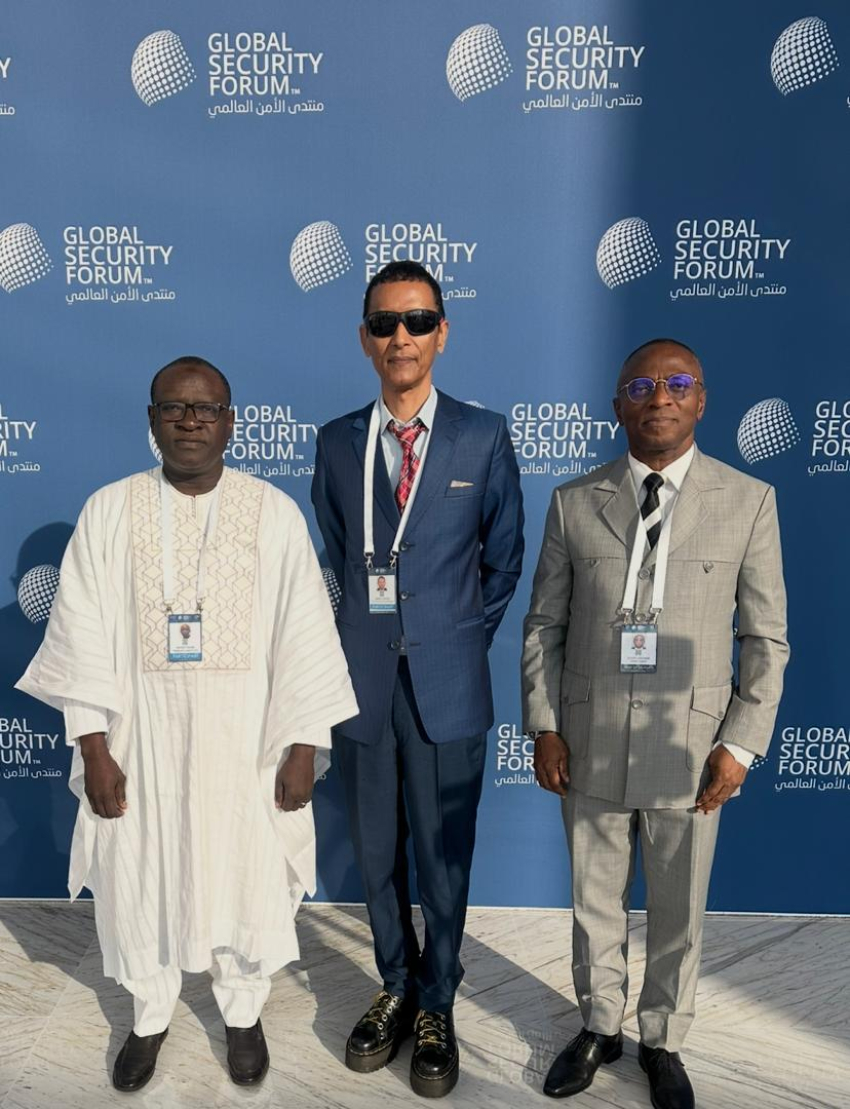
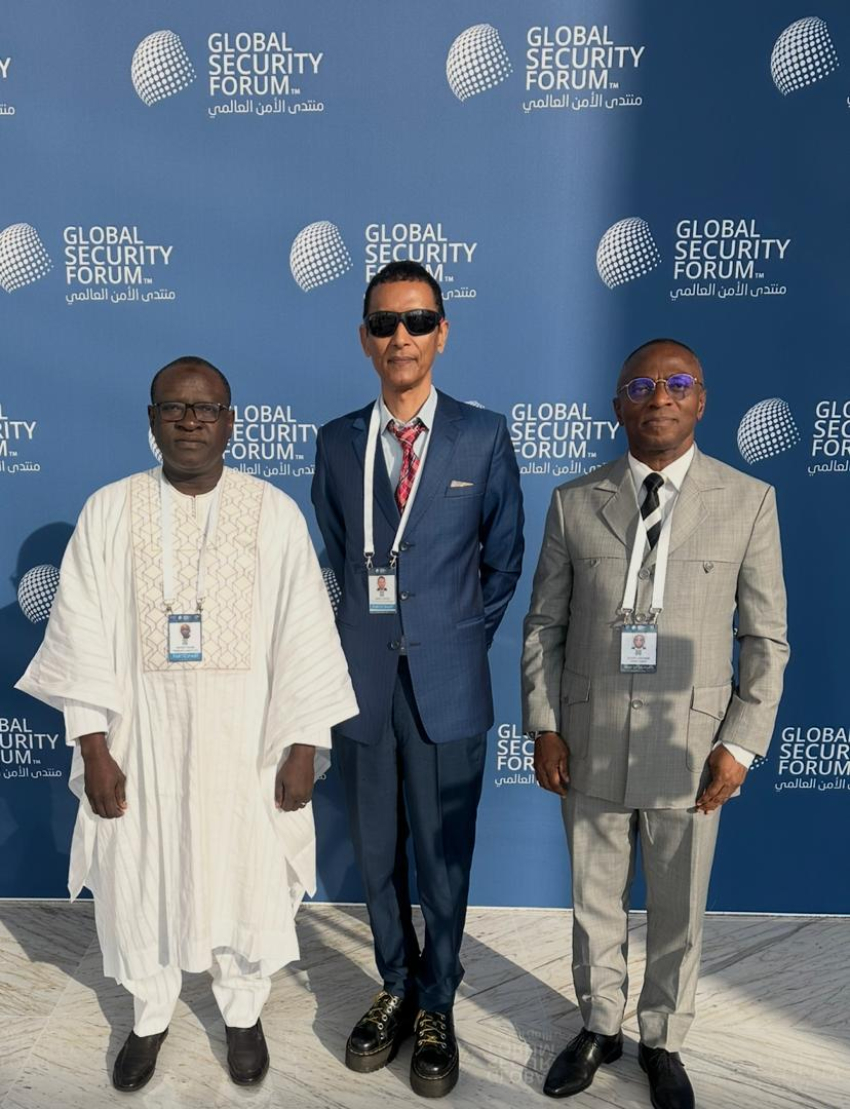
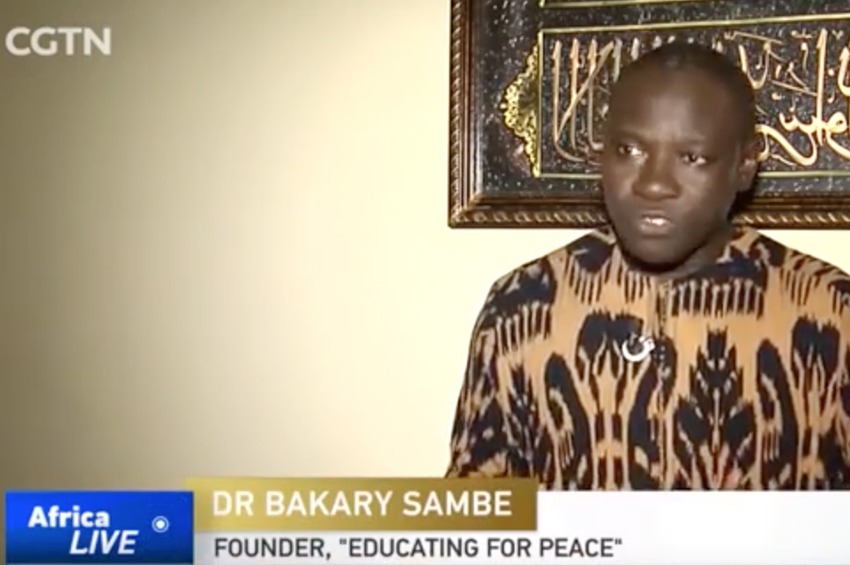
From October 19 to 21, 2026, Doha is hosting the 8th edition of the Global Security Forum, organized by The Soufan Center and the Qatar International Academy for Security Studies (QIASS). Amid delegations from more than 100 countries, West Africa is represented by two leading institutions. The Timbuktu Institute – African Center for Peace Studies is represented by its founding president, Dr. Bakary Sambe. The International Academy for Combating Terrorism (AILCT) in Jacqueville is represented by its Director General, General Allah Kouamé Joseph, accompanied by counter-terrorism expert Nasser Ould El Yassa, associate researcher at the AILCT. Their presence is a reminder of an obvious truth: there can be no discussion of the future of collective security without hearing from those who, day in and day out, grapple with the Sahelian crisis and its spread toward the coastal states.
“The Future of Alliances” as Seen from the Sahel
Opened on October 19 by Qatar's Prime Minister and Minister of Foreign Affairs, Sheikh Mohammed bin Abdulrahman Al-Thani, this year's Global Security Forum brings together senior officials, military officers, diplomats and researchers from more than 100 countries. Their working theme, “The Future of Alliances,” is closely in step with world events. The organizers intend to examine alliances that are “tested, reconfigured and sometimes profoundly rethought.” The context lends itself to this: international institutions are faltering, emerging powers and non-state actors are gaining influence, and mediation is once again becoming a central instrument of security.
For West Africa, this theme is anything but abstract. Few regions are experiencing the reshaping of alliances as intensely. Since the effective withdrawal of Mali, Burkina Faso and Niger from ECOWAS in January 2025, two regional architectures have coexisted, each with its own collective force facing the same armed groups. The departure of Western forces, the arrival of new security partners and the accompanying war of narratives have turned the Sahel into a veritable laboratory of what the Doha forum seeks to understand. It is against this backdrop that the presence of a West African delegation takes on its full significance.
Two Institutions, One Reading of the Threat
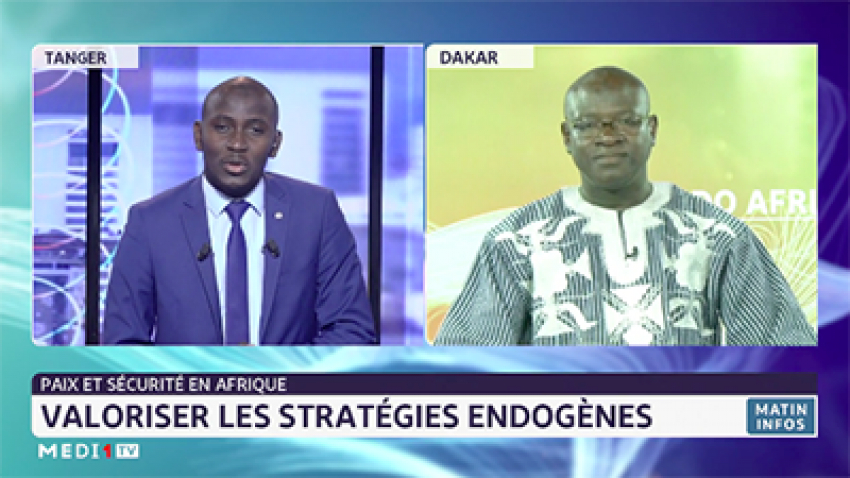
This delegation brings together two complementary profiles: independent peace research and institutional counter-terrorism expertise. Dr. Bakary Sambe, founding president of the Timbuktu Institute and coordinator of the FOWARD observatory, has established himself as one of the most widely heeded voices on the Sahel and religious radicalization. He has long advocated responses that go beyond a purely military logic. General Allah Kouamé Joseph heads the International Academy for Combating Terrorism, an institution designed, in his own words, “to grasp the terrorist threat in all its forms.” He is accompanied by Nasser Ould El Yessa, a recognized counter-terrorism expert and associate researcher at the AILCT. The latter has notably worked on radicalization in prisons in West Africa, one of the blind spots of prevention policies.
What brings these three experts together goes beyond the complementarity of their backgrounds. They share the same reading of the threat: terrorism in West Africa cannot be understood without knowledge of the ground, nor fought without the people.
Jacqueville, a Hub for Regional Strategic Thinking
The AILCT was born of a painful lesson. Its creation was decided by Côte d'Ivoire and France in the aftermath of the Grand-Bassam attack of March 13, 2016. It was inaugurated in June 2021 in Jacqueville, some sixty kilometers from Abidjan. The academy brings together three components. A training division welcomes senior civil servants. An operational division trains specialized units. Finally, an Institute for Strategic Research produces applied knowledge in support of public decision-making.
It is this last pillar that makes the AILCT far more than a training center. In May 2025, for instance, its research institute presented work on radicalization in prisons, on the links between violent extremism and refugee flows in northern Côte d'Ivoire, and on female jihadism in the Sahelian border areas. Its international standing confirms this status as a hub. In addition to its two founders, the academy has eleven active members, including Germany, the United States, Canada, Italy and the European Union. ECOWAS and the African Union sit on it as permanent associate members.
This influence extends that of Côte d'Ivoire itself. Exposed to jihadist pressure on its northern border, the country has combined investment in intelligence, a security presence and social programs. It has thus established itself as an anchor point for regional strategic thinking, at the junction of the Sahel and the Gulf of Guinea.
The Timbuktu Institute: Ten Years of a Bottom-Up Approach
The Timbuktu Institute – African Center for Peace Studies celebrated its tenth anniversary in February 2026 with a regional seminar on the transformations of terrorism in West Africa. Its line has not changed: Sahelian jihadism is increasingly homegrown, fueled by local grievances, and a military response alone cannot suffice. “No one has ever seen a Kalashnikov kill an ideology,” Dr. Sambe summed up at the time.
This conviction took concrete form in July with the launch of the Fragility Observatory for West and Central Africa (FOWARD). The observatory continuously monitors fragility factors, whether sociopolitical, religious, economic, climate-related or gender-related. It relies on a network of researchers and field correspondents to detect weak signals before they turn into crises. It publishes near-real-time monitoring reports, policy briefs and an annual report, and is developing a West African fragility index. Its first report, devoted to Guinea, shows how the Simandou mining boom “reshapes rather than resolves” the country's structural fragilities.
The Institute complements this monitoring with perception surveys. A pilot study of more than 1,100 people in Côte d'Ivoire, Niger, Senegal and Togo measures the growing distrust of populations toward external security partners. The Institute also brings its analyses to major international forums. In June, at the World Bank's Fragility Forum in Washington, it advocated “sustained, differentiated, adaptive engagement” in the Sahel and the Gulf of Guinea. On October 15, it delivered a similar message at the Rome Humanitarian Congress. Finally, it was among the first voices to consistently call for a formal dialogue between ECOWAS and the Alliance of Sahel States (AES), whose first ministerial meeting was held in Dakar on October 17.
What West Africa Brings to the Doha Debate
The presence of these two institutions in Doha addresses specific challenges. The first is the spread of the threat toward the coastal states. Armed groups from the central Sahel are exerting growing pressure on northern Benin, Togo, Ghana and Côte d'Ivoire. Dr. Lassina Diarra, director of the AILCT's Institute for Strategic Research, even speaks of a “Sahelization” of the Gulf of Guinea. For Abidjan, this is not a theoretical scenario but a reality to be contained.
The second challenge stems from the fragmentation of security architectures. The coexistence of ECOWAS and the AES Confederation makes it necessary to build, beyond political differences, interoperability between forces and intelligence sharing. Without these, no cross-border response can be effective, and the dialogue opened in Dakar is only the first step. Added to this is the geopolitical and informational competition that followed the departure of Western partners, which lies at the very heart of the Doha debates on the future of alliances.
The final challenge, perhaps the most decisive, concerns root causes. The joint study conducted by the Timbuktu Institute and the AILCT shows that poverty and unemployment are cited by 97% of respondents as the main gateway to jihadist recruitment. Collective security therefore cannot be reduced to its military dimension. This is where the West African contribution becomes irreplaceable: these institutions bring to major forums what they often struggle to grasp — a fine-grained knowledge of local dynamics, data drawn from the field, and the experience of frontline countries.
A Partnership Built on the Ground
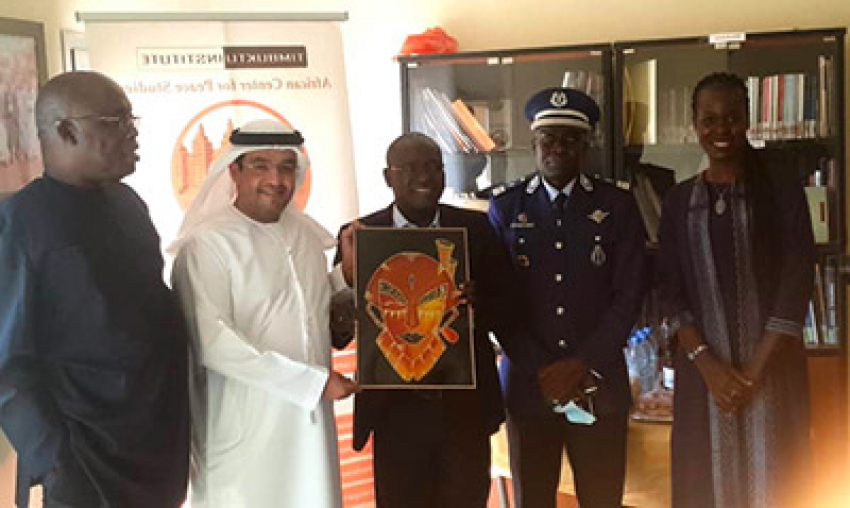
The joint presence in Doha crowns a rapprochement under way for more than a year and a half. In March 2025, the AILCT leadership, accompanied by a large delegation, paid a working visit to the Timbuktu Institute in Dakar. There, the two institutions identified training, strategic research and threat analysis as areas of cooperation, and Dr. Sambe was already advocating “a bottom-up approach” grounded in listening to local populations. In February 2026, Dr. Lassina Diarra, director of the IRS (Institute for Strategic Research), spoke at the seminar launching the scientific activities of the 10th Anniversary of the Timbuktu Institute, alongside its president, Dr. Bakary Sambe.
This collaboration found its most complete expression in a joint study on young people and terrorist recruitment in Ménaka, Mali, and Diffa, Niger. Conducted from January to April 2026 under the scientific coordination of Dr. Sambe, it was presented in Jacqueville by the AILCT's research institute, then published in August. Its conclusions are unequivocal: awareness campaigns “disconnected from any economic support do not work,” any more than vocational training without job prospects. The study recommends making youth employment the top priority and funding programs over a minimum of three to five years, with the involvement of local communities.
The prospects now opening up match the scale of this convergence. FOWARD's data could feed more directly into the AILCT's training programs and doctrinal thinking, so that early warning translates into public action. Joint research is set to expand to coastal states, border areas and prisons, where the future of the threat is being played out. Finally, Doha offers an opportunity to build ties with Gulf actors, starting with Qatar, whose mediation diplomacy is making it an increasingly present interlocutor in Africa.
The two institutions share a conviction that Dr. Sambe expressed as early as 2025: “terrorism has made us countries that now share vulnerability in the face of a global evil.” In Doha, then, West Africa has not come merely to listen to the debates on the future of alliances. It has come to remind everyone that tomorrow's alliances will also be built on its knowledge, its institutions and its experience on the ground.
Sacré-Coeur 3 – BP 15177 CP 10700 Dakar Fann – SENEGAL.
+221 33 827 34 91 / +221 77 637 73 15
contact@timbuktu-institute.org