Côte d’Ivoire: Border Cooperation, Mining Expansion, and Climate Risks Spécial
 © TDR
In Côte d’Ivoire, a meeting involving four countries in Korhogo highlighted mechanisms for conflict prevention and cooperation among border communities, while a multinational military exercise began in the country's central and southern regions. On the economic front, the inauguration of a major gold mine supports ambitions to diversify production. Meanwhile, new climate projections point to risks for cocoa production and agricultural incomes.
Security: Developing Cross-Border Cooperation and Military Capabilities
From November 9 to 12, Korhogo hosted a consultation workshop bringing together representatives of Côte d’Ivoire, Burkina Faso, Guinea, and Mali. Organized by Promediation with support from Global Affairs Canada and Côte d’Ivoire's National Borders Commission (CNFCI), the meeting included territorial authorities, security services, civil society organizations, and community representatives.
Discussions focused on strengthening local early-warning, mediation, and information-sharing mechanisms between neighboring administrations. Participants examined land disputes, transhumance, access to natural resources, and illicit activities. The CNFCI proposed regular cross-border consultation mechanisms accompanied by a two-year operational roadmap, whose formal adoption has not yet been confirmed.
The initiative builds on stabilization activities already underway in the Sikasso–Korhogo–Bobo-Dioulasso (SKBo) area, now with broader participation from Guinea. It illustrates the continuation of pragmatic cooperation between AES and ECOWAS countries despite their institutional differences. Its value will depend, however, on establishing mechanisms through which local authorities can communicate regularly and prevent disputes from escalating.
These efforts respond to persistent pressures. According to FEWS NET's October outlook, northern regions face tensions associated with cross-border insecurity, population displacement, and competition over resources. Dialogue mechanisms could help contain local conflicts, but cannot substitute for protection and security arrangements.
Separately, Ivorian, Gabonese, and French armed forces launched the multinational FANGHA 2026 exercise on November 7, scheduled to run through November 14 in Jacqueville, Yamoussoukro, and Bouaké. The exercise aims to strengthen military coordination and interoperability, though its effects on operational capabilities remain to be assessed.
Extractive Resources: Economic Diversification and Local Benefits
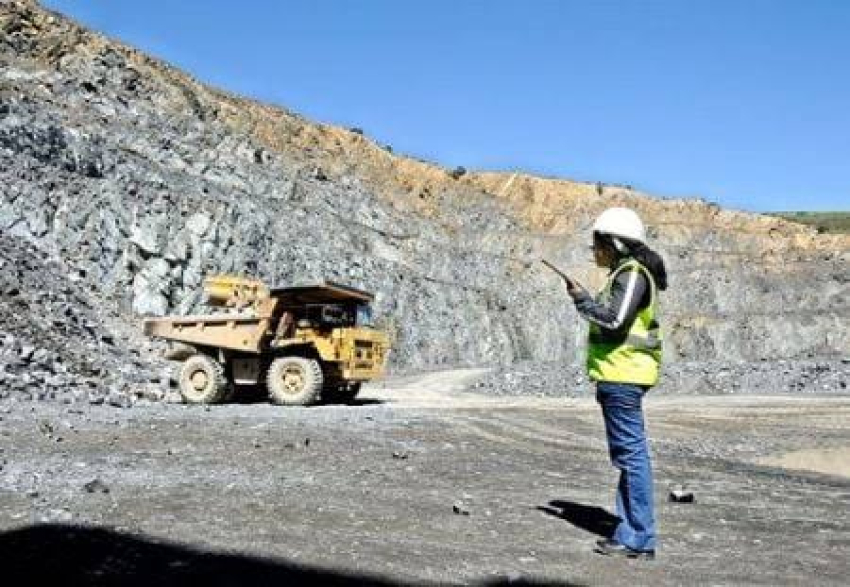
On November 12, the government inaugurated the Koné gold mine, near Kani in the Worodougou region. Described as the largest in the country, it represents an investment of more than 580 billion CFA francs and is expected to produce approximately 10 metric tons of gold annually during its first eight years, with an estimated mine life of 20 years. Authorities also announced a local development mechanism expected to mobilize approximately 4 billion CFA francs annually for surrounding communities.
The inauguration follows the November 9 presentation of the Integrated Mineral Resources and Energy Policy (PIRME). The program envisages 38 trillion CFA francs in investment through 2040, a substantial share of which is expected to come from the private sector.
These initiatives seek to expand the role of extractive resources and energy in an economy still heavily dependent on agriculture. However, investment commitments and production projections do not guarantee sustained diversification or an equitable distribution of benefits. Their contribution to resilience will depend on revenue actually generated, local employment, compliance with environmental standards, and transparency in the use of funds earmarked for communities. Tangible local benefits from the Koné mine will provide an initial test of these ambitions.
Cocoa: Climate Projections Heighten Agricultural Vulnerabilities
On November 11, Reuters reported an assessment by SODEXAM indicating that national cocoa production could decline by 21–25 percent during the 2026–2027 season. A particularly intense El Niño episode could reduce rainfall by 10–27 percent, prolong the dry season, and raise temperatures. These figures are projections, not losses already observed.
Some growers have already reported harvests below expectations in certain areas, but these observations cannot establish the scale of any eventual national decline. Prolonged water shortages could reduce yields and, in turn, producer incomes and export revenues, extending the fiscal pressures examined the previous week. Rainfall trends, cocoa arrivals at ports, and agricultural incomes will help determine whether this risk materializes.
In the near term, the central question is whether initiatives translate into tangible results. Without regular exchanges between border authorities and accessible mediation mechanisms, pressures on land, pasture, and services could fuel new disputes in the north. Meanwhile, diversification through gold mining will reduce the economy's vulnerability only if investments generate sustained revenues and tangible local benefits. A poor cocoa season could, in the meantime, undermine rural livelihoods and narrow fiscal space. The adoption and use of mechanisms proposed in Korhogo, initial disbursements to mining communities, and trends in cocoa arrivals will provide early signals of resilience or accumulating fragility.