Togo: Opposition Mobilization, Digital Regulation, and Institutional Reforms Spécial
 © TDR
In Togo, an opposition rally held despite reported obstruction, together with preparations for nationwide mobilization on November 20, demonstrates the persistence of political contestation. Meanwhile, the media regulator has begun registering digital content creators, raising questions about oversight of online expression. The government is also pursuing several administrative reforms, although no political response to the opposition's principal demands was identified during the week.
Opposition: Mobilization Continues Despite Restrictions
On November 8, the National Consultation Framework for Change (CNCC) held a rally in Tsévié, after several postponements stemming from administrative difficulties. Municipal authorities had ultimately authorized use of the venue. However, opposition leaders and supporters were blocked by security forces on the road to Tsévié, while several people were detained. According to subsequent reports, those arrested were released.
The rally nevertheless went ahead with political leaders and civil society organizations in attendance. Speeches addressed challenges to the current constitutional order, the implications of a ruling by the ECOWAS Court of Justice, and difficulties accessing drinking water in the locality. The gathering thus connected national political demands with concrete concerns affecting residents.
On November 10, organizations that signed the Manifeste Génération Togo condemned the reported obstruction and arrests in Tsévié. Although distinct from the CNCC, the coalition expressed solidarity with participants and renewed its call for a “Patriotic Day of Warning” on November 20. Its representatives had also distributed leaflets in Greater Lomé encouraging citizens to suspend their professional and commercial activities that day.
This strategy seeks to broaden political contestation beyond street demonstrations by mobilizing traders, employees, and other occupational groups. Its impact will depend on these groups' actual participation and the organizers' ability to sustain coordination. Limited participation could weaken the movement's influence, while broader mobilization could increase political pressure and the risk of confrontation with authorities.
The events in Tsévié demonstrate that the opposition retains an ability to organize, but also that administrative authorization for a gathering does not necessarily ensure that it can proceed without obstruction. Authorities announced no new initiative directly addressing the opposition's constitutional demands during the week. November 20 will therefore be an important test of the movement's mobilizing capacity and the space permitted for the exercise of political freedoms.
Digital Expression: A Registration Initiative with Uncertain Implications
On November 9, the High Authority for the Regulation of Print, Audiovisual, and Digital Communication (HARC) invited bloggers, influencers, video creators, and other social media actors to register in a database. The information requested includes their identity, place of residence, field of activity, and contact details. According to HARC, the objective is to maintain an up-to-date registry of digital content producers.
The announcement sets no registration deadline and specifies no explicit penalty for failure to register. At this stage, therefore, the measure does not constitute a prior-authorization regime. Nevertheless, it expands the regulator's ability to identify digital actors at a time when social media plays an important role in the circulation of information and political expression.
In a context marked by restrictions on civil liberties, the future use of this registry warrants close attention. The measure could improve knowledge of the sector, but could also facilitate closer monitoring of certain content producers if new obligations were introduced. No evidence establishes a direct link to opposition mobilization. Whether registration remains genuinely voluntary, how personal data are protected, and how regulatory practices evolve will help determine its implications for freedom of expression.
Social Protection and Governance: Reforms Yet to Be Implemented
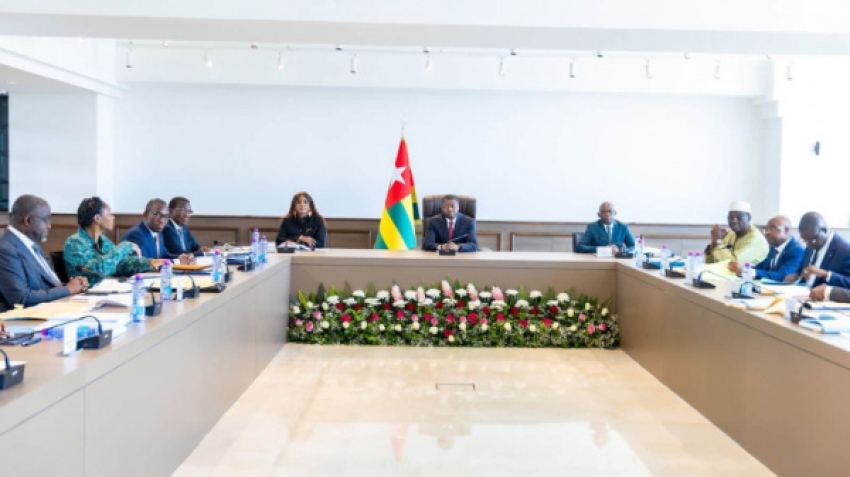
On November 8, the Ministry of Finance published an account of the November 6 Council of Ministers meeting, which had adopted a draft law establishing the National Social Security Institute (INSS). The new institution would merge the Togo Retirement Fund (CRT) and the National Health Insurance Institute (INAM) to simplify the administration of pensions and health insurance for public employees and their dependents.
The Council also adopted a decree specifying rules for the governance of public enterprises and examined, at first reading, a revision of the 2018 Land Code intended in part to strengthen customary and rural land rights. These measures address important administrative-management and conflict-prevention challenges, but their impact will depend on the resources committed and their effective implementation. The INSS bill still requires parliamentary consideration, while the land reform remains at a preliminary stage.
The week confirms the persistence of organized political contestation despite obstacles to the exercise of civil liberties. The mobilization planned for November 20 could heighten tensions if it prompts further restrictions or arrests, while digital registration raises questions about the future scope of freedom of expression. Administrative reforms could improve certain services, but do not directly address the opposition's political demands. The scale of participation on November 20, the authorities' response, the use of the digital registry, and implementation of the reforms will help determine whether political and institutional fragilities deepen or opportunities for de-escalation emerge.