 French
 Arabic
 English
 Portuguese
 Spanish
 Swahili
Sacré-Coeur 3 – BP 15177 CP 10700 Dakar Fann – SENEGAL.
+221 33 827 34 91 / +221 77 637 73 15
contact@timbuktu-institute.org
 © Timbuktu Institute
Source: L’Enquête
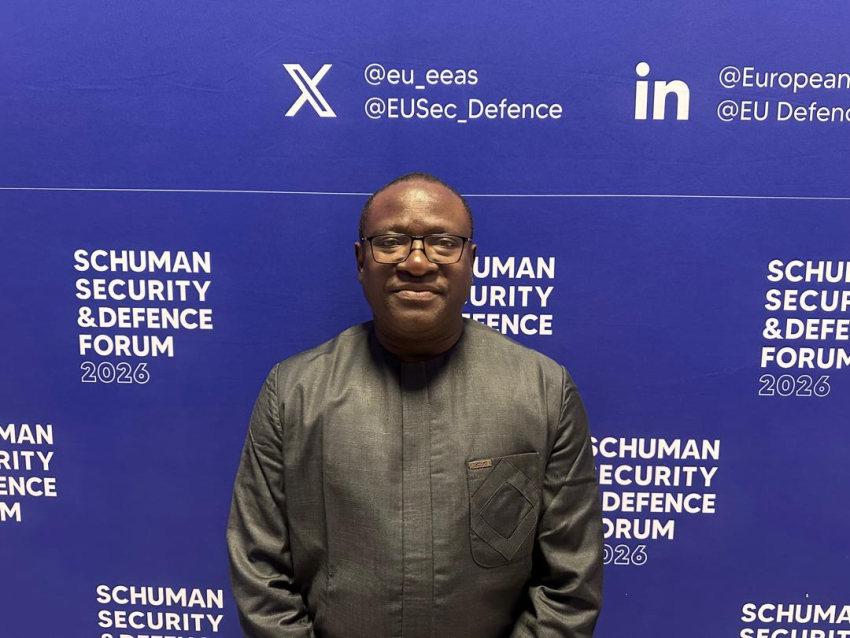
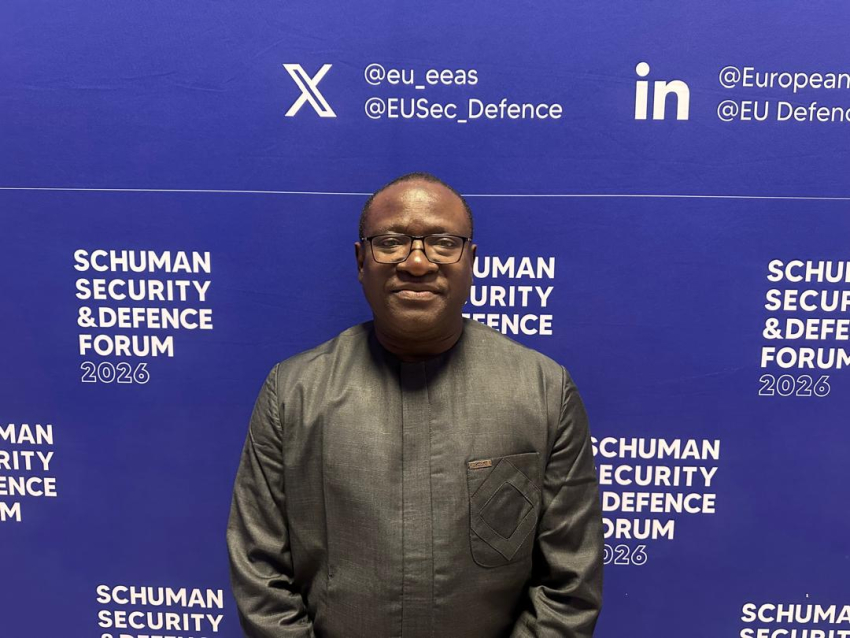
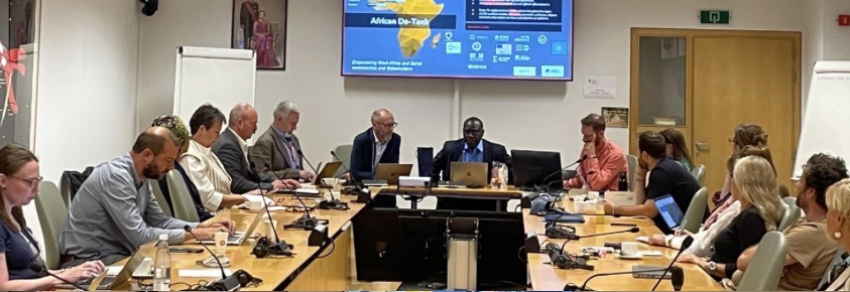
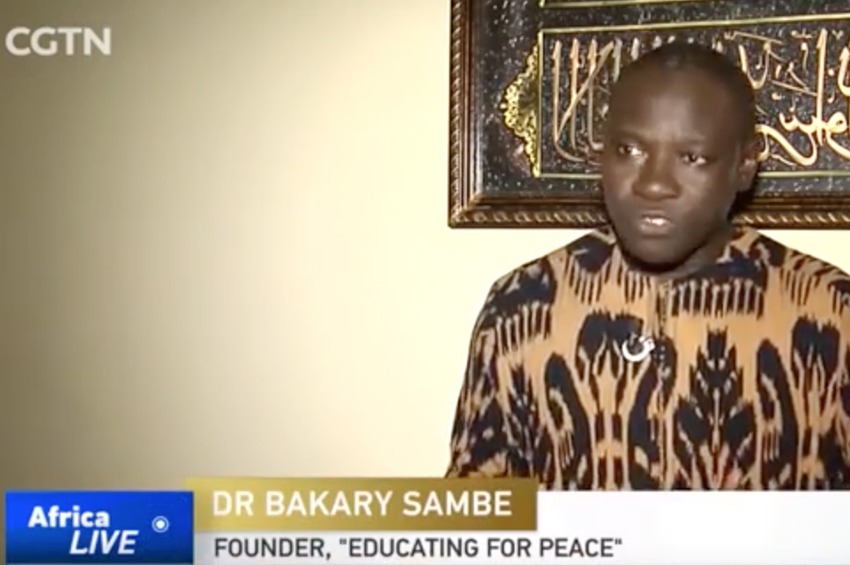
Timbuktu Institute took part in the Schuman Security and Defence Forum in Brussels (17–18 November). During the session devoted to think tanks, Dr Bakary Sambe warned of a risk that the European response to Russian influence in the Sahel is out of step with reality. This gap, in his view, stems as much from Europe’s own inertia as from Moscow’s capacity to adapt.
Every year in Brussels, the Schuman Forum brings together political leaders, military officers, diplomats and researchers around the security and defence challenges facing the European Union. In the debate reserved for think tanks, the Sahel question came to the fore from a specific angle: how is Europe responding to a Russian influence that has settled durably in the region, and that no longer resembles what it was five years ago?
For the director of the Timbuktu Institute, the diagnosis is clear. Europe runs the risk of adjusting its response to a reality that has already changed. He identifies two sources of this gap: Europe’s difficulty in moving beyond the shock of Russia’s lead in the information space, and the rapid evolution of Moscow’s strategy, which has turned the page on mercenarism in favour of institutionalisation and the sectoral diversification of its cooperation. Moscow is targeting the tangible, while Europe is still focused on information containment – a field in which Russia enjoys the advantage of local roots, with relays on the ground and methods that have been made endogenous.
The first gap, according to Dr Sambe, is paradigmatic: for several years, Russia took a clear lead in the Sahelian information space. This lead contributed to Europe’s loss of influence, and then to the open rejection of certain European countries.
For Dr Sambe, Europe is still struggling to recover from this shock, as it continues to read the situation through the prism of informational defeat, seeking to respond blow for blow to hostile narratives. Yet this ground is already occupied. Pro-Moscow narratives have taken root and now circulate on their own, carried by actors who have internalised their content and direction.
Malian digital spaces offer an illustration, as Russian military cooperation is regularly presented there as a break from the relations of dependency associated with the former French partner. Local media such as Kati 24 highlight the “sincerity” and “dignity” of the Russian-Malian partnership. Europe is no longer facing imported propaganda, but what would appear to be convictions shared by part of public opinion.
The first gap in Europe’s responses to Russia in the Sahel is compounded by a structural imbalance. Without having been prepared for it by a long-term strategy, he says, Europe has been forced to wage a double battle. “In the Sahel, it is trying to counter Moscow’s strategy as well as foreign information manipulation and interference (FIMI). In Europe, it is fully engaged on the Ukrainian file. Russia, for its part, does not seem to have to deal with the Ukrainian file in the Sahel: it advances there on a single front, while projecting back onto Europe the image of a country capable of harming its interests far from its borders. This imbalance weighs heavily on perceptions,” he says.
Dr Sambe also points to the lack of explanation and communication about the Ukrainian conflict among the region’s populations. For many Sahelians, this war remains distant and poorly understood. Its stakes have never really been explained to them, even though they bear its effects, particularly on food and energy prices. It is the same cognitive bias at work among Sahelians who believe they are at the heart of European concerns and priorities, while Europe is completely absorbed by the Ukrainian question.
“Ukraine itself may bear some responsibility for this persistent perception in the Sahel of a primarily intra-European conflict, stripped of the meaning it is given in Europe in terms of defending democracy. The missteps of Ukrainian diplomacy at the start of this war, as well as its lack of agility in communicating about the conflict, left the field open to disinformation campaigns. These have established the image of a Ukraine that has become the armed wing of Western powers, and at times even an actor in the Sahelian conflict. In an era of sovereigntist narratives, this image carries great weight,” Dr Sambe stresses.
According to him, the result of this European battle on two fronts is a genuine paradox. Europe is perceived as fighting Russia in the Sahel with the arguments of a conflict that the region’s populations do not regard as their own. In his view, its fight against disinformation – a challenge shared with other countries – then risks being read as the export of a European war onto African soil.
The second gap, according to Dr Bakary Sambe, lies in Moscow’s unexpected capacity to adapt. Russia, he says, is seeking to shed the image of an influence built on Wagner’s mercenarism and on disinformation campaigns. He warns: “if Europe continues to fight only that Russia, it risks aiming at a target that has moved.”
On the military front, first of all, the Russian model, he says, once described as mercenarism, has been brought under state control and replaced by an Africa Corps structure drawing on former Wagner personnel. Wagner’s withdrawal from Mali and its announced replacement by the Africa Corps, placed under the authority of the Russian Ministry of Defence, have transformed mercenarism into state-to-state cooperation. The Russian offer is increasingly modular and multisectoral: around 2,000 men engaged in combat in Mali, and a few hundred at most in training and supervisory roles in Burkina Faso and Niger.
But for Russia, he stresses, the main focus seems to be shifting elsewhere. Moscow is diversifying its entry points and developing multisectoral cooperation based on concrete projects that go well beyond security alone. “Mining: Moscow supports the mining sovereignty claimed by states. In Mali, the national gold refinery is 62% owned by the state and 38% by the Russian company Yadran. On 28 October 2026, Bamako signed an agreement with Zarubezhgeologia for the geological mapping of half of the country’s territory. Civil nuclear power: Rosatom has signed agreements with Burkina Faso, Mali and Niger. At the Russia–Africa summit in October 2026, Ghana and Togo joined this momentum. Education and culture: Moscow is expanding its network of ‘Russian Houses’, with new agreements signed in 2026 in eight African countries, including Senegal, Mali and Côte d’Ivoire. This offer relies on an information base that is now more endogenous and on a coherent strategy of localising approaches,” he explains.
Added to this is Tafouk TV, the AES channel launched in Bamako, which has concluded a cooperation agreement with Russia Today. Dr Sambe points to local relays that enjoy local legitimacy: influencers, platforms, media outlets and political figures who themselves carry the narratives of sovereignty and multipolarity.
Nevertheless, he argues, this momentum has its limits despite the appearance of a lead that seems alarming, since Russia accounts for less than 1% of foreign direct investment on the continent. “Its arms exports reportedly fell by 64% between 2016–2020 and 2021–2025. The Africa Corps had to withdraw from Kidal in April 2026. And critical voices are rising online, such as on the Ivorian platform Zapping CI, which questions the risk of a ‘new dependency’. But these weaknesses alone are not enough to restore Europe’s former position, which requires a rethought, proactive strategy that goes beyond short-term responses,” Dr Sambe warns.
On the sidelines of the proceedings, Dr Sambe reflected on Europe’s place in a Sahel of reshaped alliances. For him, Europe has indeed become one partner among others. But, he says, this is not necessarily bad news. “Europe has lost its monopoly, not its relevance. The challenge is to move from a logic of tutelage to a genuine partnership, as recently set out by European officials and diplomats in the region, and to think of the region as a whole, without becoming locked into the divide between ECOWAS and the AES which, however long it lasts, will only be temporary,” he recommends.
On the question of values, he rejects the idea that they are a handicap in the face of less demanding and more coordinated partners. The problem, in his view, is less any rejection of democracy – which all the data contradict – than the perception of a double standard. Values are not imposed, they are shared, he insists, urging Europe to draw on local traditions of social and religious regulation by making the most of endogenous resources. If Europe is effective, predictable and committed for the long term, the values it shares with the countries of the region can set it apart from more transactional partners.
One essential point remains, in his view: Sahelian populations must not pay the price of insecurity and of disagreements between governments at the same time. Suspending aid, he recalls, often amounts to leaving the field open to armed groups and criminal networks. “Europe must preserve its humanitarian and development channels, work with local actors and invest in prevention, particularly in border areas and coastal countries. This is also where the response to the Russian influence that haunts it – but that must not disorient it – is being played out. Less in declarations than in a concrete presence alongside people. Europe will remain useful and relevant in its engagement in the Sahel if it has the agility to rely less on its visibility than on its consistent presence*,” he advises.
Sacré-Coeur 3 – BP 15177 CP 10700 Dakar Fann – SENEGAL.
+221 33 827 34 91 / +221 77 637 73 15
contact@timbuktu-institute.org