 French
 Arabic
 English
 Portuguese
 Spanish
 Swahili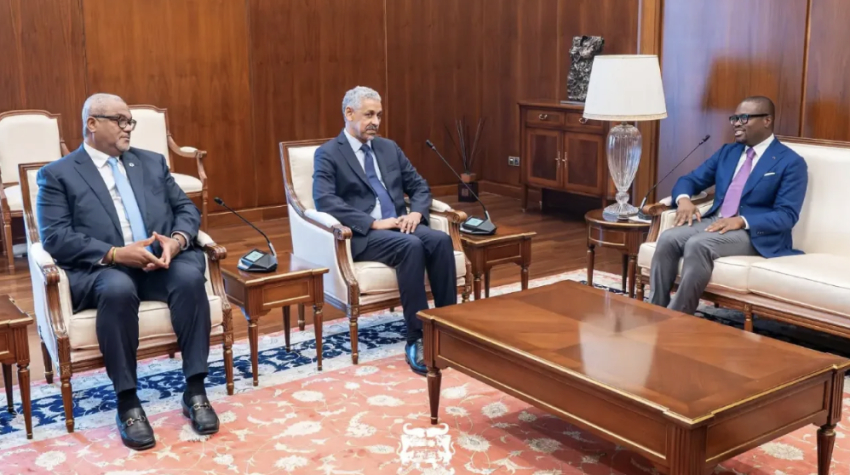

Sacré-Coeur 3 – BP 15177 CP 10700 Dakar Fann – SENEGAL.
+221 33 827 34 91 / +221 77 637 73 15
contact@timbuktu-institute.org

 © TDR
© TDR
Timbuktu Institute October 2026 - Week 1
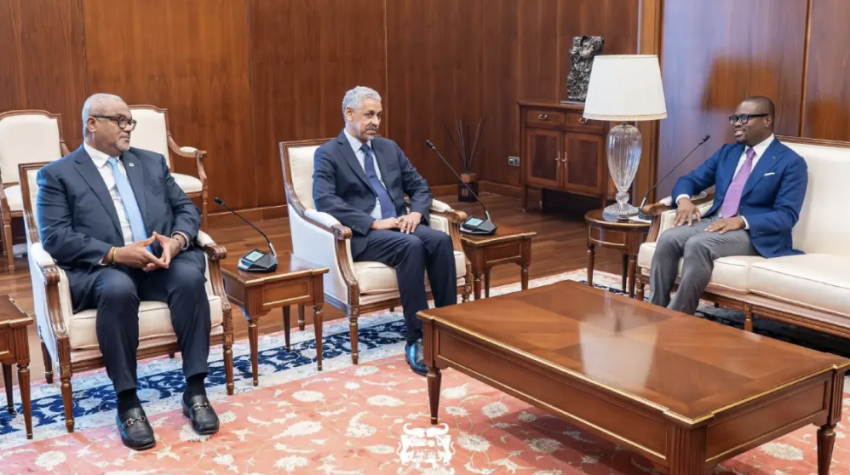
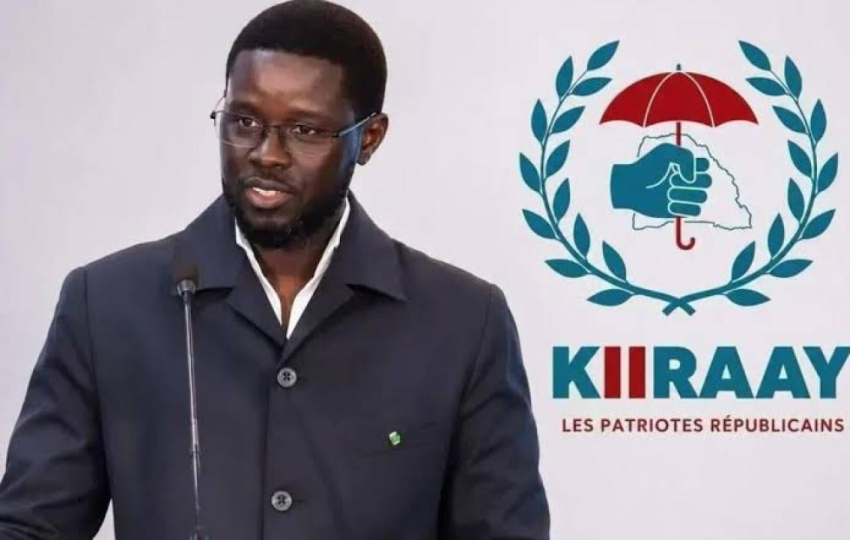
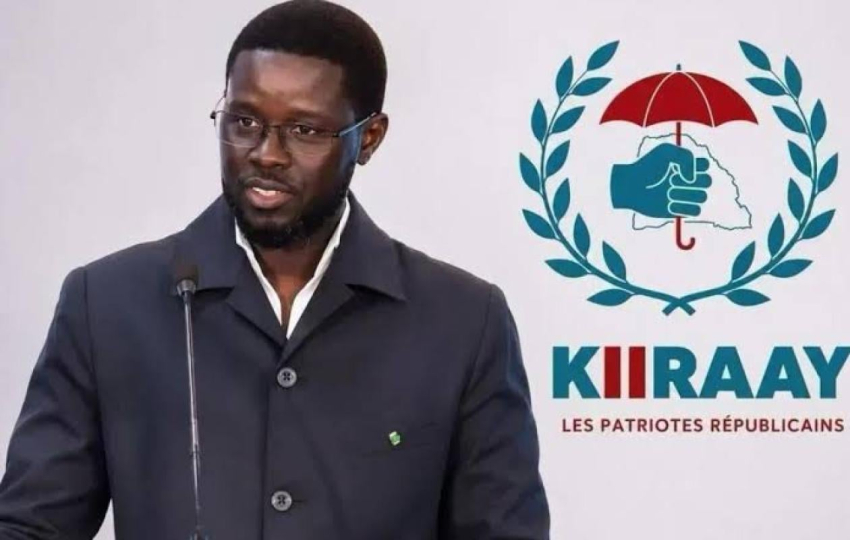
Like a serial whose final episode no one yet knows, it seems that we will have to get used to the coming years being paced by the twists and turns of the open political duel between President Diomaye Faye and the President of the National Assembly, Ousmane Sonko. And, making the best of the situation, the Head of State is pursuing his goal of turning the young presidential party Kiiraay into a political and territorial force. In this quest for grassroots presence, Kiiraay’s first rainy-season university, held on 3 October in Dakar, marked a new stage in building the party launched on 25 July. There, the party sought to define an identity based on “pragmatic sovereignism” and “balanced diplomacy”, with a discourse meant to be more measured than ideological.
Behind this still-tentative ideological line lies a much more immediate concern: the ground. A few months before the 2027 local elections, Kiiraay now claims the support of nearly 400 of Senegal’s 557 mayors. Several of these elected officials come from former President Macky Sall’s Alliance for the Republic (APR). This progress, however, has yet to be consolidated. With this in mind, a membership card distribution campaign is soon expected to enable the party to move from rallying elected officials to building a genuine activist network. Meanwhile, the National Assembly continues to offer a crystal-clear picture of the power play this new political configuration must face. Admittedly, the tensions expressed there are not formally linked to Kiiraay, but they reflect the same movement of political realignment.
The Assembly chamber, stage of a power struggle
In this tug-of-war, Pastef’s parliamentary majority, as is well known, is determined to bring its full weight to bear on the executive machinery. The National Assembly thus appears to have become one of the clearest mirrors of the battle between the Faye and Sonko camps. Parliamentary sessions now frequently give rise to heated debates, sparring matches or altercations. The latest episode: the examination on 30 September of the bill on health care in prisons, sponsored by Pastef MPs Khady Sarr, Anta Dia, Cheikh Faye and Mamadou Lamine Diaité. According to them, the text aims to fill the absence of a coherent legal framework for detainees’ health care and to guarantee them access to care equivalent to that of free citizens. However, MP Abdou Mbow, a member of the Takku Wallu parliamentary group and of the APR, opposed the examination of the prison health bill sponsored by Pastef MPs. Calling for the deliberations to be postponed while acknowledging the seriousness of detention conditions and the importance of detainees’ health, he notably declared: “Let us not legislate in anger”, arguing, in his own words, that the text was flimsy. Immediately afterwards, the Takku Wallu Sénégal parliamentary group denounced an altercation in the corridors of the chamber involving its MP Abdou Mbow, who, according to the group, was confronted and insulted by Pastef MP Ousmane Fall. Its chair, Aïssata Tall Sall, denounced “verbal violence” and a breach of the Assembly’s rules of procedure, while Abdou Mbow announced that he would file a complaint.
Furthermore, after being corrected on procedural grounds following the decision of 25 August, the bill on special appropriations was back before the National Assembly in the form of an organic law. The Senegalese government tabled an amendment seeking to remove the category of “special appropriations or funds” from the organic law on finance laws. Presented by the Minister of Justice, Maître Moussa Sarr, amendment no. 2 modifies Article 14 of Organic Law no. 2020-07 of 26 February 2020. But on 1 October, the National Assembly rejected all the amendments defended by the Minister of Justice, Maître Moussa Sarr, despite the government’s use of a block vote, before adopting the single article of the organic bill on finance laws. MPs notably rejected the amendment to Article 14, which sought to remove the specific reference to “special appropriations or funds” and incorporate them into the overall allocation of the constitutional institutions. The amendment to Article 70, which provided a different framework for parliamentary oversight of these appropriations, was also rejected. Both amendments had already been rejected by the Finance and Budgetary Control Committee. The single article was finally adopted in the wording sought by the MPs, with the aim of explicitly including special funds in budget allocations and strengthening oversight of them.
Shedding light on the 2021-2024 violence?
As voices were increasingly denouncing the slowness of the justice system in shedding light on the political events of 2021 to 2024, a few steps are now beginning to be taken in that direction. At the end of September, four people were thus charged with “crimes against humanity” and “complicity”, four of them in the case of the violence inflicted on Pape Abdoulaye Touré and one in the investigation into the death of Mamadou Ndoye, killed in Bargny after being, according to the prosecutor’s office, deliberately struck by a police vehicle. Along the same lines, on 2 October, the Dakar prosecutor’s office announced a provisional count of 76 deaths and more than 200 alleged victims of torture or inhuman treatment during the politico-judicial violence of that period. Forty-one of these deaths were reportedly recorded in the Dakar region alone. In total, 166 victims and witnesses have already been heard in the investigation opened in July 2025. Admittedly, these first proceedings represent progress, but they already raise a weightier question: how far up the chain of responsibility will the justice system go? The amnesty law adopted in March 2024 in principle covers offences linked to the political events of 2021-2024. But in April 2025 the Constitutional Council ruled that it did not preclude prosecutions for homicide or torture. In the current political sequence between Pastef and Kiiraay, would it be rash to see this judicial revival as a sign of anything? One thing at least is hardly in doubt: while the victims and some Pastef activists are calling for the proceedings to be speeded up, the striking contrast of the rapprochement between President Faye and Macky Sall is fuelling unease among those still awaiting truth, justice and reparation.
Sacré-Coeur 3 – BP 15177 CP 10700 Dakar Fann – SENEGAL.
+221 33 827 34 91 / +221 77 637 73 15
contact@timbuktu-institute.org