 French
 Arabic
 English
 Portuguese
 Spanish
 Swahili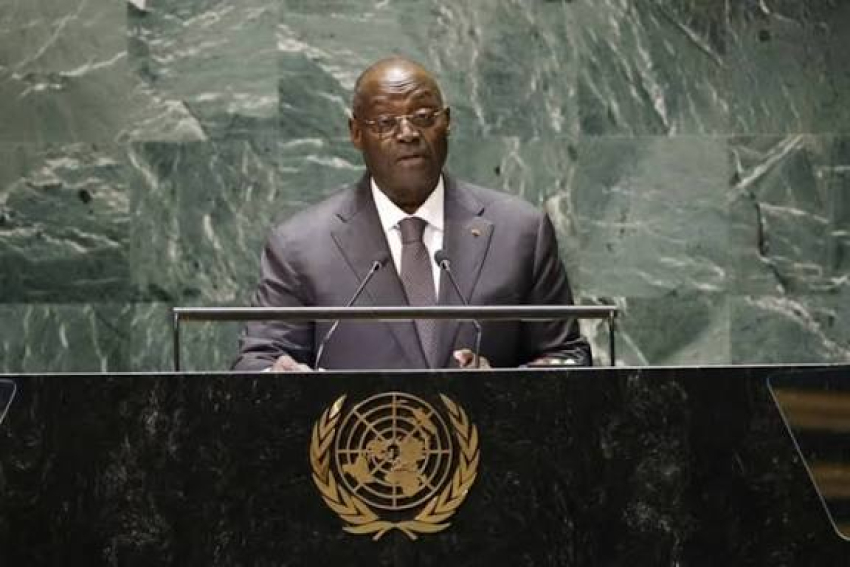

Sacré-Coeur 3 – BP 15177 CP 10700 Dakar Fann – SENEGAL.
+221 33 827 34 91 / +221 77 637 73 15
contact@timbuktu-institute.org


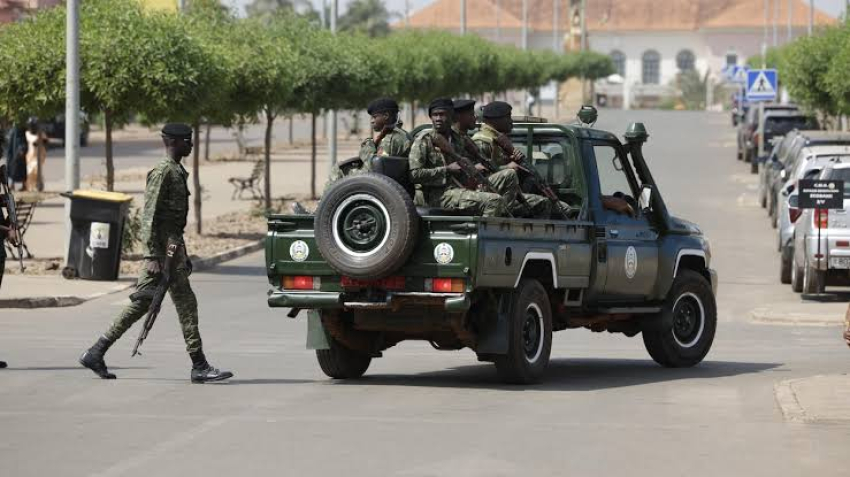
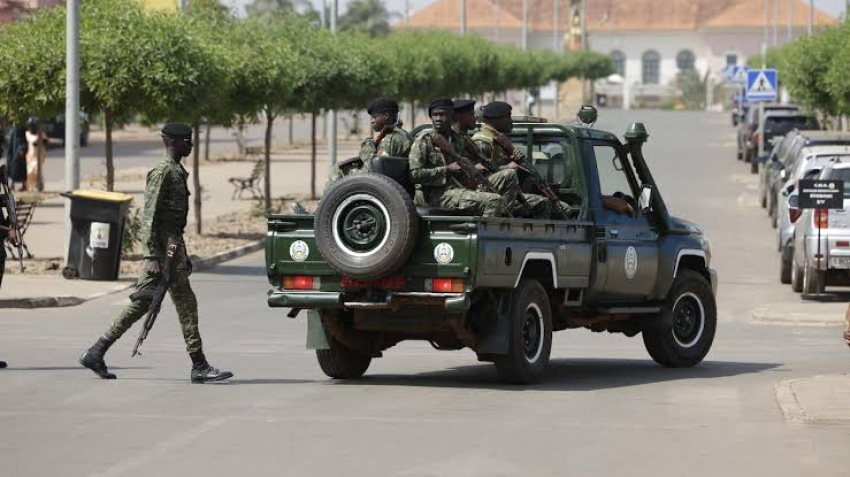
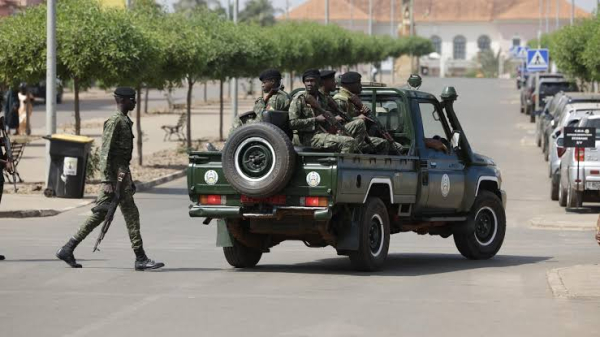
On the occasion of the 53rd anniversary of independence, General Horta Inta-a Na Man defended a transition that is “on the right track” and called for preserving social calm ahead of the December presidential election. A conciliatory speech that contrasts with the hardening observed this week: former President Umaro Sissoco Embaló has been barred from returning to Bissau, while soldiers entered the PAIGC headquarters, closed since 14 September, to declare it “state property”. From Lisbon, Domingos Simões Pereira denounces the persecution of his party, and civil society is calling for an inclusive dialogue to preserve a stability that remains fragile.
General Horta Inta-a Na Man spoke publicly on the occasion of the 53rd anniversary of Guinea-Bissau’s independence. He described a country “under construction” and said that the political transition was “on the right track”. Praising the government’s action, he also gave assurances that the various infrastructure projects were continuing.
The President of the Republic Defends the Transitional Government and Calls for Preserving Stability
Ahead of the December presidential elections, the former army chief of staff called for maintaining “social calm”, urging Bissau-Guineans not to give credence to “hate speech”, “calls for violence” and attempts to provoke “public disorder”.
The PAIGC Denounces a Tightening of Political Restrictions
On the occasion of the 70th anniversary of the African Party for the Independence of Guinea and Cape Verde (PAIGC), celebrated in Lisbon, its president Domingos Simões Pereira denounced the “illegitimate forces seeking to weaken the PAIGC, persecute its activists and silence its voice”. In his sights: restrictions on public freedoms, the 30 August referendum, which he considers contrary to the principles of the rule of law, and the closure of the PAIGC headquarters ordered by the authorities on 14 September. In a new twist, the party’s headquarters was reportedly entered this week by soldiers who put up a sign indicating that the building was now considered “state property”.
Civil Society Calls for Calm and Dialogue
The National Civil Society Movement (MNSC) called for the establishment of a “constructive dialogue” between political actors in order to preserve peace and stability in Guinea-Bissau. On the occasion of the International Day of Peace, the MNSC’s permanent secretary highlighted the tensions linked to the political transition following the coup d’état, as well as several institutional, economic and social difficulties. The MNSC proposed a national peacebuilding strategy based on strengthening justice, fighting corruption and impunity, protecting human rights and preparing for general elections.
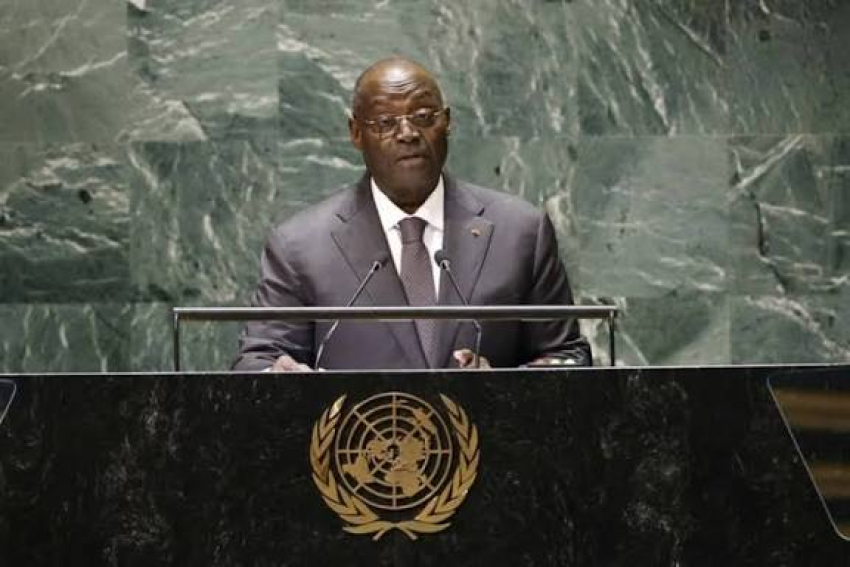
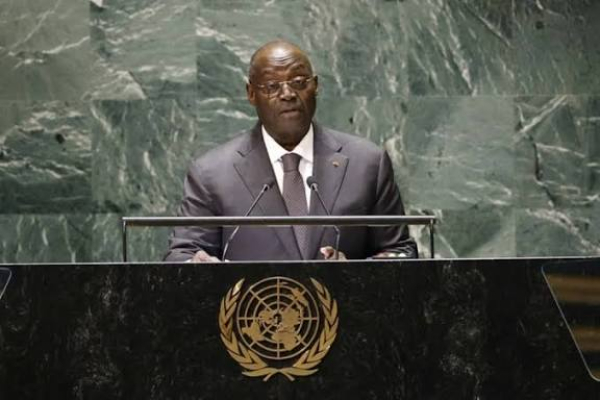
Abidjan s’est illustré lors de la 81ème session ordinaire de l’Assemblée générale des Nations unies, à New York. Le 24 septembre dernier, Tiémoko Meyliet Koné, vice-président de la République et représentant du président Alassane Ouattara, a porté la voix de la Côte d’Ivoire pour appeler la communauté internationale au dialogue. Face aux différentes crises qui affectent le monde, il estime que « nous devons choisir le dialogue plutôt que la confrontation ».
Diplomatie : la Côte d’Ivoire défend la coopération internationale et le dialogue
Lors du débat général placé sous le thème « Restaurer la confiance, accompagner les transformations : une ONU au service de tous », il a prôné des réponses collectives et une coopération internationale renforcée. À travers son intervention, il a souligné l’importance de rapprocher les positions et de reconstruire la confiance.
Une offensive contre les réseaux criminels et les trafics illicites
Sur le plan sécuritaire, le succès de l’opération « Épervier spécial » a été salué par le Conseil national de sécurité, notamment en raison de la stabilité qu’elle maintient. En effet, le conseil a estimé que cette stabilité se matérialise par la baisse des attaques à main armée, des cambriolages, des vols et des autres formes de criminalité. Dans le communiqué rendu public, on peut lire : « Cette opération, qui mobilise 1 320 éléments de la police et de la gendarmerie nationales, enregistre, sur la seule période du 7 au 16 septembre, le bilan suivant : la destruction et la non-recolonisation de 56 fumoirs ; la saisie de près de 183 tonnes de MQIF et de médicaments détournés ; la saisie de plus de 3 500 engins, essentiellement pour non-port de casque de protection et défaut de plaques d'immatriculation ; l'interpellation de 196 individus, conduits devant les parquets pour incitation à la violence et trafic de MQIF et de stupéfiants… ». Cette opération de grande envergure a été lancée le 7 septembre dernier pour une durée de quatre-vingt-dix jours dans les villes de Bouaké, Daloa et Korhogo. L’objectif de démanteler les réseaux de trafic illicite de médicaments de qualité inférieure et falsifiés (MQIF) et de médicaments détournés, de lutter contre la drogue et de réprimer l'incivisme routier est en train d’être atteint, comme en témoignent les succès obtenus sur le terrain.
Bouaké, Daloa, Korhogo : « Épervier spécial » à l’épreuve des réseaux criminels
Dès lors, il s’avère nécessaire de se poser un certain nombre de questions : existe-t-il un réseau derrière ces distributions et ces mécanismes de blanchiment ? Qui sont les acteurs ? Quels sont les pays touchés ? Dans tous les cas, le défi est titanesque, surtout au regard de la situation sécuritaire tendue aux portes de la Côte d’Ivoire. Le président de la République a tenu à féliciter le vice-Premier ministre, ministre de la Défense, Téné Birahima Ouattara, le ministre de l'Intérieur et de la Sécurité, Vagondo Diomandé, ainsi que les forces de défense et de sécurité mobilisées dans le cadre de cette opération, au vu des résultats positifs obtenus en si peu de temps. Il a également exhorté à maintenir cette dynamique.
Orpaillage clandestin : Abidjan durcit les sanctions face à un phénomène persistant
Par ailleurs, le 23 septembre dernier, le gouvernement a adopté un projet de loi visant à durcir les peines contre l’orpaillage clandestin, un phénomène qui continue de l'inquiéter. En effet, le dispositif est de plus en plus renforcé face à la persistance de ce phénomène. Selon les données du Conseil national de sécurité, plus de 8 500 sites d’orpaillage illégal ont été détruits et 4 474 personnes ont été déférées. En dépit de tous ces efforts, ces activités criminelles continuent de nuire à l’économie du pays en termes de manque à gagner. Les peines peuvent désormais aller jusqu’à 20 ans de prison si l’infraction concerne un agent public. À travers cette décision, il apparaît clairement que cette activité illicite n’est plus l’apanage exclusif de trafiquants isolés ; il pourrait s’agir d’un système organisé impliquant des personnalités de haut rang au sein de l'appareil étatique. Les défis à relever sont donc la formalisation des acteurs, le contrôle des entrées dans le pays par le biais de cette activité, la traçabilité de l’or et la lutte contre la corruption.
Abidjan made its mark at the 81st ordinary session of the United Nations General Assembly in New York. On 24 September, Tiémoko Meyliet Koné, Vice-President of the Republic and representative of President Alassane Ouattara, voiced Côte d’Ivoire’s position, calling on the international community to engage in dialogue. In the face of the various crises affecting the world, he believes that “we must choose dialogue over confrontation”.
Diplomacy: Côte d’Ivoire Champions International Cooperation and Dialogue
During the general debate held under the theme “Restoring trust, supporting transformations: a UN that serves all”, he advocated collective responses and stronger international cooperation. In his address, he stressed the importance of bringing positions closer together and rebuilding trust.
An Offensive Against Criminal Networks and Illicit Trafficking
On the security front, the success of Operation “Épervier spécial” was praised by the National Security Council, notably because of the stability it maintains. The council considered that this stability is reflected in the decline in armed robberies, burglaries, thefts and other forms of crime. The published statement reads: “This operation, which mobilises 1,320 members of the national police and gendarmerie, recorded the following results for the period from 7 to 16 September alone: the destruction and non-reoccupation of 56 drug dens; the seizure of nearly 183 tonnes of SFMPs and diverted medicines; the seizure of more than 3,500 vehicles, mainly for failure to wear a helmet and lack of registration plates; and the arrest of 196 individuals, brought before prosecutors for incitement to violence and trafficking in SFMPs and narcotics…”. This large-scale operation was launched on 7 September for a period of ninety days in the cities of Bouaké, Daloa and Korhogo. The objective of dismantling illicit trafficking networks for substandard and falsified medical products (SFMPs) and diverted medicines, combating drugs and cracking down on reckless road behaviour is being achieved, as shown by the successes recorded on the ground.
Bouaké, Daloa, Korhogo: “Épervier spécial” Put to the Test by Criminal Networks
It is therefore necessary to ask a number of questions: is there a network behind these distribution channels and laundering mechanisms? Who are the actors? Which countries are affected? In any case, the challenge is enormous, especially given the tense security situation on Côte d’Ivoire’s doorstep. The President of the Republic made a point of congratulating the Vice-Prime Minister and Minister of Defence, Téné Birahima Ouattara, the Minister of the Interior and Security, Vagondo Diomandé, as well as the defence and security forces mobilised for this operation, in view of the positive results achieved in such a short time. He also urged them to maintain this momentum.
Illegal Gold Mining: Abidjan Toughens Penalties for a Persistent Phenomenon
Furthermore, on 23 September, the government adopted a bill aimed at toughening penalties against illegal gold mining, a phenomenon that continues to concern it. Indeed, the measures are being steadily reinforced in the face of the persistence of this phenomenon. According to data from the National Security Council, more than 8,500 illegal gold mining sites have been destroyed and 4,474 people have been brought before the courts. Despite all these efforts, these criminal activities continue to harm the country’s economy in terms of lost revenue. Sentences can now reach up to 20 years in prison if the offence involves a public official. This decision makes it clear that this illicit activity is no longer the exclusive preserve of isolated traffickers; it could be an organised system involving high-ranking figures within the state apparatus. The challenges ahead are therefore the formalisation of operators, control of entries into the country through this activity, the traceability of gold and the fight against corruption.
Sacré-Coeur 3 – BP 15177 CP 10700 Dakar Fann – SENEGAL.
+221 33 827 34 91 / +221 77 637 73 15
contact@timbuktu-institute.org