 French
 Arabic
 English
 Portuguese
 Spanish
 Swahili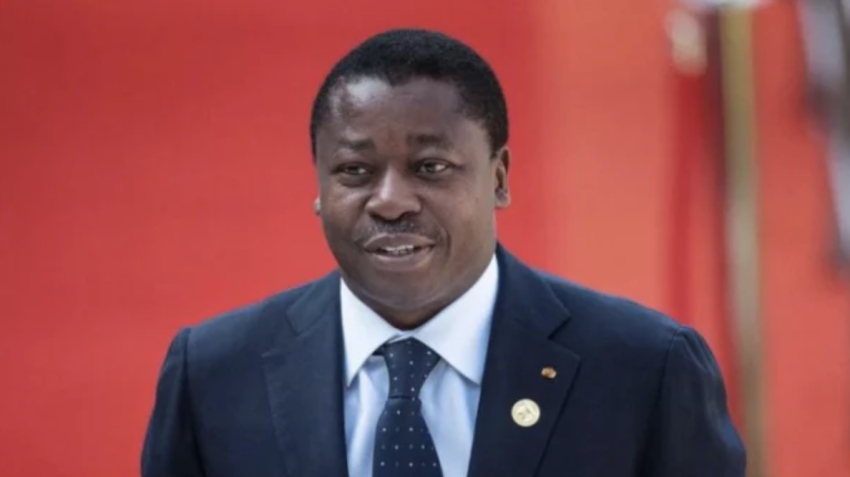


Sacré-Coeur 3 – BP 15177 CP 10700 Dakar Fann – SENEGAL.
+221 33 827 34 91 / +221 77 637 73 15
contact@timbuktu-institute.org

Timbuktu Institute September 2026, Week 2
In a political landscape still marked by the aftereffects of the transition and then by Idriss Mahamat Déby Itno's consolidation of power at the head of the country, the presidential pardon granted last August to former Prime Minister Succès Masra, after a year in detention,took on the appearance of a gesture of appeasement. Upon his release, Succès Masra had also declared himself “collectively available” to take part in a new political dynamic and renewed his proposal for a unity government based on a “double parity,” between Christians and Muslims as well as between men and women. For now, the authorities have not followed up on this call for openness. The head of state renewed his confidence in Prime Minister Allamaye Halina and his government, while the executive had already ruled out the idea of a national unity government. Above all, a pardon is not the same as an amnesty. Indeed, it does not erase Masra's conviction and could continue to restrict his civic rights as well as his ability to officially resume leadership of the Transformers. Hence the calls from his lawyers and several political figures for an amnesty law. The opposition figure's release thus constitutes a sign of appeasement, though its political significance remains uncertain.
Controlled Openness
But beyond Succès Masra's case, it is the authorities' capacity to durably widen the political space that remains in question. The opposition continues to denounce the restrictions stemming from the ordinances adopted in 2023, which notably complicated the organization of rallies. The Standing Framework for Political Dialogue, set up last February and presented as a forum for consultation between the majority and the opposition, does not appear to have dispelled these reservations either. Succès Masra's party, Les Transformateurs, and several formations from the former GCAP opposition coalition (Group for Consultation of Political Actors) are not part of it; its critics denounce excessive executive “control” over the body. The call made in early September by opposition figure Albert Pahimi Padacké for the revocation of the loss of nationality imposed on activists Makaïla Nguebla and Charfadine Galmaye Saleh could, if favorably received, extend the momentum of appeasement. That said, gestures of openness remain limited for now and are not enough to convince the opposition of a genuine change of course.
This fragility is all the more visible given that several disputes linked to political violence remain unresolved. Two and a half years after the death of the late opposition figure Yaya Dillo, killed on February 28, 2024 during the army's assault on the headquarters of the Socialist Party Without Borders in N'Djamena, his brother Ousmane Dillo continues to demand an independent investigation. In early September, at a press conference held at the French National Assembly, Ousmane Dillo announced that the family hadtaken legal action both domestically and internationally. Through his lawyers, the family notably referred the matter to the Paris public prosecutor's office and brought the case before the relevant United Nations bodies. The deceased's family is therefore now considering referring the case to the International Criminal Court, with lawyer Pierre Masquart arguing that Yaya Dillo's death falls within a pattern of “systematic attacks against the opposition for political reasons.” Any such move would need to occur before the end of July 2027, the deadline by which Chad is reportedly planning to withdraw from the International Criminal Court (ICC). This case thus serves as a reminder that the violence of the transition period continues to weigh on the credibility of the political process launched by N'Djamena.
Consolidating Through the Economy
At the same time, domestically, N'Djamena is seeking to consolidate its economic and industrial capacities, notably through regional partnerships. The mission carried out on September 9 by the director-general of the Senegalese Standardization Association, El Hadji Abdourahmane Ndione, thus opened upa new avenue for cooperation with Chadian authorities around product quality and food security. Received by the Minister of Commerce and Industry, Dr. Guibolo Fanga Mathieu, on the occasion of a seminar devoted to the ISO 22000:2018 standard, the Senegalese official discussed strengthening production standards and developing “Made in Chad.” A closer relationship between the ASN and the Chadian standardization agency is also being considered in order to facilitate the sharing of expertise and improve Chadian products' access to regional and international markets. This initiative is part of the ambitions of the “Chad Connection 2030” plan and reflects a desire to diversify the country's levers of consolidation, beyond the purely security-focused register.
At bottom, the challenge for N'Djamena now seems to lie less in the day-to-day management of tensions than in its capacity to reform the underpinnings of its governance. The consolidation of power cannot durably and solely rest on the balance of political forces or on security and economic levers alone. It will also depend on the State's capacity to build institutions credible enough to absorb dissent and give substance to its promises of transformation.
Timbuktu Institute Semaine 2 - Septembre 2026
Depuis la réélection de Paul Biya l’an dernier, l’opposition camerounaise connaît une relative traversée du désert. Contrôlée voire parfois empêchée, elle cherche depuis, tant bien que mal, à se ménager des marges de manœuvres. C’est dans ce contexte que la rentrée politique camerounaise s’est ouverte sur une séquence quelque peu surprenante. La démission, le 8 septembre, de l’opposant Maurice Kamto de la présidence du Mouvement pour la renaissance du Cameroun (MRC), accompagnée de celle de son premier vice-président Mamadou Mota, intervient alors que le principal parti d’opposition prépare son retour dans le jeu électoral, après avoir boycotté les élections locales de 2020. Dans une lettre laconique, Kamto invoque « l’intérêt supérieur » de son parti, de ses militants et du « Peuple du Changement », sans préciser davantage les raisons de son retrait. Mota s’est montré plus explicite, dénonçant le « harcèlement constant de l’administration camerounaise » et expliquant vouloir se mettre en retrait pour éviter de fournir au pouvoir un « sujet de focalisation » susceptible d’entraver les activités du MRC. Mais à l’ombre de cette double démission se profile une équation politique complexe : préserver les chances électorales du parti tout en desserrant la pression administrative et judiciaire qui s’exerce sur ses principales figures.
L’opposition joue des coudes
La décision de Maurice Kamto intervient après plusieurs mois de contestation autour de son retour à la tête du MRC. Consacrée par une convention en décembre 2025, cette réinstallation avait fait l’objet de deux recours introduits par d’anciens militants du parti. Surtout, le 19 août dernier, le ministre de l’Administration territoriale Paul Atanga Nji, avait indiqué au secrétaire général du MRC qu’il n’avait pas jugé opportun de « prendre acte » de cette convention, alimentant les interrogations sur la reconnaissance du leadership de Kamto et par ricochet, sur la participation du parti aux prochaines échéances. Des responsables du camp présidentiel avaient même présenté publiquement le départ de l’ancien candidat à la présidentielle comme une condition à la participation du MRC aux scrutins à venir. Dans ces conditions, le retrait de Kamto peut apparaître comme un choix tactique. Les législatives et municipales prévues début 2027 constituent en effet un enjeu majeur pour une formation qui pourrait devenir le principal adversaire du parti au pouvoir le RDPC, après le retrait annoncé d’Issa Tchiroma Bakary. Cela étant, il convient de préciser que Kamto et Mota ne quittent pas le MRC. En attendant une nouvelle convention extraordinaire, convoquée le 10 octobre à Yaoundé, la deuxième vice-présidente Balbine Tiriane Noah assure la direction du parti. Cette solution permet de maintenir la machine électorale en mouvement, mais elle ne règle pas la question du leadership. Dans les rangs du MRC, certains présentent le départ des deux hommes comme un sacrifice consenti pour sauver les intérêts de la formation. D’autres y voient une séquence inédite qui pourrait contraindre l’opposition à repenser ses équilibres. Le pari est donc clair : retirer du premier plan les deux personnalités autour desquelles se concentrent les tensions avec l’administration, sans renoncer à la bataille électorale.
La crédibilité de l’État à l’épreuve
Cette séquence politique intervient alors que Yaoundé cherche parallèlement à reprendre le contrôle de ses équilibres financiers. Depuis août, le ministère des Finances conduit un audit de la « dette flottante » accumulée entre 2020 et 2025 par les administrations, entreprises publiques, universités et collectivités. Les créances concernées vont des rappels et primes dus aux fonctionnaires aux factures de fournisseurs et prestataires, en passant par des dettes académiques, sociales ou locatives. Les dossiers doivent être transmis à la Direction générale du budget avant le 31 octobre. L’exercice fait écho à un précédent audit réalisé en 2020 sur la période 2000-2019, qui avait établi un stock de 752,1 milliards de francs CFA, dont près des deux tiers ont depuis été apurés. Il avait toutefois également révélé l’existence de milliers de créances entachées de doublons ou de falsifications. Par ailleurs, ce nouvel audit vise aussi à établir avec davantage de précision l’étendue des engagements de l’État et à renforcer la crédibilité de leur gestion, alors que Yaoundé négocie un nouveau programme avec le FMI.
Parallèlement, c’est sur ce même terrain de la crédibilité institutionnelle que vient se greffer une autre affaire, autrement plus troublante du cambriolage du Tribunal criminel spécial (TCS) à Yaoundé, survenue dans la nuit du 29 au 30 août. Les cambrioleurs auraient emporté un ordinateur et une somme d’argent relativement modeste. Mais l’intrusion prend une tout autre dimension depuis que le greffier en chef Joel Tsik, en poste depuis la création du TCS il y a quatorze ans et arrivé à l’âge de la retraite en juin, demeure injoignable après avoir invoqué des problèmes de santé. Lui seul détiendrait la clé du coffre où sont conservés les scellés, les pièces à conviction, des objets de valeur, des documents sensibles et des espèces provenant notamment de procédures de plaider-coupable. Selon Jeune Afrique, plusieurs milliards de francs CFA pourraient se trouver dans ce coffre, issus notamment de procédures impliquant d’anciens responsables condamnés pour détournement de fonds publics. Rien ne permet à ce stade d’établir qu’une telle somme a disparu. Mais l’impossibilité de vérifier le contenu du coffre semble déjà nourrir l’hypothèse d’un vol plus important que celui constaté lors du cambriolage. La hiérarchie du tribunal a finalement saisi le ministre de la Justice, Laurent Esso, afin de lui faire part de ses soupçons. Si les faits étaient confirmés, l’affaire aurait une portée symbolique particulièrement lourde pour une juridiction créée précisément pour lutter contre les détournements de fonds publics.
Dans un certaine mesure, un certain paradoxe camerounais pourrait résider en ceci : à mesure que le pouvoir verrouille les espaces de contestation, il est aussi confronté à des signes de fragilité dans les institutions chargées d’incarner son autorité. L’opposition peut être contenue, mais elle ne disparaît pas ; les mécanismes administratifs peuvent être mobilisés pour encadrer le jeu politique, sans pour autant dissiper les soupçons qui entourent désormais le fonctionnement de l’État. À quelques mois des législatives et municipales de 2027, ces poches de tension ne peuvent qu’être de nature à interpeller. Car si le régime parvient encore à imposer les termes du jeu, il lui faudra désormais convaincre que les règles qu’il fixe restent suffisamment crédibles pour être acceptées.
Timbuktu Institute September 2026, Week 2
Since Paul Biya's re-election last year, the Cameroonian opposition has been going through something of a wilderness period. Controlled, and at times even obstructed, it has since been trying, one way or another, to carve out room to maneuver. It is against this backdrop that the Cameroonian political rentrée opened with a somewhat surprising sequence of events.The resignation, on September 8, of opposition figure Maurice Kamto from the presidency of the Cameroon Renaissance Movement (MRC), along with that of his first vice-president Mamadou Mota, comes as the main opposition party prepares its return to the electoral arena, having boycotted the 2020 local elections. In a terse letter, Kamto invoked the “higher interest” of his party, its members and the “People of Change,” without further specifying the reasons for his withdrawal. Mota was more explicit, denouncing “constant harassment by the Cameroonian administration” and explaining that he wanted to step back to avoid giving the authorities a “focal point” that could hamper the MRC's activities. But behind this double resignation lies a complex political equation: preserving the party's electoral chances while easing the administrative and judicial pressure on its leading figures.
The Opposition Jostles for Position
The decision by Maurice Kamto comes after several months of controversy surrounding his return to the leadership of the MRC. Formalized by a convention in December 2025, this reinstatement had been challenged by two appeals filed by former party members. More importantly, on August 19, the Minister of Territorial Administration, Paul Atanga Nji, informed the MRC Secretary-General that he had not deemed it appropriate to “take note” of the convention, raising questions about the recognition of Kamto’s leadership and, by extension, the party’s participation in upcoming elections. Officials from the presidential camp had even publicly presented the departure of the former presidential candidate as a condition for the MRC’s participation in future elections. Under these circumstances, Kamto’s withdrawal may appear to be a tactical choice. The legislative and municipal elections scheduled for early 2027 are indeed a major issue for a party that could become the ruling RDPC’s main opponent, following the announced withdrawal of Issa Tchiroma Bakary. That said, it should be clarified that Kamto and Mota are not leaving the MRC. Pending a new extraordinary convention, convened for October 10 in Yaoundé, Second Vice-President Balbine Tiriane Noah is taking over the party’s leadership. This solution keeps the electoral machinery moving, but it does not resolve the question of leadership. Within the MRC, some portray the departure of the two men as a sacrifice made to safeguard the party’s interests. Others see it as an unprecedented development that could force the opposition to rethink its internal balance. The strategy is therefore clear: remove the two figures at the center of tensions with the administration from the forefront, without abandoning the electoral battle.
The Credibility of the State Under Scrutiny
This political sequence comes as Yaoundé is simultaneously seeking to regain control of its financial situation. Since August, the Ministry of Finance has been conducting an audit of the “floating debt” accumulated between 2020 and 2025 by public administrations, state-owned enterprises, universities and local authorities. The claims concerned range from salary arrears and bonuses owed to civil servants to invoices from suppliers and service providers, as well as academic, social and rental debts. The files must be submitted to the Directorate-General of the Budget by October 31. The exercise echoes a previous audit conducted in 2020 covering the period from 2000 to 2019, which identified a stock of 752.1 billion CFA francs, nearly two-thirds of which have since been cleared. It also revealed, however, the existence of thousands of claims tainted by duplicate entries or falsifications. Furthermore, this new audit aims to establish a more precise picture of the State’s outstanding commitments and strengthen confidence in their management, as Yaoundé negotiates a new program with the IMF.
At the same time, another case—far more troubling—has emerged on this same issue of institutional credibility: the burglary of the Special Criminal Court (TCS) in Yaoundé, which occurred during the night of August 29–30. The burglars reportedly took a computer and a relatively modest sum of money. But the break-in has taken on an entirely different dimension since the chief registrar, Joel Tsik, who had been in office since the TCS was created fourteen years ago and reached retirement age in June, has remained unreachable after citing health problems. He alone reportedly held the key to the safe containing seized items, evidence, valuables, sensitive documents and cash, including money from plea-bargaining proceedings. According to Jeune Afrique, several billion CFA francs could be stored in this safe , including funds linked to proceedings involving former officials convicted of embezzling public funds. At this stage, there is no evidence establishing that such an amount has disappeared. But the inability to verify the contents of the safe already appears to be fueling speculation that the theft may have been far greater than what was observed during the burglary. The court’s leadership eventually referred the matter to the Minister of Justice, Laurent Esso, to report its suspicions. If the allegations were confirmed, the case would carry particularly serious symbolic implications for a court created precisely to combat the embezzlement of public funds.
To some extent, a certain Cameroonian paradox may lie in the following: as the authorities tighten their grip on spaces for dissent, they are also confronted with signs of fragility within the institutions meant to embody their authority. The opposition can be contained, but it does not disappear; administrative mechanisms can be used to regulate the political arena without necessarily dispelling the suspicions now surrounding the functioning of the State. Just months before the 2027 legislative and municipal elections, these pockets of tension are bound to raise questions. For while the regime may still be able to dictate the terms of the game, it will now have to convince people that the rules it sets remain credible enough to be accepted.
Timbuktu Institute Semaine 2 - Septembre 2026
Il semble bien qu’à mesure que la présidentielle - prévue en janvier 2027 – approche, la compétition politique au Nigéria prend une tournure particulièrement âpre. En attendant, l’heure est à la campagne et donc aux tractations et au remue-ménage. Alors que les principaux candidats commencent à affûter leurs stratégies, la campagne se joue autant sur le terrain national que dans l’espace médiatique et diplomatique international. L’entrée en campagne de l’opposant Atiku Abubakar, désormais candidat de l’African Democratic Congress (ADC), illustre cette internationalisation de la compétition électorale. L’ancien vice-président aurait engagé pour près de 1,5 million d’euros le cabinet américano-nigérian Von Batten-Montague-York afin de travailler son image auprès des responsables politiques américains et de remettre en lumière certains éléments controversés du passé du président Bola Tinubu aux États-Unis, notamment une saisie judiciaire opérée en 1993 sur des comptes lui appartenant. La démarche répond à une stratégie déjà employée par le pouvoir. En janvier, Tinubu avait lui-même recours à un cabinet de lobbying pour défendre sa politique auprès du Congrès américain, alors que Donald Trump mettait notamment en cause son action face aux violences visant, selon ses dires, les chrétiens au Nigeria.
L’affaire a cependant pris une tournure plus sensible lorsque le cabinet mandaté par Atiku a affirmé avoir été approché par un proche du président, qui lui aurait proposé 3 millions de dollars pour mettre un terme à sa campagne de lobbying. Une affirmation qui reste à établir, mais qui donne une autre dimension à l’affrontement entre les deux camps. Dans l’entourage présidentiel, l’initiative d’Atiku est présentée comme une tentative d’obtenir une « validation étrangère », tandis que l’opposition cherche manifestement à exploiter, auprès des décideurs américains, les zones de vulnérabilité du bilan et du passé de Tinubu.
Une campagne sous tension
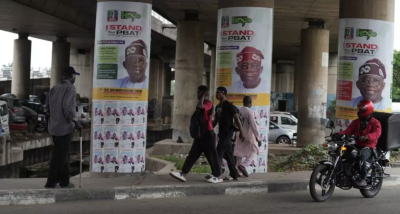
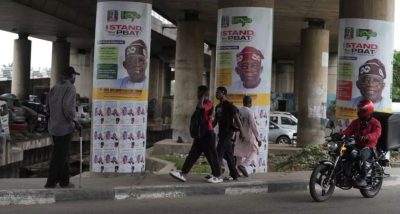
Sur le terrain, les premiers incidents donnent une autre mesure de la tension électorale. Le 8 septembre, Peter Obi, arrivé troisième lors de la présidentielle de 2023 et désormais candidat de l’opposition, a été empêché de se rendre dans un camp de déplacés à Yelwata, dans l’État de Benue. Des dizaines de jeunes avaient bloqué la route et menacé son convoi, contraignant la police à intervenir pour assurer la sécurité du candidat. Obi souhaitait rencontrer les victimes des violences récurrentes opposant agriculteurs et éleveurs dans cette région, notamment après l’attaque de juin 2025 qui avait fait plus de 200 morts à Yelwata et provoqué le déplacement d’environ 6 500 personnes. Son parti, le Nigeria Democratic Congress (NDC) a dénoncé une « obstruction honteuse » et mis en cause le gouverneur de Benue, Hyacinth Alia, membre de l’APC au pouvoir. Celui-ci a rejeté ces accusations, affirmant que le candidat aurait dû prévenir les autorités de sa venue afin qu’un dispositif de sécurité puisse être organisé. L’affaire n’en révèle pas moins la difficulté qui se profile pour la campagne : dans certaines régions déjà fragilisées par les violences communautaires, les déplacements des candidats ne manqueront pas de se muer en épisodes de confrontation politique. L’opposition a demandé l’ouverture d’une enquête et appelé les missions diplomatiques à prendre note de l’incident.
Cette crispation trouve un écho plus inquiétant encore à Kano, où Ibrahim Khalil Dan Shagamu, influenceur politique suivi par plusieurs centaines de milliers de personnes, a été retrouvé mort à son domicile. Ancien journaliste et critique régulier des autorités dans des vidéos en langue haoussa, il aurait été victime d’un meurtre particulièrement violent, tandis que deux de ses téléphones auraient disparu. Des menaces de mort auraient également précédé son décès. Le mobile reste cependant inconnu et aucune implication politique n’est établie à ce stade. Amnesty International a demandé une enquête complète. Dans un pays où les campagnes électorales ont régulièrement été accompagnées d’intimidations et de violences, cette affaire vient néanmoins rappeler la vulnérabilité des voix politiques et médiatiques à l’approche du scrutin.
Le front sécuritaire reste ouvert
La fébrilité politique en présence intervient dans un contexte sécuritaire pour le moins délétère, le pays demeurant confronté à une menace jihadiste persistante. Dans l’État de Borno, l’armée a récemment déjoué une embuscade attribuée à des éléments présumés de Boko Haram sur l’axe Buni Gari–Buratai, lors d’une patrouille de l’opération Hadin Kai. Les forces nigérianes ont contraint les assaillants à se retirer avant de découvrir et démanteler plusieurs camps improvisés. Des munitions, des grenades propulsées par roquette et différents moyens de déplacement ont notamment été récupérés. Aucun militaire n’a été blessé, même si plusieurs véhicules ont été endommagés. Un épisode qui rappelle que dans le sillage de la compétition électorale, la question sécuritaire reste une épine dans le pied des autorités nigérianes. Les opérations conduites dans le nord-est témoignent de la persistance des capacités de nuisance des groupes jihadistes et de la nécessité, pour Abuja, de maintenir une pression militaire constante sur leurs réseaux et leurs zones d’implantation.
Et c’est sans doute dans cette perspective que s’inscrit également le renforcement du partenariat militaire avec les États-Unis. L’US Air Force a annoncé le 10 septembre, la livraison de nouveaux équipements à l’Air Force nigériane dans le cadre d’un accord de vente militaire appelé à donner lieu à plusieurs autres livraisons. Selon l’AFRICOM, ces équipements doivent renforcer les capacités opérationnelles nigérianes et soutenir la lutte contre les groupes terroristes actifs dans la région. Washington insiste sur le fait que son soutien intervient à la demande d’Abuja et dans le respect de sa souveraineté. La coopération sécuritaire américano-nigériane apparaît ainsi appelée à se renforcer au moment même où les deux pays sont déjà engagés dans une bataille d’influence autour du récit politique nigérian.
Tout bien considéré, le Nigeria aborde l’année 2027 avec une vie politique qui sera de plus en plus difficile à dissocier des tensions sécuritaires qui traversent le pays. Par ailleurs, la campagne devrait offrir aux fractures en présence, une caisse de résonance supplémentaire. À Abuja comme dans les États, dans les urnes comme dans les médias et jusque dans les rapports avec Washington, la bataille pour le pouvoir se joue désormais sur plusieurs fronts à la fois. Reste à voir si cette pluralité de confrontations peut encore être contenue par le jeu électoral ou si, à mesure que le scrutin approchera, elle finira par en déplacer les limites.
Timbuktu Institute September 2026, Week 2
As the presidential election — scheduled for January 2027 — draws closer, political competition in Nigeria appears to be taking on a particularly bitter turn. In the meantime, it is campaign season, and therefore a time for maneuvering and jostling. As the leading candidates begin sharpening their strategies, the campaign is playing out as much on the domestic front as in the international media and diplomatic arena. The entry into the race of opposition figure Atiku Abubakar, now the African Democratic Congress (ADC) candidate, illustrates this internationalization of electoral competition. The former vice-presidentreportedly hired, for nearly €1.5 million, the American-Nigerian firm Von Batten-Montague-York to work on his image among American policymakers and to bring back into the spotlight certain controversial elements of President Bola Tinubu's past in the United States, notably a 1993 judicial seizure of accounts belonging to him. The move mirrors a strategy already employed by the ruling power. In January, Tinubu himself had turned to a lobbying firm to defend his policies before the US Congress, after Donald Trump had notably criticized his handling of violence which, in Trump's telling, targeted Christians in Nigeria.
The affair took on a more sensitive dimension, however, when the firm hired by Atiku claimed it had been approached by someone close to the president, who allegedly offered $3 million to have it drop its lobbying campaign. A claim that remains to be established, but one that adds another dimension to the standoff between the two camps. In presidential circles, Atiku's initiative is portrayed as an attempt to obtain “foreign validation,” while the opposition is clearly seeking to exploit, before American decision-makers, the vulnerable points in Tinubu's record and past.
A Campaign Under Tension
On the ground, the first incidents offer another gauge of electoral tension. On September 8, Peter Obi, who came third in the 2023 presidential election and is now an opposition candidate, was prevented from visiting a camp for displaced persons in Yelwata, in Benue State. Dozens of young people had blocked the road and threatened his convoy, forcing police to intervene to ensure the candidate's safety. Obi had wanted to meet with victims of the recurring violence between farmers and herders in the region, notably following the June 2025 attack that killed more than 200 people in Yelwata and displaced around 6,500 people. His party, the Nigeria Democratic Congress (NDC), denounced a “shameful obstruction” and pointed the finger at Benue State Governor Hyacinth Alia, a member of the ruling APC. Alia rejected the accusations, arguing that the candidate should have notified the authorities of his visit so that security arrangements could be made. The affair nonetheless reveals a looming difficulty for the campaign: in certain regions already destabilized by communal violence, candidates' visits are bound to turn into episodes of political confrontation. The opposition has called for an investigation and urged diplomatic missions to take note of the incident.
This tension found an even more troubling echo in Kano, where Ibrahim Khalil Dan Shagamu, a political influencer followed by several hundred thousand people,was found dead at his home. A former journalist and regular critic of the authorities in Hausa-language videos, he reportedly fell victim to a particularly violent murder, while two of his phones went missing. Death threats reportedly preceded his death. The motive, however, remains unknown, and no political involvement has been established at this stage. Amnesty International has called for a full investigation. In a country where election campaigns have regularly been accompanied by intimidation and violence, this affair nonetheless serves as a reminder of the vulnerability of political and media voices as the election approaches.
The Security Front Remains Open
The prevailing political tension comes against a security backdrop that is bleak, to say the least, with the country still facing a persistent jihadist threat. In Borno State, the army recentlyfoiled an ambush attributed to suspected Boko Haram elements on the Buni Gari-Buratai axis, during an Operation Hadin Kai patrol. Nigerian forces forced the attackers to retreat before discovering and dismantling several makeshift camps. Ammunition, rocket-propelled grenades and various means of transport were notably recovered. No soldiers were injured, although several vehicles were damaged. An episode that serves as a reminder that, alongside the electoral contest, security remains a thorn in the side of the Nigerian authorities. The operations conducted in the northeast attest to the continued nuisance capacity of jihadist groups and to Abuja's need to maintain constant military pressure on their networks and areas of operation.
It is presumably also with this in mind that military cooperation with the United States is being strengthened. The US Air Force announced on September 10 thedelivery of new equipment to the Nigerian Air Force as part of a military sales agreement expected to lead to several further deliveries. According to AFRICOM, this equipment is meant to strengthen Nigerian operational capabilities and support the fight against terrorist groups active in the region. Washington insists that its support comes at Abuja's request and in accordance with its sovereignty. US-Nigerian security cooperation thus appears set to deepen at the very moment when the two countries are already engaged in a battle of influence over the Nigerian political narrative.
All things considered, Nigeria is entering 2027 with a political life that will be increasingly difficult to separate from the security tensions running through the country. Moreover, the campaign is likely to provide an additional sounding board for existing fault lines. In Abuja as in the states, at the ballot box as in the media and even in relations with Washington, the battle for power is now being fought on several fronts at once. It remains to be seen whether this multiplicity of confrontations can still be contained by the electoral process, or whether, as the vote draws closer, it will end up shifting its boundaries.
Timbuktu Institute Semaine 2 - Septembre 2026
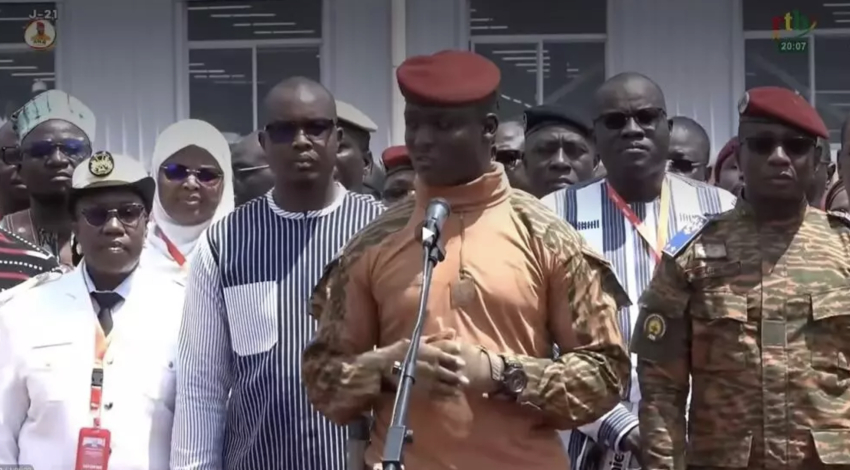
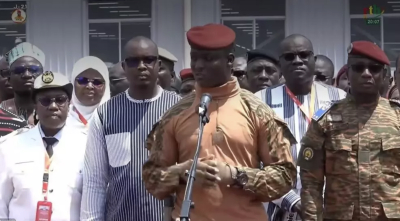
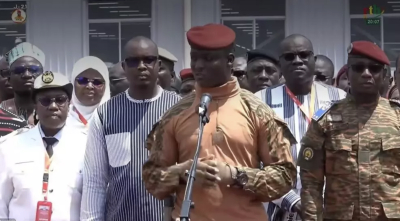
Cette semaine, l'actualité au Burkina Faso est marquée par la réaffirmation de la souveraineté, pas seulement militaire, mais aussi économique, industrielle et culturelle. C'est dans cette optique que le complexe industriel Texforces-BF a été inauguré en grande pompe à Bobo-Dioulasso le 9 septembre par le capitaine Traoré. Estimé à 17 milliards de FCFA, ce projet ambitieux vise à produire des tenues pour les militaires, les supplétifs volontaires pour la patrie et les civils. Les autorités ambitionnent ainsi de fabriquer localement ces vêtements, de relancer l’industrie textile et de poursuivre leur longue marche vers la souveraineté tant chantée. Selon le ministre de l’Industrie et du Commerce, Serge Poda, “ nous ne pouvons pas continuer à produire la matière première, exporter les emplois qu'elle peut créer et importer ensuite les produits issus de notre propre richesse”.
Burkina Faso : de la souveraineté militaire à la souveraineté industrielle, le pari Texforces-BF
Avec son dispositif, Texforces-BF change cette équation : notre coton pourra être davantage transformé sur notre sol, par nos compétences, pour répondre notamment à nos besoins nationaux. » Le Burkina Faso demeure un grand pays producteur de coton, mais la transformation reste un défi à relever. Cette initiative est de nature à réduire les importations, à créer des emplois pour les jeunes dans ce domaine et à impulser une véritable dynamique de transformation industrielle. Pour le chef de l’État, « quand on parle de souveraineté, ce ne sont pas que des mots. Pendant longtemps, même dans la sous-région, nous exportions nos matières brutes. Nous avons décidé, à travers ce complexe, d'affirmer notre souveraineté dans le secteur textile. » L’État est donc résolument engagé à reprendre la main sur ce secteur porteur.
De Sankara à Traoré : la jeunesse comme moteur du projet de souveraineté et de transformation du Burkina Faso
Toujours dans cette même dynamique, IB s’est encore illustré par les déclarations tonitruantes auxquelles il a habitué l’opinion publique. Cette fois-ci, il s’est plus appesanti sur la jeunesse et sa responsabilité historique face aux défis actuels. « (...) on vous conseille d'attendre tout de Dieu dans les mosquées, dans les églises et dans les temples. Dieu ne viendra pas vous donner ce que vous voulez. S’il vous a créé avec un cerveau et des membres, c’est pour vous en servir, pour être utile à vous-mêmes, à votre famille, à votre communauté ». Il a profité de l’occasion pour les exhorter à s’orienter davantage vers les secteurs moteurs de l’industrialisation. Dans ces messages, la référence à Thomas Sankara se fait toujours sentir.
Souveraineté sous tension : la persistance de l’insécurité face aux ambitions de reconquête territoriale
Pendant ce temps, la crise sécuritaire reste une préoccupation centrale. Cette fois-ci, les informations obtenues sur le terrain font état de l'enlèvement d'un ressortissant espagnol vendredi dernier. Selon une source sécuritaire, cet enlèvement serait lié à une attaque terroriste. Selon plusieurs sources, les forces de sécurité sont à pied d'œuvre pour élucider cette affaire. Pour rappel, des journalistes espagnols avaient subi le même sort par le passé lors d'une mission de reportage et avaient été retrouvés morts à l'est du pays au cours d'une attaque terroriste. Les enlèvements de ressortissants étrangers écornant l’image du pays peuvent avoir des conséquences néfastes sur le tourisme, les investissements, etc. Le Burkina Faso se trouve donc à la croisée des chemins, entre l’affirmation de sa souveraineté, la lutte contre les vulnérabilités sécuritaires et la reconquête de son territoire.
Timbuktu Institute September 2026, Week 2
This week, news in Burkina Faso is marked by the reaffirmation of sovereignty — not only military, but also economic, industrial and cultural. It is with this in mind that the Texforces-BF industrial complex was inaugurated with great fanfare in Bobo-Dioulasso on September 9 by Captain Traoré. Estimated at 17 billion CFA francs, this ambitious project aims to produce uniforms for the military, volunteer auxiliaries for the homeland and civilians. The authorities thus intend to manufacture these garments locally, revive the textile industry, and continue their long march toward the much-vaunted sovereignty. According to the Minister of Industry and Trade, Serge Poda, “we cannot keep producing the raw material, exporting the jobs it could create, and then importing products made from our own wealth.”
Burkina Faso: From Military Sovereignty to Industrial Sovereignty, the Texforces-BF Gamble
With this facility, Texforces-BF is changing this equation: our cotton can now be processed more extensively on our own soil, by our own skills, to meet our national needs in particular.” Burkina Faso remains a major cotton-producing country, but processing remains a challenge to overcome. This initiative is likely to reduce imports, create jobs for young people in the sector, and drive a genuine dynamic of industrial transformation. For the head of state, “when we talk about sovereignty, these are not just words. For a long time, even within the sub-region, we exported our raw materials. Through this complex, we have decided to assert our sovereignty in the textile sector.” The State is thus firmly committed to regaining control of this promising sector.
From Sankara to Traoré: Youth as the Driving Force Behind Burkina Faso's Project of Sovereignty and Transformation
Still in keeping with this same momentum, IB once again made headlines with the thunderous statements the public has come to expect from him. This time, he dwelt at greater length on youth and its historic responsibility in the face of today's challenges. “(...) we are told to expect everything from God, in mosques, churches and temples. God will not come and give you what you want. If He created you with a brain and limbs, it is so that you may use them, to be useful to yourselves, to your family, to your community.” He took the opportunity to urge them toturn more decisively toward the sectors driving industrialization. In these messages, the reference to Thomas Sankara is always palpable.
Sovereignty Under Strain: Persistent Insecurity Versus Ambitions of Territorial Reconquest
Meanwhile, the security crisis remains a central concern. This time, information obtained on the ground points to theabduction of a Spanish national last Friday. According to a security source, this abduction is believed to be linked to a terrorist attack. According to several sources, security forces are working hard to shed light on the case. As a reminder, Spanish journalists suffered the same fate in the past during a reporting mission and were found dead in the east of the country following a terrorist attack. Abductions of foreign nationals, which tarnish the country's image, can have adverse consequences for tourism, investment and more. Burkina Faso thus finds itself at a crossroads, caught between asserting its sovereignty, fighting its security vulnerabilities, and reconquering its territory.
Timbuktu Institute Semaine 2 - Septembre 2026
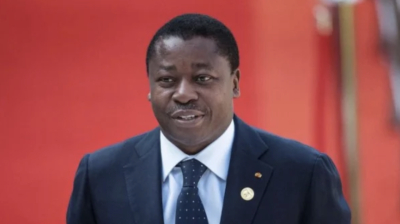
Au Togo, l’actualité de cette semaine est marquée par la position stratégique du pays dans la nouvelle géopolitique africaine. Venu participer au World Nuclear Symposium de Londres dont le thème était « From Ambition to Action », le président du Conseil a insisté sur la place centrale du financement, notamment le coût du capital, pour la construction des centrales. Selon Faure Gnassingbé, « L’Afrique n’a plus un problème d’ambition nucléaire. Elle a un problème de capital ». Il a mis l’accent sur le principal obstacle au développement du nucléaire sur le continent, car selon lui, « le nouveau nucléaire mondial ne se fera pas sans l’Afrique ».
Le nucléaire comme nouvel instrument de positionnement stratégique dans la géopolitique africaine
Le Togo lance ainsi un appel solennel à ses pairs pour qu'ils « renforcent les compétences », les « capacités réglementaires » et les « chaînes de valeur » afin que le continent puisse mieux se positionner sur ce marché. Il est à noter que le pays poursuit ses efforts pour devenir un hub stratégique dans ce domaine. Pour rappel, le prochain sommet du Nuclear Energy Innovation Summit for Africa (NEISA) se tiendra du 1er au 3 juin 2027 à Lomé. Ce sera l’occasion de créer un espace de coopération sur le nucléaire africain.
Entre souveraineté et libertés publiques, l’affaire des réalisateurs ravive les tensions avec Paris
Pendant ce temps, l’affaire des réalisateurs refait surface. Libérés provisoirement le 1er septembre, ces derniers ne sont pas encore tirés d’affaire, l’information judiciaire étant toujours en cours. L’un d’eux, Gaël Mocaër, s’est exprimé sur France 24 et a assuré que les « conditions de détention étaient tout à fait acceptables ». Il faut noter que cette affaire vient jeter de l’huile sur le feu entre l’axe Paris-Lomé. Déjà, en 2025, les médias français RFI et France 24 avaient été suspendus, alimentant le débat sur le rétrécissement de l’espace civique et des libertés de la presse au Togo. De son côté, le gouvernement insiste sur la souveraineté, mais aussi et surtout sur le respect des législations en vigueur.
Sacré-Coeur 3 – BP 15177 CP 10700 Dakar Fann – SENEGAL.
+221 33 827 34 91 / +221 77 637 73 15
contact@timbuktu-institute.org