 French
 Arabic
 English
 Portuguese
 Spanish
 Swahili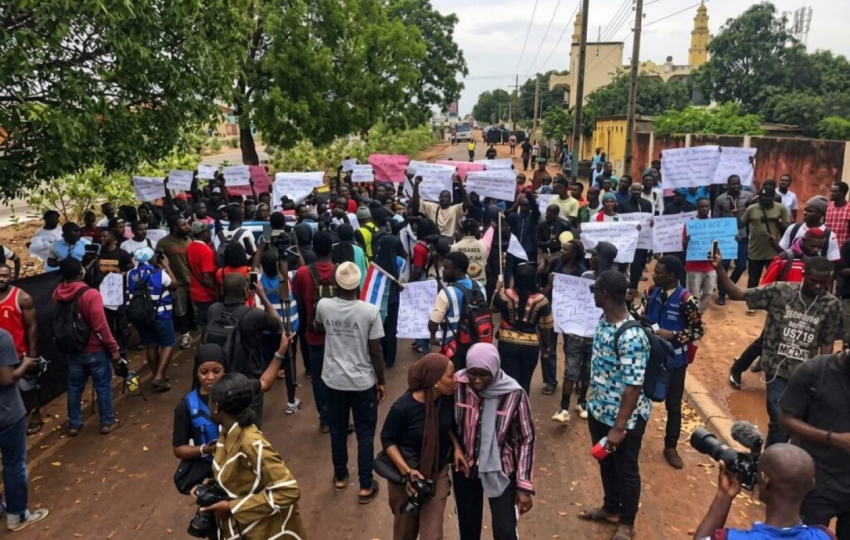




Sacré-Coeur 3 – BP 15177 CP 10700 Dakar Fann – SENEGAL.
+221 33 827 34 91 / +221 77 637 73 15
contact@timbuktu-institute.org

Timbuktu Institute - Semaine 3 Septembre 2026
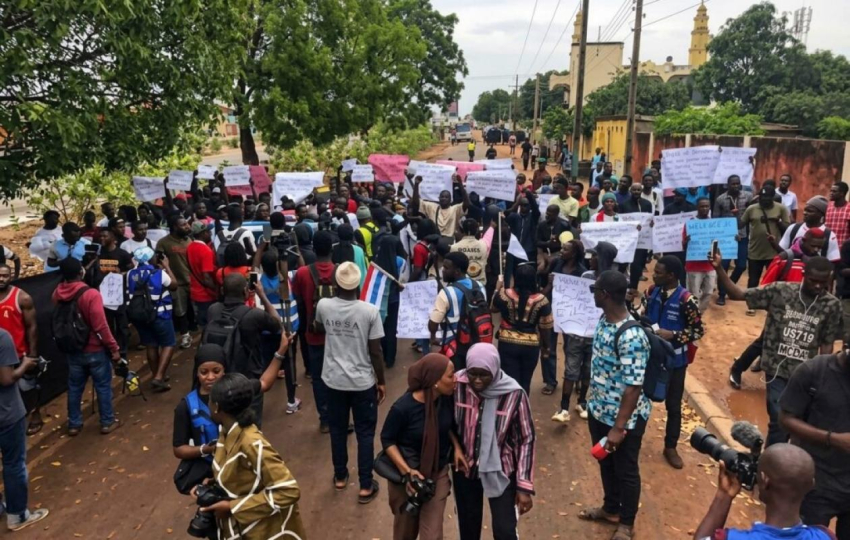
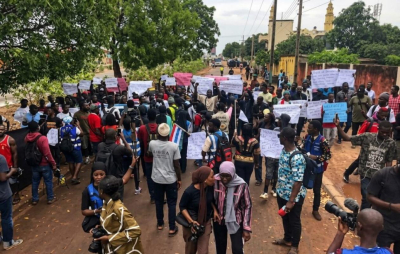
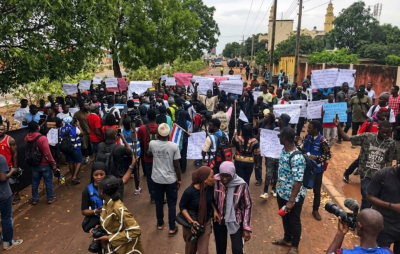
Depuis le mois de juin, la Gambie traverse une crise énergétique marquée par des coupures d’électricité récurrentes pouvant durer jusqu’à deux jours. En raison de leur impact sur l’activité économique et la vie quotidienne des Gambiens, des manifestations ont éclaté dans la nuit du 7 au 8 septembre et les jours suivants dans plusieurs villes du pays, dont la capitale Banjul. Des barricades ont été érigées dans les rues et un commissariat a même été incendié à Tujereng.
La crise énergétique cristallise les tensions politiques et sociales sous-jacentes
Mais la colère a rapidement pris une dimension politique, une partie des manifestants demandant le départ du président alors que sa candidature à un troisième mandat fait l’objet de contestations. Après près de dix années au pouvoir, Adama Barrow pourrait en effet se présenter une nouvelle fois aux élections de décembre, la limitation à deux mandats n’ayant finalement pas été intégrée à la Constitution. En réponse à ces manifestations, les autorités ont interdit les rassemblements sans autorisation préalable et procédé à l’arrestation de onze personnes présumées impliquées dans des dégradations.
Si la situation sécuritaire s’est stabilisée à la suite de ces mesures, les manifestations ont mis en lumière les fragilités du modèle énergétique gambien. Il y a 16 mois, la National Water and Electricity Company (NAWEC) n’avait pas renouvelé le contrat la liant à l'opérateur turc Karpowership. La question d’un éventuel retour du groupe a été relancée dans le débat public par l’Ambassadeur turc sortant le 10 septembre, avant d’être écartée dès le lendemain par le directeur de la NAWEC. De février 2018 à mai 2025, Karpowership fournissait environ 30 MW à la Gambie pour un coût cumulé dépassant 200 millions de dollars. La NAWEC avait alors privilégié des importations régionales moins coûteuses via l'Organisation pour la mise en valeur du fleuve Gambie (OMVG). Cette stratégie de substitution s’est cependant heurtée à la sécheresse qui a récemment frappé la Guinée et réduit la disponibilité de l'hydroélectricité transitant par l'OMVG.
Adama Barrow a promis une amélioration de l'approvisionnement d'ici la fin octobre en renforçant l’offre domestique. La crise pourrait toutefois traduire un malaise plus profond au sein de la société gambienne, dépassant la seule question énergétique. Selon Talib Ahmed Bensouda, maire de Kanifing et candidat à la présidentielle, la frustration des jeunes Gambiens tiendrait en effet plutôt à un manque plus large d'opportunités, alimentant la migration irrégulière vers l'Europe.
Washington renforce les moyens de la justice transitionnelle gambienne
L’ambassade des États-Unis en Gambie a indiqué financer un programme à hauteur de 930 000 dollars et destiné à renforcer les capacités de la justice gambienne dans le traitement des crimes commis sous le régime de Yahya Jammeh. Le programme s’appuiera sur les conclusions de la Commission vérité, réconciliation et réparations (TRRC) concernant les disparitions forcées et les exécutions extrajudiciaires commises entre 1994 et 2017.
Timbuktu Institute - Week 3 September 2026
Since June, The Gambia has been going through an energy crisis marked by recurrent power cuts lasting up to two days. Because of their impact on economic activity and Gambians’ daily lives, protests broke out on the night of 7 to 8 September and the following days in several towns across the country, including the capital Banjul. Barricades were erected in the streets and a police station was even set on fire in Tujereng.
The energy crisis crystallises underlying political and social tensions
But the anger quickly took on a political dimension, with some protesters demanding the president’s departurewhile his bid for a third term is being contested. After nearly ten years in power, Adama Barrow could indeed run again in the December elections, as a two-term limit was ultimately not included in the Constitution. In response to the protests, the authorities banned gatherings without prior authorisation and arrested eleven people allegedly involved in acts of vandalism.
While the security situation has stabilised following these measures, the protests have highlighted the weaknesses of the Gambian energy model. Sixteen months ago, the National Water and Electricity Company (NAWEC) did not renew its contract with the Turkish operator Karpowership. The question of a possible return of the group was revived in public debate by the outgoing Turkish ambassador on 10 September, before being ruled out the very next day by NAWEC’s director. From February 2018 to May 2025, Karpowership supplied around 30 MW to The Gambia at a cumulative cost exceeding 200 million dollars. NAWEC had then opted for cheaper regional imports via the Gambia River Basin Development Organisation (OMVG). However, this substitution strategy ran up against the drought that recently hit Guinea and reduced the availability of hydroelectricity transmitted through the OMVG.
Adama Barrow has promised an improvement in supply by the end of October by boosting domestic generation. The crisis may, however, reflect a deeper malaise within Gambian society, going beyond the energy issue alone. According to Talib Ahmed Bensouda, mayor of Kanifing and presidential candidate, the frustration of young Gambians stems rather from a broader lack of opportunities, fuelling irregular migration to Europe.
Washington strengthens the resources of Gambian transitional justice
The United States Embassy in The Gambia announced that it is funding a programme worth 930,000 dollarsaimed at strengthening the capacity of the Gambian judiciary to handle crimes committed under Yahya Jammeh’s regime. The programme will build on the findings of the Truth, Reconciliation and Reparations Commission (TRRC) on enforced disappearances and extrajudicial executions committed between 1994 and 2017.
Sacré-Coeur 3 – BP 15177 CP 10700 Dakar Fann – SENEGAL.
+221 33 827 34 91 / +221 77 637 73 15
contact@timbuktu-institute.org