 French
 Arabic
 English
 Portuguese
 Spanish
 Swahili


Sacré-Coeur 3 – BP 15177 CP 10700 Dakar Fann – SENEGAL.
+221 33 827 34 91 / +221 77 637 73 15
contact@timbuktu-institute.org

 © Michel Yaradouno
Timbuktu Institute – The Fragility Observatory – September 2026
With the Simandou project, Guinea holds a lever capable of profoundly transforming its economy. But the scale of this mineral windfall does not, by itself, guarantee improved living conditions or an easing of the fragilities running through the country. In this respect, the precedent set by the bauxite-rich region of Boké shows, on the contrary, that intensive resource extraction can fuel frustration when populations perceive a persistent gap between the wealth extracted from their territory and the benefits they derive from it. As Simandou enters its operational phase, the question is therefore less about the project’s economic potential than about its capacity to correct this paradox rather than reproduce its effects.
On 11 November 2025, Guinea inaugurated operations at the Simandou iron ore deposit, presented as the largest untapped mining project in the world, as recalled by the Fragility Observatory report of the Timbuktu Institute, “Beyond Simandou: Guinea’s Many Faces of Fragility”, published in July 2026. With nearly twenty billion dollars in cumulative investment, the project is generating some of the highest growth prospects on the continent and feeding hopes of a structural transformation of the Guinean economy, driven in particular by the “Simandou 2040” strategy and the sovereign wealth fund set to support it. The promise is considerable: few West African countries have a comparable resource potential to finance, on such a scale, the education, infrastructure and essential services that a large share of the population still lacks today.
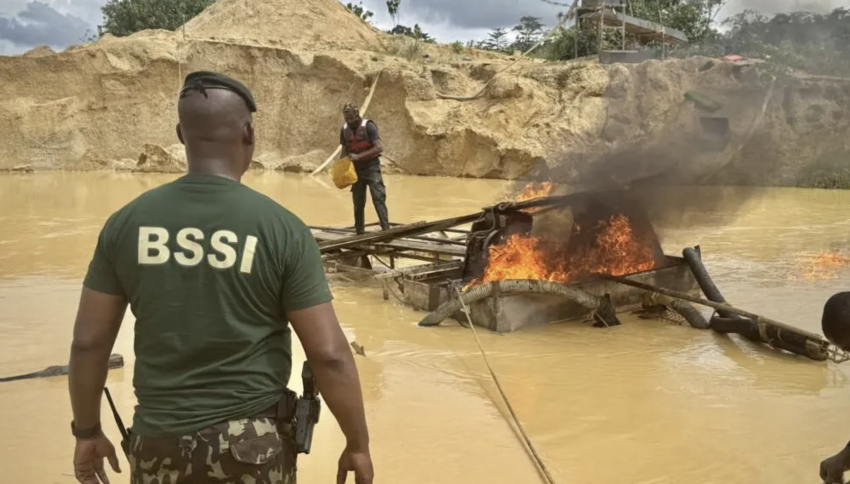
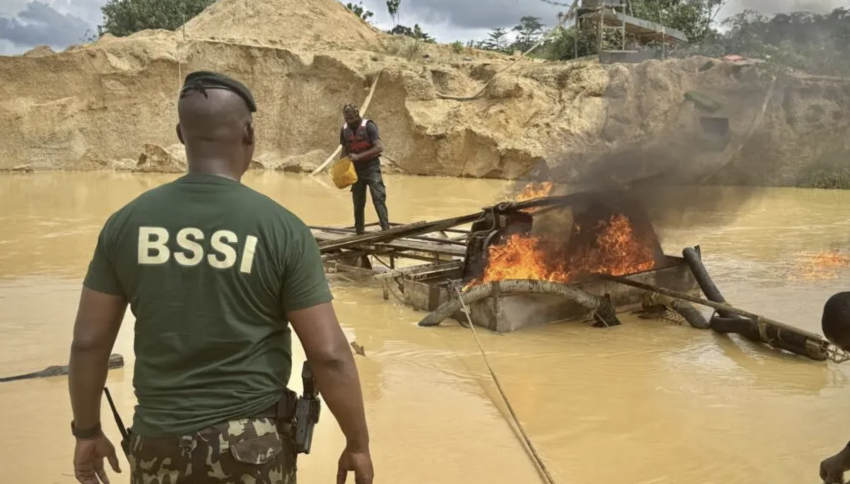
Yet this promise unfolds in a geography that is not without its stakes. The Simandou massif lies in the regions of Nzérékoré and Kankan, among the areas most exposed to ethnic and communal tensions in the country. And Guinea’s recent mining history offers, a few hundred kilometres away, a precedent that would be risky to overlook. For nearly a decade, the region of Boké, which alone holds two-thirds of Guinea’s bauxite reserves, has regularly been shaken by episodes of violent unrest, fuelled by a paradox that has become a rallying cry: “We are hungry even though our region holds two-thirds of Guinea’s bauxite surface area”. Deteriorating roads, a lack of drinking water and electricity, schools left to decay: the abundance of the extractive resource has not translated, for local populations, into any tangible improvement in their living conditions. Out of this contradiction was born a cumulative fragility — infrastructural, security-related and social — that continues, to this day, to shape episodes of tension in Boké.
It is this matrix that the present note examines, placing it within a broader reading of Guinea’s fragilities. Indeed, nothing at this stage guarantees that Simandou will escape the dynamic observed in Boké. If the benefits of the sovereign wealth fund and local royalties are not felt, concretely and swiftly, by the populations of Nzérékoré, Kankan and Siguiri, the same sense of abandonment in the face of wealth extracted but insufficiently shared could gradually take root there — with, ultimately, the same risk of a slide into violent unrest. Well managed, the exploitation of Simandou could significantly improve the socio-economic situation of Guineans; poorly managed, it could instead reproduce, on an altogether different scale, the mistakes for which Boké still bears the scars today. It is from this perspective that the case of Boké opens the analysis of the many faces of fragility running through contemporary Guinea.
Boké, a Laboratory of Fragility
The region of Boké embodies a fragility that is both structurally major and emblematic. This locality in Lower Guinea, a region that alone holds nearly two-thirds of Guinea’s bauxite reserves, nonetheless has residents confronted with the persistent deterioration of public services, marked by a glaring shortfall in roads, drinking water, electricity and educational infrastructure. This contrast between the abundance of extractive wealth and the deprivation of local populations has, for nearly a decade, formed the breeding ground for increasingly frequent outbursts of anger. Each incident, even when it appears isolated, thus reveals a deeper fragility, one whose roots are at once structural and cumulative.
Infrastructural fragility is particularly visible in the state of the roads along the Tamaranssy–Tamakènè axis, whose deterioration accelerates during the rainy season. Beyond the mere deterioration of facilities, what is called into question is the very capacity of public infrastructure to absorb the logistical pressure of the extractive industry that partly finances it. Even the promise of a modernised urban space ends up, within a few months, turning into a fresh source of discontent. Fragility, then, no longer stems solely from a lack of facilities: it also feeds on their visible and rapid deterioration, even after repairs have been carried out.
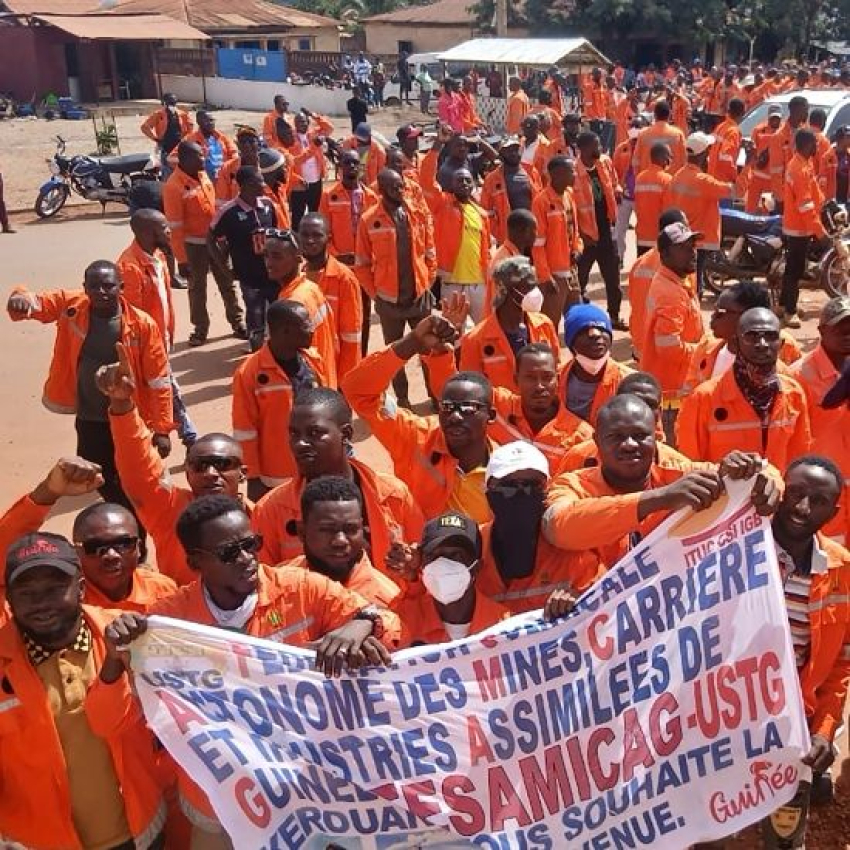
Added to this infrastructural dimension is a security-related fragility. In Boké, even the most localised incidents can quickly escalate into clashes, with gendarmerie posts attacked, motorbikes set on fire and barricades erected in several localities such as Kolaboui. In a particularly tense context, it took a joint operation by the public prosecutor’s office and the security forces, along with twenty-six arrests, to restore order. The intensity of the reaction cannot, however, be attributed to the triggering incident alone. It reflects, rather, a distrust already firmly entrenched towards a political authority deemed incapable of adequately protecting the population and of delivering justice effectively. This fragility is further compounded by the diminishing credibility of the local security and judicial apparatus, now less able to absorb the shock of a minor incident without it escalating into a direct confrontation with the State.
In this respect, it is precisely the interweaving of these fragilities — infrastructural and security-related — with a third, social dimension, that makes Boké a particularly revealing case. It shows, above all, just how fluid conflict dynamics remain, and how quickly they can change in nature. Behind the weak signals of latent social tension, certain episodes reveal an interlocking of factors that accelerates the shift towards violence directed at the State and its representatives. On 8 December 2025, a strike by public schools thus degenerated, with several private establishments in Boké (Groupe Excellence, ALDEX, KPC, PATMOS) targeted, resulting in injuries and significant material damage, in a movement their administrators considered unrelated to their own grievances. The sequence illustrates the weight of circumstance and the entanglement of factors. In Boké, social anger is therefore no longer directed solely at the State or the mining companies; it can also turn inward, between local social groups, exposing the cracks in a community fabric where collective violence finds substitute targets once a legitimate social movement slips beyond the control of those who initiated it.
The frequency of riots — notably those triggered by demands for the restoration of water and electricity, which left one person dead and around thirty injured — fits this same pattern. It crystallised, in particular, around a slogan that has since become well known: “We are hungry even though our region holds two-thirds of Guinea’s bauxite surface area”. Also documented in footage circulated online, this episode reveals a rather deep-seated perception: that of an almost mechanical link between the abundance of mineral resources, persistent gaps in basic services, and the slide into collective violence. Nearly a decade after these riots, this pattern of accelerating recourse to violence has lost none of its explanatory power regarding Guinea’s structural and cumulative fragilities. It continues to underlie every new episode of unrest observed in Boké. Amid the current wave of enthusiasm surrounding Simandou, the case of Boké is thus a reminder that preventing violence linked to such fragilities depends less on law enforcement alone than on real, visible and lasting investment in essential services, funded first and foremost by the proceeds of local mineral wealth.
Resilience Mechanisms Shaped by Local Context
Faced with this fragmentation, existing conflict-resolution mechanisms are, likewise, deeply shaped by local context. In rural areas, the authority of elders and religious leaders remains the first recourse. In Kankan, the customary tribunal headed by the Sotikémo continues to adjudicate most disputes, while formal justice remains socially discredited. “Here in Africa, we settle things within the family”, as one local community leader put it, the word “family” here extending beyond the immediate circle to encompass the community as a whole. In the major cities, populations turn more readily to formal justice. Yet this dual system does not preclude complementarity at the national level: in 2016 as in 2022, two religious leaders, one Muslim and the other Christian, jointly steered the national assizes.
On the State’s side, the mechanisms deployed likewise bear the mark of a response designed by territory rather than applied uniformly: an early-warning system installed in one hundred and sixty-eight communes with World Bank support, though marked by very low participation from women; a religious training programme designed to counter fundamentalism, which saw five hundred young imams sent to Morocco as early as 2014; ongoing revision of the curricula of Franco-Arabic schools; Friday sermons drafted centrally by the general secretariat for religious affairs to spread a message of tolerance. Conversely, the fight against trafficking and organised crime — the Medicrime unit, the general secretariat of special services, an anti-terrorism unit created in 2018 — remains designed at the national level, without any clearly identified community relay. A gap that constitutes a structural shortcoming.
Simandou, a Promise Under Strain
It emerges, then, that the case of Boké helps to gauge one of the principal challenges now accompanying the exploitation of Simandou: namely, turning mineral abundance into a lever for development without reproducing the imbalances that feed the fragility of these territories. In the exploitation of the Simandou iron ore deposit, whose investment brings together the Winning Consortium Simandou and Rio Tinto-Simfer-Chinalco consortia, the Guinean State holds 15% of the capital in each of the blocks, as well as in the company responsible for the rail and port infrastructure. More than six hundred and fifty kilometres of railway now link the deposits in the south-east of the country to the new port of Morebaya, while the first shipments to China began in January 2026. This surge in activity is fuelling particularly favourable growth prospects. The World Bank thus forecasts one of the highest rates of economic growth on the continent for Guinea, in the order of 7.5% in 2025, 9.3% in 2026 and more than 11% in 2027. The International Monetary Fund, for its part, estimates that Simandou alone could increase the country’s gross domestic product by 26% by 2030. A sovereign wealth fund backed by the project’s revenues, endowed with around one billion dollars, is also due to be launched in 2026 to finance education, agriculture and infrastructure under the “Simandou 2040” strategy.
This promise nonetheless carries its share of uncertainty and, above all, unfolds in a geography that is not neutral from the standpoint of fragility. The Simandou massif lies precisely in the regions of Nzérékoré and Kankan, considered among the areas most exposed to ethnic and communal conflict in the country. An accident that claimed the lives of three workers had, moreover, temporarily halted the site in October 2025, a reminder, beyond the purely economic stakes, of the project’s social dimension.
In the mining areas, there is a deep sense of abandonment among populations who see few local benefits from wealth extracted from their own subsoil. Nothing indicates, at this stage, that Simandou will escape this same dynamic if the benefits of the sovereign wealth fund and local royalties are not felt, concretely and swiftly, by the populations of Nzérékoré, Kankan and Siguiri. Despite political announcements regarding the local processing of minerals, notably gold, the Guinean economy’s growing dependence on mineral exports — bauxite, gold and now iron ore — also exposes it to the swings of global commodity cycles. The International Monetary Fund itself considers optimistic the assumption of a ramp-up in production as rapid as that announced by the authorities.
Conjuring the Spectre of Boké
At a time when Simandou is drawing the bulk of attention and hope for Guinea’s economic future, the case of Boké offers a simple lesson, though one still too rarely heeded: mineral abundance does not automatically translate into social stability. Ten years after its first riots, the bauxite region continues to demonstrate this. Once entrenched, fragility tends to feed on itself: the failure of repairs becomes, in turn, a grievance; distrust of institutions comes to replace the original cause of tensions; and collective violence, lacking an obvious target, can find substitutes even within the community fabric itself.
This pattern, however, extends beyond the case of Boké alone. It reflects, at the local level, a broader shortfall that this study highlights at the national level: that of resilience mechanisms which are both effective and fragmented — customary authorities in rural areas, formal justice in urban centres, an interfaith dialogue capable of steering national assizes — alongside State mechanisms that remain unevenly distributed. The early-warning system, active in part of the territory, thus coexists with efforts against trafficking and organised crime that are still designed without any clearly identified community relay. By locating itself precisely in the regions of Nzérékoré and Kankan, among the areas most exposed to ethnic and communal tensions in the country, Simandou is taking root in this gap between existing mechanisms and persistent fragilities.
That said, it should be stressed that nothing at this stage allows the outcome to be predetermined. Simandou has advantages that Boké did not enjoy at the same stage of its mining development: a dedicated sovereign wealth fund, a long-term strategy set out to the horizon of 2040, and an international visibility that subjects the project to greater demands for social outcomes. These advantages will not, however, bear fruit if they remain confined to the realm of macroeconomic announcements. The double-digit growth projected by the World Bank and the IMF will not be enough to durably reassure the populations of Nzérékoré, Kankan or Siguiri unless it translates, on a timeline comparable to that of extraction itself, into roads that hold up, a school that functions and a clinic that provides care.
Conjuring the spectre of Boké therefore requires activating three main levers. The first concerns timing: aligning the pace of social investment with that of extraction, already under way, rather than deferring tangible benefits to the 2040 horizon. The second concerns scale: the early-warning and community dialogue mechanisms already tested elsewhere in the country must be extended into Simandou’s areas of operation, fully involving women and young people, who remain largely absent from existing mechanisms. The third concerns doctrine: the logic of law enforcement — which showed its limits in Boké, where twenty-six arrests did no more than manage the crisis without addressing its causes — must give way to a logic of prevention grounded in the visibility and speed of local benefits. Only on these terms will Simandou be able to turn mineral abundance into a genuine lever for development and stability. Failing that, the project risks reproducing, on an entirely different scale, the paradox for which Boké still bears the scars. Only at this price will Simandou be able to keep the promise that Boké itself failed to fulfil.
Sacré-Coeur 3 – BP 15177 CP 10700 Dakar Fann – SENEGAL.
+221 33 827 34 91 / +221 77 637 73 15
contact@timbuktu-institute.org