 French
 Arabic
 English
 Portuguese
 Spanish
 Swahili



Sacré-Coeur 3 – BP 15177 CP 10700 Dakar Fann – SENEGAL.
+221 33 827 34 91 / +221 77 637 73 15
contact@timbuktu-institute.org


Timbuktu Institute October 2026 - Week 1
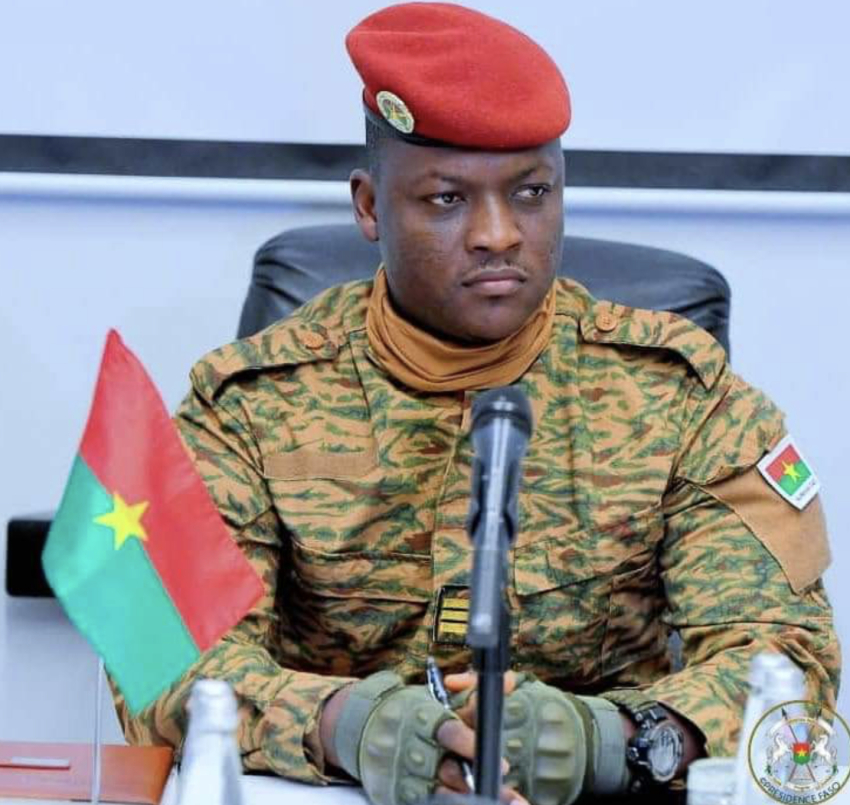
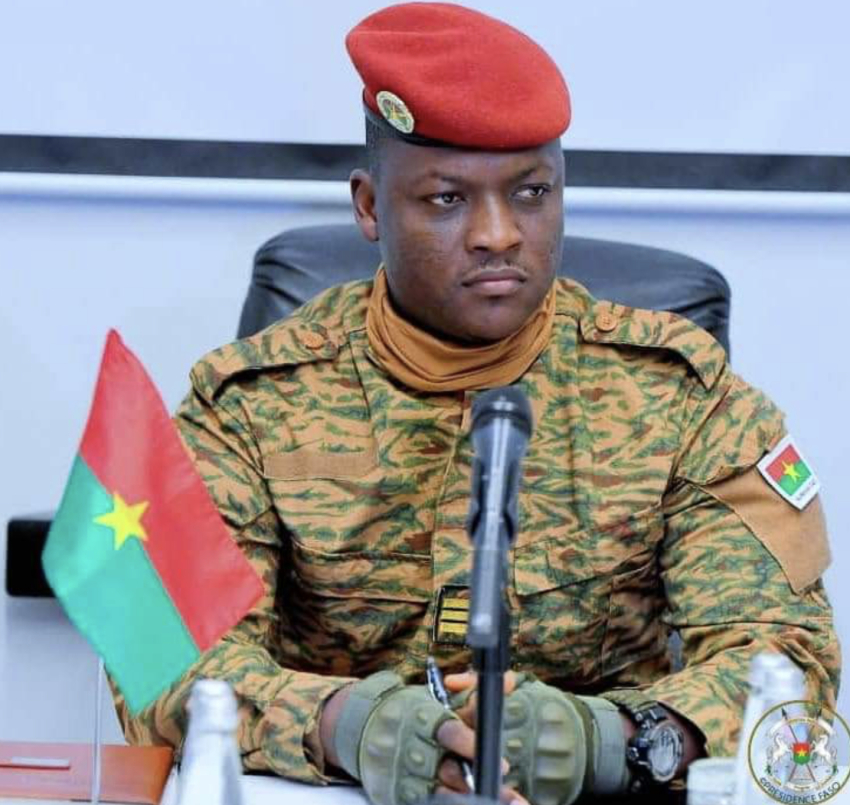
In Burkina Faso, the fourth anniversary of Captain Traoré’s rise to power was celebrated with great pomp by the nation. The “Night of the Popular Progressive Revolution” brought together thousands of residents on 30 September on the Place de la Résistance in Ouagadougou. Under the slogan “The people watch over the revolution”, the participants glorified the action of their leader, the man of 30 September 2022, throughout the festive evening. As a reminder, the current authorities took power in a particularly tense security context.
Between a claimed security record…
Over these years in power, they claim military successes, notably the recapture of a large part of the territory. For Prime Minister Rimtalba Jean Emmanuel Ouédraogo, “all these victories on the development front, in health, education, infrastructure, industry, food security, and so on – I am surely forgetting some. You can be proud of all these victories. Because if we have achieved all this, it is thanks to the commitment and the awakening of an entire people behind its visionary leader.” Nevertheless, civil society and international organisations point to restrictions on freedoms. In this regard, Burkinabe journalist Issouf Ouédraogo believes that this record “does not erase the current government’s difficulty in resolving crucial issues relating to the fight against corruption, freedom of expression and human rights violations”. For many observers, while major progress has indeed been made in terms of security and patriotic momentum, human rights must still be better guaranteed, particularly for politicians and journalists.
… and a civic space seen as shrinking
The record is therefore mixed. Civic space is shrinking ever further. In this regard, the Anti-Putschist Front has drawn up a list of 86 people “detained or abducted” since 2022. For them, “this is widespread repression. In practice, it is forbidden to have an opinion under this regime,” confirms one of the authors of the list, who wishes to remain anonymous. “Imagine that, for some, it was a simple comment on Facebook or WhatsApp that led to their abduction! The tragedy in this affair is that, as they have become widespread, these abductions and detentions have become commonplace…” The document entitled “Ibrahim Traoré’s disappeared” was published to shed light on, but also and above all to “denounce the authoritarianism of the junta in power in Ouagadougou and honour the memory of those who have been victims of its repression”. These accusations were brushed aside by the authorities, who continue to tout their economic and military successes.
Financial sovereignty in support of the war effort
Still in the context of the fight against terrorism, tangible results have been achieved on the ground. According to the Ministry of Economy, the Patriotic Support Fund mobilised more than 250 million CFA francs in just 9 months. The authorities published these encouraging figures for the period from 1 January to 29 September. It should be noted that this fund, created in 2023 to finance the fight against terrorism and the strengthening of national defence, is made up of, among other things, levies and taxes, levies on imported products, compulsory deductions from civil servants’ salaries, and levies on telephony and television, in order to ensure financial sovereignty. This is a Burkinabe strategy aimed at self-financing a large part of the country’s security. The supervising minister, Aboubakar Nacanabo, thanked the “valiant Burkinabe people” for all the efforts made. The fund mobilises citizens around the war in order to finance the army’s equipment and supplies.
The rise of a more specialised army in the face of the terrorist threat
Along the same lines, the authorities are stepping up the resources deployed in the fight against armed groups. On 30 September, 136 new specialist officers, trained in 29 different fields, joined the Burkinabe Armed Forces to strengthen their ranks. Graduates of the 16th class of the Georges-Namoano Military Academy, they will strengthen human and operational capacities against the insecurity that has affected the country for several years. The Chief of General Staff of the Armed Forces, Major General Moussa Diallo, who presided over the ceremony, congratulated the graduates and urged them to “remain committed to the values of honour, discipline and loyalty”. The Burkinabe authorities seem to understand that this war against terrorism requires specialists in every field: intelligence, cybersecurity, medicine, technology, and so on. Building an increasingly specialised army meets a security imperative.
Burkinabe gold: from extraction to processing, the new frontier of economic sovereignty
Mining sovereignty also made the news. The authorities are more determined than ever to ensure that gold returns to the people who own it. On 28 September, Captain Traoré announced a new stage in the nationalisation of the precious metal in Burkina Faso. At the inauguration of RAFFINOR-BF, the country’s first gold refinery, he declared that “from now on, Burkina Faso’s gold must not only be extracted in the country, it must also be processed, controlled, valorised and certified”. This is a notable step forward that requires not only political courage, but also enormous material, human and financial resources, as well as strategic partnerships. For the leader of the transition, gold must contribute to the country’s economic and social development by creating wealth and jobs. The authorities have understood that processing their resources elsewhere reduced their room for manoeuvre and slowed their progress towards sovereignty. Nationalisation also makes it possible to improve traceability and develop the country’s industrial skills. The initiative required an investment of CFA 11 billion, financed by the State through the National Company for Precious Substances of Burkina Faso (SONASP) and private partners. It already has a foundry, an analysis laboratory, a secure storage area and a jewellery unit. The remaining challenges are artisanal mining, which needs to be better regulated, as well as cross-border flows and the presence of armed groups in some mines.
Timbuktu Institute Octobre 2026 - Semaine 1
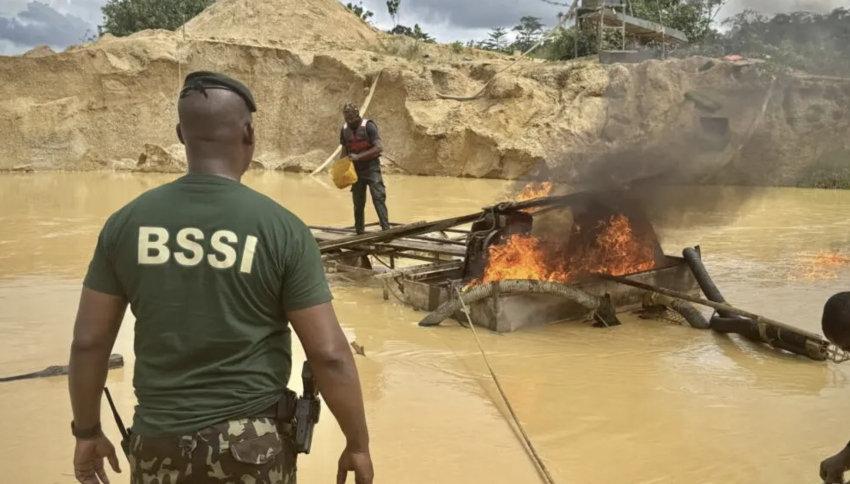
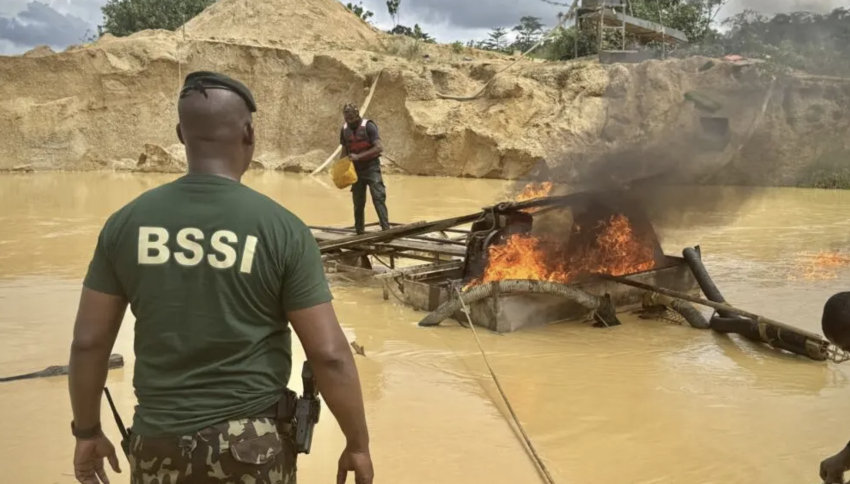
La question de l’orpaillage reste l’une des principales actualités du pays. Cette fois-ci, il est à noter un tournant décisif : le phénomène est désormais considéré comme une question de sécurité nationale. Il ne s'agit plus seulement d'une infraction économique, mais d'un enjeu sécuritaire national pour les autorités. Pour Fidèle Sarassoro, secrétaire exécutif du Conseil national de sécurité, la lutte contre l'orpaillage illégal est « une exigence de sécurité nationale ». Ainsi, les opérations de démantèlement des sites clandestins se poursuivent et l’État reste déterminé à les éradiquer dans un délai de six mois.
L’orpaillage illégal érigé en enjeu de sécurité nationale
Pour le ministre de la Défense, Téné Birahima Ouattara, « l'État de Côte d'Ivoire est déterminé à éradiquer l'orpaillage illégal sur toute l’étendue du territoire national. Face à l'ampleur de ce phénomène, l'État ivoirien adopte une posture de fermeté. Cela doit se faire dans le strict respect de la loi et des droits des populations ». Il en appelle ainsi à la responsabilité de tous face à ce fléau qui gangrène l’économie et l'environnement. Pour ce faire, les forces de sécurité ont été dotées de centaines de véhicules le 30 septembre afin de pouvoir « mener des opérations sur terre comme sur l’eau », « de jour comme de nuit ». À cela s’ajoutent le durcissement des sanctions, notamment par le biais de l’augmentation des amendes et des peines d’emprisonnement. Pour rappel, le Groupement spécial de lutte contre l’orpaillage illégal a été créé en 2021 dans le but d'éradiquer ce phénomène.
Côte d’Ivoire : complicité affichée avec Conakry, dégel prudent avec le Sahel
Sur le plan diplomatique, Alassane Ouattara a dépêché Robert Beugré Mambé à la fête nationale de la Guinée. Les autorités ont lancé un appel solennel aux ressortissants ivoiriens pour qu'ils réservent un accueil chaleureux à leur hôte. Dans une note publiée par l’ambassade de Côte d’Ivoire en Guinée, on peut lire : « L'ambassade invite tous les Ivoiriens de Conakry à se mobiliser pour réserver au Premier ministre un accueil chaleureux, le vendredi 2 octobre 2026, à partir de 7 h, à l’aéroport international Ahmed Sékou Touré de Conakry. » Les deux pays entretiennent en effet de bonnes relations diplomatiques depuis plusieurs décennies. Cette visite est de nature à renforcer ces liens historiques de coopération entre Abidjan et Conakry. À chaque occasion, le général Mamadi Doumbouya présente Ouattara comme son grand frère, ce qui témoigne de la solidité de leurs relations. Pour rappel, il y a quelques semaines, le président guinéen était chez son homologue ivoirien dans le cadre d'une visite de travail.
Dégel diplomatique à l’épreuve des divergences sécuritaires et politiques
En outre, les relations entre la Côte d’Ivoire et le Sahel ont été au cœur de l’actualité. Ces dernières années, les rapports n'étaient pas au beau fixe ; ils étaient marqués par un climat de suspicion et des accusations récurrentes d'infiltration de la part d'États comme le Burkina Faso contre la Côte d’Ivoire. Depuis quelque temps, un dégel semble toutefois se produire. Selon Jeune Afrique, leurs relations se sont récemment renforcées, notamment pour développer la coopération et les échanges. Cette « détente » entre la Côte d’Ivoire et l’AES traduit surtout un pragmatisme dicté par la nécessité de contenir les risques sécuritaires transfrontaliers, sans pour autant effacer les divergences politiques et stratégiques. Il faut souligner que ces pays sont collectivement fragilisés par l’insécurité grandissante. Ils gagneraient à collaborer pour mieux faire face à la menace terroriste. Ainsi, ce rapprochement est de nature à réduire les tensions à court terme, mais sa consolidation dépendra de la capacité des acteurs à instaurer des mécanismes de confiance, notamment en matière de sécurité des frontières, de coopération économique et de relations avec les organisations régionales.
Timbuktu Institute October 2026 - Week 1
Gold panning remains one of the main issues in the country’s news. This time, there has been a decisive shift: the phenomenon is now considered a matter of national security. For the authorities, it is no longer just an economic offence but a national security issue. For Fidèle Sarassoro, Executive Secretary of the National Security Council, the fight against illegal gold mining is “a national security requirement”. Operations to dismantle clandestine sites are therefore continuing, and the State remains determined to eradicate them within six months.
Illegal gold mining raised to a national security issue
For Defence Minister Téné Birahima Ouattara, “the State of Côte d’Ivoire is determined to eradicate illegal gold mining throughout the national territory. Given the scale of this phenomenon, the Ivorian State is adopting a firm stance. This must be done in strict compliance with the law and the rights of the population.” He thus called on everyone to take responsibility in the face of this scourge, which is eating away at the economy and the environment. To this end, the security forces were provided with hundreds of vehicles on 30 September so that they can “conduct operations on land and on water”, “by day and by night”. Added to this is the toughening of penalties, notably through higher fines and longer prison sentences. As a reminder, the Special Group to Combat Illegal Gold Mining was created in 2021 with the aim of eradicating this phenomenon.
Côte d’Ivoire: open closeness with Conakry, cautious thaw with the Sahel
On the diplomatic front, Alassane Ouattara sent Robert Beugré Mambé to Guinea’s national day celebrations. The authorities issued a solemn appeal to Ivorian nationals to give their guest a warm welcome. A note published by the Embassy of Côte d’Ivoire in Guinea reads: “The Embassy invites all Ivorians in Conakry to turn out to give the Prime Minister a warm welcome on Friday 2 October 2026, from 7 a.m., at Ahmed Sékou Touré International Airport in Conakry.” The two countries have indeed enjoyed good diplomatic relations for several decades. This visit is likely to strengthen these historic ties of cooperation between Abidjan and Conakry. At every opportunity, General Mamadi Doumbouya presents Ouattara as his big brother, which reflects the strength of their relationship. As a reminder, a few weeks ago the Guinean president was at his Ivorian counterpart’s side for a working visit.
A diplomatic thaw tested by security and political differences
In addition, relations between Côte d’Ivoire and the Sahel were in the spotlight. In recent years, relations were far from good; they were marked by a climate of suspicion and recurring accusations of infiltration made by States such as Burkina Faso against Côte d’Ivoire. For some time now, however, a thaw seems to be under way. According to Jeune Afrique, their relations have recently strengthened, notably to develop cooperation and exchanges. This “détente” between Côte d’Ivoire and the AES above all reflects a pragmatism dictated by the need to contain cross-border security risks, without erasing political and strategic differences. It should be stressed that these countries are collectively weakened by growing insecurity. They would benefit from working together to better confront the terrorist threat. This rapprochement is therefore likely to reduce tensions in the short term, but its consolidation will depend on the actors’ ability to establish confidence-building mechanisms, notably on border security, economic cooperation and relations with regional organisations.
Sacré-Coeur 3 – BP 15177 CP 10700 Dakar Fann – SENEGAL.
+221 33 827 34 91 / +221 77 637 73 15
contact@timbuktu-institute.org