 French
 Arabic
 English
 Portuguese
 Spanish
 Swahili

Sacré-Coeur 3 – BP 15177 CP 10700 Dakar Fann – SENEGAL.
+221 33 827 34 91 / +221 77 637 73 15
contact@timbuktu-institute.org

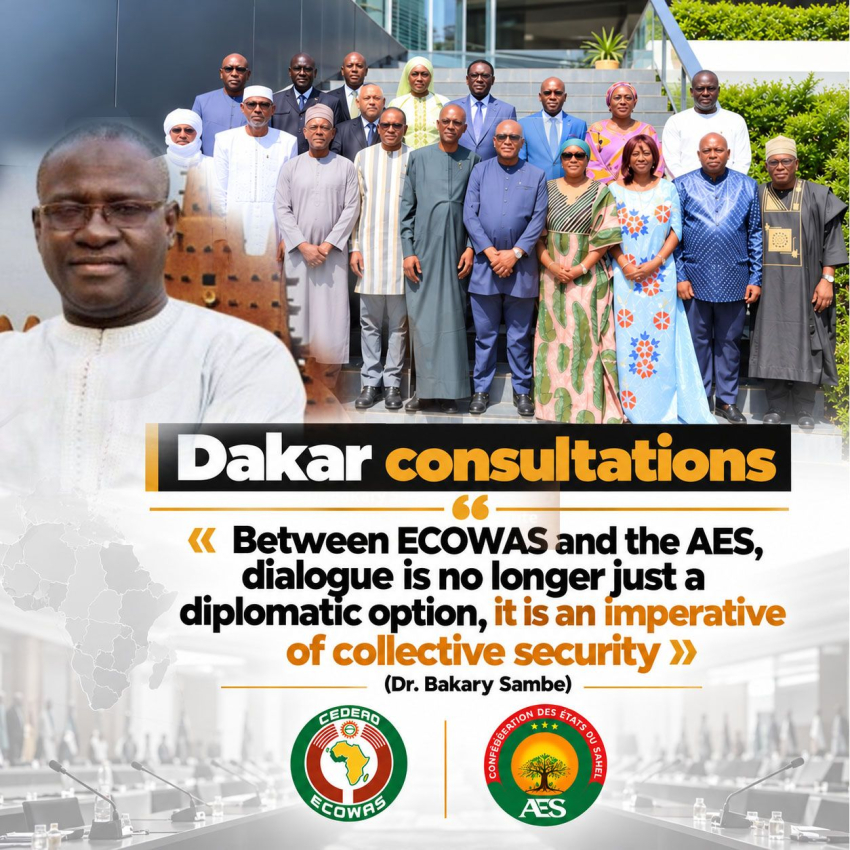
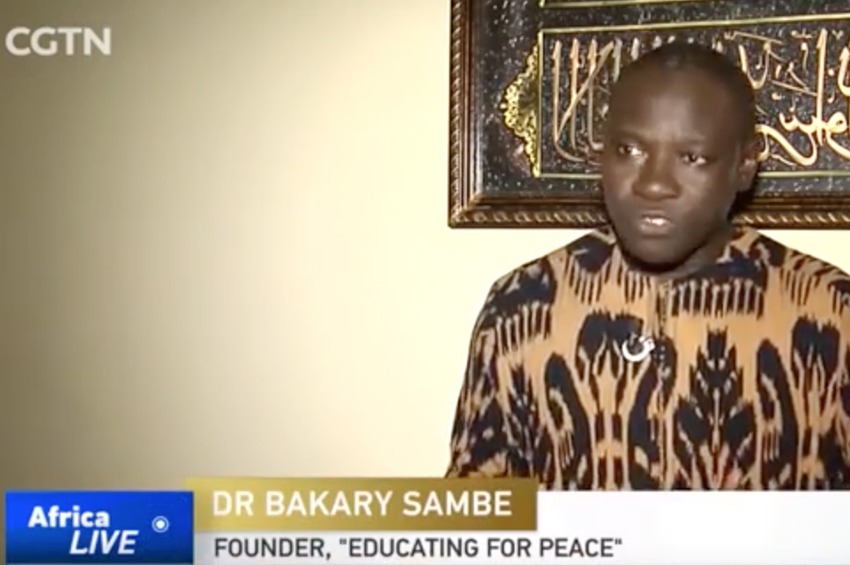
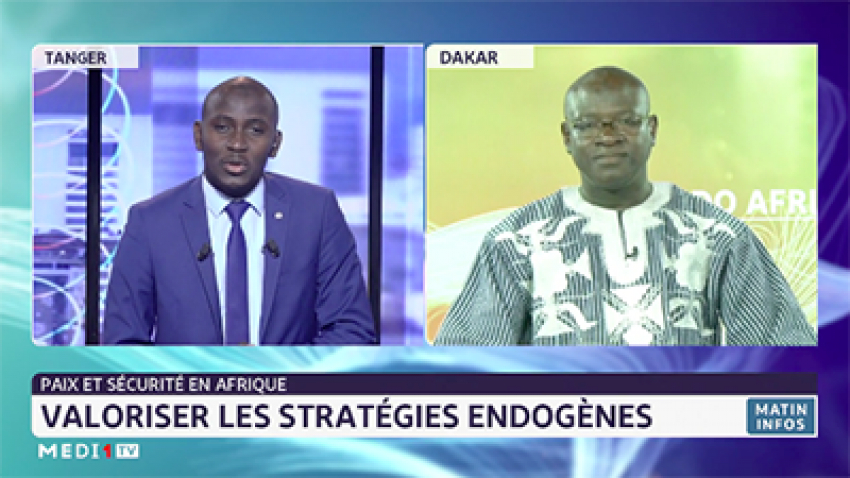
Since Mali, Burkina Faso and Niger formally withdrew in January 2025, West Africa has been living with two regional architectures that face each other with mistrust. The ministerial meeting held in Dakar on 17 October opens a new phase. Co-chaired by Senegal’s Cheikh Niang and Burkina Faso’s Karamoko Jean-Marie Traoré, it follows the Bamako consultations of May 2025. It provides for joint thematic working groups and sets an explicit goal: a cooperation framework agreement between ECOWAS and the AES Confederation. The issue is no longer reintegration or rupture, but cooperation between two entities that recognise each other. For Dr Bakary Sambe, founding president of the Timbuktu Institute – African Center for Peace Studies and coordinator of the Fragility Observatory for West and Central Africa (FOWARD), recently set up to produce alerts and analyses on political, security and diplomatic trends in the region, this is “a turning point in method more than in substance”. A Sahel specialist, he was among the first to call for dialogue between the two organisations. In this interview with the Senegalese national daily Le Soleil, he reviews the priority areas: interoperability of forces, intelligence sharing, free movement, trade corridors and monetary coordination. He also explains the bridging role Senegal can play now that it holds both the chairmanship of the Conference of Heads of State and the presidency of the Commission. In his view, faced with armed groups that exploit every gap in coordination, dialogue is no longer one diplomatic option among others: it is an imperative of collective security.
You have always called for formal dialogue between ECOWAS and the AES. As a high-level meeting between the two organisations has opened in Dakar, how do you analyse the launch of these formal consultations?
First of all, it is a moment of lucidity, and I sincerely welcome it, having always advocated not only for dialogue but also for a more assertive Senegalese role. Since Mali, Burkina Faso and Niger formally withdrew in January 2025, West Africa has been living with two regional architectures that regarded each other with mistrust. Neither a complete divorce nor a reconciliation took place; relations swung between residual confrontation and functional pragmatism. The ministerial meeting held in Dakar on 17 October moves this relationship from the realm of declarations to that of method.
The joint communiqué bears witness to this. The two delegations, led by Senegal’s Minister Cheikh Niang, Chair of the ECOWAS Council of Ministers, and by Burkina Faso’s Minister Karamoko Jean-Marie Traoré, Chair of the AES Ministerial Steering Committee, co-chaired the meeting. This co-chairmanship is no mere protocol detail: it establishes a relationship between equals and a politically formalised mutual recognition, which is the precondition for any serious negotiation.
Above all, there is a geographical truth that no one can ignore: none of our countries, whether a member of ECOWAS or of the AES, can move out of West Africa. We share the same borders, the same populations, the same trade corridors and, unfortunately, the same threats from armed groups that ignore borders. The security of one is inseparable from that of the other. Dialogue is therefore not one diplomatic option among others; it is an imperative of collective security.
Can this be seen as a real turning point in relations between the two organisations?
Yes, it is a turning point, but one of method more than of substance, and this must be said realistically. The substance, that is, the differences over the political legitimacy of the transitions, the security architecture or the monetary question, will not be resolved in a single meeting. The method, however, is genuinely changing.
Three elements lead me to speak of a turning point in the sense of an evolution. First, continuity: Dakar extends the consultations held in Bamako on 22 May 2025, which shows that a process now exists and no longer depends on circumstances alone. Second, institutionalisation, as the parties have decided to create joint thematic working groups whose findings will be submitted to the ministers before their next session. Finally, and most importantly, the objective is clearly named: a cooperation framework agreement between ECOWAS and the AES Confederation.
In other words, we are no longer talking about reintegration or a definitive break, but about cooperation between two entities that recognise each other. This is a major development. The most realistic path to stabilising the region is not a simple return to the status quo ante; it is differentiated and functional cooperation that secures our vital interdependencies without waiting for a comprehensive political settlement whose horizon remains uncertain.
For the AES Confederation, three imperatives should guide future negotiations: preserving the sovereignty of States, consolidating the Confederation and protecting the interests of the populations of the confederal space. Can these principles serve as a basis for negotiations between the two entities?
Absolutely, provided they are read as a starting point and not as rigid preconditions. These three imperatives are, moreover, not foreign to what the two parties signed in Dakar. The joint communiqué states that relations must be guided by good neighbourliness, respect for sovereignty, and the dignity and well-being of West African populations. Sovereignty and the interests of populations are therefore already common ground.
The most delicate point remains the consolidation of the AES. For a long time, the fundamental issue pitted the primacy of community law, defended by ECOWAS through its Protocol on Democracy and Good Governance, against the primacy of national sovereignty, claimed by the transitional authorities. By agreeing to negotiate a framework agreement with the Confederation as such, ECOWAS acknowledges an undeniable institutional reality. This paves the way for an association or partnership status, rather than a political reintegration that the AES countries consider irrevocably ruled out.
As for the third imperative, the protection of populations, it must take precedence over all the others. Traders, transporters, transhumant herders and cross-border families have no interest in institutional quarrels. Their daily lives depend on free movement, the transit of goods and the security of roads. If the two organisations take this imperative seriously, they will find enough points of convergence to move forward. We have clearly seen how a country like Senegal has been affected by the disruption of traffic caused by insecurity on the Dakar–Bamako corridor, which is vital for both States.
In your view, what are the main issues likely to have been discussed during these consultations, particularly in terms of security, the fight against terrorism, the free movement of people and goods, and economic cooperation?
The thematic working groups provided for in the communiqué should logically be organised around four priority areas.
First, security and the fight against terrorism. This is the most urgent issue. Today, two collective defence frameworks coexist in the same space where the same armed groups operate: the AES unified force, whose target strength has been set at 15,000 troops, and the ECOWAS standby force. This situation could become counterproductive in the face of a jihadist threat that ignores institutional borders. The aim is not to merge chains of command, but to get the military general staffs of both spaces to work together concretely on three fronts: the interoperability of their forces, so that neighbouring units can communicate and act in a coordinated manner on either side of a border; the pooling of certain assets, particularly air, logistics and surveillance capabilities, which States cannot always finance alone; and intelligence sharing, without which no cross-border operation can be effective. A joint committee of general staffs, with direct lines of communication, could provide the framework for this. The free movement of people and goods is a historic achievement of our region, now weakened: difficulties at borders, an ECOWAS motor insurance scheme that may no longer cover the AES space, and significant economic costs for the whole region. Mutual recognition of identity documents and passports, and the securing of commercial transit, can be the subject of specific agreements without waiting for a comprehensive political settlement.
Next, on the crucial issue of economic and financial cooperation, the model already exists: the AES countries take part in GIABA and the ECOWAS Bank for Investment and Development (EBID) as non-ECOWAS member countries. This logic can be extended to other technical areas such as customs, energy, health and statistics. It will also be necessary to preserve the corridors linking coastal ports to the Sahel, which are vital for both spaces that, in reality, form a single one. As for the monetary question, between the common currency project mentioned by the AES and ECOWAS’s Eco, technical consultation between central banks is essential to avoid uncontrolled monetary fragmentation, of which the populations most dependent on remittances would be the first victims.
To what extent can these consultations help bring ECOWAS and AES positions closer together in the face of the security and geopolitical challenges of the Sahel and West Africa?
They can make a decisive contribution, provided they become a permanent framework and not merely a series of disjointed meetings. The Senegalese chairmanship of ECOWAS could make this process smoother. The communiqué speaks of a “balanced, realistic” cooperation framework that preserves the interests of the peoples. These two words, balance and realism, are key. On the security front, the threat makes no distinction between an ECOWAS country and an AES country. Armed groups exploit precisely the gaps in coordination, the grey areas along borders and the mistrust between administrations and between intelligence services. Every time two neighbouring States stop talking to each other, armed groups gain ground. The pressure now being exerted on the northern regions of coastal countries shows that collective security is not a slogan. Yet the fight against terrorism requires a minimum of trust between countries that share the same space. You do not share sensitive intelligence, allow a neighbouring unit to pursue an armed group across your border, or pool resources with a partner you distrust. That is why the political dialogue opened in Dakar is the precondition for any military cooperation. By restoring this trust, it can enable general staffs to move from coexistence to coordination.
All the more so because, geopolitically, the risk is that our region becomes the arena for rivalries between external powers, with each bloc perceived as aligned with different partners. Direct dialogue between Africans, on African soil, is the best response to this instrumentalisation. This is also why the financing of our collective security must rely more on our own resources. Finally, from now on, bilateral crises must be prevented from contaminating the overall dialogue. Tensions between an AES country and a coastal country can undermine the necessary trust. A permanent format, involving the African Union and the diplomacies most committed to the rapprochement, would make it possible to defuse such crises before they block the entire process.
These formal consultations are starting at a time when Senegal holds both the current chairmanship of the Conference of Heads of State and the presidency of the Commission. What contribution could our country make so that these two entities can work together calmly?
First, President Bassirou Diomaye Faye’s initiative must be commended. By hosting this first ministerial meeting, he is restoring Senegal to the place that has always been its own: that of a country of dialogue and mediation, committed to African integration. The fact that both parties, ECOWAS and AES alike, chose to express in their communiqué their deep gratitude to President Faye, the government and the Senegalese people for their hospitality and their constant commitment to integration is telling. Dakar is now seen as a credible interlocutor by both sides. This credibility has deep roots. Senegal has always favoured dialogue and regional solidarity, including in times of tension. It shares a long border and centuries-old human, commercial and cultural ties with Mali. The port of Dakar and the Dakar–Bamako corridor make it a natural partner of the Sahel. Our country therefore has no interest in confrontation, and every interest in the stability of its neighbourhood.
In this context of Senegalese chairmanship, I see three possible contributions from our country. First, bridge-building diplomacy. Within ECOWAS, Senegal can champion an approach based on mutual respect and pragmatism, while reassuring the AES countries that cooperation will not be conditional on demands they consider unacceptable. Second, an inclusive and sustained method. Here, the aim is to ensure that the thematic working groups meet quickly and produce concrete results, so that the next ministerial session can mark real progress towards the framework agreement. Finally, priority should be given to populations. Free movement, commercial transit and border security cooperation are the issues on which visible results can quickly restore trust. On the security side, Senegal can in particular encourage regular meetings between the chiefs of staff of both spaces, devoted to interoperability, the pooling of resources and intelligence sharing.
Ultimately, the message that Senegal can and must above all convey is simple: ECOWAS or AES, we are bound to live together, because none of our countries will move out of West Africa. The only question is whether we will face our common challenges together, or separately, to the benefit of those who thrive on our divisions.
Sacré-Coeur 3 – BP 15177 CP 10700 Dakar Fann – SENEGAL.
+221 33 827 34 91 / +221 77 637 73 15
contact@timbuktu-institute.org