 French
 Arabic
 English
 Portuguese
 Spanish
 Swahili


Sacré-Coeur 3 – BP 15177 CP 10700 Dakar Fann – SENEGAL.
+221 33 827 34 91 / +221 77 637 73 15
contact@timbuktu-institute.org

Timbuktu Institute, November 2026
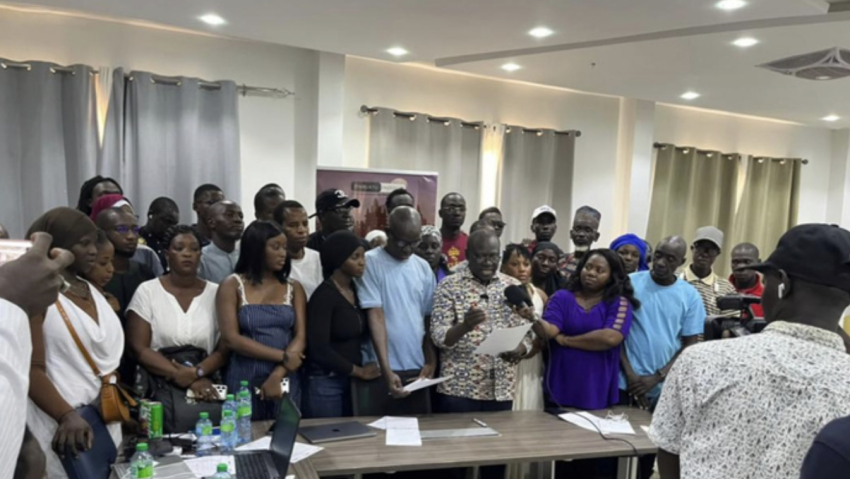
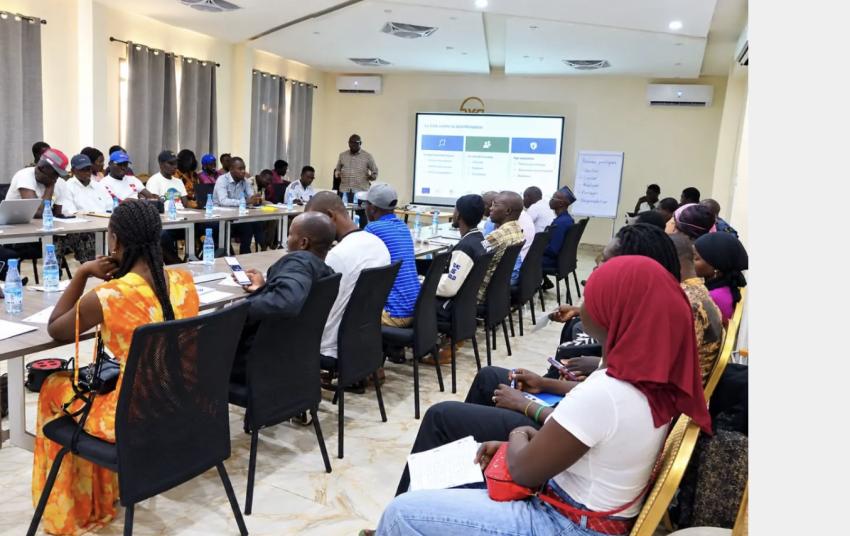
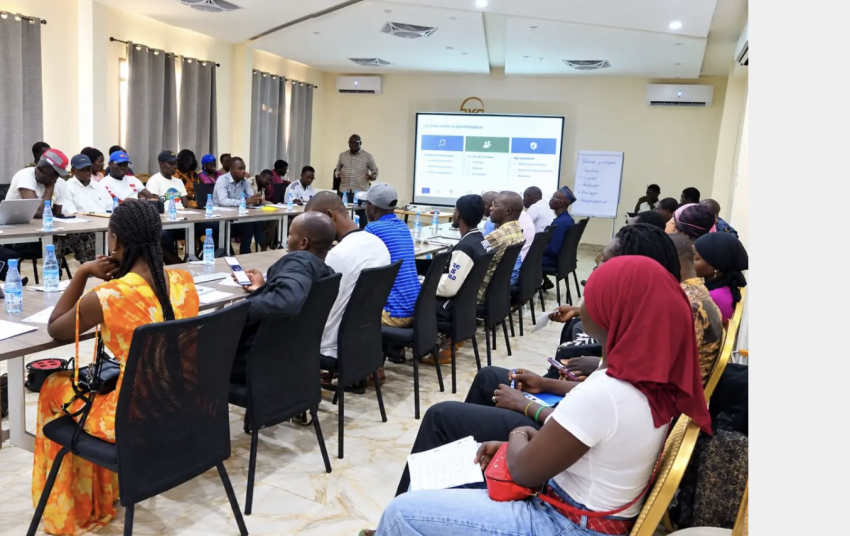
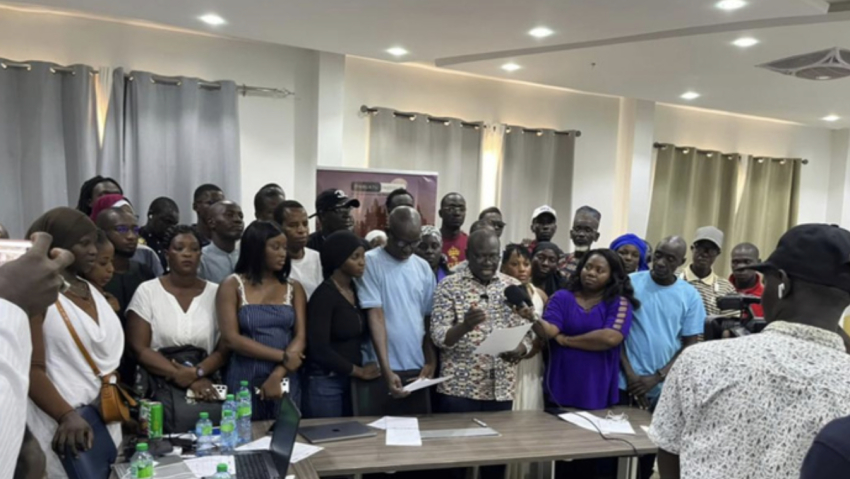
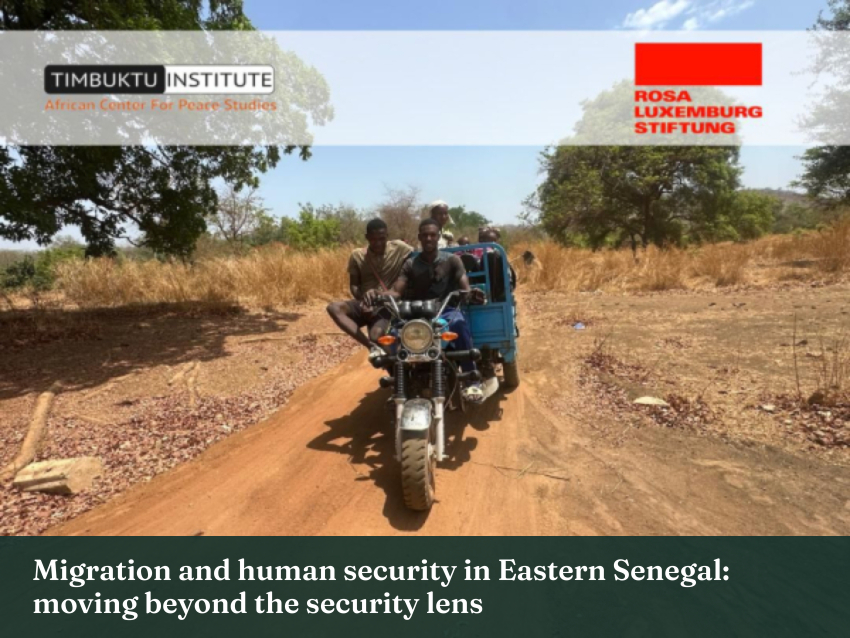
In Goudiry, in the Tambacounda region, the migration issue is especially acute, at the crossroads of economic fragility, social dynamics and security concerns. On 29 October 2026, the Timbuktu Institute, in partnership with the Rosa Luxemburg Foundation, held a meeting there to present the findings of its study “Migration, Resilience and Human Security”, which focuses on the departments of Goudiry and Bakel. Bringing together local elected officials, the prefect, civil society representatives, young people, returning migrants and the defence and security forces (DSF), the meeting opened up for discussion the central conviction that migration cannot be reduced to a question of security or crime. Rather, it must also be understood through its economic and social dimensions, in particular its role in community resilience mechanisms.
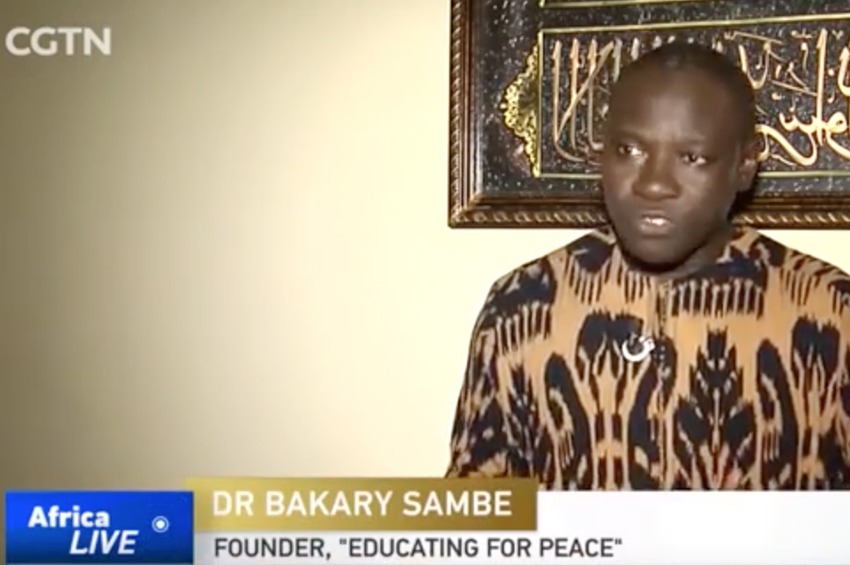
The validation workshop forms part of a broader reflection on the links between migration, economic resilience and human security in eastern Senegal. Located in the Tambacounda region, some 650 kilometres from Dakar, the departments of Goudiry and Bakel are among the oldest migration basins in West Africa. They are also on the front line of the repercussions of the security crisis affecting Mali’s Kayes region, just across the border. In these territories, human mobility, cross-border solidarity and economic vulnerability are closely intertwined, in ways that security-only frameworks do not always capture. It was with this in mind that the Timbuktu Institute and the Rosa Luxemburg Foundation organised this workshop, opened by Dr Bakary Sambe, Regional Director of the Timbuktu Institute, and Marie Nguettia, Programme Officer, in the presence of Alséyni Bangoura, Prefect of the department. Representing the Regional Director of the Rosa Luxemburg Foundation, Dr Armin Osmanovic, the Foundation’s representative recalled the aim of the exercise: to test the study’s conclusions against the realities experienced by local stakeholders, in order to arrive at a final document that takes into account the aspirations and recommendations of local communities.
Migration, unemployment and resilience: what the field survey reveals
Conducted from 9 to 30 June 2026 in the departments of Goudiry and Bakel, the study draws on a data collection system combining 180 household questionnaires, 30 interviews, 7 observations and 7 life stories. The research involved a wide range of profiles: returning migrants, families, religious and community leaders, young people, local authorities and members of the defence and security forces. Three main lessons emerge from this fieldwork.
The first concerns the central place of migration in the social and economic organisation of communities. Almost every household has at least one member living abroad, so much so that one phrase recurs in the testimonies: “in every house, there is at least one migrant”. Income from these movements is a key source of family resilience, even though this strategy comes with human tragedies, particularly on the sea and desert routes. Next comes the issue of unemployment, which proves to be the main common denominator of local vulnerabilities. For 88% of respondents, looking for work is the primary reason for leaving. More significantly still, 99% believe that the lack of job opportunities exposes young people to irregular migration. Unemployment also ranks first among the risk factors for radicalisation cited by respondents. These results underline how far economic prospects shape both migration choices and perceptions of security. Finally, a third finding highlights the existence of a territorial resilience capital that remains largely informal. Traditional mediation, trust in the defence and security forces and the commitment of the diaspora are all resources on which communities can draw. This foundation nevertheless receives too little support and is weakened by misunderstandings between generations.
Nevertheless, the realities observed reveal marked differences between the two departments. In Bakel, 87% of households report receiving remittances from the diaspora, compared with 58% in Goudiry. The perception of the security threat is also stronger there: 60% of respondents in Bakel consider this threat a reality to be reckoned with, compared with 29% in Goudiry. Conversely, the lack of economic opportunities for young people is felt more keenly in Goudiry, where 89% of respondents point to it, compared with 68% in Bakel. Located on the Senegal River and bordering Mali and Mauritania, Bakel thus appears more closely dependent on remittances and more exposed to security concerns. Goudiry, a more rural and isolated territory, remains particularly affected by the shortage of economic opportunities. Despite their differences, these two configurations point to the same need: to put people’s living conditions back at the heart of prevention and development policies.
Understanding the drivers of migration
When presenting the results, Dr Bakary Sambe stressed the guiding thread of the exercise: migration is first and foremost a complex social phenomenon, closely linked to human security and to people’s economic resilience strategies. Treating it as a mere manifestation of crime would amount to an incomplete diagnosis and, consequently, to favouring responses ill-suited to realities on the ground. This reading calls for some distance from exclusively security-based approaches. The data collected show that people associate their sense of insecurity first and foremost with unemployment, the lack of infrastructure and the fragility of their livelihoods, rather than with the armed attacks reported across the border. To capture this complexity, the study relies on four complementary analytical frameworks: human security, territorial resilience, governance and the “new economics of migration”.
This last framework helps to explain why departures continue despite awareness of the risks involved. Emigration is not solely an individual decision; it is often part of a family strategy of income diversification, conceived as a form of insurance against economic hardship and climatic hazards. The search for work also goes hand in hand with a quest for dignity. For many young people, leaving also means escaping idleness, gaining autonomy and earning the respect of those around them.
Moreover, the historical evolution of mobility in the area sheds light on this dynamic. Three major waves of migration have followed one another. The first, up to the 1970s and 1980s, consisted of relatively regular labour migration to France. The second, in the 1990s and 2000s, was marked by a diversification of destinations towards Central Africa and the Maghreb. The third, which characterises the current period, is dominated by irregular departures for Europe, against a backdrop of the gradual closure of legal migration channels. Each time opportunities for movement were restricted, new routes emerged, often at considerable human risk. For Bakary Sambe, policies of deterrence and route closure can therefore only have limited and temporary effects unless they are accompanied by improved economic prospects in the areas of departure. In this sense, the migration issue calls for a response that addresses the structural causes of mobility rather than its manifestations alone.
The diaspora, a pillar of family resilience and social services
One of the study’s major contributions is to highlight the economic and social role of remittances. For 92% of respondents, migration helps to improve living conditions, while 73% of the households concerned report regularly receiving money from relatives living abroad. At national level, these transfers represent around 10% of gross domestic product (GDP). The departments studied are probably among the areas where they are particularly concentrated. How these resources are used indicates their primary function in the household economy. The money received goes first and foremost to meeting basic needs: 81% of recipients spend it on food, 70% on health and 54% on education. In areas far from the main decision-making centres, where public service coverage remains limited, the diaspora’s contribution thus compensates, at least in part, for the shortcomings of institutional provision. In Bakel, one resident sums up this reality by saying that the diaspora “plays the role of the State”, notably by funding schools, health posts and boreholes.
However decisive it may be for the survival and stability of households, this contribution has not yet translated sufficiently into productive investment. During the presentation, Bakary Sambe emphasised this limitation: in the absence of suitable credit and insurance mechanisms, remittances do more to secure living conditions than to support income-generating activities. Only 26% of recipients mention investment among the uses of these resources. In a sense, the challenge is not so much to discourage mobility as to make better use of its economic benefits for the areas of origin. The study puts forward several avenues, such as: 1) developing project savings schemes, 2) co-financing initiatives between the diaspora and local authorities, 3) setting up village funds and supporting promising sectors, particularly solar energy and agri-food processing.
This remittance economy nevertheless carries a human and social cost that cannot be overlooked. The Saharan and Atlantic routes have already claimed lives within the communities concerned. Within families, the prolonged absence of men who have migrated is also changing domestic responsibilities. The women who remain at home often become the de facto managers of their households. While this shift can give them greater autonomy, it also exposes them to particular vulnerability when remittances become scarce or stop altogether.
A validation meeting informed by local realities
More than a simple presentation of the survey’s conclusions, the Goudiry meeting was also designed as a participatory exercise. It therefore gave considerable space to discussions and group work, bringing together local elected officials, defence and security forces, religious leaders, young people, women, returning migrants and civil society representatives. The aim was to test the study’s findings against the experience of local stakeholders and to generate recommendations that could enrich the final document. Four mixed groups were formed around issues drawn directly from local realities. Each group was tasked with identifying one local finding insufficiently covered by the survey and one stakeholder overlooked until now, and with proposing an action achievable within six months. The approach sought to turn the meeting into a space for collective production, in which knowledge from research enters into dialogue with the knowledge and experience of communities.
The first group, devoted to youth and the economy, was notably asked to identify the sectors capable of offering young people real prospects, while reflecting on how to respond to the “disappointed candidates” who return after an unsuccessful migration attempt. The second group looked at the relationship between the diaspora and investment. Its work focused on ways of moving beyond family solidarity to channel more remittances towards productive activities, without neglecting the role of women in managing these resources. The third workshop addressed the challenges of community-level security. Participants were invited to consider the conditions for strengthening the capacities of the defence and security forces while preserving people’s trust, as well as how to manage the presence of displaced people from Mali. Finally, the fourth group examined mediation and intergenerational relations, paying particular attention to the effective participation of young people and women in local conflict resolution mechanisms.
Tempering the security-first approach, rethinking dialogue with Europe
At the end of the discussions, the message to decision-makers centred on two demands. On the one hand, Dr Bakary Sambe, the study’s scientific director, argued for an approach to migration that does not make security control its sole horizon. On the other, he called for deeper reflection between Europe and the countries of departure, so as to take better account of the economic and social drivers of mobility. The priorities expressed by the population support this direction. Asked what could improve their security, respondents very clearly put community dialogue at the top of their expectations, with 89% in Goudiry and 87% in Bakel. Next come the involvement of young people in decision-making processes and local governance, economic development and cross-border cooperation to secure the borders with Mali. Satisfaction with public policies, meanwhile, remains particularly low: only 27% of respondents in Goudiry and 14% in Bakel say they are satisfied with them.
Trust in the defence and security forces is nevertheless an important asset, shared by 92% of respondents. This support is not unconditional, however; it depends on the resources deployed, but also on the quality of relations between the security forces and communities. In this regard, the study points out that perceptions of abuse by State representatives can be a factor preceding the slide into radicalisation. Under these conditions, an increase in personnel that was not accompanied by training in the community-based approach could produce the opposite of the desired effects.
Security clearly also depends on people’s material living conditions. Opening up isolated areas is the top priority expressed by residents, but also the main constraint reported by the defence and security forces, especially during the rainy season. Improving the road network thus meets a dual need: facilitating economic exchanges and strengthening the capacity of security services to intervene and maintain a presence. The study sums up this logic in its theory of change: on this border, security depends first on employment, which can keep young people at home, and on the development of the territories.
The European dimension of the migration issue also deserves to be placed back at the centre of the debate. The third wave of irregular departures developed notably in the wake of the closure of legal routes to Europe. In this respect, 55% of the households surveyed cite France as the main migration destination. For Bakary Sambe, a policy based essentially on border control merely shifts the routes without stemming departures. He calls instead for concerted reflection with the countries of origin, taking into account the role of remittances in access to basic social services and the need to create lasting economic prospects in the areas concerned. This issue also extends beyond Senegal’s borders. The same economic and migratory logics can be found in a wider area stretching from Kayes, in Mali, to Niger. Responses would therefore benefit from a cross-border approach, attentive to the interdependencies between territories, rather than remaining confined to strictly national frameworks.
Preventing risks through local resilience
The Goudiry meeting thus reaffirmed the conviction that the lasting prevention of security risks in border areas depends first and foremost on investing in their resilience. In the study’s conclusions, irregular migration and radicalisation appear as two phenomena that may find common ground in the lack of economic and social prospects offered to young people. Preventing them therefore requires a holistic approach that combines territorial development, local governance, community dialogue and human security, rather than a response focused exclusively on control. To this end, the study identifies six areas of intervention, four of which are considered high priorities. The first concerns the establishment, in Bakel, of a community monitoring system for early warning signs of religious rigorism. Designed as a community-based initiative rather than a policing mechanism, this monitoring should involve the defence and security forces, religious authorities and State representatives.
In the short term, the study also recommends that the State and local authorities allocate transparent, territorially based funding to developing youth self-employment. At the same time, it advocates strengthening the local presence of the defence and security forces, while taking care to preserve the trust that communities place in them. In the medium and long term, improving road infrastructure within rural areas, together with a greater effort by the State on energy supply, should mobilise public authorities as well as technical and financial partners. Two further priorities, put forward directly by the communities, complete this foundation. The first is to grant recognised status to traditional mediation, without seeking to instrumentalise it. The second aims to better channel diaspora contributions towards productive investment, so that migrant solidarity can also become a lever for the economic transformation of these territories.
Several blind spots nevertheless deserve further investigation. The study notably stresses the need for better documentation of gold panning along the Falémé river, of forced returns with inadequate support, of the still under-recognised place of women’s voices, and of reception conditions for displaced people from Mali, forced to leave their localities by insecurity in that neighbouring country. All these dimensions are a reminder that migration and security issues in eastern Senegal cannot be separated from people’s daily realities. The contributions gathered from participants in Goudiry will feed into the final document of the study, led by the Timbuktu Institute with the support of the Rosa Luxemburg Foundation. The ambition of this approach is to bring forth locally rooted responses, capable of recognising migration in all its complexity and of making community resilience a genuine lever for lasting stability.
Sacré-Coeur 3 – BP 15177 CP 10700 Dakar Fann – SENEGAL.
+221 33 827 34 91 / +221 77 637 73 15
contact@timbuktu-institute.org