 French
 Arabic
 English
 Portuguese
 Spanish
 Swahili



Sacré-Coeur 3 – BP 15177 CP 10700 Dakar Fann – SENEGAL.
+221 33 827 34 91 / +221 77 637 73 15
contact@timbuktu-institute.org


Sacré-Coeur 3 – BP 15177 CP 10700 Dakar Fann – SENEGAL. +221 33 827 34 91 / +221 77 637 73 15
contact@timbuktu-institute.org
Timbuktu Institute
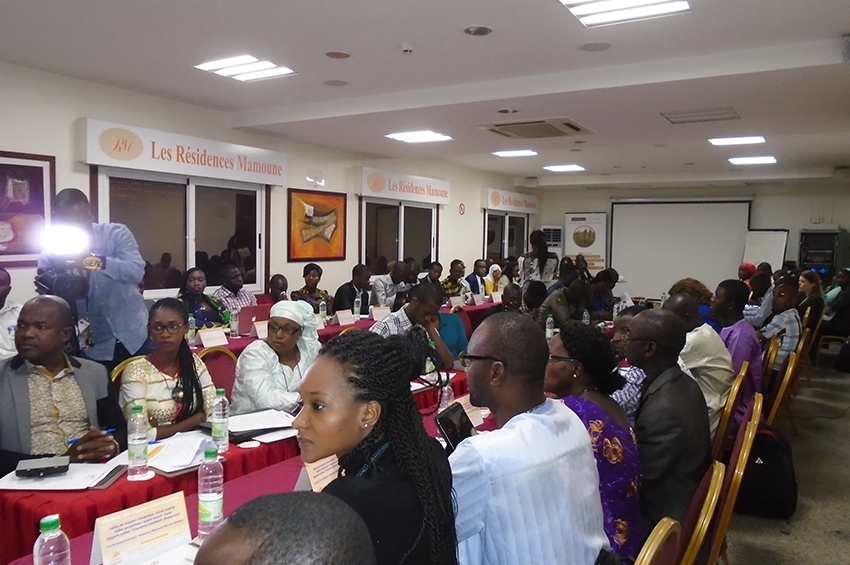
At a time when terrorist activities continue to reshape the security landscape in West Africa, a detailed understanding of the mechanisms of radicalization, resilience, and prevention has become a strategic necessity for the region’s states. With this in mind, the Institute for Strategic Research (IRS) of the International Academy for Counter-Terrorism (AILCT) organized a workshop on June 17 at Alassane Ouattara University in Bouaké (Ivory Coast) a workshop to present the findings of three strategic studies on the dynamics of terrorism and violent extremism in West Africa. This event, which aligns with the IRS’s mission to generate and disseminate knowledge in support of prevention, brought together professors, faculty researchers, and students from the university. Moreover, this forum for reflection aimed to raise awareness among academic stakeholders, stimulate scholarly debate, and formulate recommendations to strengthen policies on prevention and social cohesion.
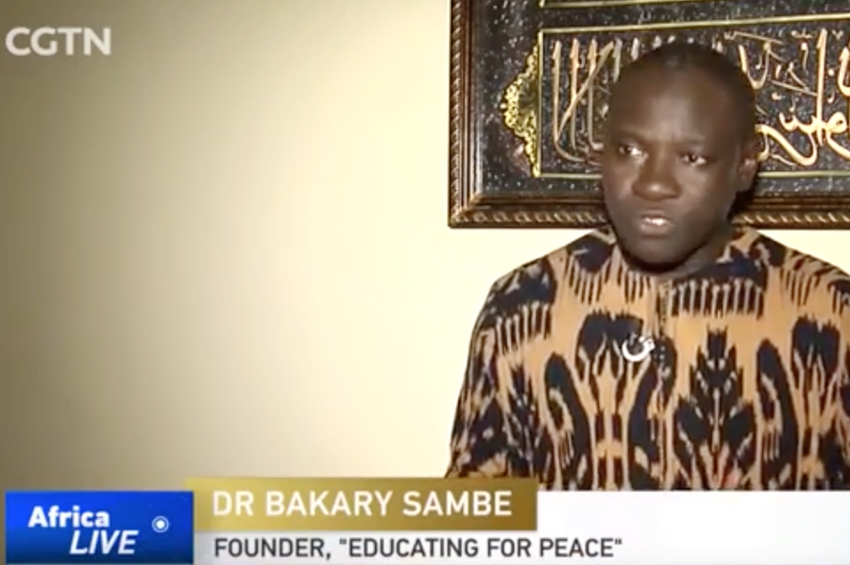
If there is one finding on which there is broad consensus today in research on violent extremism, it is that young people are particularly vulnerable to the dynamics of radicalization and recruitment. These are the main points of the study presented by the regional director of the Timbuktu Institute, Bakary Sambe, on the topic: “Young Boys and Girls in Areas Under Jihadist Influence: Challenges of Recruiting and Protection.” Highlighting the relevance and timeliness of this workshop, Bakary emphasized that the IRS’s decision to present the findings of the three studies directly to faculty, researchers, and students at the University of Bouaké is significant: “The IRS does not merely produce knowledge in Abidjan; it disseminates and enriches it in collaboration with on-the-ground actors and future elites.” Thus, the study conducted by the Timbuktu Institute took its field teams to Ménaka (Mali) and Diffa (Niger) in the Lake Chad basin. For Bakary Sambe, “this immersion in these two different field settings allowed for a comparative analysis of two distinct jihadist recruitment dynamics, each with its own specific characteristics, underpinned by a multidisciplinary approach to complex issues.”
At the same time, the other two studies presented focused on “support for victims of terrorism and the challenge of reintegrating displaced persons” and “the experience of deradicalization policies in Africa: successes, failures, doubts, and prospects.” These two studies were presented, respectively, by Régis Hounkpè, a Beninese researcher and executive director of InterGlobe Conseils, and Barka Bâ, a Senegalese expert specializing in regional security issues and director of Sen Stratégies Consulting, who brings extensive field and research experience in the Sahel and West Africa. In this regard, the studies presented in Bouaké directly address the challenges identified in the regional context, namely: the territorialization of terrorism, the appeal of jihadist rhetoric to young people, and the need to transform universities into spaces for prevention and resilience.
Abidjan, an emerging hub for strategic research
According to Bakary Sambe, the regional significance of the event cannot be overstated: “Abidjan already has a major asset in AILCT in Jacqueville, which combines training and research activities. This event demonstrates that this institution can become a center where high-level analysis, lessons learned from the Sahel and the Gulf of Guinea, and concrete proposals converge.” This is what makes it “precisely a strategic hub, one that not only generates knowledge but also makes it useful and accessible to the entire subregion,” he added. Furthermore, the president of the Timbuktu Institute highlighted Côte d’Ivoire’s unique position: “It is today one of the most stable and economically integrated countries in ECOWAS and UEMOA. It benefits from a strategic geographic location, modern infrastructure in Abidjan, and a tradition of regional openness; and in a context where terrorism is spreading from the Sahel to coastal countries, having a research hub in Abidjan offers a dual advantage.”
“The knowledge generated can inform concrete frameworks for cooperation, whether through joint operations, intelligence sharing, or cross-border prevention programs,” he explained. He added that the involvement of universities and young people, as seen in this workshop, strengthens community resilience: “It is essential that security cooperation be not only military but also social and preventive. By becoming this research hub, Abidjan can provide the region’s states with shared and up-to-date analytical tools. This is a valuable contribution to smarter and more sustainable regional cooperation. ”
All in all, the workshop—which took an interactive format featuring presentations followed by discussions—helped identify tailored solutions and strengthen the capacity of academic actors in terrorism prevention. Beyond its scientific significance, this event confirms a genuine momentum that could continue to grow. It is worth noting that Abidjan, through the AILCT and its Institute for Strategic Research (IRS), is gradually establishing itself as a major regional hub for the production and dissemination of strategic knowledge on security, in support of an integrated approach combining scientific research, training for executives and practitioners, and prevention policies.
Timbuktu Institute
À l’heure où les dynamiques terroristes continuent de redessiner les équilibres sécuritaires en Afrique de l’Ouest, la compréhension fine des mécanismes de radicalisation, de résilience et de prévention s’impose comme une nécessité stratégique pour les États de la région. C’est fort de cela que l’Institut de Recherche Stratégique (IRS) de l’Académie Internationale de Lutte contre le Terrorisme (AILCT) a organisé le 17 juin à l’Université Alassane Ouattara de Bouaké (Côte d’Ivoire), un atelier de restitution de trois études stratégiques sur les dynamiques du terrorisme et de l’extrémisme violent en Afrique de l’Ouest. Cet événement, qui s’inscrit dans la mission de l’IRS de produire et diffuser des connaissances au service de la prévention, a réuni professeurs, enseignants-chercheurs et étudiants de l’université. Au demeurant, ce creuset de réflexion visait à sensibiliser les acteurs académiques, stimuler le débat scientifique et formuler des recommandations pour renforcer les politiques de prévention et de cohésion sociale.
S’il est un enseignement qui fait aujourd’hui largement consensus dans les recherches sur l’extrémisme violent, c’est bien celui de l’exposition particulière des jeunes aux logiques de radicalisation et d’embrigadement. Tels sont les linéaments de l’étude présente par le directeur régional du Timbuktu Institute, Bakary Sambe, sur le thème : « Jeunes garçons et filles dans les zones sous influence jihadiste : enjeux d’embrigadement et de protection ». Rappelant la pertinence et l’opportunité de cet atelier, Bakary a souligné que le choix de l’IRS de présenter directement les résultats des trois études aux enseignants-chercheurs et aux étudiants de l’Université de Bouaké est significatif : « l’IRS ne se contente pas de produire du savoir à Abidjan, il le diffuse et l’enrichit avec les acteurs de terrain et les futures élites ». Ainsi, l’étude réalisée par le Timbuktu Institute a conduit ses équipes de terrain à Ménaka (Mali) et à Diffa (Niger) dans le bassin du Lac Tchad. Pour Bakary Sambe, « cette immersion sur ces deux différents terrains ont permis une approche comparative entre deux dynamiques de recrutement djihadiste avec leurs spécificités respectives, sous-tendue par une approche pluridisciplinaire de problématiques complexes ».
Dans le même temps, les deux autres études restituées concernaient la « prise en charge des victimes du terrorisme et problématique d’insertion des déplacés » et « l’expérience des politiques de dé-radicalisation en Afrique : succès, échecs, doutes et perspectives ». Ces deux recherches ont été présentées respectivement par le chercheur béninois et directeur exécutif du Cabinet InterGlobe Conseils, Régis Hounkpè ; et l’expert sénégalais Barka Bâ spécialiste des questions sécuritaires régionales et directeur du Cabinet Sen Stratégies Consulting, fort d’une grande expérience de terrain et de recherche au Sahel et en Afrique de l’Ouest. En ce sens, ces travaux présentés à Bouaké répondent directement aux défis identifiés dans le contexte régional, à savoir : la territorialisation du terrorisme, l’attraction exercée par les discours jihadistes sur les jeunes et la nécessité de transformer les universités en espaces de prévention et de résilience.
Abidjan, hub émergent de la recherche stratégique
Selon Bakary Sambe, la portée régionale de l’évènement ne saurait être suffisamment soulignée : « Abidjan dispose déjà d’un atout majeur avec AILCT à Jacqueville, qui combine des actions de formation et recherche. Cet événement montre que cette institution peut devenir le centre où se croisent analyses de haut niveau, retours d’expérience du Sahel et du Golfe de Guinée ainsi que propositions concrètes ». C’est cela qui en fait « précisément un hub stratégique, consistant non seulement à produire de la connaissance, mais aussi en la rendant utile et accessible à l’ensemble de la sous-région », ajoute-t-il. Par ailleurs, le président du Timbuktu Institute a mis en avant le positionnement particulier de la Côte d’Ivoire : « Il s’agit aujourd’hui de l’un des pays les plus stables et les plus intégrés économiquement de la CEDEAO et de l’UEMOA. Elle bénéficie d’une position géographique stratégique, d’infrastructures modernes à Abidjan et d’une tradition d’ouverture régionale et dans un contexte où le terrorisme se diffuse du Sahel vers les pays côtiers, avoir un hub de recherche à Abidjan présente un double avantage ».
« Ces connaissances produites peuvent nourrir des cadres de coopération concrets, qu’il s’agisse d’opérations conjointes, de partage de renseignement ou de programmes de prévention transfrontaliers », a-t-il expliqué. Ajoutant que l’implication des universités et des jeunes, comme lors de cet atelier, renforce la résilience communautaire : « il est indispensable pour que la coopération sécuritaire ne soit pas seulement militaire, mais aussi sociale et préventive. Abidjan, en devenant ce hub de recherche, peut fournir aux États de la région des outils d’analyse communs et actualisés. C’est une contribution précieuse à une coopération régionale plus intelligente et plus durable. »
Somme toute, l’atelier, qui s’est déroulé sous un format interactif avec des présentations suivies de discussions, aura permis d’identifier des pistes de solutions adaptées et de renforcer les capacités des acteurs académiques dans la prévention du terrorisme. Au-delà de son importance scientifique, cet événement confirme une réelle dynamique qui pourrait se consolider. A savoir que Abidjan, à travers l’AILCT et son Institut de Recherche Stratégique (IRS), s’impose progressivement comme un pôle régional majeur de production et de diffusion de savoirs stratégiques sur la sécurité, au service d’une approche intégrée alliant recherche scientifique, formation des cadres et des praticiens et politiques de prévention.
Timbuktu Institute Week 2 - June 2026
Against a backdrop of ongoing shifts in the regional balance of power, Senegal is working to strengthen its position, with its sights set on playing a central role in the current dynamics. It is in this context that Dakar is currently conducting a diplomatic offensive in West Africa to bolster General Birame Diop’s candidacy for the presidency of the ECOWAS Commission for the 2026–2030 term. Following stops in Freetown and Abidjan, Foreign Minister Cheikh Niang’s tour continued on 8 June in Lomé, where he was received by the President of the Togolese Council, Faure Gnassingbé. Conveying a message from President Diomaye Faye, Senegal’s foreign minister officially presented the candidate nominated by Senegal and sought the support of the Togolese authorities. This move forms part of a broader regional strategy aimed at strengthening support for the Senegalese candidacy in the run-up to the upcoming ECOWAS elections. According to Dakar, this campaign aims to promote a candidate deemed capable of contributing to the revitalisation of the regional institution, given the major security and political challenges in West Africa. It also comes at a time when Senegal, which currently holds the chairmanship of the ECOWAS Commission, makes no secret of its desire to play a greater role within the regional organisation.
Meanwhile, on 10 June, President Diomaye Faye received an envoy from his Mauritanian counterpart, Mohamed El Ghazouani, as part of efforts to strengthen political dialogue between the two neighbouring countries. The special envoy, the Mauritanian Minister for Foreign Affairs and African Cooperation, Mohamed Salem Ould Merzoug, delivered a message from the Mauritanian Head of State. This meeting forms part of the ongoing regular exchanges between Dakar and Nouakchott, which maintain strategic and structured diplomatic relations. In this instance, the discussions reaffirmed the two countries’ shared commitment to strengthening their cooperation in several priority sectors, notably the economy, energy, fisheries and security, within a regional context characterised by a high degree of interdependence. Beyond being a diplomatic gesture, this meeting illustrates the depth of Senegal-Mauritanian relations and the desire of both countries to strengthen a partnership described as fraternal, in the face of the political, economic and security challenges facing the sub-region.
Institutional balances in flux
On the domestic front, amid escalating tensions between President Diomaye Faye and his former Prime Minister Ousmane Sonko, a coalition comprising trade unions, intellectuals and civil society actors has appealed to public opinionto warn of the risks of an institutional crisis. At the heart of the controversy lies Sonko’s reinstatement to the National Assembly – the legality of which is contested by n the opposition – and which enabled his election as Speaker. The signatories believe that only the Constitutional Council can resolve this dispute and restore a climate of political calm. They are urging it to rule swiftly on the appeal already lodged by opposition MPs, in order to prevent the conflict from turning into a protracted power struggle between the presidency and the parliamentary majority.
Meanwhile, two Pastef MPs, Ismaila Diallo (First Deputy Speaker of the National Assembly) and Cheikh Thioro Mbacké (Third Deputy Speaker), have announced their resignation from their posts as Deputy Speakers of the National Assembly of Senegal. On the one hand, Ismaila Diallo justifies his decision on the grounds of a “sense of responsibility and loyalty” to his commitment. For his part, Cheikh Thioro Mbacké describes it as a decision taken after careful consideration, motivated by “personal and political considerations”. However, both elected representatives remain Members of Parliament. Whilst the underlying reasons for these moves are not yet entirely clear, they appear to be a new episode in the political manoeuvring within Parliament, where the Pastef intends to wield its legislative power in the political dispute pitting it against the Head of State.
Timbuktu Institute Semaine 2 - Juin 2026
Dans un contexte de recomposition continue des équilibres régionaux, le Sénégal s’emploie à renforcer son positionnement, lorgnant un rôle d’acteur central dans les dynamiques en présence. C’est en ce sens que Dakar mène actuellement une offensive diplomatique en Afrique de l’Ouest afin de consolider la candidature du général Birame Diop à la présidence de la Commission de la Cedeao pour le mandat 2026-2030. Après des étapes à Freetown et à Abidjan, la tournée du ministre des Affaires étrangères Cheikh Niang s’est poursuivie le 8 juin à Lomé, où il a été reçu par le président du Conseil togolais Faure Gnassingbé. Portant un message du président Diomaye Faye, le chef de la diplomatie sénégalaise a officiellement présenté le candidat désigné par le Sénégal et sollicité le soutien des autorités togolaises. Une démarche qui s’inscrit dans une stratégie régionale plus large visant à renforcer les appuis autour de la candidature sénégalaise, à l’approche des prochaines échéances de la Cedeao. Selon Dakar, cette mobilisation vise à promouvoir un profil jugé apte à contribuer à la relance de l’institution régionale eu égard aux défis sécuritaires et politiques majeurs en Afrique de l’Ouest. Elle intervient par ailleurs dans un contexte où le Sénégal qui occupe actuellement la présidence de la Commission de la Cedeao, ne cache pas son désir de jouer un rôle accru au sein de l’organisation régionale.
Parallèlement, le président Diomaye Faye a reçu le 10 juin, un émissaire de son homologue mauritanien, Mohamed El Ghazouani, dans le cadre du renforcement du dialogue politique entre les deux pays voisins. L’envoyé spécial, le ministre mauritanien des Affaires étrangères et de la Coopération africaine, Mohamed Salem Ould Merzoug, était porteur d’un message du chef de l’État mauritanien. Cette audience s’inscrit dans la continuité des échanges réguliers entre Dakar et Nouakchott, qui entretiennent des relations diplomatiques stratégiques et structurées. En l’espèce, les discussions ont réaffirmé la volonté commune des deux pays de consolider leur coopération dans plusieurs secteurs prioritaires, notamment l’économie, l’énergie, la pêche et la sécurité, dans un espace régional caractérisé par une forte interdépendance. Au-delà du geste diplomatique, cette rencontre illustre la densité des relations sénégalo-mauritaniennes et le souhait des deux pays de renforcer un partenariat présenté comme fraternel, face aux enjeux politiques, économiques et sécuritaires de la sous-région.
Équilibres institutionnels en recomposition
Au plan interne, face à l’aggravation des tensions entre le président Diomaye Faye et son ex-Premier ministre Ousmane Sonko, un collectif regroupant syndicats, intellectuels et acteurs de la société civile a saisi l’opinion publique pour alerter sur les risques d’une crise institutionnelle. Au centre de la controverse figure la réintégration de Sonko à l’Assemblée nationale, dont la légalité est contestée par l’opposition, et qui a permis son élection au perchoir. Les signataires estiment que seul le Conseil constitutionnel peut trancher ce différend et rétablir un climat de sérénité politique. Ils l’exhortent à se prononcer rapidement sur le recours déjà déposé par des députés de l’opposition, afin d’éviter que le conflit ne se transforme en rapport de force durable entre la présidence et la majorité parlementaire.
Pendant ce temps, deux députés du Pastef, Ismaila Diallo (premier vice-président de l’Assemblée nationale) et Cheikh Thioro Mbacké (troisième vice-président), ont annoncé leur démission de leurs fonctions de vice-présidents de l’Assemblée nationale du Sénégal. D’une part, Ismaila Diallo justifie sa décision par un « esprit de responsabilité et de fidélité » à son engagement. De son côté, Cheikh Thioro Mbacké évoque une décision prise après réflexion, motivée par des « convenances personnelles et politiques ». Toutefois, les deux élus restent par ailleurs députés. Si les raisons profondes de ces positionnements ne se laissent pas encore clairement déceler, elles apparaissent comme un nouvel épisode dans le jeu de passe-passe dans un Parlement, où le Pastef entend user de son pouvoir législatif, dans le différend politique qui l’oppose au chef de l’Etat.
Timbuktu Institute Week 2 - June 2026
In West Africa, mediation frameworks have remained unstable and fragmented in recent years. Against this backdrop, Togo is seeking to establish itself as a hub for diplomatic convergence and the facilitation of multilateral dialogue. This dynamic reflects a strategy of gradual and continuous integration into regional mediation mechanisms, aimed at strengthening Lomé’s visibility and legitimacy within African crisis management frameworks. With this in mind, on 7 and 8 June in Lomé, the key players in regional and international mediation on the crisis in the east of the Democratic Republic of the Congo (DRC) met for a session to assess the peace process. Alongside the Togolese mediator, representatives from the EAC, SADC, ICGLR, the African Union and the UN reviewed the progress of the various ongoing initiatives, notably the AU roadmaps and the parallel processes in Washington and Doha.
The discussions highlighted limited progress, with several commitments still only partially implemented, notably regarding the protocols to the Doha Agreement and the effective withdrawal of armed forces from eastern DRC. Furthermore, the absence of binding mechanisms – considered one of the main limitations of African mediation – was also noted, as was the slow implementation of the ceasefire verification mechanism. Against this backdrop, representatives of the UN and regional organisations emphasised the need for better coordination of existing initiatives in order to enhance the effectiveness of the peace process in a region still marked by persistent armed violence. Separately, but in a similar vein, on 9 June, Togo and the European Union held their fourth round of political dialogue within the framework of the ACP-EU partnership, focusing on issues of peace, security, democratic governance and economic cooperation. The discussions provided an opportunity to assess Togo’s efforts in the areas of conflict prevention, building community resilience and combating terrorism, with European support in these areas reaffirmed.
A restricted civic space
In Togo, restrictions on civil society appear to have become increasingly systematic in recent years. Recent developments point to a civic environment in which the scope for free expression and dissent appears to be increasingly restricted, thereby fuelling an ongoing debate on the nature of the rule of law in the country. In an open letter published on 11 June, several human rights organisations, including the FIDH and the OMCT, called on the Togolese authorities to guarantee the safe return, free from reprisals, of human rights defenders forced into exile following the political tensions and crackdowns observed during recent protests. The letter condemns the legal proceedings, intimidation and harassment targeting these civil society actors, and demands that these be dropped and that independent investigations be launched into the reported violations. The signatory organisations further emphasise the need to provide lasting protection for civic space and to re-establish dialogue between the state and civil society actors. Beyond the humanitarian dimension of the appeal, this letter highlights a structural tension between the consolidation of state authority and the guarantee of civil liberties, the resolution of which is key to Togo’s democratic credibility.
Timbuktu Institute Semaine 2 - Juin 2026
En Afrique de l’Ouest, les architectures de médiations demeurent instables et fragmentées depuis quelques années. Dans cette configuration, le Togo cherche à s’affirmer comme un espace de convergence diplomatique et de facilitation des dialogues multilatéraux. Une dynamique qui traduit une stratégie d’ancrage progressif et continu dans les dispositifs de médiation régionale, visant à renforcer la visibilité et la légitimité de Lomé au sein des dispositifs africains de gestion des crises. C’est dans cette optique, les 7 et 8 juin à Lomé, les principaux acteurs de la médiation régionale et internationale sur la crise dans l’est de la République Démocratique du Congo (RDC) se sont réunis pour une session d’évaluation du processus de paix. Autour du médiateur togolais, des représentants de l’EAC, de la SADC, de la CIRGL, de l’Union africaine et de l’ONU ont examiné l’état d’avancement des différentes initiatives en cours, notamment les feuilles de route de l’UA ainsi que les processus parallèles de Washington et de Doha.
Les discussions ont mis en évidence des progrès limités, plusieurs engagements restant encore partiellement appliqués, notamment sur les protocoles de l’accord de Doha et le retrait effectif des forces armées dans l’est de la RDC. Par ailleurs, il a été également relevé l’absence de mécanismes contraignants, considérée comme l’une des principales limites de la médiation africaine, ainsi que la lente mise en œuvre du dispositif de vérification du cessez-le-feu. Dans ce contexte, les représentants de l’ONU et des organisations régionales ont insisté sur la nécessité d’une meilleure coordination des initiatives existantes afin de renforcer l’efficacité du processus de paix dans une région toujours marquée par la persistance des violences armées. D’un autre côté mais dans la même veine, le 9 juin, le Togo et l’Union européenne ont tenu leur quatrième session de dialogue politique dans le cadre du partenariat OEACP-UE, consacrée aux questions de paix, de sécurité, de gouvernance démocratique et de coopération économique. Les échanges ont permis d’évaluer les efforts du Togo en matière de prévention des conflits, de renforcement de la résilience des populations et de lutte contre le terrorisme, avec un appui européen confirmé dans ces domaines.
Un espace civique verrouillé
Au Togo, les restrictions pesant sur la société civile semblent avoir pris ces dernières années, une forme de plus en plus systématique. Ainsi, les évolutions récentes témoignent d’un environnement civique où les marges d’expression et de contestation apparaissent de plus en plus encadrées, alimentant de fait un débat persistant sur la nature de l’État de droit dans le pays. Dans une lettre ouverte publiée le 11 juin, plusieurs organisations de défense des droits humains, dont la FIDH et l’OMCT, appellent les autorités togolaises à garantir le retour sûr et sans représailles des défenseurs des droits humains contraints à l’exil à la suite des tensions politiques et des répressions observées lors des mobilisations récentes. Le texte dénonce les poursuites judiciaires, les intimidations et le harcèlement visant ces acteurs de la société civile, et exige leur abandon ainsi que l’ouverture d’enquêtes indépendantes sur les violations rapportées. Les organisations signataires insistent en outre sur la nécessité de protéger durablement l’espace civique et de rétablir un dialogue entre l’État et les acteurs de la société civile. Au-delà de la dimension humanitaire de l’appel, cette lettre met en évidence une tension structurelle entre la consolidation de l’autorité étatique et la garantie des libertés publiques, dont la résolution conditionne la crédibilité démocratique du Togo.
Timbuktu Institute Week 2 - June 2026
Since the dissolution of the Independent Electoral Commission (CEI), the outcome regarding the arrangements for managing the electoral process remains uncertain. To avoid remaining in a state of limbo, a coalition of around ten political parties, meeting on 8 June, proposed the creation of a ‘High Electoral Council’ to replace the current arrangements. Led in particular by the former First Lady, Simone Ehivet Gbagbo, with the support of political figures such as Charles Blé Goudé and Ahoua Don Mello, this initiative envisages the establishment of a body comprising 11 members drawn from civil society (professional, economic and legal circles), recruited through a transparent call for applications and approved by the National Assembly, with no partisan representation within it. Its members would be appointed for life and tasked with organising elections and conducting an annual review of the electoral register, with the stated aim of strengthening confidence in the electoral system and preventing recurring crises linked to elections. However, the proposal – which has been raised in the past without success – does not enjoy unanimous support and has been put forward without the involvement of the main opposition parties, the PDCI and the PPA-CI.
Meanwhile, whilst the issue of electoral governance remains unresolved, the Senate’s legislative agenda has moved forward on a more consensual basis. Indeed, on 8 June, the Ivorian Senate’s Committee on Economic and Financial Affairs adopted three draft laws concerning the reform of public procurement, the implementation of the African Continental Free Trade Area (AfCFTA) and the repeal of the tax to support the development of refining activities. The first bill aims to strengthen the powers and governance of the Public Procurement Regulatory Authority in order to improve oversight and transparency in public procurement and public-private partnerships. The second bill provides a framework for Côte d’Ivoire’s integration into the tariff dismantling mechanism of the African Continental Free Trade Area ( , AfCFTA), with a gradual removal of customs duties on the majority of non-sensitive products; whilst this is expected to have a budgetary impact, it offers prospects for economic growth and increased exports. Finally, the third bill confirms the abolition of the refining tax, which has become obsolete following the repayment of the debt owed by the Ivorian Refining Company. Through these reforms, the Senate aims to support the modernisation of economic governance, regional integration and the optimisation of the Ivorian energy sector.
A sovereignist voice on the political scene
Ahoua Don Mello, who was recently expelled from Laurent Gbagbo’s PPA-CI, is reportedly, according to *Jeune Afrique*, preparing to set up a new sovereignist political party, scheduled to be launched by August 2026. Currently based temporarily in Russia, he is said to be steering this project by establishing both the internal organisation and funding networks, with the support of close associates tasked with drafting the party’s constitution and setting up the administrative framework in Côte d’Ivoire. The initiative is also said to be based on a strategy of gradual mobilisation, targeting trade unions, community leaders, disillusioned political figures and the diaspora, through organised networks in Europe, Africa and the United States, whilst local cells are being set up under the guise of associations or think tanks. Names are currently being considered for this new political formation, whose ideological orientation is intended to be resolutely sovereigntist and pan-African. Whilst sovereigntism has driven a major geopolitical realignment in the Sahel in recent years, the emergence of such a structured political movement in Côte d’Ivoire – a country reputed to be pro-Western –
Timbuktu Institute Semaine 2 - Juin 2026
Depuis de la dissolution de la Commission électorale indépendante (CEI), l’issue autour des modalités de la gestion du processus électoral demeure incertaine. Afin de ne pas rester dans l’expectative, une coalition d’une dizaine de partis politiques réunie le 8 juin, a proposé la création d’un « Haut Conseil électoral » en remplacement des dispositifs actuels. Portée notamment par l’ancienne Première dame Simone Ehivet Gbagbo, avec le soutien de figures politiques comme Charles Blé Goudé et Ahoua Don Mello, cette initiative prévoit la mise en place d’un organe composé de 11 membres issus de la société civile (milieux professionnels, économiques et juridiques), recrutés via un appel à candidatures transparent et validés par l’Assemblée nationale, sans représentation partisane en son sein. Ses membres seraient nommés à vie et chargés de l’organisation des élections ainsi que de la révision annuelle du fichier électoral, avec l’objectif affiché de renforcer la confiance dans le système électoral et de prévenir les crises récurrentes liées aux scrutins. Toutefois, la proposition, déjà évoquée par le passé sans aboutir, ne fait pas l’unanimité et intervient sans l’implication des principaux partis d’opposition, le PDCI et le PPA-CI.
D’un autre côté, tandis que la question de la gouvernance électorale reste en suspens, l'agenda législatif du Sénat a, lui, avancé sur un terrain plus consensuel. En effet, le 8 juin, la Commission des affaires économiques et financières du Sénat ivoirien a adopté trois projets de loi portant sur la réforme de la commande publique, la mise en œuvre de la Zone de libre-échange continentale africaine (ZLECAf) et l’abrogation de la taxe de soutien au développement de l’activité de raffinage. Le premier texte vise à renforcer les compétences et la gouvernance de l’Autorité de régulation de la commande publique afin d’améliorer le contrôle et la transparence des marchés publics et des partenariats public-privé. Le deuxième encadre l’intégration de la Côte d’Ivoire dans le dispositif de démantèlement tarifaire de la ZLECAf, avec une suppression progressive des droits de douane sur la majorité des produits non sensibles, malgré un impact budgétaire anticipé, mais avec des perspectives de croissance économique et d’augmentation des exportations. Enfin, le troisième projet entérine la suppression de la taxe sur le raffinage, devenue obsolète après le remboursement de la dette de la Société ivoirienne de raffinage. À travers ces réformes, le Sénat entend soutenir la modernisation de la gouvernance économique, l’intégration régionale et l’optimisation du secteur énergétique ivoirien.
Une offre souverainiste sur la scène politique
Récemment radié du PPA-CI de Laurent Gbagbo, Ahoua Don Mello, préparerait à en croire Jeune Afrique, la création d’un nouveau parti politique souverainiste dont le lancement est prévu d’ici août 2026. Installé temporairement en Russie, il piloterait ce projet en structurant à la fois l’organisation interne et les réseaux de financement, avec l’appui de proches chargés de la rédaction des statuts et de la mise en place administrative en Côte d’Ivoire. Le dispositif reposerait également sur une stratégie de mobilisation progressive, visant syndicats, leaders communautaires, cadres politiques déçus et diaspora, à travers des relais organisés en Europe, en Afrique et aux États-Unis, tandis que des cellules locales se constituent sous couvert d’associations ou de clubs de réflexion. Des noms sont actuellement envisagés pour cette nouvelle formation, dont l’orientation idéologique se veut résolument souverainiste et panafricaine. Alors que le souverainisme aura porté ces dernières années une recomposition géopolitique majeure au Sahel, l’émergence d’une telle offre politique structurée en Côte d'Ivoire - réputé pro-occidental – pourrait du reste marquer une inflexion notable à l’échelle régionale.
Timbuktu Institute Week 2 - June 2026
From one capital to the next, President Romuald Wadagni is continuing the relentless marathon of his diplomatic offensive aimed at fostering good neighbourly relations. No sooner had he been sworn in than, with characteristic strategic acumen, he began weaving his diplomatic web, framing his actions within a framework of rapprochement and consultation at regional level. This is evidenced by the visits he made earlier this month to his neighbours (Nigeria, Niger, Burkina Faso, Togo and Côte d’Ivoire). Building on this momentum, Wadagni’s diplomatic itinerary included three further stops the following week: Senegal, Mali and Guinea-Bissau. This tour, it appears, focused on UEMOA member states, with the aim of strengthening economic and trade cooperation within the regional bloc and deepening consultations on regional security issues.
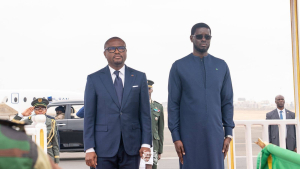
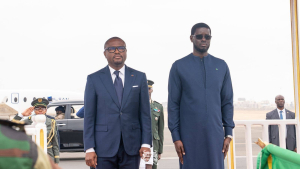
Welcomed in Dakar on 9 June by his Senegalese counterpart Bassirou Diomaye Faye, Romuald Wadagni held bilateral talks devoted to strengthening relations between the two countries. Discussions centred on prospects for economic and financial cooperation, the common challenges facing the sub-region, and ways to consolidate and expand the partnership between Cotonou and Dakar. Following this brief meeting, the Beninese President set off for Bamako on the same day. Received by his Malian counterpart Assimi Goïta, the two heads of state discussed the revival of bilateral cooperation, particularly in the areas of trade, ports and customs. Furthermore, they also agreed to organise the second session of the Benin-Mali Joint High Commission in order to boost economic exchanges and logistics networks between the two countries. Furthermore, security issues featured prominently in the discussions. Faced with the persistent terrorist threat in the Sahel, Wadagni and Goïta – whilst reaffirming their commitment to respecting the sovereignty of states – expressed their willingness to strengthen cooperation in the areas of intelligence, territorial surveillance and security coordination. “Africa moves forward when its people talk to one another,” Goïta stated on his X account following the meeting. Finally, Wadagni’s busy day of diplomacy concluded in Guinea-Bissau, with the Beninese president also becoming the first foreign leader to be welcomed at the new presidential lounge at Bissau airport. Together with his counterpart Horta Inta-A Na Man, the two presidents discussed strengthening bilateral cooperation, economic opportunities and the challenges of regional integration in West Africa.
Wadagni : taking the helm
It is clear that, in a region plagued by persistent security challenges and geopolitical realignments, Benin is seeking to position itself as a bridge – particularly between ECOWAS and the states of the Sahel Alliance (AES). Indeed, the complicated relations that have prevailed in recent years between Benin and the AES did not lend themselves to such a role. But at present, their renewed rapprochement offers Cotonou a fine opportunity to position itself as a ‘peacemaker’ or mediator in the region. In this context, such a stance reflects a clear sense of pragmatism; Cotonou intends to preserve its diplomatic and economic room for manoeuvre in an increasingly fragmented West African environment.
On the domestic front, President Wadagni is seeking to set a tone of discipline and integrity. Indeed, during his first working meeting with the ministerial advisers to the Presidency, he called on his colleagues to place the public interest at the heart of their work. Emphasising the need to set an example, consistency between words and deeds, and attention to vulnerable groups, he reiterated that their mission is, above all, to ‘serve Benin and the Beninese people’. Marking the end of the election period, the Head of State urged his advisers to look beyond regional or community considerations and work in the service of the nation as a whole. This appeal is all the more significant given that many in the public sphere describe these ministerial posts as ‘political rewards’.
Timbuktu Institute Semaine 2 - Juin 2026
Capitale après capitale, le président Romuald Wadagni poursuit le marathon séquentiel de son offensive diplomatique de bon voisinage. A peine investi, il entamait déjà, en bon manœuvre, le tissage de sa toile diplomatique en inscrivant son action dans une dynamique de rapprochement et de concertation à l’échelle régionale. En témoignent les visites effectuées en début de mois à ses voisins (Nigeria, Niger, Burkina Faso, Togo et Côte d’Ivoire). Fort de cet entrain, l’itinéraire diplomatique de Wadagni a connu la semaine suivante, trois nouvelles stations : le Sénégal, le Mali et la Guinée-Bissau. Un trajet, comme il apparaît, centré sur des États membres de l’Uemoa, visant ainsi à renforcer la coopération économique et commerciale au sein de l’espace communautaire et à approfondir les concertations sur les enjeux sécuritaires régionaux.
Accueilli le 9 juin à Dakar par son homologue sénégalais Bassirou Diomaye Faye, Romuald Wadagni a tenu un entretien bilatéral consacré au renforcement des relations entre les deux pays. Les discussions ont porté sur les perspectives de coopération économique et financière, les défis communs auxquels fait face la sous-région ainsi que les moyens de consolider et d’élargir le partenariat entre Cotonou et Dakar. Suite à cette rencontre express, le président béninois a mis cap le même jour, sur Bamako. Reçu par son homologue malien Assimi Goïta, les deux chefs d’Etat ont échangé sur la relance de la coopération bilatérale, notamment dans les domaines commercial, portuaire et douanier. De plus, ils ont également convenu d’organiser la deuxième session de la Grande Commission mixte Bénin-Mali afin de dynamiser les échanges économiques et les circuits logistiques entre les deux pays. Par ailleurs, les discussions ont aussi accordé une place importante aux questions sécuritaires. Face à la persistance de la menace terroriste au Sahel, Wadagni et Goïta ont – tout en réaffirmant leur attachement au respect de la souveraineté des États - exprimé leur volonté de renforcer la coopération en matière de renseignement, de surveillance territoriale et de coordination sécuritaire. « L’Afrique avance quand ses fils se parlent », a déclaré Goïta sur son compte X, à l’issue de la rencontre. En dernier lieu, la journée diplomatique chargée de Wadagni a pris fin en Guinée-Bissau, le président béninois devenant en outre le premier dirigeant étranger accueilli dans le nouveau pavillon présidentiel de l'aéroport de Bissau. Avec son homologue Horta Inta-A Na Man, les deux présidents ont échangé sur le renforcement de la coopération bilatérale, les opportunités économiques et les enjeux d'intégration régionale en Afrique de l'Ouest.
Wadagni, l’heure du gouvernail
On l’aura compris : dans un espace régional en proie à des défis sécuritaires persistants et recompositions géopolitiques, le Bénin cherche à se faire passerelle. Notamment entre la Cedeao et les Etats de l’Alliance du Sahel (AES). En effet, les relations compliquées ayant prévalu ces dernières années entre le Bénin et l’AES ne se prêtaient pas à un tel positionnement. Mais à l’heure actuelle, leur nouveau rapprochement offre une belle occasion pour Cotonou de se positionner en « faiseur de paix » ou médiateur dans la région. Dans ce sillage, une telle posture traduit un pragmatisme assumé ; Cotonou entendant préserver ses marges de manœuvre diplomatiques et économiques dans un environnement ouest-africain de plus en plus fragmenté.
Au plan interne, le président Wadagni cherche à imprimer un tempo de discipline et de probité. En effet, lors de sa première réunion de travail avec les ministres conseillers de la Présidence, il a appelé ses collaborateurs à placer l'intérêt général au cœur de leur action. Insistant sur l'exemplarité, la cohérence entre les discours et les actes ainsi que l'attention aux populations vulnérables, il a rappelé que leur mission consiste avant tout à « servir le Bénin et les Béninois ». Marquant la fin de la période électorale, le chef de l'État a exhorté ses conseillers à dépasser les considérations régionales ou communautaires pour œuvrer au service de l'ensemble de la nation. Un appel d’autant plus parlant que plusieurs langues dans l’opinion publique, qualifient de « récompenses politiques » ces postes de ministres.
Sacré-Coeur 3 – BP 15177 CP 10700 Dakar Fann – SENEGAL.
+221 33 827 34 91 / +221 77 637 73 15
contact@timbuktu-institute.org