 French
 Arabic
 English
 Portuguese
 Spanish
 Swahili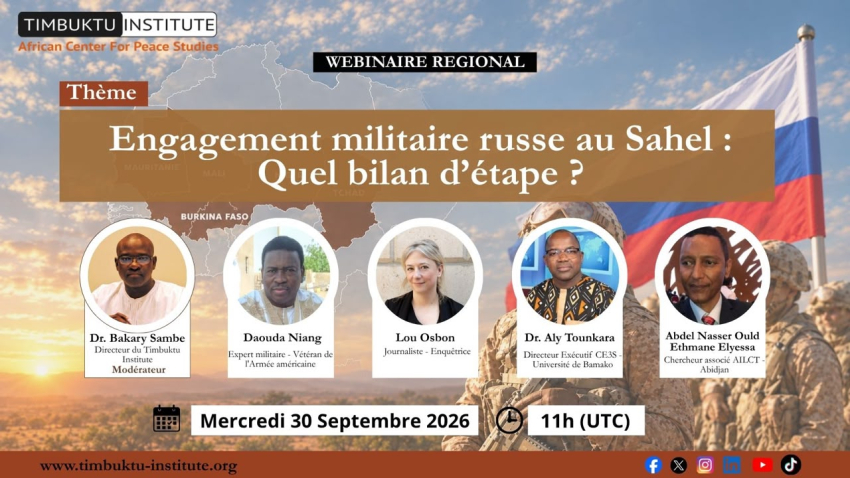

Sacré-Coeur 3 – BP 15177 CP 10700 Dakar Fann – SENEGAL.
+221 33 827 34 91 / +221 77 637 73 15
contact@timbuktu-institute.org

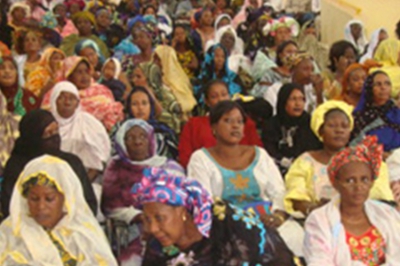
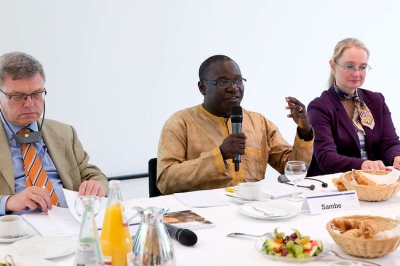
Timbuktu Institute- African Center for Peace Studies en partenariat avec la Fondation Friedrich Naumann, a mené une étude préliminaire sur les femmes et la prévention de l’extrémisme violent dans le cadre d’un projet test de recherche-action confiné à Bamako et environs qu’il vise à élargir dans les autres régions du Mali. L’étude dirigée par Dr. Bakary Sambe fait ressortir les difficultés que vit cette « matrice faible et en lutte ». Elle met en exergue l’extrême vulnérabilité des femmes, leur engagement rarement mis en valeur dans la prévention, mais aussi le besoin de renforcement des capacités de la société civile de même que la situation alarmante des droits des femmes face à des institutions religieuses très influentes malgré la confiance des femmes vis femmes vis-à-vis de l’Etat. Ce dernier est même plébiscité devant les partenaires internationaux sur fond d’inquiétudes quant à la stabilisation du pays et rôle de la MINUSMA. L’enquête a été menée par deux chercheures en janvier dernier par Mmes Yague Samb et Yousra Hamdaoui sous la direction scientifique du Timbuktu Institute.
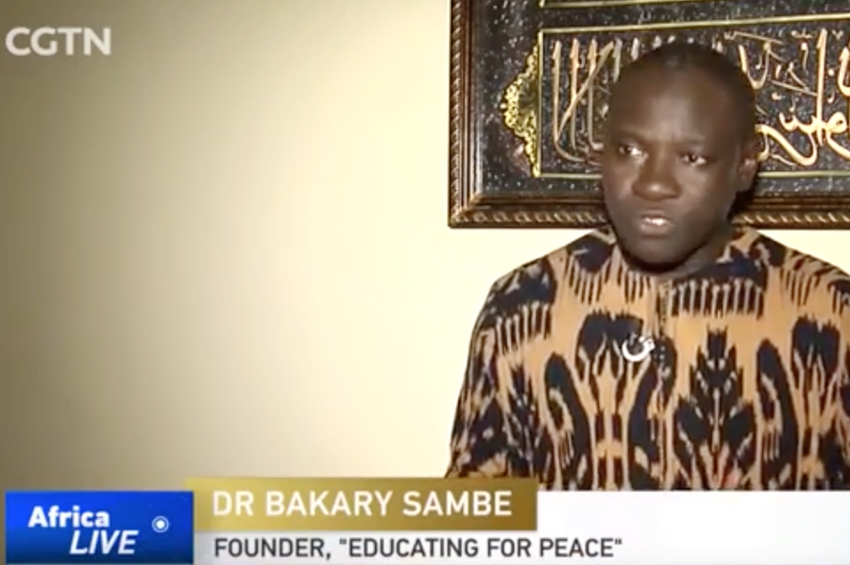
Dr. Bakary Sambe, directeur de l’institut et coordonnateur de l’Observatoire des radicalismes et conflits religieux en Afrique, revient, dans cette interview, sur les grandes lignes de cette étude préliminaire et nous en donne un aperçu analytique tout en souhaitant que la Fondation Naumann élargisse cette recherche-action dans les autres régions du Mali.
Votre étude préliminaire s’est limitée à Bamako, où sont localisées le gros des organisations de femmes et femmes leaders. Qu’est ce qui en ressort sur la perception des femmes du radicalisme et de l’extrémisme violent ?
Cette étude a surtout alerté sur la grande vulnérabilité socioéconomique des femmes. C’est une étude de perception qui s’est servie de la méthode CAP (connaissance, attitude et pratiques) pour mieux comprendre comment les acteurs eux-mêmes voient et analysent les phénomènes. Les femmes maliennes ainsi que les organisations féminines interrogées dans le cadre d’un questionnaire et de focus groupes à Bamako et Senou avec une présence importante de réfugiées, estiment que les deux facteurs les plus importantes de l’extrémisme violent restent la pauvreté (47%) et pour 40% ce serait le chômage. Cela prouve encore cette vulnérabilité qui nécessite des solutions urgentes aussi bien de la part de l’Etat que des partenaires internationaux du Mali.
Quel rôle les femmes peuvent-elles jouer contre le phénomène de l’extrémisme violent ?
Vous savez, les femmes ont une prédisposition dans la lutte contre l’extrémisme. Il est vrai qu’on les présente surtout comme les premières victimes de l’extrémisme violent mais on insiste rarement sur leur capacité à faire face à ce phénomène. Il faut rappeler que les femmes et les organisations féminines étaient presque seules à faire face à l’extrémisme religieux lorsqu’il menaçait leurs droits dans les années 1990s. Les hommes et surtout les hommes politiques ont attendu que le radicalisme devienne un enjeu sécuritaire pour le prendre au sérieux. Les femmes interrogées mettent à nu deux « grandes failles» dans les dispositifs nationaux et internationaux de lutte contre l’extrémisme : pour 63% d’entre-elles la société civile n’est pas assez outillée pour jouer pleinement son rôle contre ce phénomène, elles pensent aussi à 52% que les femmes ne sont pas assez impliquée dans la prévention et la lutte contre l’extrémisme violent. Pourtant différentes expériences montrent que les femmes sont capables de développer des formes de résilience communautaire méritant d’être prises en compte dans les différentes stratégies. Il suffit que leur rôle soit mieux valorisé notamment en ce qui est de la prévention auprès des plus jeunes.
En quelles institutions les femmes ont-elles confiance pour lutter efficacement contre l’extrémisme violent ?
Malgré des critiques assez sévères contre les institutions politiques, les femmes placent l’Etat en tête des acteurs capables de lutter contre l’extrémisme (28%). Viennent ensuite les Nations Unies (13%), puis la CEDEAO (12,5 %), la MINUSMA (11,5%) ou encore la France (8,5%). Il est intéressant de voir qu’elles dissocient les Nations Unies en général comme système de la MINUSMA en tant que mission de stabilisation dont la présence et l’action divisent les personnes interrogées dans le cadre de l’étude et qu’elles spécifient le rôle de la France avec un taux de confiance de 8.5% bien qu’elle soit est un acteur important de la lutte contre le terrorisme au Mali et au Sahel.
Dans le projet test, il est aussi question des droits des femmes, un sujet qui divise au Mali. Qu’en dit l’étude?
La situation des droits des femmes telle qu’analysée par les femmes et les organisations féminines maliennes n’est pas rassurante. Les femmes s’alarment de l’absence de « courage politique » mais aussi une forme d’inertie de la communauté internationale ou en tout cas l’absence de pression sur les autorités politiques. L’étude dénote ce grand paradoxe sur la position des femmes vis-à-vis de l’institution étatique. Cette percée de l’Etat comme acteur le mieux placé pour la lutte contre l’extrémisme dans un contexte où l’on assiste à un recul notoire des droits des femmes est très surprenante d’autant plus que pour beaucoup de femmes leaders, les autorités politiques n’ont jamais su tenir leurs positions face aux pressantes manifestations des associations religieuses contre la promulgation du fameux code de la famille et de la personne. Dans la perception de femmes et des organisations les représentant, la situation semble perdurer aujourd’hui, suite au « soutien décisif des associations islamiques à l’arrivée au pouvoir des nouvelles autorités issues des élections de 2012 ».
Le Mali, dont une partie importante du territoire échappe au contrôle de l’État, est une zone durement touchée par la crise sécuritaire sahélienne, où les conflits armés à grande échelle sont récurrents et la violence très répandue. Le principal facteur responsable de cette situation préoccupante serait, selon certains observateurs, si on devait le résumer en un seul mot, « l’injustice », rendue permanente ou persistante par son corollaire politique : État en déficit, mal gouvernance, corruption, crises alimentaires successives, frustrations accumulées. « Il y a une grande masse de la population qui est là, dans une situation désastreuse. D’année en année, les choses s’aggravent. Donc, à mesure que l’injustice grandit, il y a des réactions violentes et différentes forces qui essaient de tirer profit de cela », explique Moussa Tchangari, Secrétaire général d’Alternative Espaces Citoyens, à Niamey et membre de la Fondation Frantz Fanon. Les djihadistes profitent de ce « terreau favorable » créé par ces injustices pour islamiser le conflit, utiliser les frustrations pour recruter indéfiniment et attirer l’Occident dans le piège de l’intervention. « Les terroristes sont aussi des gens révoltés, qui pensent avec leurs actions pouvoir apporter un changement qui aille dans le sens de leur propre agenda politique», poursuit le chercheur.
Erreurs et stratégies Cette situation, qui échappe au contrôle de l’État, est gérée par les forces étrangères de la communauté internationale, installées dans le pays, qui doivent aider à trouver une solution. « Dans cette crise, la communauté internationale a au moins 40 ans de retard », lance le Dr Bakary Sambé, enseignant-chercheur, coordonnateur de l’Observatoire des radicalismes et conflits religieux en Afrique et directeur du think tank Timbuktu. « Dans les années 70, elle n’avait pas les moyens de fournir de l’aide à l’Afrique, frappée par la sécheresse, à cause du choc pétrolier qui touchait l’Europe et les États-Unis. Les pays vendeurs de pétrole ont utilisé la prédication et l’humanitaire pour s’implanter au Sahel. Puis, dans les années 80, la communauté internationale a commis une deuxième erreur, d’appréciation. Elle a imposé aux pays des politiques d’ajustements structurels, qui voulaient dire en quelque sorte : investissez le moins possible dans l’éducation, la santé, etc. et les puissances dites islamistes sont venues carrément occuper le terrain, via des centres culturels, des écoles, des services sociaux de base, pendant que l’État tentait de faire face au défi du déficit d’État. 40 ans après, la communauté internationale élabore des stratégies Sahel pour combattre les terrorismes, alors qu’ils sont là depuis 40 ans. La situation conflictuelle est en partie due à ces deux erreurs », affirme l’enseignant-chercheur.
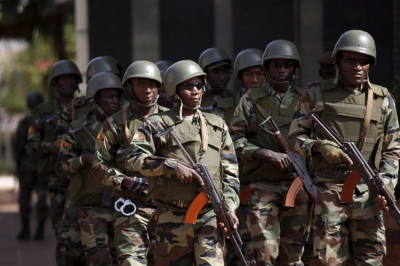
Armes contre idéologie Toujours est-il que pour faire face à la situation sécuritaire au Mali et dans le Sahel, les pays du G5 (Mauritanie, Tchad, Mali, Niger et Burkina Faso), soutenus par la France, se sont « unis face au terrorisme » et tentent de mettre sur pied une force régionale conjointe, qui comptera 5 000 militaires des cinq pays. Son centre de commandement a été inauguré le samedi 9 septembre, à Sévaré, par le chef de l’État malien, mais son financement, 450 millions d’euros annuels, peine toujours à être bouclé. Le premier bataillon de cette force dite du G5 devrait être opérationnel dès le mois de septembre et les premières opérations militaires transfrontalières menées dès le mois d’octobre. Pour autant, l’efficacité de cette énième force censée combattre le terrorisme au Sahel est loin de convaincre. « La façon dont on pose le problème n’est pas la bonne. On pense qu’on le résoudra avec une force militaire qui aura des moyens. Nos pays font fausse route. Il y a beaucoup de choses à destination de la population qui ne coûtent pas autant d’argent et qu’il faut faire. Il faut commencer par tout ce qui dépend de nous, ce pour quoi on a déjà les moyens, qui ne coûte pas d’argent mais demande de la volonté. Pourquoi ne commence-t-on pas d’abord par ça, au lieu de s’épuiser à obtenir le soutien de la communauté internationale quand on n’a pas celui de son peuple ? Ça montre vraiment le décalage », observe Moussa Tchangari. Pour le Dr Bakary Sambé, il faut privilégier les approches multiples et non seulement se concentrer sur le recours à la force pour résoudre un problème aux racines profondes. « Si la solution militaire était une solution pour combattre le terrorisme, il n’y aurait plus de Talibans en Afghanistan, alors que Trump veut y retourner. Il n’y aurait plus de djihadistes au Nord du Mali. Vous savez, je n’ai jamais vu une idéologie défaite par les kalachnikovs », conclut, sceptique, l’enseignant-chercheur.
source: www.journaldumali.com
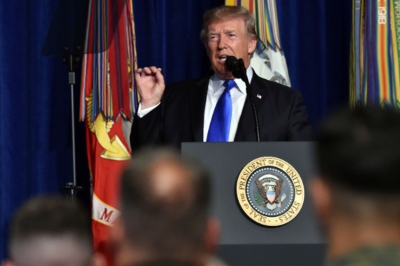
Le triste anniversaire des attentats du 11 septembre coïncide, cette année, avec un contexte où l’idée d’un retour en force en Afghanistan agitée par l’Administration Trump, « préoccupe tous les partisans de la paix et d’une meilleure solidarité entre les peuples surtout à l’ère des menaces transnationales », déclare le Dr. Bakary Sambe enseignant-Chercheur à l’université Gaston Berger de Saint-Louis, joint par la rédaction à cette occasion. Il rappelle que « des soldats américains s’y trouvent encore et qu’on espérait plutôt une désescalade ».
« Le monde se souviendra toujours avec tristesse et émotion de cet attentat meurtrier et barbare qui a changé la nature même du terrorisme ; ce mal du siècle qui instaure la vulnérabilité en partage au sein de la communauté internationale », soutient Bakary Sambe, directeur du Timbuktu Institute-African Center for Peace Studies.
Sambe rappelle que «pour rendre hommage aux victimes de tous les pays, aux Etats-Unis comme quotidiennement au Sahel, le monde entier doit, aussi, se mobiliser davantage contre le terrorisme qui n’épargne plus aucun territoire, une mobilisation qui doit contribuer à la promotion de la culture de la paix »
Rappelant que « les jeunes nés en 2001 sont ceux-là mêmes qui sont dans les collèges et lycées du Sénégal que nous parcourons, aujourd’hui, dans le cadre du Programme « Educating for Peace » ; ils ont plus besoin d’une culture de la paix que de discours de guerre. Ils nous expriment plus l’envie d’un monde sans violence faisant bloc contre tous les extrémismes politique comme religieux »
Pour le coordonnateur de l’Observatoire des Radicalismes et Conflits religieux en Afrique (ORCRA), « le discours belliciste de Donald Trump ne rassure guère ». Il affirme que « Barack Obama avait pourtant fait des pas appréciables dans la pacification de la narrative américaine envers le monde musulman lors du discours historique du Caire dans l’enceinte même de l’Université d’Al-Azhar et qui signait un nouveau départ allant jusqu’à la nomination d’une envoyée Spécial au monde musulman, Mme Sarah Pandith, à l’époque».
« Nous devons nous évertuer à ce que les tristes leçons du passé puissent servir dans le cadre de la construction et de la consolidation de la paix et il ne faudrait pas opposer le peuple américain au monde musulman. Ils gagneraient à mieux se connaître et à se respecter. Lors d’un voyage d’étude aux Etats-Unis (IVLP 2008), je m’étais rendu compte que l’urgence était plus de combattre ensemble une méconnaissance mutuelle par le dialogue et le respect. Une kalachnikov n’a jamais défait une idéologie; il faut plus d’écoles que de chars », rappelle Dr. Sambe.
Exprimant son inquiétude, il conclut que « toute surenchère militaire rappelant de mauvais souvenirs de l’ère Bush serait dommageable pour les relations et la coopération nécessaire entre les Etats-Unis et le monde musulman qui sont, tous les deux, aussi interpellés par le même défi du terrorisme ».
Source: dakaractu.com
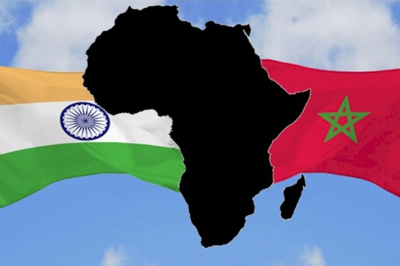
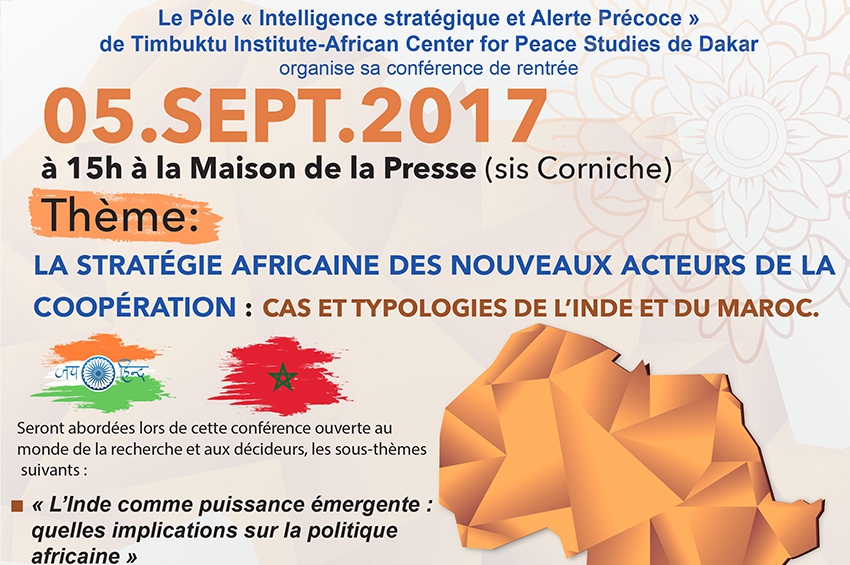
Le Pôle « Intelligence stratégique et Alerte Précoce » de Timbuktu Institute-African Center for Peace Studies de Dakar, organise, le Mardi 5 septembre à 15h à la Maison de la Presse (sis Corniche), sa conférence de rentrée sur : «La stratégie africaine des nouveaux acteurs de la coopération : Cas et typologies de l’Inde et du Maroc ».
La conférence-débat sera co-animée par Alioune Ndiaye, de l’Université de Sherbrooke (Canada) auteur de « L’Afrique dans la politique étrangère indienne : les nouvelles ambitions africaines de New Delhi » et Dr. Bakary Sambe auteur de « Islam et diplomatie : la politique africaine du Maroc ». Elle sera modérée par le journaliste politologue Yoro Dia.
Seront abordées lors de cette conférence ouverte au monde de la recherche et aux décideurs, les sous-thèmes suivants : « L’Inde comme puissance émergente : quelles implications sur la politique africaine » et « Le Maroc en Afrique : entre diplomatie religieuse et conquête économique ».
Cette conférence de rentrée qui entre dans le cadre des études stratégiques de l’Institut est organisée en partenariat avec IntellAfrica active dans l’intelligence économique et les Relations publiques, d’Oméga Finance, du Centre d’études sur le partenariat Indo-africain et Eclore-France.
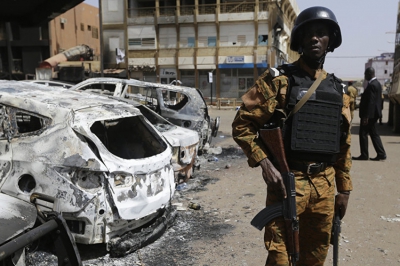
Plus d’une semaine après, l’attaque terroriste de Ouagadougou n’est toujours pas revendiquée. Cela rompt d’avec les pratiques des groupes terroristes qu’oppose même une certaine concurrence dans la région. Dans cet entretien, le Directeur de Timbuktu Institute-African Center for Peace Studies (Dakar) analyse cette « situation assez singulière ».
Pour Bakary Sambe, « au début, certains indices comme le retard de la revendication avaient dirigé les analystes vers la piste Etat Islamique qui ne disposerait pas encore d’un appareil de communication huilé dans cette région assez éloignée du centre de commandement, mais aussi en se penchant sur les précédentes attaques attribuées à Abul Walid Al-Sahraoui qui cherche un territoire de déploiement dans la région ».
Mais, soutient le spécialiste des réseaux transnationaux, « de plus en plus, on pourrait penser que le fait que l’attentat ait touché des victimes qui comptent parmi les plus grands prédicateurs salafistes comme les deux koweïtiens et le Cheikh Tano, a dû mettre les commanditaires dans un certain embarras, ne pouvant pas justifier au niveau de leur base affective de s’en prendre à des personnalités jugées proches idéologiquement. »
« Ils ne peuvent pas facilement admettre d’avoir commis un attentat qui a coûté la vie à des acteurs salafistes aussi importants comme Cheikh Walid El Aly et Cheikh Fahd Al-Housseiny, proches de la mouvance d’Ihyâ Turâth qui répand l’idéologie wahhabite dans le monde et dans la région avec plusieurs voyages déjà effectués en Guinée, Gambie mais aussi des liens avec des groupes salafistes sénégalais identifiés », explique le coordinateur de l’Observatoire des radicalismes et conflits religieux en Afrique. « Pour toutes ces raisons, il faut absolument redoubler de vigilance », insiste-t-il.
« On dirait même que cette dernière attaque de Ouagadougou semble avoir plus touché les mouvances radicales africaines qui ont beaucoup communiqué à travers des condamnations aussi claires comme jamais auparavant », souligne le directeur de Timbuktu Institute.
Et cela « expliquerait aussi, d’après lui, que des communiqués aient émané de différents mouvements islamistes qui n’ont jamais réagi officiellement de la sorte ces dernières années ni contre les exactions récurrentes de Boko Haram, d’Aqmi au Mali et encore moins les attentats de Bassam ou la destruction des mausolées de Tombouctou bien avant ».
Selon toujours Bakary Sambe, « il faudrait déplorer le fait que dans le communiqué des acteurs proches de la mouvance wahhabite, de la Ligue des anciens étudiants sénégalais d’Arabie Saoudite dirigée par Mohamed Ahmad Lô et d’autres mouvements islamiques sénégalais, on puisse noter une hiérarchie des indignations contre cette horrible attaque, différenciant, de manière indécente, entre musulmans et non musulmans mais aussi qualifiant, arbitrairement, certains de victimes et d’autres de martyrs selon leurs obédiences ».
« Cette pratique qui en dit long sur une certaine proximité idéologique a, d’ailleurs, beaucoup choqué au Burkina Faso, un pays africain frère, où la population a encore une fois montré son unité conformément à l’harmonieuse tradition de cohabitation religieuse que les djihadistes essaient, d’ailleurs, de détruire », conclut Dr. Bakary Sambe.
Bakary Sambe, enseignant-chercheur à l’université Gaston-Berger de Saint-Louis, est coordonnateur de l’Observatoire des radicalismes et conflits religieux en Afrique et directeur du think tank Timbuktu. Pour lui, les terroristes ont « la volonté de faire du Burkina Faso un pays carrefour, un espace d’extension des zones d’intervention des groupes jihadistes ».
L’attaque d’un restaurant à Ouagadougou dimanche 13 août, suivie d’une prise d’otages, est-ce que c’est exactement le même scénario qu’il y a un an et demi, le 15 janvier 2016, au café Cappuccino et à l’hôtel Splendid, ou voyez-vous des différences ?
Bakary Sambe : Le modus operandi de la dernière attaque laisse croire quand même à une similitude par rapport aux attaques qu’on a connues avec le Cappuccino et le Splendid. Mais tout de même le Burkina Faso n’a pas cessé d’être attaqué depuis les attentats de 2015 et de 2016.
En novembre 2016, il y avait déjà un double attentat à Soum, à Djibo et à Pétéga, avec des attaques à Ariel. Et en mars 2017, les mêmes attaques à Baraboulé. Et trois autres attaques, en juin, dans la région de Soum.
Donc toutes ces localités – les localités de Titabé, de Sentangué, de Tin-Akof -, ont continué à être la cible des jihadistes, et de manière continuelle. C’est dire que le Burkina Faso, dont le premier attentat marquait la fin des exceptions en Afrique de l’Ouest, commence malheureusement à s’habituer au phénomène jihadiste. Et ce dans un pays qui a constitué un exemple de stabilité, un modèle de cohabitation et où règne une véritable cohésion sociale.
Pour vous, c’est ce modèle que sont venus attaqués les jihadistes ?
Le Burkina Faso symbolisait un modèle, dans le sens de la cohabitation pacifique entre toutes les communautés religieuses, que le jihadisme veut remettre en cause. Notamment avec l’émergence de jihadisme endogène, avec d’Ibrahim Malam Dicko et son groupe Ansarul Islam qui constitue une nouveauté, si l’on sait que jusqu’ici, c’était plutôt les groupes transnationaux – comme Al-Mourabitoune, al-Qaïda au Magrheb islamique, etc. – qui opéraient dans cette région du Sahel.
La société burkinabè est-elle perméable aux divisions religieuses ?
Je crois qu’il y a une capacité de résilience au Burkina Faso – on la trouve d’ailleurs en Côte d’Ivoire -, qui fait qu’il sera difficile d’arriver à un jihadisme de masse dans ce pays-là. En tout cas au niveau de la population, qui a encore des capacités de résilience, des capacités de régénérer ses ressources cultuelles, qui ont été à la base de ce modèle tant cité en Afrique de l’Ouest.
Quelles peuvent être les autres raisons qui font du Burkina une cible privilégiée des jihadistes aujourd’hui ?
Il y a aussi la volonté de faire du Burkina Faso un pays carrefour, un espace d’extension des zones d’intervention des groupes jihadistes. Il faut quand même noter que, au Burkina Faso, pas moins de six groupes sont impliqués dans des enlèvements et des attaques : Ansar Dine, le Front de libération du Macina, l’État islamique dans le Grand Sahara, Ansarul Islam d’Ibrahim Malam Dicko. Et tant d’autres.
Si l’on sait que ce pays aujourd’hui est entenaillé avec des plusieurs opérations militaires en même temps : l’opération Celo qui est menée par les forces maliennes dans le nord-ouest, l’opération Tapoa à l’est du pays, et l’opération Segéré au Nord en alliance avec les forces togolaises.
Sacré-Coeur 3 – BP 15177 CP 10700 Dakar Fann – SENEGAL.
+221 33 827 34 91 / +221 77 637 73 15
contact@timbuktu-institute.org