Timbuktu Institute - Semaine 1 - mai 2026 

Télécharger l'intégralité de la Météo Sahel 

Au Togo, l’affaire Affectio refait surface.  Honoré Sitsopé Sokpor dit Affectio a en effet été emprisonné une fois de plus le 4 mai, soit quelques mois seulement après sa mise sous contrôle judiciaire. Pour rappel, le poète et activiste, critique du pouvoir, avait été interpellé en avril pour avoir divulgué des images de chantier dans la capitale, qu'il aurait envoyées à des tiers de l'extérieur, notamment au « M66 » ou au « Mouvement du 6 juin », des mouvements activistes de la diaspora. Ces deux mouvements sont actifs depuis 2025 lors des grandes manifestations contre le pouvoir. Sa première arrestation était liée à un poème jugé virulent qu’il avait posté sur les réseaux sociaux. Selon son avocat, « le procureur a estimé que ce qu'il a fait est grave, étant donné qu'il est sous contrôle judiciaire », bien qu’aucun chef d’inculpation n’ait encore été retenu contre lui. De leur côté, l’opposition et la société civile crient à l’injustice et exigent sa libération immédiate et sans condition. 

Par ailleurs, on note que l’arrestation d’Affectio accentue les tensions politiques et les inquiétudes sur les libertés publiques Le front « Touche pas à ma constitution » de l'opposant Nathaniel Olympio parle de « cas d'acharnement ». Il réclame la libération de tous les prisonniers politiques et la fin des intimidations. Le leader de l'ANC, Jean-Pierre Fabre, embouche la même trompette et dénonce ces arrestations qu'il juge arbitraires. Ce dernier s'est étonné des conditions d'arrestation d'Affectio : « Quel est le danger de prendre des photos ? Sommes-nous dans un cadre de secret-défense ? Est-ce que le site sur lequel la photo a été prise est interdit ? » Peut-on prendre des photos sur un chantier public ? » Il estime que l’incarcération est abusive et relève purement et simplement du harcèlement. Cette arrestation vient donc durcir le climat sociopolitique togolais, déjà tendu, alors que la situation sécuritaire au nord du pays reste inquiétante.

Lomé et New Delhi renforcent leur coopération autour de la gouvernance parlementaire

Sous un autre registre, Jeudi, à Lomé, le garde des Sceaux, ministre de la Justice et des Droits humains, Pacôme Adjourouvi, a eu un entretien avec l’ambassadeur de l’Inde au Togo, Sayed Razi Haider Fahmi, au sujet des perspectives de coopération bilatérale en matière de gouvernance démocratique et de renforcement du fonctionnement des institutions parlementaires. En effet, l’Inde accompagne le Togo dans sa marche vers la maturité parlementaire. Considéré comme l’une des « plus grandes et plus anciennes démocraties parlementaires », le pays de Gandhi pourrait soutenir efficacement le Togo dans sa quête d'un parlement digne de ce nom. Pour l'autorité indienne, « dans une démocratie, le Parlement demeure l'expression des aspirations souveraines des citoyens ». Son homologue  togolais semble vouloir échanger des bonnes pratiques parlementaires afin d’assurer la transformation institutionnelle souhaitée.

Timbuktu Institute – Week 1 – May 2026

Download the full Sahel weather report

The death of opposition figure Anicet Ekane, who died in the custody of the Cameroonian gendarmerie, caused a great stir in the country. Having died on 1 December 2025 after 38 days in police custody at the height of the protests against Paul Biya’s re-election, he was buried on Saturday 9 May in Bomono, his home village. But beyond the passing of this historic figure of the political opposition, it was the tensions surrounding his funeral – in which his own party, Manidem, refused to participate – that highlighted the divisions within the opposition. Firstly, given the dispute surrounding the organisation of Anicet Ekané’s funeral, his sister Mariane Simone Ekané had released audio recordings, purportedly reflecting the deceased’s wish that the organisation of his funeral should fall to his party, Manidem (African Movement for New Independence and Democracy), alongside his family. Ultimately, the courts ruled in favour of the deceased’s son, Muna Ekane, to the detriment of part of the family, to conduct the funeral.

In the wake of this, Maurice Kamto’s Movement for the Renaissance of Cameroon (MRC) announced that it would not attend the funeral. Despite the controversy, opposition figure Issa Tchiroma Bakary called for participation in the funeral. In response, MANIDEM announced its decision to break the agreement reached with Issa Tchiroma Bakary regarding the October 2025 presidential election. Underlying this imbroglio are suspicions regarding the role of the government, accused by some of doing everything in its power to prevent popular mobilisation around this event, at a time when the authorities had halted tribute ceremonies for the deceased last March. Furthermore, this episode, in which Issa T. Bakary’s move is viewed as a defection by part of the opposition, is indicative of the tensions within the opposition itself. Meanwhile, the institutional restructuring in Cameroon – of which the reinstatement of the post of Vice-President is the most telling sign – appears to be reinforcing the marginalisation of the political opposition.

 Death of political figures

In the space of a few months, Paul Biya’s regime has lost several of its iconic pillars. Following the deaths of Marcel Niat Njifenji, President of the Senate, and Ayang Luc, President of the Economic and Social Council, the former President of the National Assembly, Cavaye Yeguié Djibril, passed away on 6 May at the age of 86. A pillar of the Biya system and a loyal representative in the north, his passing comes against a backdrop of quiet realignment at the very top of Cameroonian power. This, moreover, confirms the gradual fading of a generation of political figures who emerged in the 1980s and 1990s.

On the other side of the political spectrum, Yaya Saïdou Maidadi, a leading opposition figure, died on 7 May. Born into a family close to the ruling establishment (his father served as a minister under Ahidjo and Biya), he had chosen the path of opposition activism. After joining the SDF (Social Democratic Front) in 1992 and becoming its first national vice-president, he left the party in 2002 following differences with John Fru Ndi, before founding the Alliance of Progressive Forces and subsequently joining the UNDP, where he served as National Secretary for Communications and as a member of the Political Bureau at the time of his death.

Timbuktu Institute - Semaine 1 - mai 2026

Télécharger l'intégralité de la Météo Sahel 

Mort dans les geôles de la gendarmerie camerounaise, le décès de l’opposant Anicet Ekane avait suscité une vive émotion dans le pays. Décédé le 1er décembre 2025 après 38 jours de garde à vue au plus fort des contestations contre la réélection de Paul Biya, il a été inhumé samedi 9 mai, à Bomono, son village natal. Mais au-delà de la disparition de cette figure historique de l’opposition politique, ce sont les tensions autour de ses obsèques - auxquelles son propre parti le Manidem a refusé de participer - qui auront mis en lumière les tensions au sein de l’opposition. Tout d’abord, compte tenu du conflit qui entourait l’organisation des obsèques d’Anicet Ekané, sa sœur Mariane Simone Ekane avait rendu public des enregistrements audio, supposés traduire la volonté du défunt selon laquelle l’organisation de ses funérailles devait revenir à son parti le Manidem (Mouvement africain pour la nouvelle indépendance et la démocratie), accompagné de sa famille. En fin de compte, c’est en faveur du fils du défunt, Muna Ekane que la justice a tranché, au détriment d'une partie de la famille, pour conduire les obsèques. 

Dans la foulée, le Mouvement pour la renaissance du Cameroun (MRC) de Maurice Kamto a annoncé sa non-participation aux funérailles. En dépit de la controverse, l’opposant Issa Tchiroma Bakary, a appelé à participer aux obsèques. Comme réponse, le Manidem a annoncé sa décision de rompre l’accord conclu avec Issa Tchiroma Bakary, dans le cadre de la présidentielle d’octobre 2025. En arrière-plan de cet imbroglio, des suspicions sur le rôle du pouvoir accusé par certains de tout faire pour empêcher une mobilisation populaire autour de cet événement, au moment où les autorités avaient interrompu en mars dernier, des cérémonies d’hommage au défunt. Par ailleurs, cet épisode où la démarche d’Issa T. Bakary est jugée comme une défection par une partie de l’opposition est révélatrice des lignes de tensions au sein de celle-ci. Pendant ce temps, la recomposition institutionnelle au Cameroun dont le retour du poste de vice-présidente est la manifestation la plus parlante, semble renforcer la marginalisation de l’opposition politique.

Disparition de figures politiques

En quelques mois, le régime de Paul Biya aura perdu plusieurs de ses piliers emblématiques. Après notamment les décès de Marcel Niat Njifenji, président du Sénat et d’Ayang Luc, président du Conseil économique et social, l’ancien président de l'Assemblée nationale Cavaye Yeguié Djibril s’est éteint le 6 mai à l’âge de 86 ans. Pilier du système Biya et fidèle relais dans le septentrion, sa disparition intervient dans un contexte de recomposition silencieuse au sommet du pouvoir camerounais. Ceci, qui plus est, confirme l'effacement progressif d'une génération de figures politiques ayant émergé dans les années 1980 et 1990.

De l’autre côté du paysage politique, Yaya Saïdou Maidadi, figure de l'opposition, est décédé le 7 mai. Issu d'une famille proche du pouvoir (son père fut ministre sous Ahidjo et Biya), il avait choisi la voie du  militantisme d'opposition. Après avoir rejoint le SDF  (Social Democratic Front) en 1992 et en être devenu premier vice-président national, il quitte le parti en 2002 à la suite de divergences avec John Fru Ndi, avant de fonder l'Alliance des Forces Progressistes, puis de rejoindre l'UNDP, où il occupait les fonctions de Secrétaire national à la Communication et de membre du Bureau politique au moment de son décès.

Timbuktu Institute – Week 1 – May 2026

Download the full Sahel weather report

The transitional President, Assimi Goïta, addressed the nation in a speech broadcast on national television in an effort to stabilise public opinion. This address followed a series of violent attacks that had cast doubt on the state’s ability to protect its citizens. The President assured the public that the situation was under control, seeking to reassure the population and project an image of complete control. By addressing the nation directly, he sought to quell destabilising rumours and reaffirm the strength of the military command. This speech aimed to restore confidence in the Malian Armed Forces (FAMa) and to demonstrate that the state remains operational despite growing pressure from armed groups. He urged Malians not to succumb to the information war, whilst promising a response to any attempt to undermine the integrity of the national territory. By asserting that everything is under control, the government is seeking to prevent panic that could destabilise the domestic situation. However, the effectiveness of this speech is at odds with the reality on the ground. Whilst the President’s words reassure the population, they also create an expectation of concrete results.

AES response: air strikes by the unified force

The unified force of the Alliance of Sahel States (AES) has launched a major counter-offensive in the form of air strikesin northern Mali. Confirmed by the Nigerien authorities, these operations follow the bloody attacks that have struck several parts of Malian territory. This intervention marks an operational turning point for the AES, proving that solidarity between Mali, Niger and Burkina Faso is now being translated into concrete military action. The airstrikes targeted convoys of vehicles and logistical positions of the armed groups, using air superiority to locate the enemy in desert areas that are difficult to access. The intensification of these operations demonstrates a determination to give the armed groups no respite, whilst sending a message about the new regional alliance’s capacity to protect its territory. This response is presented as a success demonstrating the alliance’s growing technological capabilities in the face of a constantly shifting threat. By striking from the air, the AES seeks to inflict heavy material losses on the armed groups without exposing its ground troops to ambushes. It is a show of force aimed at legitimising the alliance in the eyes of the population by demonstrating its ability to ensure the protection of its member states. However, the regional dimension of these strikes shows that the Malian conflict remains a source of intense diplomatic friction. External accusations highlight the difficulty for Bamako in waging its war whilst maintaining a calm dialogue with the international community.

The capture of Tessalit by the FLA

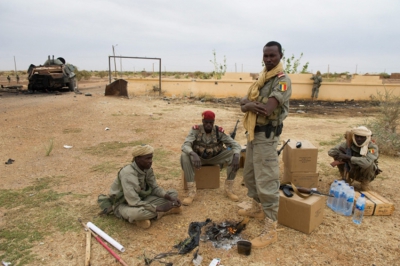
On the ground, the situation remains complex, as evidenced by the capture of the strategic camp at Tessalit by the Azawad Liberation Front (FLA) in early May 2026. Videos have circulated showing rebel fighters occupying this key base near the Algerian border, a historic crossing point and a major security chokepoint in the Far North. Meanwhile, the FLA spokesperson has spoken out publicly to affirm the movement’s determination to control its ancestral territories and repel the armed forces. The fall of Tessalit, a base equipped with a runway essential for resupply and control of the Malian Sahara, represents a significant logistical setback for the Malian army. This demonstrates that despite the massive air strikes by the AES, ground-based groups retain the will to coordinate and seize territory. This rebel advance weakens the state’s line of defence in the North and forces military commanders to rethink their strategy of territorial occupation in the face of highly mobile forces with intimate knowledge of the area. The loss of Tessalit highlights the disconnect between the aerial successes claimed by the government and the reality of territorial control on the ground. For the FLA, this victory is not merely military; it is political: it strengthens their position of strength ahead of any potential talks. Control of such an isolated and strategic base complicates the resupply of the FAMa. This shows that the current war is being fought on at least two fronts: technological air superiority for the state and mastery of the terrain for the rebels, making stabilisation increasingly complex.

Centralisation of power: Assimi Goïta also becomes Minister of Defence

Mali has undergone a major political shift with President Assimi Goïta’s decision to appoint himself as Minister of Defence. By combining these two roles, he is cutting out the middlemen to directly oversee day-to-day military operations. This move demonstrates his determination to consolidate his power and act more swiftly in the face of threats to the country. It is a clear signal that he is securing his position as a warlord, where the regime’s future now depends heavily on successes on the ground. This decision also allows him to ensure the military’s loyalty by personally managing the armed forces’ budget and strategy in a highly tense climate. Assimi Goïta’s self-appointment is a gamble on the centralisation of command. If the situation improves, he will be the nation’s saviour; conversely, if failures mount up, he will be solely responsible in the eyes of the army and the people. It is a high-risk strategy to maintain absolute control over the country.

Timbuktu Institute - Semaine 1 - mai 2026

Télécharger l'intégralité de la Météo Sahel

Le Président de la transition, Assimi Goïta, a pris la parole lors d'un discours à la télévision nationale afin de stabiliser l'opinion publique. Cette intervention est survenue après une série d'attaques violentes ayant semé le doute sur la capacité de l'État à protéger ses citoyens. Le Président a assuré que la situation est maîtrisée, cherchant ainsi à rassurer les populations et à projeter une image de maîtrise totale. En s'adressant directement à la nation, il a tenté de couper court aux rumeurs de déstabilisation et de réaffirmer la solidité du commandement militaire. Ce discours visait à restaurer la confiance dans les forces armées maliennes (FAMa) et à montrer que l'État reste opérationnel malgré la pression croissante des groupes armés. Il a invité les Maliens à ne pas céder à la guerre de l'information, tout en promettant une riposte contre toute tentative de porter atteinte à l'intégrité du territoire national. En affirmant que tout est sous contrôle, le pouvoir cherche à prévenir des mouvements de panique qui pourraient fragiliser la situation interne. Cependant, l'efficacité de ce discours se heurte à la réalité des faits sur le terrain. Si la parole présidentielle rassure la population, elle crée également une attente de résultats concrets.

Riposte de l'AES : les frappes aériennes de la force unifiée

La force unifiée de l'Alliance des États du Sahel (AES) a lancé une contre-offensive majeure sous la forme de frappes aériennes dans le nord du Mali. Confirmées par les autorités nigériennes, ces opérations font suite aux attaques sanglantes ayant touché plusieurs parties du territoire malien. Cette intervention marque un tournant opérationnel pour l'AES, prouvant que la solidarité entre le Mali, le Niger et le Burkina Faso se traduit désormais par des actions militaires concrètes. Les bombardements ont visé des colonnes de véhicules et des positions logistiques des groupes armés, utilisant la supériorité aérienne pour localiser l'ennemi dans des zones désertiques difficiles d'accès. L'intensification de ces traques montre une volonté de ne laisser aucun répit aux groupes armés, tout en envoyant un message sur la capacité de protection de la nouvelle alliance régionale. Cette riposte est présentée comme un succès démontrant la montée en puissance technologique de l'alliance face à une menace en mouvement constant. En frappant depuis les airs, l'AES cherche à infliger des pertes matérielles lourdes aux groupes armés sans exposer ses troupes au sol à des embuscades. C'est une démonstration de force qui vise à légitimer l'alliance aux yeux des populations en montrant sa capacité à assurer la protection de ses pays membres. Toutefois, la dimension régionale de ces frappes montre que le conflit malien reste un sujet de friction diplomatique intense. Les accusations externes soulignent la difficulté pour Bamako de mener sa guerre tout en maintenant un dialogue serein avec la communauté internationale.

La prise de Tessalit par le FLA

Sur le front terrestre, la situation reste complexe, comme en témoigne la prise du camp stratégique de Tessalit par le Front de Libération de l'Azawad (FLA) début mai 2026. Des vidéos ont circulé montrant les combattants rebelles occupant cette base névralgique située près de la frontière algérienne, un point de passage historique et un verrou sécuritaire majeur du Grand Nord. Parallèlement, le porte-parole du FLA s'est exprimé publiquement pour affirmer la détermination du mouvement à contrôler ses territoires ancestraux et à repousser les forces armées. La chute de Tessalit, base dotée d'une piste d'atterrissage essentielle pour le ravitaillement et le contrôle du Sahara malien, représente un revers logistique important pour l'armée malienne. Cela démontre que malgré les frappes aériennes massives de l'AES, les groupes au sol conservent la volonté dde coordination et de conquête territoriale. Cette avancée rebelle fragilise la ligne de défense de l'État dans le Nord et oblige les états-majors à repenser leur stratégie d'occupation territoriale face à des forces très mobiles et connaissant parfaitement la zone. La perte de Tessalit souligne le décalage entre les succès aériens revendiqués par le gouvernement et la réalité du contrôle territorial au sol. Pour le FLA, cette victoire n'est pas seulement militaire, elle est politique : elle renforce leur position de force avant d'éventuelles discussions. Le contrôle d'une base aussi isolée et stratégique complique le ravitaillement des FAMa. Cela montre que la guerre actuelle se joue sur au moins deux plans : une supériorité technologique aérienne pour l'État et une maîtrise de la géographie terrestre pour les rebelles, rendant la stabilisation de plus en plus complexe.

Centralisation du pouvoir : Assimi Goïta devient par ailleurs ministre de la Défense

Le Mali a connu une évolution politique majeure avec la décision du président Assimi Goïta de s'octroyer lui-même les fonctions de ministre de la Défense. En cumulant ces deux fonctions, il supprime les intermédiaires pour diriger directement les opérations militaires au quotidien. Ce choix montre sa volonté de verrouiller son pouvoir et d'agir plus vite face aux menaces qui pèsent sur le pays. C'est un signal clair, il assure sa position de chef de guerre, où l'avenir du régime dépend désormais grandement des succès sur le terrain. Cette décision lui permet aussi de s'assurer de la fidélité des militaires en gérant lui-même le budget et la stratégie des armées dans un climat très tendu. Cette auto-désignation d'Assimi Goïta est un pari sur la centralisation du commandement.. Si la situation s'améliore, il sera le sauveur de la nation ; en revanche, si les échecs s'accumulent, il sera le seul responsable aux yeux de l'armée et du peuple. C'est une stratégie de risque maximal pour garder un contrôle absolu sur le pays.


Timbuktu Institute – Week 1 – May 2026

Download the full Sahel weather report

On Saturday 9 May, the broad presidential coalition brought together activists and supporters from across the region to pay tribute to President Diomaye Faye. The “Diomaye Président” coalition gathered in Mbour, the current president’s stronghold, to honour him in the presence of his parents, relatives and friends, two years after he came to power.

Diomaye Faye’s supporters reveal their ambitions for 2029

This large-scale gathering is seen as a political test, as tensions appear to persist within the ruling party, Pastef, led by Prime Minister Ousmane Sonko. A trial run, or a masterstroke? In any case, his supporters believe they have succeeded in mobilising support and intend to maintain this momentum for the upcoming elections. The Minister for Trade and former Managing Director of Nestlé’s Africa and Middle East Research and Development Centre, who attended the meeting, said: “I have never seen, in two years, so many results… We want to tell you that the ‘Diomaye-President’ coalition is a lever for building this Senegal. That is why, in 2029, the President must seek another five-year term. No president has ever served just a single term in Senegal, so we, the Senegalese people, want him to be our candidate in 2029 and for him to win for the development of Senegal.” He clearly expressed his willingness to support President Faye’s candidacy, despite internal tensions.

Internal divisions within Pastef are fuelling political speculation

These tensions have manifested in a series of dismissals among the “pro-Sonko” faction in recent months. Following the dismissal of the director of SNHLM, it is now the turn of Ousseynou Ly, the former presidential spokesperson, to bear the brunt of these tensions. These dismissals are seen as highly politically motivated given the individuals’ close ties to the Pastef leader. They reflect the persistent tensions within the state and fuel the notion of an internal political realignment at the expense of figures close to Ousmane Sonko and the Pastef party. Pastef party activists continue to voice criticism against their party colleague – who is also the President of the Republic – and speak of an attempt to ‘de-Pastefise’ the government. According to some observers, Bassirou is already poised to take over after Sonko. The appointment of Abdoulaye Tine, a lawyer and member of the presidential coalition, to replace Mr Ly, is proof of this. As a reminder, the replacement of Aïda Mbodj by Aminata Touré at the head of the coalition had, according to many analysts, signalled the tone of the internal power struggle that was to follow.

During an interview with three Senegalese journalists, President Faye was keen to clarify his relationship with his Prime Minister: “As long as he is Prime Minister, it means he has my trust. The day that trust no longer exists, I will appoint another Prime Minister. ” This statement frustrated several leaders, activists and supporters of the ruling party, who took to the streets to express their discontent. This outburst by President Bassirou Diomaye Faye highlights the fragilities within the majority, where the question of the balance of power between the Head of State and his Prime Minister continues to fuel debate and frustration.

Senegal–Mali: Dakar calls for a coordinated regional response to the terrorist threat

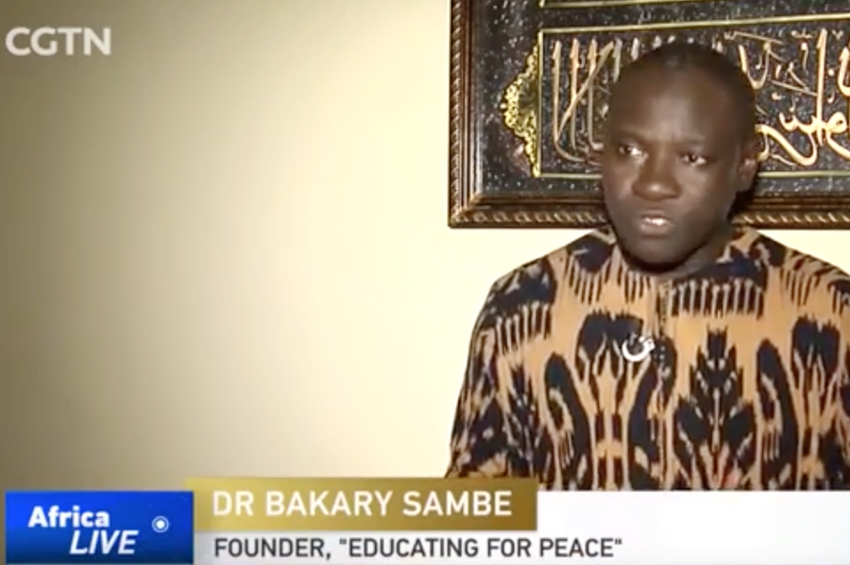
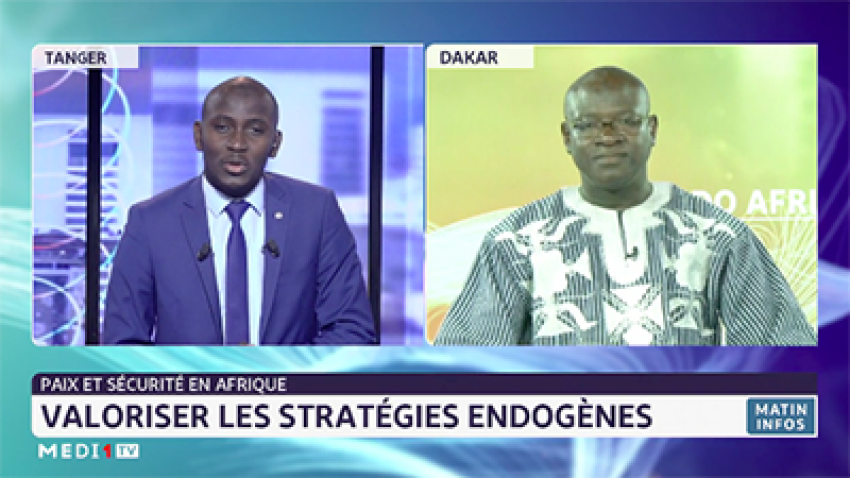
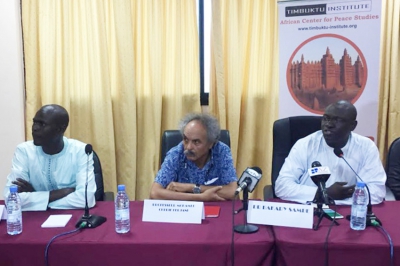
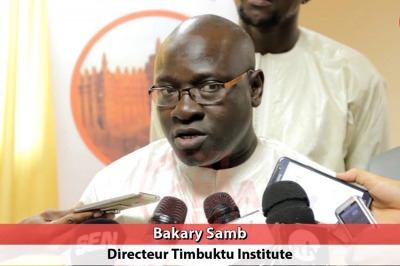
On the security front, the prevailing situation in Mali is a cause for concern for Senegal due to the shared border and trade relations between the two countries. For President Faye, “everything that affects Mali concerns us directly”, emphasising the historical ties between Dakar and Bamako. He also believes that Senegal must support Mali in its fight against terrorism. “We must strengthen cooperation with Bamako through the exchange of intelligence and joint patrols. ” He thus calls on all ECOWAS countries to take joint and coordinated action. The situation is already having repercussions on transport and trade in general. According to researcher Bakary Sambe, a holistic approach involving African countries directly or indirectly affected by the problem must be adopted in order to resolve the crisis. When questioned by a journalist from Dakaractu, the president of the Timbuktu Institute stated that “at the regional level, the approach proposed in Lomé is precisely what is needed: multilateral coordination involving the AU, ECOWAS, Algeria, Mauritania and neutral actors, or those perceived as such. And as regards external partnerships, we must be clear-sighted without being dogmatic.” As a reminder, on 18 April, Lomé hosted a high-level meeting with the foreign ministers of the Economic Community of West African States (ECOWAS), ECOWAS officials, partners and researchers, with a view to bringing positions closer together.