 French
 Arabic
 English
 Portuguese
 Spanish
 Swahili

Sacré-Coeur 3 – BP 15177 CP 10700 Dakar Fann – SENEGAL.
+221 33 827 34 91 / +221 77 637 73 15
contact@timbuktu-institute.org

 © wadr
Timbuktu Institute – February 2026
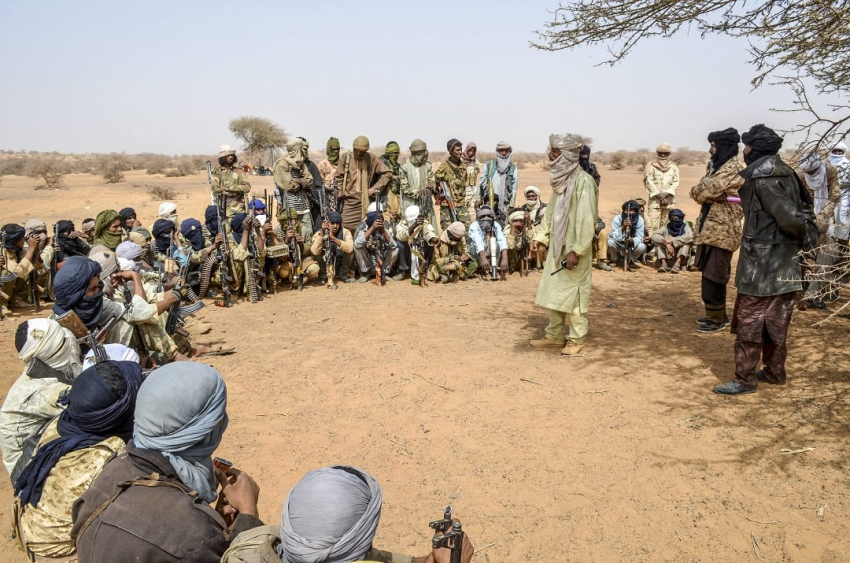
In West Africa, terrorism has evolved into a diffuse phenomenon capable of adapting to socio-cultural and territorial dynamics. In doing so, jihadist groups exploit local vulnerabilities, the absence of the state, and community tensions, rendering essentially military responses ineffective. Faced with this development, a central question arises: how can we anticipate and contain endogenous and constantly changing terrorism while preserving the legitimacy and cohesion of states? It is in the wake of this issue that the Timbuktu Institute has—as part of the scientific activities of its10th anniversary – organized a regional seminar in Dakar on January 4 on the theme "Changes in terrorism in West Africa: what strategies for adaptation?" Researchers, decision-makers, and ambassadors exchanged their analyses and perspectives, highlighting the changes in West African terrorism and possible strategic adaptations between prevention, mediation, and social intelligence.
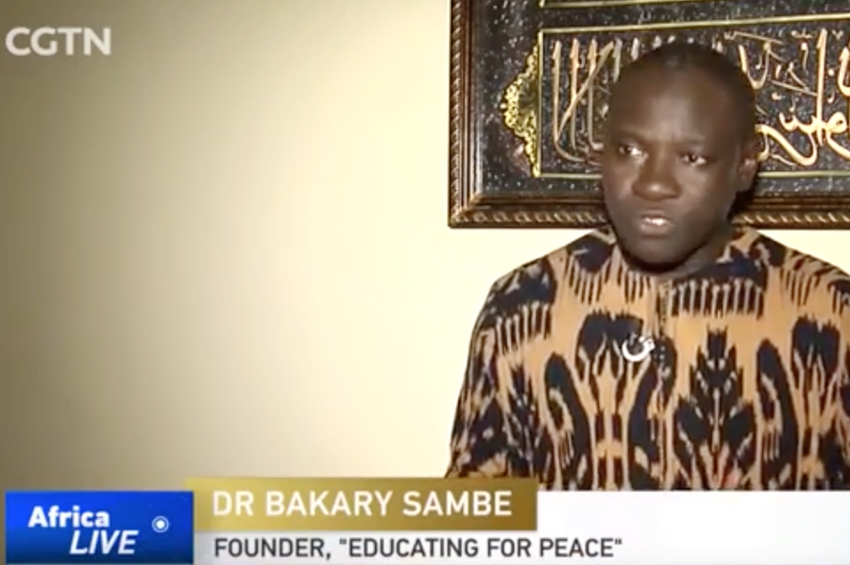
As terrorist groups adapt to socio-cultural, territorial, and technological strategies and dynamics, the issue of the adequacy of security and political responses to threats that have become evolving, diffuse, and resilient is now acute. This transformation of terrorism in West Africa, marked by a hybridization of modes of action, flexible territorialization, and continuous infiltration into the social fabric of communities, requires a rethinking of analytical frameworks and intervention tools in order to move beyond short-term responses in favor of structural and multidimensional adaptation strategies. However, according to Bakary Sambe, president of the Timbuktu Institute, it is not so much a question of adapting to terrorism as of anticipating it as best we can. In this case, one of the major mistakes, in his view, was the failure to take into account the parameter of the spread of epicenters, which gained momentum from 2015 onwards. "We compartmentalized our thinking about the phenomenon. We did not anticipate at all when it broke out in North Africa (Algeria), where we were far from imagining that it would become endogenous. It then spread from northern to central Mali, to Liptako Gourma, Niger, Burkina Faso, and now Benin and Togo, and more recently closer to us in Kayes, not far from the Senegalese border," he regrets.
The observation is quite similar in the analysis offered by Lassina Diarra, director of the Strategic Research Institute of the International Academy for the Fight against Terrorism (AICLT) in Abidjan. According to him, the main issue lies "in the interaction between the theater and the periphery. From the Algerian theater, we moved to the Burkinabe periphery, and then the Sahel became the global theater with its peripheries of coastal countries. " He added: "If, in twenty years, we have not been able to contain the problem in , it is because we have not understood this dynamic." From a more historical perspective, human rights expert Alioune Tine points out that the problem cannot be separated from the genesis of African states. According to the founder of the Afrikajom Center, this equation has its roots "in the formation and modeling of our state territories on the Westphalian model, where communities no longer recognize institutions and even resort to insurrection, sometimes repressed as was the case in Mali in the early years after independence."
Diffuse and extensive changes in terrorism
In response to terrorism, another failure has been to favor military and interventionist responses to a phenomenon essentially characterized by asymmetric warfare, according to Bakary Sambe. "We have not taken into account the parameter of home-grown terrorism. From the birth of MUJAO to the Macina Liberation Front, which became Katiba Macina, we neglected the dynamics of the endogenization of jihad at work, while allowing our armies to become bogged down in types of interventions for which they were not prepared," the political scientist points out. Today, he adds, "it is not hordes of foreign jihadists who are attacking us, but local fighters, our own children. We lack the social intelligence to counter infiltration into the social fabric of communities where the state is often absent. That is why in countries like Senegal, a proactive prevention policy is necessary."
Author of the book "West African Terrorism: From Islamist Proselytism to Armed Jihad," presented during the conference, Lassina Diarra argues that "it is not so much that the state is absent in certain areas of the territory, but rather that the problem lies in the lack of professionalism of state agents sent to these areas, who sometimes engage in racketeering and abuse of power. " In addition, the researcher highlights a variable that he considers essential: the difference between operational security and strategic intelligence. "While operational security concerns the dimensions of sovereign action, strategic intelligence refers to the ability to understand the phenomenon in its social, anthropological, and economic dimensions in given territorial spaces," he points out. In his view, it is the lack of strategic intelligence that prevents West African states from developing an adequate long-term response.
This long-term perspective is all the more crucial given that jihadist groups seem to have made wearing down their opponents a tactic. According to Bakary Sambe, this is exemplified in a strategic manual entitled "The Management of Savagery, the Worst Stage Awaiting the Ummah " (Idârat al-Tawahhush) published in 2004 by an Al-Qaeda theorist under the pseudonym Abu Bakr Naji, explaining how to exploit chaos and violence to destabilize states and create a territory under jihadist control.
In the wake of Serval's departure in 2014, B. Sambe points out, "Adnan Abu Walid al-Sahrawi said that the war was not lost and that the main energy should now be focused on the instrumentalization of inter-community conflicts. Ultimately, he predicted, there would be so many radicalized and frustrated masses that recruitment campaigns would no longer be necessary." According to the president of the Timbuktu Institute, evidence of the influence of this strategy can be seen in the methods used by JNIM in Mali in its ability to exploit community tensions.
This means that ideology, which some people sometimes underestimate, is an essential factor. While recognizing the importance of the ideological variable, Lassina Diarra believes that the role of the communitarization of jihadist violence should not be overestimated. "We must distinguish between the driving force behind jihadism, which is the structuring element, and contingencies such as the communitarization of violence. That said, it remains a cardinal error to underestimate Islamist ideology, against which we must propose localized and endogenous responses based on the model of a national Islam," he argues. Furthermore, Alioune Tine points out that the current spiral of violence in the Sahel also raises the question of the "difficulty international organizations (UN, Amnesty) have in documenting the extent of human rights violations."
"Dialogue or perish"?
While West African states have long taken a zero-tolerance stance toward jihadism, the outcome of dialogue as a realistic solution may become increasingly apparent. "The marginalization of certain areas of the territories and the failure of the welfare state are a ticking time bomb. If we want endogenous and realistic answers, we can no longer afford the luxury of division between the AES and ECOWAS. At this stage of the problem, it is dialogue or perish. And at the country level, this must involve major national dialogues in which civil society and opposition voices are all invited," says Alioune Tine. For him, at a time when sub-Saharan Africa is the testing ground for an information war, it is deplorable that African countries remain less genuine geopolitical actors than subjects or objects of global geopolitics.
But even more so, says Bakary Sambe, given the level of maturity of the conflict, where neither the armed forces nor the terrorist groups are currently in a position to achieve a definitive military victory, the time for mediation has come. "Africans must talk to their children, including those considered to be misguided. We must reach out to them through open dialogue and put the issue of frustration on the table," he says. He emphasizes that "this is all the more urgent as the problem is becoming politicized due to the ambitions of the JNIM (in Mali, editor's note), which does not necessarily want to replace the sovereign state but wants to participate in governance, which it is already implementing in certain areas with its system of zakat and taxation. As a successful example of mediation, the political scientist cites "the Mauritanian experience" with Salafist and jihadist actors, as well as the reintegration processes observed in Morocco and Algeria, for xample. Apart from that, Bakary Sambe argues that, in consulting with states, the concept of sovereignty should not be used too extensively, because constructive and interdependent collaboration is currently a vital necessity. "The jihadists have succeeded in placing our countries in a situation of neither war nor peace. The situation of the AES, which is a parenthesis opened by geopolitical anger, cannot call into question the long history that links the countries of the sub-region. And in this regard, Senegal's role as mediator must continue for reasons of realism and responsibility, because the regional security architecture that is collapsing is a common problem that requires us to give synergy beyond diplomatic and ambitions to endogenous strategies the dignity of viable solutions," he recommends.
Sacré-Coeur 3 – BP 15177 CP 10700 Dakar Fann – SENEGAL.
+221 33 827 34 91 / +221 77 637 73 15
contact@timbuktu-institute.org