 French
 Arabic
 English
 Portuguese
 Spanish
 Swahili

Sacré-Coeur 3 – BP 15177 CP 10700 Dakar Fann – SENEGAL.
+221 33 827 34 91 / +221 77 637 73 15
contact@timbuktu-institute.org


Sacré-Coeur 3 – BP 15177 CP 10700 Dakar Fann – SENEGAL. +221 33 827 34 91 / +221 77 637 73 15
contact@timbuktu-institute.org
Timbuktu Institute – May 20, 2026
In an in-depth and previously unpublished analysis by the Timbuktu Institute, media coverage of the coordinated attacks of April 25, 2026, within the Russian information ecosystem was meticulously examined. These attacks, carried out jointly by the Group for the Support of Islam and Muslims (JNIM) and the Azawad Liberation Front (FLA) against several Malian towns, resulted in the death of the Malian Minister of Defense, General Sadio Camara, and dealt a serious blow to government forces and their Russian partners in the Africa Corps. The full study demonstrates how an event that could have potentially destabilized Russia’s image in the Sahel was transformed into a narrative opportunity by a well-oiled information apparatus.
A layered and coordinated information ecosystem
The analysis begins with a detailed mapping of the mobilized Russian media ecosystem. At the heart of the apparatus are major state-run channels such as Rossiya-1, Pervy Kanal, and NTV, which provided rapid and structured coverage starting on April 26. Rossiya-1, with experienced war correspondents such as Evgeny Poddubny, played a central role in the official narrative. The study revealed that these traditional media outlets are joined by specialized digital actors: the widely read news site Lenta.ru, and above all the African Initiative agency, a veritable pro-Kremlin “narrative laboratory” dedicated to Africa. This agency produces content in French and Russian (articles, opinion pieces, and documentaries) intended to feed the entire Russian information ecosystem. Finally, channels on the Telegram app (Africa Corps 2.0 and Oncles Blancs en Afrique) serve as operational relays and hubs for activist cohesion, disseminating images and talking points with remarkable speed. This architecture enables impressive editorial convergence: the same narrative spreads across national channels, online sites, and social media within a matter of hours.
First narrative thread: the Africa Corps, Mali’s invincible shield
In the Timbuktu Institute’s study, the dominant narrative presents the Africa Corps as an effective bulwark despite setbacks. As early as April 26, Rossiya-1 and Lenta.ru claimed that Russian forces had “repelled the largest Islamist attack ever launched in Mali” and prevented a coup orchestrated by the West. Instead of admitting a military retreat, pro-Kremlin media transformed it into a noble tactical choice: “The Africa Corps withdrew to save the lives of Malian soldiers,” according to an op-ed by Artiom Kureyev of African Initiative. Images of the bodies of slain attackers are widely circulated on Telegram to attest to Russian effectiveness.
Second narrative thread: Western interference and the Franco-Ukrainian conspiracy
Meanwhile, according to the Timbuktu Institute’s analysis, the attacks are systematically framed within a broader geopolitical confrontation. Beyond France, which is traditionally singled out, Russian media denounce a “coordinated Western media campaign” aimed at discrediting the Russian presence.
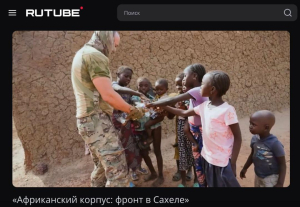
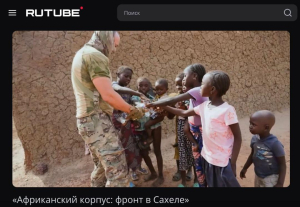
The narrative goes further by explicitly accusing France and Ukraine of having prepared and supported the attackers: training fighters by Ukrainian instructors, supplying Western weapons (Stinger and Mistral MANPADS), and even coordinating intelligence. In the same vein, African Initiative publishes what it presents as evidence (Ukrainian military intelligence—GUR—insignia), elements that turn out to be photomontages. A 45-minute documentary titled “Africa Corps: The Front in the Sahel,” aired in early May, summarizes this perspective by linking Russia’s presence to a “shared destiny” with Mali in the face of external interference. The study subtly highlights the gray zone strategy: the Russian narrative skillfully blends partially verified facts (the presence of certain Ukrainian elements in the Sahel reported by Western sources) with fabricated elements, creating uncertainty that benefits the most sensational version.
Dissenting Voices: A Crack in a Narrative Perceived as Monolithic?
Despite the dominance of the official narrative, the Timbuktu Institute’s study highlights the existence of counter-narratives promoted by independent Russian-language media in exile. For instance, the channel Dojd (TV Rain) referred to a “Russian defeat in Mali” and raised questions about a possible withdrawal of the Africa Corps. The Russian-language media outlet Meduza, for its part, emphasized the scale of the attacks—such as the loss of a Russian helicopter—and the difficulties faced by the Malian junta, while maintaining a more rigorous factual framework. This diversity, though still tentative, serves as a reminder that the Russian-language information landscape is not entirely monolithic and highlights both the scale of the narrative-building efforts undertaken by the Kremlin and the analytical work required to achieve a comprehensive understanding free from preconceptions.
Conclusion and Lessons
The attacks of April 25 constituted a true test of resilience for the Russian information apparatus in Mali and the Sahel more broadly. The analysis concludes that the strength of the system lies less in the mere fabrication of narratives than in its ability to rapidly reframe an unfavorable reality into a framework of interpretation favorable to Russian interests and strategic positioning in Mali and the Sahel.
Three main lessons emerge from the Timbuktu Institute’s study: Finally, the study emphasizes a methodological requirement: in this context of information warfare, only a granular and rigorous verification of facts allows for distinguishing discursive constructions from documented realities. This groundbreaking study constitutes an important contribution to understanding the dynamics of influence and disinformation in the Sahel, as well as the ongoing geopolitical shifts in which information warfare plays a central role.
Finally, the study emphasizes a methodological requirement: in this context of information warfare, only a granular and rigorous verification of facts allows us to distinguish discursive constructs from documented realities. This groundbreaking study makes a significant contribution to our understanding of the dynamics of influence and disinformation in the Sahel, as well as the ongoing geopolitical shifts in which information warfare plays a central role.
Timbuktu Institute – 20 mai 2026
Dans une analyse approfondie et inédite du Timbuktu Institute, le traitement médiatique des attaques coordonnées du 25 avril 2026 dans l’écosystème informationnel russe a été minutieusement étudié. Ces attaques, menées conjointement par le Groupe de soutien à l’islam et aux musulmans (JNIM) et le Front de libération de l’Azawad (FLA) contre plusieurs localités maliennes ont provoqué la mort du ministre malien de la Défense, le Général Sadio Camara, et constitué un sérieux choc pour les forces gouvernementales et leurs partenaires russes de l’Africa Corps. L’étude complète démontre comment un événement potentiellement déstabilisateur pour l’image de la Russie au Sahel a été transformé en opportunité narrative par un dispositif informationnel bien rodé.
Un écosystème informationnel stratifié et coordonné
L’analyse commence par une cartographie précise de l’écosystème médiatique russe mobilisé. Au cœur du dispositif figurent les grandes chaînes d’État comme Rossiya-1, Pervy Kanal et NTV, qui ont assuré une couverture rapide et structurée dès le 26 avril. Rossiya-1, avec des reporters de guerre expérimentés comme Evgeny Poddubny, a joué un rôle central dans la mise en récit officielle. L’étude a révélé qu’à ces médias traditionnels s’ajoutent des acteurs numériques spécialisés : le site d’information Lenta.ru, très consulté, et surtout l’agence African Initiative, véritable « laboratoire narratif » pro-Kremlin dédié à l’Afrique. Cette agence produit des contenus en français et en russe (articles, tribunes et documentaires) destinés à alimenter l’ensemble de l’écosystème informationnel russe. Enfin, les canaux sur l’application Telegram (Africa Corps 2.0 et Oncles Blancs en Afrique) servent de relais opérationnels et de lieux de cohésion militante, diffusant images et éléments de langage avec une rapidité remarquable. Cette architecture permet une convergence éditoriale impressionnante : un même argumentaire traverse en quelques heures les chaînes nationales, les sites en ligne et les réseaux sociaux.
Premier axe narratif : l’Africa Corps, bouclier invincible du Mali
Dans l’étude du Timbuktu Institute, le narratif dominant consiste à présenter l’Africa Corps comme un rempart efficace malgré les revers. Dès le 26 avril, Rossiya-1 et Lenta.ru affirment que les forces russes ont « repoussé la plus grande attaque islamiste jamais menée au Mali » et empêché un coup d’État orchestré par l’Occident. Au lieu d’admettre un recul militaire, les médias pro-Kremlin l’ont transformé en choix tactique noble : « Africa Corps s’est retiré pour sauver les vies des soldats maliens », selon une tribune d’Artiom Kouréïev d’African Initiative. Des images de corps d’assaillants tués sont largement diffusées sur Telegram pour attester de l’efficacité russe.
Deuxième axe narratif : l’ingérence occidentale et le complot franco-ukrainien
Parallèlement, selon l’analyse du Timbuktu Institute, les attaques sont systématiquement inscrites dans une confrontation géopolitique plus large. Au-delà de la France traditionnellement indexée, les médias russes dénoncent une « campagne médiatique occidentale coordonnée » visant à discréditer la présence russe. Le récit va plus loin en accusant explicitement la France et l’Ukraine d’avoir préparé et soutenu les assaillants : entraînement de combattants par des instructeurs ukrainiens, fourniture d’armes occidentales (Manpads Stinger et Mistral), et même coordination informationnelle. Dans le même sillage, African Initiative publie ce qu’elle présente comme des preuves (écussons du renseignement militaire ukrainien – GUR), éléments qui s’avèrent être des photomontages. Un documentaire de 45 minutes intitulé « Africa Corps : le Front au Sahel », diffusé début mai, synthétise cette vision en associant la présence russe à une « communauté de destin » avec le Mali face à l’ingérence extérieure. L’étude souligne avec finesse la stratégie de la zone grise : le dispositif russe mélange habilement faits partiellement attestés (présence de certains éléments ukrainiens au Sahel rapportée par des sources occidentales) et éléments fabriqués, créant une incertitude qui profite à la version la plus spectaculaire.
Voix dissidentes : la faille dans un dispositif perçu comme monolithique ?
Malgré la prédominance du narratif officiel, l’étude du Timbuktu Institute met en lumière l’existence de contre-lectures portées par des médias russophones indépendants en exil. Ainsi, la chaîne Dojd (TV Rain) a évoqué une « défaite de la Russie au Mali » et s’est interrogée sur un possible retrait de l’Africa Corps. Le media russophone Meduza, quant à lui, a insisté sur l’ampleur des attaques comme la perte d’un hélicoptère russe et les difficultés de la junte malienne, tout en maintenant un cadre factuel plus rigoureux. Cette pluralité, bien qu’encore timide, rappelle que le champ informationnel russophone n’est pas totalement monolithique et sert de révélateur de l’ampleur du travail de construction narrative opéré par le Kremlin mais aussi les efforts analytiques qu’en exige une compréhension exhaustive loin des présupposés.
Conclusion et enseignements
Les attaques du 25 avril ont constitué un véritable test de résilience pour la machine informationnelle russe au Mali et au Sahel de manière générale. L’analyse conclut que la force du dispositif tient moins à la pure fabrication de récits qu’à sa capacité à reformuler rapidement une réalité défavorable en grille d’interprétation favorable aux intérêts et au positionnement stratégique russes au Mali et au Sahel.
Trois enseignements principaux émergent de l’étude du Timbuktu Institute :
Enfin, l’étude insiste sur une exigence méthodologique : dans ce contexte de guerre informationnelle, seule une vérification granulaire et rigoureuse des faits permet de distinguer les constructions discursives des réalités documentées. Cette étude inédite constitue une contribution importante à la compréhension des dynamiques d’influence et de désinformation au Sahel mais aussi des mutations géopolitiques en cours et dans lesquelles la guerre informationnelle occupe toute sa place.
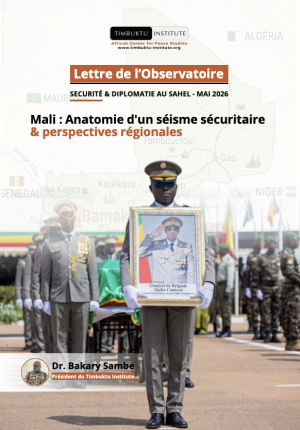
Lettre de l'Observatoire - Timbuktu Institute - Mai 2026
Le 25 avril 2026 restera une date charnière dans l’histoire sécuritaire du Sahel et du Mali de cette dernière décennie. Six localités maliennes ont été attaquées simultanément par le JNIM et le FLA (Front de libération de l’Azawad), entraînant la mort du ministre de la Défense, le général Sadio Camara, et remettant en cause le contrôle militaire de Kidal. Ces opérations coordonnées révèlent une montée en puissance inédite des groupes armés et, malgré les efforts des FAMAs, marquent l’échec patent du modèle de sous-traitance sécuritaire russe (Wagner puis Africa Corps), incapable de tenir durablement les territoires face à des guérillas ancrées dans les réalités locales.
Dans ce contexte, l’alliance entre le JNIM et le FLA repose sur deux piliers : le rôle central d’Iyad Ag Ghaly, figure de liaison organique vu les allégeances communautaires, et des intérêts économiques partagés autour des trafics transsahariens. Il s’agit cependant d’une alliance de circonstances, dictée par l’ennemi commun – le régime de Bamako - et non d’un pacte stratégique durable. Les objectifs divergent profondément : le JNIM poursuit l’imposition évolutive de la charia sur un territoire élargi, tandis que le FLA, héritier des rébellions touareg, défend un projet d’autonomie ou d’indépendance de l’Azawad. Ces visions irréconciliables, dans le temps long, limitent la pérennité de leur coopération.
Pour le régime du général Goïta, dont la légitimité reposait presque exclusivement sur la promesse de rétablir la sécurité, ces événements constituent un choc politique. La reconquête symbolique de Kidal en 2023 est déjà contestée sur le terrain militaire, et le parallèle avec la crise de 2012 devient inquiétant. À court terme, les attaques suscitent un réflexe de ralliement national autour du pouvoir et surtout du « drapeau », mais cet effet reste fragile et volatile sur le long terme.
Sur le plan régional, l’Alliance des États du Sahel (AES) affiche une solidarité limitée aux déclarations et condamnations, contrainte par les difficultés internes de ses pays. La CEDEAO semble évoluer vers un rôle de facilitateur et plus conciliant, tandis que les États côtiers craignent un effet domino. Dans ce contexte fragmenté, l’initiative togolaise de Lomé du 18 avril 2026 apparaît comme une opportunité diplomatique majeure. En réunissant autour d’une même table acteurs de l’AES, de la CEDEAO, de l’UA, de l’ONU, de la Russie, de la France et de l’Union européenne, le Togo s’est positionné comme un espace neutre de dialogue lors d’une réunion de Haut-Niveau le 18 avril 2026 à Lomé.
Le Timbuktu Institute, parlant à titre de Think Tank régional invité, a défendu, à Lomé, l’approche du « paquet indivisible » – sécurité, gouvernance, développement et démocratie – et proposé la création et l’activation d’un canal militaire et technique direct entre états-majors AES et CEDEAO pour partager le renseignement et coordonner les opérations sur le terrain vu l’ampleur des urgences qui ne peuvent attendre les longues tractations diplomatiques.
Face à cette crise multidimensionnelle, cinq pistes de sortie de crise semblent s’imposer : Sortir de l’illusion d’une solution purement militaire au Sahel et mitiger les stratégies actuelles ; engager un dialogue politique inclusif véritable (décentralisation substantive, meilleure gouvernance des ressources, révision ou amélioration de l’Accord d’Alger) ; soutenir les dynamiques citoyennes constructives maliennes (GRAIN, Imam Dicko, autres) favorables au dialogue inclusif ; construire une architecture régionale pragmatique autour de l’intérêt partagé de contenir l’expansion djihadiste en dehors des velléités diplomatiques AES/CEDEAO ; et privilégier des partenariats pragmatiques, non exclusifs et non substitutifs aux solutions endogènes.
Le 25 avril 2026 révèle les limites des approches sécuritaires externalisées et des fractures persistantes, mais ouvre opportunément une fenêtre de dialogue régional que la routine n’aurait sans doute pas permise dans le contexte actuel. L’urgence est désormais de transformer cette crise qui fut un électrochoc, en opportunité avant que la fenêtre de la prise de conscience, de la médiation et du dialogue ne se referme, en misant sur une réponse globale portée par les sociétés sahéliennes elles-mêmes bien qu’ouverte à tous les partenariats constructifs.
Timbuktu Institute – Week 1 – May 2026
Download the full Sahel weather report
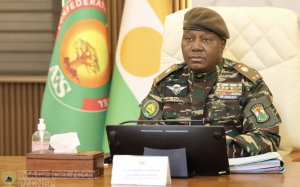
Labour Day celebrations in Niger were marked by an exceptional decision from the transitional government: the cancellation of the traditional military and civilian parades. The authorities justified this measure as a necessary response to the ‘current challenges’, referring to the tense security situation and the need to mobilise resources for the front line. The government opted for low-key ceremonies and awareness-raising messages focusing on national resilience and the sacrifices made by workers. This decision reflects a desire to move away from costly celebrations in order to focus the nation’s energy on defending territorial integrity. The trade unions, whilst acknowledging this decision, took the opportunity to present their list of grievances, emphasising that the fight for security must not overshadow the need to protect purchasing power in an economy under pressure. This imposed austerity underscores the shift towards permanent crisis management, where every public event is reassessed. The cancellation of the parade is a strong political signal aimed at establishing a climate of “general mobilisation”. By removing the festive nature of Labour Day, the transitional government reinforces the idea that the country is in a state of emergency. It is a strategy that helps legitimise budgetary restrictions and call for further sacrifices from the population. However, it also reduces the space for public expression by trade unions, transforming a day of social demands into a day of controlled national solidarity.
Popular mobilisation: march in support of the government in Niamey
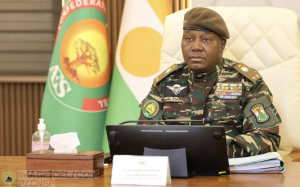
The capital, Niamey, was the scene of a large-scale popular demonstration in support of the transitional authorities. This march, organised by several civil society groups, aimed to reaffirm the backing of a section of the population for the government’s strategic choices, particularly regarding national sovereignty and the diplomatic break. Demonstrators marched through the main streets to express their opposition to external pressure and their support for the Defence and Security Forces (FDS). This mobilisation comes amid a climate of regional tension, with Niger seeking to consolidate its alliances within the Economic and Monetary Community of West African States (ECOWAS). For the organisers, the aim was to demonstrate that the current government enjoys solid popular legitimacy in the face of international criticism. The march also served as a platform to denounce past economic sanctions and call for a united front around the ideals of the transition, illustrating the strength of patriotic sentiment in the current political debate. These support marches function as tools for internal and external legitimisation. For the government, they serve as proof of national consensus in the eyes of foreign partners. However, in a transitional context, the line between spontaneous support and orchestrated mobilisation is often a fine one. This demonstration proves that the idea of the country’s sovereignty remains a widely shared consensus among the population. This is what allows the people to remain united despite diplomatic tensions.
Economic inclusion: financial projects for women and young people
On a different note, the Nigerien government has announced the launch of two projects aimed at transforming the country’s financial landscape: improving access to financial services for women and young people. These initiatives aim to remove the structural barriers that exclude a large part of the population from the formal economy. By facilitating access to credit, microfinance and financial education, these projects seek to encourage local entrepreneurship and reduce poverty. The strategy is based on the digitalisation of financial services and the establishment of specific guarantee funds for vulnerable groups. The objective is twofold: to stimulate domestic economic growth by drawing on the country’s driving forces and to ensure social stability through financial empowerment. In a context where international funding is becoming increasingly scarce and is sometimes redirected, Niger is banking on mobilising local savings and the dynamism of its youth to build a more inclusive economy resilient to external shocks. These projects signal a commitment to moving from a subsistence economy to a participatory development economy. Targeting women and young people is a strategic decision, as these groups represent Niger’s most significant—but also its most fragile—driver of growth. The success of these measures will depend on the state’s ability to ensure the sustainability of funding and to overcome bureaucratic obstacles. This is an attempt to build national economic autonomy, in line with the political discourse on sovereignty championed by the transition.
Timbuktu Institute - Semaine 1 - mai 2026
Télécharger l'intégralité de la Météo Sahel
La célébration de la fête du Travail, a été marquée au Niger par une décision exceptionnelle du gouvernement de transition : l'annulation des traditionnels défilés militaires et civils. Cette mesure a été justifiée par les autorités comme une réponse nécessaire aux « défis du moment », faisant référence au contexte sécuritaire tendu et aux impératifs de mobilisation des ressources vers le front. Le gouvernement a privilégié des cérémonies restreintes et des messages de sensibilisation axés sur la résilience nationale et le sacrifice des travailleurs. Cette décision reflète une volonté de rompre d’avec les célébrations coûteuses pour concentrer l'énergie de la nation sur la défense de l'intégrité territoriale. Les syndicats, tout en prenant acte de cette décision, ont saisi l'occasion pour remettre leurs cahiers de doléances, soulignant que la lutte pour la sécurité ne doit pas cacher la nécessité de protéger le pouvoir d'achat dans une économie sous pression. Cette sobriété imposée souligne le passage à une gestion de crise permanente où chaque événement public est réévalué. L'annulation du défilé est un signal politique fort visant à instaurer un climat de "mobilisation générale". En supprimant le caractère festif de la fête du Travail, le pouvoir de transition renforce l'idée que le pays est en état d'exception. C’est une stratégie qui permet de légitimer les restrictions budgétaires et de demander un effort supplémentaire à la population. Toutefois, cela réduit également les espaces d'expression publique pour les syndicats, transformant une journée de revendications sociales en une journée de solidarité nationale encadrée.
Mobilisation populaire : marche de soutien au gouvernement à Niamey
La capitale Niamey a été le théâtre d'une vaste manifestation populaire en soutien aux autorités de transition. Cette marche, organisée par plusieurs collectifs de la société civile, visait à réaffirmer l'adhésion d'une partie de la population aux choix stratégiques du gouvernement, notamment en matière de souveraineté nationale et de rupture diplomatique. Les manifestants ont défilé dans les rues principales pour exprimer leur opposition aux pressions extérieures et leur appui aux Forces de Défense et de Sécurité (FDS). Cette mobilisation intervient dans un climat de tension régionale, où le Niger cherche à consolider ses alliances au sein de l'AES. Pour les organisateurs, il s'agissait de démontrer que le pouvoir en place bénéficie d'une légitimité populaire solide face aux critiques internationales. La marche a également servi de plateforme pour dénoncer les sanctions économiques passées et appeler à une union sacrée autour des idéaux de la transition, illustrant la force du sentiment patriotique dans le débat politique actuel. Ces marches de soutien fonctionnent comme des outils de légitimation interne et externe. Pour le gouvernement, elles servent de preuve de consensus national face aux partenaires étrangers. Cependant, dans un contexte de transition, la frontière entre soutien spontané et mobilisation orchestrée est souvent délicate. Cette manifestation prouve que l'idée de souveraineté du pays demeure un consensus largement partagé au sein de la population. C'est ce qui permet au peuple de rester uni malgré les tensions diplomatiques.
Inclusion économique : projets financiers pour les femmes et les jeunes
Sous un autre régistre, le gouvernement nigérien a annoncé le lancement de deux projets destinés à transformer le paysage financier du pays : le renforcement de l'accès des femmes et des jeunes aux services financiers. Ces initiatives visent à lever les barrières structurelles qui excluent une grande partie de la population du circuit économique formel. En facilitant l'octroi de crédits, le micro-financement et l'éducation financière, ces projets cherchent à encourager l'entrepreneuriat local et à réduire la pauvreté. La stratégie repose sur la numérisation des services financiers et la mise en place de fonds de garantie spécifiques pour les populations vulnérables. L'objectif est double : stimuler la croissance économique interne en s'appuyant sur les forces vives du pays et assurer une stabilité sociale par l'autonomisation financière. Dans un contexte où les financements internationaux se font de plus en plus rares et sont parfois réorientés, le Niger mise sur la mobilisation de l'épargne locale et le dynamisme de sa jeunesse pour bâtir une économie plus inclusive face aux chocs extérieurs. Ces projets marquent une volonté de passer d'une économie de subsistance à une économie de développement participatif. Cibler les femmes et les jeunes est une décision stratégique, car ces groupes représentent le levier de croissance le plus important mais aussi le plus fragile du Niger. Le succès de ces mesures dépendra de la capacité de l'État à assurer la pérennité des fonds et à surmonter les obstacles bureaucratiques. C'est une tentative de construire une autonomie économique nationale, en cohérence avec le discours politique de souveraineté porté par la transition.
Timbuktu Institute – Week 1 – May 2026
Download the full Sahel weather report
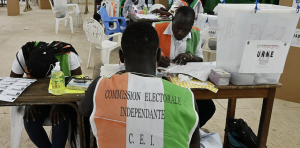
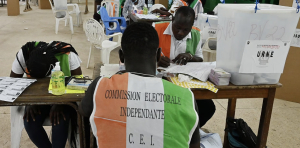
The week’s news was dominated by the dissolution of the Independent Electoral Commission, pending the establishment of a new system. This decision was announced on 6 March following a meeting of the Council of Ministers. Indeed, the commission in question was accused of breaching the principles of neutrality and impartiality. The opposition, for its part, was quick to voice reservations and make recommendations regarding the new body set to replace the CEI. For supporters of Tidjane Thiam, this is a “unilateral decision taken without consultation with the political class”, and they criticise the lack of transparency surrounding the structure. They are calling for dialogue with all political actors in order to “define the terms of the electoral system”, according to Soumaïla Bredoumy, the PDCI spokesperson.
The reform of the CEI reignites the debate on electoral transparency
In the same vein, the former First Lady of Côte d'Ivoire, Simone Gbagbo, calls for “an independent electoral body, a fair redrawing of electoral boundaries and a consensual revision of the electoral roll”. Meanwhile, the Pan-African Congress for Justice and Equality of Peoples (COJEP) welcomes the measure and sets out the path towards a “truly independent” electoral body. According to its members, this measure is an “implicit acknowledgement of the crisis of confidence that has surrounded the CEI for several years”. Supporters of Charles Blé Goudé believe that the country must establish an independent body to organise free and transparent elections and rectify the shortcomings of the old system.
Regional security: tensions along the Abidjan-Bamako axis are causing concern among economic stakeholders
On the security front, Malians living in Côte d’Ivoire have expressed concern over the continuing terrorist threat in Bamako. The latest attacks on 25 April have indeed heightened fears, particularly regarding the security of the Abidjan-Bamako route, a strategic road for both countries. Many lorry drivers are stranded due to the tense security situation. Nevertheless, the route remains passable, despite the adverse impact on trade. According to Diaby Ibrahim: “Arrangements have been made with the relevant authorities to ensure that issues concerning the operation of the Abidjan-Bamako corridor are resolved in advance, so as to avoid finding ourselves in unpleasant situations. In short, we are ensuring we are not caught off guard by unfortunate situations.” This clearly reflects a stated commitment to anticipate and coordinate actions with the relevant authorities in order to further secure the operation of the Abidjan-Bamako corridor and prevent any disruption that might affect the smooth flow of trade and the stability of economic activities.
The armed forces advocate for the promotion of female leadership based on merit
On a different note, Côte d’Ivoire celebrated the 5th edition of Women in the Military Day on 7 May. The Ivorian armed forces took this opportunity to reaffirm their commitment to equality. This year’s theme was ‘Law, discipline and merit: promoting equality within the armed forces’. Vice-Admiral N’Guessan Kouamé Célestin, Chief of Staff of the Navy, took part in the ceremony at the Locodjro naval base in the commune of Attécoubé and was keen to commend the choice of his institution. He also took the opportunity to highlight the low number of women in the ranks of the French Navy. It is therefore desirable to place greater emphasis on a policy of promoting women based on merit, in order to recognise the contribution of women to the armed forces in general.
Timbuktu Institute - Semaine 1 - mai 2026
Télécharger l'intégralité de la Météo Sahel
L’actualité de la semaine a été marquée par la dissolution de la Commission électorale indépendante, en attendant la mise en place d'un nouveau système. Cette décision a été annoncée le 6 mars dernier à l’issue du Conseil des ministres. En effet, ladite commission était accusée de manquement aux principes de neutralité et d'impartialité. L’opposition, de son côté, n’a pas manqué d’émettre des réserves et des recommandations quant à la nouvelle structure qui va remplacer la CEI. Pour les partisans de Tidjane Thiam, il s'agit d'une « décision unilatérale prise sans concertation avec la classe politique », et dénoncent l'opacité autour de la structure. Ces derniers appellent au dialogue avec tous les acteurs politiques afin de « définir les modalités du système électoral », selon Soumaïla Bredoumy, le porte-parole du PDCI.
La réforme de la CEI relance le débat sur la transparence électorale
Dans le même esprit, l’ancienne Première dame de Côte d'Ivoire, Simone Gbagbo, souhaite « un organe électoral indépendant, un redécoupage électoral équitable et une révision consensuelle de la liste électorale ». Pendant ce temps, le Congrès panafricain pour la justice et l’égalité des peuples (COJEP) salue la mesure et indique la voie à suivre pour un organe électoral « véritablement indépendant ». Selon ses membres, cette mesure est une « reconnaissance implicite de la crise de confiance qui entourait la CEI depuis plusieurs années ». Les partisans de Charles Blé Goudé estiment que le pays doit se doter d’un organe indépendant pour organiser des élections libres et transparentes et corriger les imperfections de l’ancien système.
Sécurité régionale : les tensions sur l’axe Abidjan-Bamako inquiètent les acteurs économiques
Sur le plan sécuritaire, les Maliens vivant en Côte d'Ivoire ont exprimé leur inquiétude face à la persistance de la menace terroriste à Bamako. Les dernières attaques du 25 avril ont en effet accru la peur, notamment concernant la sécurité de l’axe Abidjan-Bamako, une route stratégique pour les deux pays. De nombreux conducteurs de camions sont bloqués en raison de la situation sécuritaire tendue. Néanmoins, l'axe reste praticable, malgré les conséquences néfastes sur les échanges commerciaux. Selon Diaby Ibrahim. « Les dispositions ont été prises avec les autorités compétentes pour que les questions d'exploitation du corridor Abidjan-Bamako soient réglées en amont, afin d'éviter de nous retrouver face à des situations désagréables. En clair, nous évitons d'être pris au dépourvu par des situations malheureuses. » Il s'agit clairement d'une volonté affichée d'anticiper et de coordonner les actions avec les autorités compétentes afin de sécuriser davantage l'exploitation du corridor Abidjan-Bamako et de prévenir toute perturbation susceptible d'affecter la fluidité des échanges et la stabilité des activités économiques.
Les forces armées plaident pour une promotion du leadership féminin fondée sur le mérite
Dans un autre registre, la Côte d’Ivoire a célébré le 7 mai, la 5ème édition de la Journée de la femme militaire. Les forces armées ivoiriennes ont saisi cette occasion pour réaffirmer leur engagement en faveur de l’égalité. Le thème retenu cette année était « Droit, discipline et mérite : promouvoir l’égalité au sein des forces armées ». Le vice-amiral N'Guessan Kouamé Célestin, chef d'état-major de la Marine nationale, a pris part à la cérémonie à la base navale militaire de Locodjro, dans la commune d'Attécoubé, et a tenu à saluer le choix porté sur son institution. Il a également profité de l'occasion pour évoquer le faible nombre de femmes dans les rangs de la Marine nationale. Il est donc souhaitable de mettre davantage l’accent sur une politique de promotion féminine fondée sur le mérite, afin de reconnaître la contribution des femmes à l’armée en général.
Timbuktu Institute – Week 1 – May 2026
Download the full Sahel weather report
According to several observers, press freedom has declined in Burkina Faso since the 2022 coup. Indeed, according to Ibrahim Traoré, a “patriotic approach” to news coverage is needed at a time when the country is facing growing insecurity and disinformation affecting most countries in the Sahel. According to Reporters Without Borders’ 2026 ranking, the country is ranked 110th out of 180, reflecting a deterioration in access to diverse information and to free and independent journalism.
The Atiana Serge Oulon case reignites concerns over press freedom
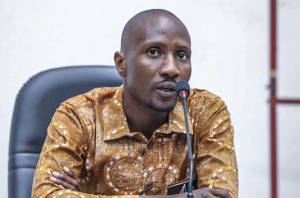
The case of journalist Atiana Serge Oulon continues to make headlines across the country. According to the organisation responsible for promoting and defending the freedom to inform and be informed worldwide, the investigative journalist has reportedly been held in a secret prison for several months and has allegedly been subjected to inhuman treatment. As a reminder, the editor-in-chief of the bi-monthly investigative magazine L’Évènement had carried out an investigation into allegations of the embezzlement of 400 million CFA francs attributed to the head of the transition. Abducted from his home in June 2024, press freedom organisations are demanding his release. This case once again raises the issue of working conditions for journalists in Burkina Faso and calls public attention to the state of civil liberties. For their part, the authorities maintain that no journalist is deprived of their liberty in the course of their work. According to Ibrahima Traoré, “everyone is free to say what they want and to express their opinion”. He made this statement during an interview with journalists last April.
Sahel: between security imperatives and a shrinking media space
In the same vein, TV5 Monde is now banned in Burkina Faso; the military government accuses the French-language channel of disinformation and glorifying terrorism in its coverage of the country. Some observers see this as a further attempt to muzzle the media. Jeanne Lagarde of Reporters Without Borders sees this as a setback for press freedoms. “In fact, the Sahel is above all a region where patriotic journalism imposed by the authorities has taken precedence over independent journalism, which previously provided reliable, high-quality information. Now, we see that this is no longer the case at all,” says Ms Lagarde. It is important to highlight the growing tensions between security imperatives and respect for fundamental freedoms in several Sahel countries, where the military authorities are tightening their grip on the media landscape in the name of national sovereignty. She also highlights concerns regarding the decline in media pluralism and the weakening of the role of independent media in consolidating democratic governance and public trust.
Timbuktu Institute - Semaine 1 - mai 2026
Télécharger l'intégralité de la Météo Sahel
Selon plusieurs observateurs, la liberté de la presse a reculé au Burkina Faso depuis le coup d’État de 2022. En effet, selon Ibrahim Traoré, il faut un « traitement patriotique » de l’actualité en cette période où le pays est confronté à une insécurité grandissante et à une désinformation qui touche la plupart des pays du Sahel. Selon le classement 2026 de Reporters sans frontières, le pays se classe au 110ème rang sur 180, ce qui traduit une dégradation des conditions d’accès à une information plurielle et à un journalisme libre et indépendant.
L’affaire Atiana Serge Oulon ravive les inquiétudes sur la liberté de la presse
L’affaire du journaliste Atiana Serge Oulon continue de défrayer la chronique dans tout le pays. Selon l’organisme chargé de promouvoir et de défendre la liberté d'informer et d'être informé dans le monde, le journaliste d'investigation serait détenu dans une prison secrète depuis plusieurs mois et aurait subi des traitements inhumains. Pour rappel, le directeur de la publication du bimensuel d'investigation L'Évènement avait réalisé une enquête sur des soupçons de détournement de 400 millions de francs CFA attribués au chef de la transition. Enlevé à son domicile en juin 2024, les organisations de défense des acteurs de la presse exigent sa libération. Ce cas soulève à nouveau la question des conditions de travail des journalistes au Burkina Faso et interpelle l’opinion publique sur l’état des libertés publiques. De leur côté, les autorités estiment qu’aucun journaliste n’est privé de liberté dans le cadre de son travail. Pour Ibrahima Traoré, « chacun est libre de dire ce qu’il veut et de donner son opinion ». Il a fait cette déclaration lors d'une interview accordée à des journalistes en avril dernier.
Sahel : entre impératifs sécuritaires et rétrécissement de l’espace médiatique
Dans le même esprit, TV5 Monde est désormais interdite au Burkina Faso ; le pouvoir militaire accuse la chaîne francophone de désinformation et d'apologie du terrorisme pour le traitement d'informations concernant le pays. Certains observateurs y voient une tentative supplémentaire de museler les médias. Jeanne Lagarde de Reporters sans frontières y voit un recul des libertés de la presse. « En fait, le Sahel, c'est surtout une région où le journalisme patriotique imposé par les autorités a pris le pas sur un journalisme indépendant qui délivrait auparavant une information fiable et de qualité. Maintenant, on observe que ce n'est plus du tout le cas », affirme madame Lagarde. Il faut souligner l’existence de tensions croissantes entre impératifs sécuritaires et respect des libertés fondamentales dans plusieurs pays du Sahel, où les autorités militaires renforcent leur contrôle sur l’espace médiatique au nom de la souveraineté nationale. Elle souligne également les inquiétudes quant au recul du pluralisme de l'information et à l'affaiblissement du rôle des médias indépendants dans la consolidation de la gouvernance démocratique et de la confiance citoyenne.
Timbuktu Institute – Week 1 – May 2026
Download the full Sahel weather report
Whilst its neighbour Chad is once again facing bloody jihadist attacks, Nigeria is struggling to continue its counter-terrorism operations. In this instance, the campaign is in full swing. Nevertheless, as we know, these operations sometimes lead to incidents that humanitarian and human rights organisations denounce as abuses. On the night of 30 April 2026, around forty Fulani herders were killed in Niger State, in the country’s central-western region. The operation, carried out jointly by Nigerian and Beninese militiamen acting alongside the Nigerian army, targeted members of the Fulani community suspected of being informants for the jihadist group Ansaru. According to witness accounts, men who resisted arrest were shot dead on the spot, bringing the possible death toll to 41, according to a local traditional chief. Ansaru, which emerged in 2020 from a split with Boko Haram and is now affiliated with Al-Qaeda in the Islamic Maghreb, has been active on both sides of the Benin-Niger border for the past two years, which would explain the involvement of militiamen from neighbouring Benin. Neither the Nigerian army nor the Beninese army has commented on the incident. According to RFI Hausa, this was reportedly a “pre-emptive raid” carried out after Fulani herders allegedly threatened to disrupt farming activities in the area, in retaliation for the recent killing of two of their own in a neighbouring community, according to a local resident.
And yet, the intensification of pressure by Nigerian armed forces against jihadist groups is not without its setbacks. During the night of 7–8 May 2026, fighters from the Islamic State in West Africa (ISWAP) launched a large-scale coordinated assault on the headquarters of the Nigerian Army’s 27th Brigade in Buni Gari, in the north-east of the country. Attacking simultaneously from three directions (west, south and south-west) in an attempt to encircle the base, the insurgents were repelled by troops from Operation Hadin Kai, who held their positions using indirect fire before forcing the attackers into a disorderly retreat. According to the Nigerian army’s report, two soldiers were killed and 50 terrorists were neutralised.
Defections within the opposition
With less than two years to go before the Nigerian presidential election in January 2027, the opposition is struggling to get its house in order.
Against this backdrop, the African Democratic Congress (ADC) is positioning itself as a credible alternative. And yet, the party has just suffered two significant defections. Peter Obi and Rabiu Kwankwaso, who finished third and fourth respectively in the 2023 election, officially left on 4 May to join the ADC from the Nigerian Democratic Congress (NDC). For his part, Peter Obi justifies his departure by citing a climate he describes as “toxic” and “unstable” within the ADC, pointing to internal legal proceedings and attempts at destabilisation between rival factions. One of these factions is challenging the legitimacy of the party’s executive in the courts. Tensions with Atiku Abubakar, another opposition heavyweight who has remained in the ADC, are also said to be a factor. Against this backdrop, is this dual defection the prelude to a possible Obi-Kwankwaso ticket for the next presidential election? Be that as it may, it is a clear indication of the realignments and alliances currently taking shape within the opposition, with the aim of challenging the ruling party (APC) in 2027.
Sacré-Coeur 3 – BP 15177 CP 10700 Dakar Fann – SENEGAL.
+221 33 827 34 91 / +221 77 637 73 15
contact@timbuktu-institute.org