 French
 Arabic
 English
 Portuguese
 Spanish
 Swahili





Sacré-Coeur 3 – BP 15177 CP 10700 Dakar Fann – SENEGAL.
+221 33 827 34 91 / +221 77 637 73 15
contact@timbuktu-institute.org


Sacré-Coeur 3 – BP 15177 CP 10700 Dakar Fann – SENEGAL. +221 33 827 34 91 / +221 77 637 73 15
contact@timbuktu-institute.org
While governments focus their efforts on counterterrorism, communal divisions and radical Islamism are gaining ground across the Sahel and West Africa, warns Dr. Bakary Sambe, president of the Timbuktu Institute.
The Sahel and West Africa are facing a series of intertwined paradoxes. First, caught in the trap of conventional counterterrorism strategies, governments are deploying significant human and financial resources to prepare their armies for a battle at the borders that they are, in reality, highly unlikely to ever fight. The terrorist enemy no longer comes from outside; it is now the work of internal actors—citizens who have turned against their own governments.
This blindness, in addition to being ineffective, prevents leaders from fully grasping the dangerous communalization of violence, which, in a deadly vicious cycle, leads to the fragmentation of societies that in turn fuels new cycles of violence. Even more seriously, the phenomenon continues to spread, now forming an arc of crisis on a regional scale, against the backdrop of a “Fulani issue” that few dare to name.
And in a Sahel region already weakened for decades by the accumulation of multifaceted crises, radical Islam—which sometimes takes on a political dimension—is gaining ground. We have known, ever since the emergence of the Islamic State in the Greater Sahara (ISGS)—which has since become the Islamic State in the Sahel—that the exploitation of the frustrations of marginalized communities has fundamentally changed the situation: once perceived as the result of external invasions, Sahelian jihadism has gradually revealed itself to be the catalyst for internal conflicts.
In Niger, some of those disillusioned by the failed reconciliation efforts between the state and Fulani militias—which have been in conflict since the 1990s—have joined the ranks of the jihadists, particularly within the EIGS, including Issa Baré, Dendou Cheffou, Bello Baré, Petit Thiafori, and Hamadi Belko. The simplistic “security-first” approach—a strategy that now prevails following the unfinished attempts at dialogue that President Mohamed Bazoum had initiated before the July 2023 coup—has driven some of them to join the ranks of the Islamic State, which recruited more from among the Fulani than from the Daoussahak.
From Kollo to Koutoukalé, hundreds of these alleged jihadists are now languishing in prison. This reality is becoming widespread throughout Liptako-Gourma, the so-called “three-border” region between Mali, Niger, and Burkina Faso. Overwhelmed by the scale of the attacks, governments have decided to rely on self-defense militias—often formed along communal lines—to participate in the fight against jihadists, thereby adding fuel to the fire.
By stigmatizing the Fulani community, this strategy has driven many of its members into the arms of the jihadists. Faced with states unable to accommodate all segments of their populations, the jihadists now proclaim themselves the “protectors” of marginalized communities. This is true in the Soum and Oudalan regions of Burkina Faso. It is now also the case in the Savanes region of Togo, as well as in the Alibori and Atacora regions of Benin, and even in northern Ghana.
At the same time, the Group for the Support of Islam and Muslims (JNIM) has adapted its strategy, relying on mobile units of fighters who, like the men of the Katiba Hanifa, are sent to carry out attacks in Benin’s Borgou region, on the border with Nigeria.
The explosive reality that we refuse to see is this: an arc of crisis is now unfolding against a backdrop of ostracism and intercommunal mistrust, stretching from Nampala and Koro-Bankass in Mali to Sokoto State in northwestern Nigeria, where the Lukurawa group—which began as a self-defense militia formed to protect Fulani herders—has pledged allegiance to the Islamic State.
But the true fragmentation yet to come will undermine not only regional balances but also Sahelian societies themselves. Long before the rise of terrorist groups, radical Islamist movements had already left their mark. In Niger, the Izala movement—founded in the 1970s in Nigeria—has thus managed to infiltrate the political arena through patronage networks that persist to this day. Advocates of a “re-Islamization” strategy, members of this movement first challenge the leaders of traditional Islam before pushing for their ouster.
These movements, which gained momentum in the wake of the droughts of the 1970s—whose human and social consequences were exacerbated by the structural adjustments imposed by the Bretton Woods institutions—have extended their influence to key sectors, from education to social work, in Mali, Burkina Faso, Niger, and Senegal. Since the secular nature of political systems prevented them from establishing themselves as traditional electoral competitors, these Salafist movements infiltrated political parties, civil society, and even Sufi brotherhoods.
In our countries, they have taken advantage of the “state deficit” to establish a dual education system, to the point of giving rise to two elites with conflicting socialization—the marginalized Arabic-speaking elites and the French-speaking elites, who have been dominant since independence—who coexist without dialogue and cannot even agree on the meaning of the state and citizenship. Unable to impose their agenda, they have sown the seeds of their ideology in parallel educational systems and have forged international partnerships that impose a substitute diplomacy toward the Arab world.
The recent arrest of a Salafist imam in Burkina Faso—which prompted a media outburst from Captain Traoré—the suspension of a religious program on Senegalese national television that attacked the Tijaniyya brotherhood, and the arrest of a Wahhabi activist who criticized the founder of Mouridism are all signs of a new dynamic: the political normalization of Wahhabi Salafism in the region is already having an impact.
Employing both entryism into political and civil society spheres, these movements also wield significant influence on social media. They capitalize on two concurrent phenomena. First, there is the rise of an “intellectualized” Islamo-nationalism—an objective and circumstantial alliance between Salafists and former left-wing leaders united in their opposition to Western models.
Second, the shrinking of civic space—particularly in the three countries of the Alliance of Sahel States (AES)—has stifled opposition groups and secular civil society, which are unable to circumvent censorship and political control of the media. This combination of factors—which is reminiscent of Algeria in the 1980s, when the Islamic Salvation Front (FIS) emerged—has made mosques, places of worship, and digital platforms for preaching the few remaining “free” spaces for expression that escape the iron grip imposed by military regimes.
In this context, all attention is focused on terrorism and its immediate violence, yet there is a failure to monitor radical Islamism, which, over the long term, seeks to destroy the republican form of the state.
Whatever form the end of these transitions takes in the near future, a vast political avenue will open up before these actors of radical Islam, who will also capitalize on the disaffection toward traditional political actors. And to establish their models or impose them on even more weakened states, they will benefit both from the vacuum left by political parties—now banned—and from the disappearance of silenced civil societies, which will take decades to recover from the effects of the unprecedented curtailment of civic and democratic space by populist regimes and military juntas.
Source: Jeune Afrique
Alors que les États concentrent leurs efforts sur la lutte antiterroriste, fractures communautaires et islamisme radical gagnent du terrain à travers le Sahel et l’Afrique de l’Ouest, alerte le Dr. Bakary Sambe, président du Timbuktu Institute.
Le Sahel et l’Afrique de l’Ouest vivent des paradoxes croisés. D’abord, pris dans le piège des stratégies contre-terroristes classiques, les États déploient des moyens humains et financiers conséquents pour préparer leurs armées à une bataille aux frontières qu’elles ont, en réalité, fort peu de chances de livrer. L’ennemi terroriste ne vient plus de l’extérieur, il est désormais le fait d’acteurs endogènes, de citoyens qui se sont retournés contre leur propre État.
Cet aveuglement, en plus d’être inefficace, empêche les dirigeants de prendre toute la mesure de la dangereuse communautarisation des violences, qui, dans un cercle vicieux mortifère, entraîne une fragmentation des sociétés qui alimente à son tour de nouveaux cycles de violences. Plus grave encore, le phénomène ne cesse de s’étendre, dessinant désormais un arc de crise à l’échelle régionale, avec pour toile de fond une « question peule » que peu osent nommer.
Et, dans un Sahel déjà fragilisé depuis de longues décennies par l’accumulation de crises multifactorielles, l’islam radical, qui se fait parfois politique, se déploie. On sait, depuis les débuts de l’État islamique au Grand Sahara (EIGS), devenu l’État islamique au Sahel, que l’instrumentalisation des frustrations des communautés ostracisées a foncièrement changé la donne : jadis perçu comme le fruit d’invasions exogènes, le jihadisme sahélien s’est progressivement révélé être le catalyseur des conflits internes.
Au Niger, certains des déçus des réconciliations avortées entre l’État et les milices peules, qui se sont affrontés depuis les années 1990, ont rejoint les rangs des jihadistes, en particulier au sein de l’EIGS, à l’instar d’Issa Baré, Dendou Cheffou, Bello Baré, Petit Thiafori ou encore Hamadi Belko. L’option simpliste du tout sécuritaire, stratégie qui prévaut désormais après les tentatives de dialogue inachevées que le président Mohamed Bazoum avait amorcées avant le coup d’État de juillet 2023, a poussé une partie d’entre eux à rejoindre les rangs de l’État islamique, qui recrutait plus parmi les Peuls que parmi les Daoussahak.
De Kollo à Koutoukalé, des centaines de ces jihadistes présumés croupissent aujourd’hui en prison. Une réalité qui se généralise dans tout le Liptako-Gourma, cette zone dite des « trois frontières » entre le Mali, le Niger et le Burkina Faso. Dépassés par l’ampleur des attaques, les gouvernements ont décidé de recourir à des milices d’autodéfense souvent constituées sur des bases communautaires pour participer à la lutte antijihadiste, ajoutant encore de l’huile sur le feu.
En stigmatisant la communauté peule, cette stratégie a poussé nombre de ses membres dans les bras des jihadistes. Face à des États incapables de faire une place à toutes les composantes de leur population, les jihadistes s’autoproclament désormais « protecteurs » de communautés marginalisées. C’est vrai dans le Soum et l’Oudalan, au Burkina Faso. C’est aussi le cas désormais dans la région des Savanes, au Togo, ainsi que dans l’Alibori et l’Atacora, au Bénin, et jusque dans le nord du Ghana.
Dans le même temps, le Groupe de soutien à l’islam et aux musulmans (Jnim) a fait évoluer sa stratégie, s’appuyant sur des unités mobiles de combattants qui, à l’image des hommes de la Katiba Hanifa, sont envoyés pour mener des attaques dans le Borgou béninois, aux confins du Nigeria.
Cette réalité explosive que l’on refuse de voir est celle-là : un arc de crise se déploie désormais sur fond d’ostracisme et de défiances intercommunautaires, de Nampala et de Koro-Bankass, au Mali, à l’État de Sokoto, dans le nord-ouest du Nigeria, où le groupe Lukurawa, qui était initialement une milice d’autodéfense constituée pour protéger les éleveurs peuls, a rallié l’État islamique.
Mais la véritable fragmentation à venir déstructurera non seulement les équilibres régionaux mais aussi les sociétés sahéliennes elles-mêmes. Bien avant la montée en puissance des groupes terroristes, les courants islamistes radicaux avaient déjà imprimé leur marque. Au Niger, le mouvement Izala – créé dans les années 1970 au Nigeria – est ainsi parvenu à s’immiscer dans le jeu politique par le biais de relations clientélistes qui perdurent encore aujourd’hui. Partisans d’une stratégie de « réislamisation », les membres de ce mouvement commencent par contester les acteurs de l’islam traditionnel avant de pousser à leur éviction.
Ces mouvements, qui ont pris leur essor aux lendemains des sécheresses des années 1970, dont les conséquences humaines et sociales ont été aggravées par les ajustements structurels imposés par les institutions de Bretton Woods, ont étendu leur influence sur des secteurs névralgiques, de l’éducation au travail social, au Mali, au Burkina Faso, au Niger ou encore au Sénégal. La nature séculière des systèmes politiques ne leur permettant pas de s’ériger en compétiteurs électoraux classiques, ces mouvements salafistes ont infiltré les partis politiques, la société civile et même les confréries soufies.
Dans nos pays, ils ont profité du « déficit d’État » pour instaurer une dualité des systèmes éducatifs, au point de faire naître deux élites à la socialisation contradictoire – les élites arabophones marginalisées et les élites francophones, dominantes depuis les indépendances – , qui évoluent sans dialoguer, et ne s’entendent pas même sur le sens à donner à l’État et à la citoyenneté. À défaut de pouvoir imposer leur agenda, ils ont semé les graines de leur idéologie dans les systèmes éducatifs parallèles et se sont dotés de partenariats internationaux imposant une diplomatie de substitution en direction du monde arabe.
La récente arrestation d’un imam salafiste au Burkina Faso, provoquant une sortie médiatique du capitaine Traoré, la suspension d’une émission religieuse de la télévision nationale sénégalaise s’attaquant à la confrérie Tijaniyya, ou encore la mise aux arrêts d’un activiste wahhabite qui a critiqué le fondateur du mouridisme sont autant de signaux d’une nouvelle dynamique : la normalisation politique du salafisme wahhabite dans la région produit déjà ses effets.
Maniant à la fois l’entrisme dans les sphères politiques et celles de la société civile, ces mouvements bénéficient également d’une puissante force de frappe sur les réseaux sociaux. Ils tirent profit de deux phénomènes concomitants. Il y a, d’abord, la montée d’un islamo-nationalisme « intellectualisé », alliance objective et circonstancielle entre salafistes et anciens caciques de la gauche dans une même contestation des modèles occidentaux.
Ensuite, la réduction de l’espace civique, notamment dans les trois pays de l’Alliance des États du Sahel (AES), a bridé les oppositions et la société civile séculière, incapable de contourner la censure et le contrôle politique des médias. Cette combinaison de facteurs, qui n’est pas sans rappeler l’Algérie des années 1980, qui a vu émerger le Front islamique du salut (FIS), a fait des mosquées, lieux de prière, et plateformes digitales de prédication les rares lieux d’expression encore « libres » et qui échappent à la chape de plomb imposée par les régimes militaires.
Dans cette configuration, toute l’attention se porte sur le terrorisme, son immédiateté violente, mais l’on néglige de surveiller un islamisme radical qui cherche pourtant, dans le temps long, à anéantir la forme républicaine de l’État.
Quelle que soit la forme que prendra la fin des transitions, dans un futur proche, un vaste boulevard politique s’ouvre devant ces acteurs de l’islam radical, qui capitaliseront en outre sur la désaffection vis-à-vis des acteurs politiques classiques. Et pour asseoir leurs modèles ou les imposer à des États encore plus affaiblis, ils bénéficieront aussi bien du vide laissé par les partis politiques, aujourd’hui interdits, que de l’effacement des sociétés civiles bâillonnées, qui mettront des décennies à se relever des effets de la réduction inédite de l’espace civique et démocratique par les régimes populistes et les juntesmilitaires.
Source : Jeune Afrique
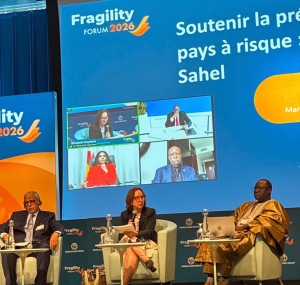
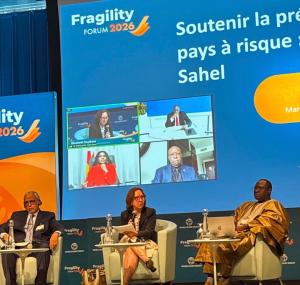
At the 2026 Fragility Forum held at the World Bank headquarters in Washington, D.C., the Timbuktu Institute, by organizing a side event, celebrated its tenth anniversary by posing a question: what if the international community’s actions reflect a lack of understanding of the Sahelian problem? Its president, Dr. Bakary Sambe, a renowned researcher and analyst on the dynamics of fragility, conflict, and violence in West Africa, participated in a High-Level Panel alongside the World Bank Vice President for West and Central Africa, the Mauritanian Minister of Economy, the Secretary General of the Presidency of the Council of Togo, and the Special Representative of the United Nations Secretary-General for the Sahel and West Africa, presented the Institute’s theses and positions, informed by a decade of fieldwork and engagement with Sahelian communities.
In this interview with Dakaractu on the sidelines of the forum, he speaks candidly about the lessons of successive crises, the strategic errors of governments and their international partners, the trap of an all-security approach, and the only way out he sees: an international engagement that is finally differentiated, adaptive, co-constructed, and attuned to local realities.
Dakaractu: Dr. Sambe, your think tank is celebrating its tenth anniversary this year, and you have chosen to mark the occasion by organizing a Side Meeting at the World Bank’s Fragility Forum. Why this moment, why this venue?
Dr. Bakary Sambe: Ten years of observing the Sahelian terrain, of interventions and advocacy, give us a long-term perspective to speak frankly but with great humility. The Fragility Forum is where decision-makers, donors, and researchers come together—those who fund and support policies and those who analyze them, among others. We felt that now was the time to raise a few questions in this forum that may seem uncomfortable. The first is that the fragilities we observe in the Sahel—and which are beginning to spread to the Gulf of Guinea—are not sudden crises. They are the result of a structural imbalance spanning several decades—the legacy of economic policies that have systematically stripped states of their ability to provide public services, uphold the social contract, and invest in their populations. One cannot understand Sahelian jihadism without understanding the 1980s.
Dakaractu: You speak of a “legacy of the 1980s.” That is a very different interpretation from the one prevailing in Western capitals…
Dr. Bakary Sambe: Exactly, and that is precisely the problem. The dominant trend since 2012 has been to treat the Sahel as merely a security issue. Military interventions have been prioritized with operations that have cost billions, and at the same time, budgets for education, health, and justice have been allowed to melt away like snow in the sun despite efforts around the Security-Development nexus. There are figures that should give us pause: in several Sahelian countries, defense and security have absorbed more than 20% of the national budget, while basic education received less than 5%. And the result? Security indicators have deteriorated as military spending has increased. Few actors acknowledge this paradox. We highlighted this in Washington, where the Fragility Forum provided a space for free, open, and constructive debate following the launch of the new FCV strategy—Fragility, Conflict, and Violence—which, it must be acknowledged, was the result of an inclusive process and to which I was invited as part of the Sahel Advisory Panel, of which I was a member alongside experts and figures from the region or those committed to its development for years.
Dakaractu: But during the Forum, you’ll say that a soldier deployed to a border area with no school or health clinic can erode the state’s legitimacy. That’s a statement likely to provoke a reaction…
Dr. Bakary Sambe: It’s a reality on the ground expressed frankly, not a provocation. Imagine a border village where young people have no accessible school, no clinic, no justice system. And then a well-armed soldier arrives. What does he represent to these people? He represents the state as a coercive power, without the counterpart of the protective state. Sustainable security is not a matter of an armed presence; it is a matter of legitimacy. And legitimacy is built through services, through justice, through listening. Alongside the repressive state, there must be a benevolent state that delivers. This is a message we have emphasized repeatedly during this session. The Sahel is not burning because of a lack of soldiers; but because of a lack of states that provide services.
Dakaractu: In your analyses, you mention a “conflict of perceptions regarding the conflict.” What do you mean by that?
Dr. Bakary Sambe: This is, perhaps, one of the most important insights we have developed over the past ten years. When a donor or international partner speaks of “terrorism” or “violent extremism” from their home country, they use categories that may be useful for their government agencies, their parliaments, and their public opinion. But on the ground, these words do not always correspond to what communities are experiencing and, above all, perceiving. They are grappling with land disputes that have remained unresolved for generations, ethnic marginalization, ostracism toward certain communities, and a deep sense of injustice exacerbated by chronic governance failures. This disconnect between partners’ assessments and the reality on the ground risks leading to misdirected interventions, which are sometimes perceived as foreign or even hostile. And when people reject international cooperation, this vacuum is exactly what armed groups know how to fill. They present themselves as credible alternatives where the state is absent and international intervention is perceived as illegitimate.
Dakaractu: The issue of “contagion” from the Sahel to coastal countries is very much present in the debate. Do you reject this term?
Dr. Bakary Sambe: Yes, and this is a fundamental analytical distinction. To speak of “spillover” is to suggest that insecurity originates from a focal point—the Central Sahel—and spreads like an epidemic, creeping into new territories. This image is misleading. The pastoral networks of Liptako-Gourma, the history of latent conflicts, the cross-border trade routes between Niger and Benin, and the community and religious bonds along the borders of Burkina Faso and Togo: none of these have ever respected the borders inherited from colonialism. What we are observing in northern Ghana, Benin, Togo, and Côte d’Ivoire is the same dynamic that has always traversed these regions and that simply had not yet been fully appreciated. The international community and its governmental partners in the region made the mistake of framing the concept of a “Central Sahel” as a priority intervention zone, thereby artificially isolating Burkina, Mali, and Niger from the rest of West Africa. We addressed the problem where it was visible, while allowing the conditions for its worsening to take root in the Gulf of Guinea countries.
Dakaractu: Some Western donors or governments are tempted, in the current context, to scale back their engagement in the region. What is your position?
Dr. Bakary Sambe: Our position is clear, and we have defended it unequivocally in Washington: disengaging would be a major strategic mistake. Withdrawal is not an option. When international partners withdraw or excessively condition their engagement on governance criteria disconnected from local realities, they do not reduce fragility; they transfer it to other actors, whose agendas are often less aligned with the interests of the people. This withdrawal creates vacuums, and vacuums get filled. That said—and this is essential—I am not advocating for blind or unconditional engagement. I am advocating for sustained, differentiated, and adaptive engagement capable of maintaining a real presence and influence without being held hostage to uniform conditions that do not work on the ground. However, this will necessarily require both a more agile approach from partners and a minimum of guarantees provided by our governments. It is true that in Europe, the effects of the war in Ukraine risk diverting attention from the Sahel, just as the resurgence of conflicts in the Middle East pushes the Sahel far from international priorities.
Dakaractu: In concrete terms, what does this mean? What are, for example, your three priorities for a renewed international engagement?
Dr. Bakary Sambe: First, we need to build real early warning systems for better anticipation. Not just dashboards produced in Brussels or Washington, but decentralized capabilities, rooted in the local areas, capable of picking up on early warning signs before crises erupt and escalate. The shift from a reactive to a proactive stance seems crucial to me. Second, approaches would benefit from being differentiated and tailored to specific regions. What works in Bamako doesn’t necessarily work in Cotonou, and even what works in Cotonou doesn’t automatically work in northern Benin. We need to move away from simplistic zoning and tailor interventions to the actual profile of each context. Third, and this is perhaps the most difficult to implement, in my view, we really need to strengthen local ownership for greater sustainable impact. The gap between international strategic perceptions and those of local communities is one of the primary causes of failure, rejection, and inefficiency. Programs must be designed with local partners and communities, not for them or in their place.
Dakaractu: You used an image during the forum: “thunder and drizzle.” Can you explain it to our readers?
Dr. Bakary Sambe: It’s an image that sums up our position well. For the past ten years, the international trend has been to respond to crises by following the sound of thunder: massive, visible, militarized, spectacular interventions. Thunder makes noise during storms; it attracts attention and reassures public opinion in donor countries. But it neither nourishes nor fosters growth. What nourishes, fosters growth, and allows the future to flourish is the light rain—the patient and continuous investment in strengthening community cohesion, in the benevolent presence of the state, in inter-community dialogue, and in structural prevention. Light rain is not spectacular. It does not make the headlines. But it is what sows the seeds for lasting peace. We have also advocated for international organizations to reform their procedures, their funding mechanisms, and their success indicators, so that they can finally invest in this gentle rain and pay equal attention—as the saying goes—to the crack of a falling tree and to the silent forest that grows: it is there that sustainable resilience in the face of multidimensional fragilities is consolidated daily and patiently.
Dakaractu: A final word on the future: what are your plans following this advocacy at the Fragility Forum?
Dr. Bakary Sambe: The reflection will continue, as will the advocacy and support for efforts to address fragilities and mitigate the risks of conflict. In the coming weeks, the Timbuktu Institute will publish a series of policy briefs delving into each of the dimensions discussed in Washington and at recent forums such as the one in Brussels and, coming up at the end of July, the Emerging Markets Forum in Abuja. These publications will provide an opportunity to organize discussions with experts and practitioners, to support national and international strategies while connecting them to local actors and endogenous realities. This is precisely where the difference lies between a strategy that remains on paper and one that aims to bring about change: taking local realities into account is not merely a methodological choice; it is a guarantee of effectiveness and legitimacy. After ten years of advocacy and generating knowledge to inform decision-making, we continue to carry this message forward with, I hope, a little more perseverance. If, by the end of this process, we succeed in convincing as many people as possible that we must give greater weight to endogenous strategies as viable solutions, we will have succeeded in sowing the seed. Others, even without us, will be able to help it sprout and grow. That is the minimum role of a think tank: to use ideas to move those who are, perhaps, stronger or more legitimate than we are.
Interview conducted by Cheikh Sadibou Fall
Source: Dakaractu
Au Fragility Forum 2026 organisé au siège de la Banque mondiale à Washington D.C., le Timbuktu Institute, en organisant un side Meeting, a célébré dix ans d'existence en posant un débat : et si l’action de la communauté internationale dénotait un déficit de compréhension du problème sahélien ? Son président, le Dr. Bakary Sambe, chercheur et analyste reconnu sur les dynamiques de de fragilité, de conflits et de violence en Afrique de l'Ouest qui participé à un Panel de Haut-Niveau aux côtés du Vice-Président de la Banque Mondiale pour l’Afrique de l’Ouest et du Centre, du Ministre mauritanien de l’économie, de la Secrétaire Générale de la Présidence du Conseil du Togo, du Représentant spécial du Secrétaire général des Nations Unies au Sahel et en Afrique de l’Ouest, a exposé les thèses et positions de l’Institut nourries par une décennie de travail de terrain et de rencontre avec les communautés sahéliennes.
Dans cet entretien accordé à Dakaractu en marge du forum, il revient sans concession sur les leçons des crises successives, les erreurs stratégiques des gouvernements comme de leurs partenaires internationaux, le piège du tout-sécuritaire et la seule issue qu'il entrevoit : un engagement international enfin différencié, adaptatif, co-construit et à l'écoute des réalités locales.
Dakaractu : Dr. Sambe, votre think tank fête ses dix ans cette année, et vous avez choisi de marquer l'événement en organisant un Side Meeting au Fragility Forum de la Banque mondiale. Pourquoi ce moment, pourquoi ce lieu ?
Dr. Bakary Sambe : Dix ans d'observation des terrains sahéliens, d’interventions et de plaidoyer nous donnent une vision sur le temps long pour parler sans détour mais avec beaucoup d’humilité. Le Fragility Forum, c'est là où se retrouvent les décideurs, les bailleurs, les chercheurs ; ceux qui financent et appuient les politiques et ceux qui les analysent, entre autres. Nous avons estimé que c'était le moment de soulever dans cet espace quelques questions qui peuvent sembler inconfortables. La première, c'est que les fragilités que nous observons au Sahel, et qui commencent à gagner le Golfe de Guinée, ne sont pas des crises soudaines. Elles sont le produit d'un décalage structurel de plusieurs décennies, le legs de politiques économiques qui ont systématiquement vidé les États de leur capacité à assurer les services publics, à maintenir le contrat social, à investir dans leurs populations. On ne comprend pas le jihadisme sahélien si on ne comprend pas les années 1980.
Dakaractu : Vous parlez d'un « legs des années 1980 ». C'est une lecture très différente de celle qui prévaut dans les capitales occidentales…
Dr. Bakary Sambe : Exactement, et c'est bien là le problème. La tendance dominante, depuis 2012, a été de traiter le Sahel comme un simple problème de sécurité. On a favorisé les interventions militaires avec des opérations qui ont mobilisé des milliards et, dans le même temps, on a laissé les budgets d'éducation, de santé, de justice fondre comme neige au soleil malgré les efforts autour du nexus Sécurité-Développement. Il y a des chiffres qui devraient faire réfléchir : dans plusieurs pays sahéliens, la défense et la sécurité ont absorbé plus de 20 % du budget national pendant que l'éducation de base recevait moins de 5 %. Et le résultat ? Les indicateurs de sécurité se sont détériorés à mesure que les dépenses militaires augmentaient. Ce paradoxe, peu d'acteurs l’avouent. Nous l'avons rappelé à Washington où le Fragility Forum nous a offert un espace de débats libres, ouverts et constructifs dans la foulée du lancement de la nouvelle stratégie FCV – Fragilité, conflits et violence – qui a été, il faut le reconnaître, le fruit d’un processus inclusif et auquel j’ai été convié dans le cadre du Sahel Advisory Panel dont j’ai été membre aux côtés d’experts et de personnalités de la région ou engagées pour son développement depuis des années.
Dakaractu : Mais lors du Forum, vous allez dire qu'un soldat propulsé dans une zone frontalière sans école ni dispensaire peut éroder la légitimité de l'État. C'est une formule qui risque de faire réagir…
Dr. Bakary Sambe : C'est une réalité de terrain exprimée franchement, pas une provocation. Imaginez un village frontalier où les jeunes n'ont pas d'école accessible, pas de dispensaire, pas de justice. Et puis arrive un soldat bien armé. Que représente-t-il pour ces populations ? Il représente l'État comme puissance coercitive, sans la contrepartie de l'État protecteur. La sécurité durable n'est pas une question de présence armée ; c'est une question de légitimité. Et la légitimité se construit par les services, par la justice, par l'écoute. À côté de l'État répressif, il faut l'État bienveillant qui délivre. C'est un message que nous avons porté avec insistance lors de cette session. Le Sahel ne brûle pas parce qu'il manque de soldats ; mais par défaut d'États pourvoyeurs de services.
Dakaractu : Vous évoquez dans vos analyses un « conflit de perceptions sur le conflit ». Qu'entendez-vous par là ?
Dr. Bakary Sambe : C'est, peut-être, l’un des diagnostics les plus importants que nous ayons développé ces dix dernières années. Quand un bailleur ou partenaire international parle de « terrorisme » ou d'« extrémisme violent » depuis son pays, il utilise des catégories qui peuvent être opératoires pour ses administrations, pour ses parlements, pour ses opinions publiques. Mais sur le terrain, ces mots ne correspondent pas toujours à ce que les communautés vivent et surtout perçoivent. Elles vivent des conflits fonciers jamais réglés depuis des générations, des marginalisations ethniques, l’ostracisme vis-à-vis de certaines communautés, un sentiment d'injustice profond accentué par des défaillances de gouvernance chroniques. Ce décalage entre le diagnostic des partenaires et la réalité vécue localement risque de produire des interventions mal ciblées, parfois perçues comme étrangères ou même hostiles. Et quand les gens rejettent la coopération internationale, ce vide est exactement ce que les groupes armés savent occuper. Ils se présentent comme des alternatives crédibles là où l'État est absent et l'intervention internationale perçue comme illégitime.
Dakaractu : La question de la « contagion » du Sahel vers les pays côtiers est très présente dans le débat. Vous récusez ce terme ?
Dr. Bakary Sambe : Oui, et c'est une distinction analytique fondamentale. Parler de « contagion », c'est suggérer que l'insécurité part d'un foyer qui est le Sahel central et se répand comme une épidémie, en glissant sur de nouveaux territoires. Cette image est trompeuse. Les réseaux pastoraux du Liptako-Gourma, l’historique des conflictualités latentes, les circuits commerciaux transfrontaliers entre le Niger et le Bénin, les solidarités communautaires et religieuses à la lisière du Burkina Faso et du Togo : tout cela n'a jamais respecté les frontières héritées de la colonisation. Ce que nous observons dans le nord du Ghana, du Bénin, du Togo, de la Côte d'Ivoire, c'est la même dynamique qui a toujours traversé ces espaces et qui n'était simplement pas encore prise à sa juste mesure. La communauté internationale et leurs partenaires gouvernementaux dans la région ont fait l'erreur de construire l’idée d' un « Sahel central » comme zone d'intervention prioritaire, en isolant artificiellement Burkina, Mali, Niger du reste de l'Afrique de l'Ouest. On a traité le problème là où il était visible, tout en laissant se consolider les conditions de son aggravation dans les pays du Golfe de Guinée.
Dakaractu : Certains bailleurs ou gouvernements occidentaux sont tentés, dans le contexte actuel, de réduire leur engagement dans la région. Quelle est votre position ?
Dr. Bakary Sambe : Notre position est claire et nous l'avons défendue sans ambiguïté à Washington : se désengager serait une erreur stratégique majeure. Le désengagement n’est pas une option. Quand les partenaires internationaux retirent ou conditionnent excessivement leur engagement à des critères de gouvernance déconnectés des réalités locales, ils ne réduisent pas la fragilité ; ils la transfèrent à d'autres acteurs, porteurs d'agendas souvent moins alignés sur les intérêts des populations. Ce désengagement crée des vides, et les vides se comblent. Cela dit, et c'est essentiel, je ne plaide pas pour un engagement aveugle ou inconditionnel. Je plaide pour un engagement soutenu, différencié, adaptatif capable de maintenir une présence et une influence réelles sans être prisonnier de conditionnalités uniformes qui ne fonctionnent pas sur le terrain. Mais, il faudra nécessairement autant une approche plus agile de la part des partenaires mais aussi un minimum de garanties offertes par nos États. Il est vrai qu’en Europe, les effets de la guerre en Ukraine risquent de détourner l’attention du Sahel comme la résurgence des conflits du Moyen-Orient fait oublier le Sahel loin des priorités internationales.
Dakaractu : Concrètement, qu'est-ce que cela signifie ? Quelles sont, par exemple, vos trois priorités pour un engagement international rénové ?
Dr. Bakary Sambe : Premièrement, il faut construire de vrais systèmes d'alerte précoce pour une meilleure anticipation. Pas de simples tableaux de bord produits à Bruxelles ou à Washington, mais des capacités décentralisées, ancrées dans les territoires, capables de capter les signaux faibles avant que les crises n'éclatent et ne s'aggravent. Le passage d'une posture réactive à une posture proactive me semble crucial. Deuxièmement, les approches gagneraient à être différenciées et territorialisées. Ce qui fonctionne à Bamako ne fonctionne pas forcément à Cotonou, et même ce qui fonctionne à Cotonou ne fonctionne pas systématiquement dans le nord du Bénin. Il faut sortir du zonage simpliste et calibrer les interventions sur le profil réel de chaque contexte. Troisièmement, et c'est peut-être le plus difficile à mettre en œuvre, à mon sens, il faut vraiment renforcer l'appropriation locale pour plus d’impact durable. Le fossé entre les perceptions stratégiques internationales et celles des communautés locales est l'une des premières causes d'échec, de rejet et d’inefficacité. Les programmes doivent être conçus avec les partenaires locaux, avec les communautés, pas pour elles et à leur place.
Dakaractu : Vous avez utilisé lors du forum une image : « le tonnerre et la pluie fine ». Pouvez-vous l'expliquer à nos lecteurs ?
Dr. Bakary Sambe : C'est une image qui résume bien notre positionnement. Depuis dix ans, la tendance internationale a été de répondre aux crises en suivant le bruit du tonnerre : des interventions massives, visibles, militarisées, spectaculaires. Le tonnerre fait du bruit lors des orages, il attire l'attention, cela rassure les opinions publiques dans les pays bailleurs. Mais il ne nourrit ni ne fait croître. Ce qui nourrit, fait pousser et fleurir l’avenir, c'est la pluie fine, l'investissement patient et continu dans la consolidation de la cohésion communautaire, dans la présence bienveillante de l'État, dans le dialogue intercommunautaire, dans la prévention structurelle. La pluie fine n'est pas spectaculaire. Elle ne fait pas les unes des journaux. Mais c'est elle qui fait germer les conditions d'une paix durable. Nous avons aussi plaidé pour que les organisations internationales réforment leurs procédures, leurs mécanismes de financement, leurs indicateurs de succès, pour pouvoir enfin investir dans cette pluie fine et prêter la même attention, conformément à l’adage, au craquement de l’arbre qui tombe comme à la forêt silencieuse qui pousse : c’est là que se consolide quotidiennement et patiemment la résilience durable face aux fragilités multidimensionnelles.
Dakaractu : Un dernier mot sur l'avenir : quels sont vos projets après ce plaidoyer au Fragility Forum ?
Dr. Bakary Sambe : La réflexion continuera de même que le plaidoyer et l’accompagnement des efforts pour faire face aux fragilités et mitiger les risques de conflits. Le Timbuktu Institute publiera dans les prochaines semaines une série de policy briefs approfondissant chacune des dimensions débattues à Washington et lors des derniers foras comme à Bruxelles et, prochainement, fin juillet, au Emerging Markets Forum d’Abuja. Ces publications seront l'occasion d'organiser des échanges avec des experts et des praticiens, pour accompagner les stratégies nationales et internationales tout en les connectant aux acteurs locaux et aux réalités endogènes. C'est précisément là que se joue la différence entre une stratégie qui reste sur le papier et une stratégie qui ambitionne de changer les choses : la prise en compte des réalités locales n'est pas une simple option méthodique, c'est un gage d'efficacité et de légitimité. Après dix ans de mobilisation, de production de connaissances pour éclairer les décisions, nous continuons à porter ce message avec, je l'espère, un peu plus de persévérance. Si nous arrivons au bout de ce processus à convaincre le plus grand nombre qu’il faut donner davantage de dignité de solution aux stratégies endogènes, nous aurions réussi à semer la graine. D’autres, même sans nous, pourront la faire germer et pousser. C’est cela le rôle minimal d’un think tank. Par les idées, faire bouger ceux qui sont, peut-être, plus forts ou légitimes que nous.
Entretien réalisé par Cheikh Sadibou Fall
Source : Dakaractu
Washington, D.C., June 2026
To mark its tenth anniversary, the Timbuktu Institute organized a side event as part of the Fragility Forum 2026 at the World Bank headquarters in Washington, D.C. The session, which is part of the most current international debates on fragility and conflict prevention, brought together policymakers, researchers, and practitioners to address a central question: to what extent do the tools and conditions of international engagement remain suited to the complexity of fragility and the realities of the Sahel and West Africa?
A decade of crises, a generation of lessons learned
The Timbuktu Institute’s intellectual contribution to the Fragility Forum centered on a fundamental observation: the fragilities now erupting in the Sahel and beginning to manifest in the coastal countries of the Gulf of Guinea are not sudden phenomena. They are the product of a structural lag spanning several decades. There is the legacy of economic policies from the 1970s and 1980s that systematically reduced states’ capacity to provide public services, uphold the social contract, and invest in human development. Persistent rural poverty, mass exoduses, uncontrolled urbanization, the collapse of educational and health services, and insufficient economic integration of border areas: these are all conditions that armed groups and jihadist networks have learned to exploit with formidable efficiency, filling the void left by weakened states.
This long-term historical analysis leads the Timbuktu Institute to issue a warning to international partners: treating the symptoms without addressing the structural issues that generate them dooms any intervention to failure, regardless of the resources mobilized. For the countries of the Gulf of Guinea, which now find themselves on the brink of this turmoil, the lesson from the Sahel is of the utmost urgency: the window of opportunity for prevention always closes very quickly.
The trap of militarization and the sidelining of development in favor of security
One of the most decisive positions taken during the session concerned the assessment of the security paradigm that has dominated international responses in the Sahel since 2012. Despite considerable funding allocated to military operations and national security forces, security indicators have deteriorated as military budgets have increased. Meanwhile, spending on education, health, agriculture, and justice stagnated or was drastically reduced. In several Sahelian countries, defense absorbed more than 20% of the national budget, while basic education received less than 5%.
During these discussions, the Timbuktu Institute highlighted a paradox that too few international actors dare to address: an armed soldier deployed to a village in northern Benin or northern Togo—without a school, without a health clinic, without access to justice—does not produce lasting security; he may even undermine its legitimacy. For security to be sustainable, it must be based on a benevolent state presence, not merely an armed one. Alongside the state—often perceived as too “repressive” to be approachable—the “protective” state must deliver the services needed by the people. This means defending, in the face of pressure from security donors and geopolitical agendas, the balance between the security response and continued investment in human development.
A gap in perceptions that undermines the best intentions
At the heart of the analyses presented by the Timbuktu Institute lies a diagnosis the Institute has long formulated: the real problem in the Sahel is not just the conflict itself, but a conflict of perceptions regarding that conflict. Imported conceptual frameworks act as analytical lenses that obscure profoundly different local dynamics: land disputes, marginalization, targeted ostracism, a sense of injustice, governance failures, and the exploitation of community grievances. This disconnect between donors’ assessments and the realities experienced by communities has, at times, led to poorly targeted interventions, perceived locally as foreign or even hostile, and has fueled rejection of international actors in certain countries.
This disconnect is precisely the breeding ground on which recruitment into armed groups thrives: where the state is absent and international aid is perceived as illegitimate, armed groups know how to present themselves as “credible” alternatives. For coastal countries still in the prevention phase, the urgent need is to build and support endogenous systems for understanding conflicts through local research, community observatories, and traditional mediators before this window closes for good.
The strategic error of zoning: denying sociocultural continuums
The session also challenged one of the most entrenched conventions of the international framework: the analytical construction of the “Central Sahel” (Mali, Burkina Faso, Niger) as a priority intervention zone, artificially delineated and ignoring the region’s anthropological and sociocultural realities. The pastoral networks of Liptako-Gourma do not stop at the borders inherited from colonization. Trade routes, the recruitment dynamics of armed groups, and clan- and religious-based solidarity transcend these administrative boundaries.
By isolating the Central Sahel from the rest of West Africa, the international community has contented itself with addressing the problem where it was most visible, while allowing the conditions for its expansion toward the Gulf of Guinea to take root.
The insecurity now evident in northern Ghana, Benin, Togo, and Côte d’Ivoire is not a “contagion” from the Sahel: it is the same dynamic that has always existed across these regions, and which simply had not yet been fully recognized. An integrated regional approach, taking into account pastoral, ethnic, religious, and commercial continuums, is a prerequisite for any truly effective strategy with impactful results.
Above all, do not disengage: a political imperative in the face of geopolitical reconfigurations
In a context of unprecedented geopolitical reconfiguration—marked by the withdrawal of international forces, strategic repositioning, and the rise of new actors—the temptation to disengage is real for many international partners.
The Timbuktu Institute took a fairly clear-cut stance on this issue at the Fragility Forum: withdrawing, reducing funding, or rigidly conditioning engagement on governance criteria disconnected from local dynamics risks exacerbating precisely the fragilities that these partners should be seeking to further reduce. International disengagement creates vacuums that other actors—whose agendas are often less aligned with the interests of local populations—will rush to fill.
For Dr. Bakary Sambe, “this does not mean blind or unconditional engagement. It means sustained, differentiated, and adaptive engagement capable of maintaining a presence and influence without being held hostage to uniform conditions that do not correspond to any reality on the ground.” ”
Three Priorities for a Renewed International Engagement
In light of this assessment, the Timbuktu Institute formulated three operational priorities for international development organizations during the session.
The first is the establishment of decentralized early warning and anticipation systems capable of detecting weak signals even before crises erupt. This involves shifting from a reactive to a proactive stance, supporting permanent monitoring capacities that integrate both structural causes and triggering factors, and establishing a differentiated classification of contexts to better guide engagement decisions and improve anticipation.
The second priority is the adoption of differentiated and localized approaches, rejecting simplistic zoning in favor of interventions tailored to the actual profile of each context. In areas of severe security deterioration, humanitarian programs must be coupled with measures promoting, for example, employment and support for the local entrepreneurial sector, even if it is predominantly informal. In areas of moderate risk, targeted territorial interventions that include conditions of transparency and inclusion are more appropriate. For areas of intense conflict, the specific management of refugees and internally displaced persons requires dedicated tools.
The third priority is strengthening local ownership and regional synergies. The structural gap between international strategic perceptions and those of local communities is one of the primary causes of the failure of top-down interventions. Organizations must systematically promote inclusion and local ownership in program design and monitoring, while developing regional and transnational synergies because the dynamics of insecurity in the Sahel transcend state borders.
Toward a “light rain” paradigm in the face of emergency “storms”
To conclude the discussions, the Timbuktu Institute proposed an image that summarizes its position: the contrast between thunder that strikes and commands all attention, and the light rain that nourishes. The international trend over the past decade has been to respond to crises with the thunder of massive, visible, militarized interventions, often disconnected from local realities. What researchers and practitioners at the Timbuktu Institute advocate is patient and sustained investment in the “light rain” of community building, a benevolent state presence, inter-community dialogue, structural prevention, and the daily strengthening of resilience
This paradigm requires profound institutional reforms within international organizations themselves: more agile procedures, more flexible funding mechanisms, and success indicators rooted in local perceptions rather than in reporting requirements to headquarters. The Timbuktu Institute, drawing on ten years of observation, analysis, and advocacy from the field in the Sahel and West Africa, intends to continue bringing this imperative to the forefront of international debate.
Building on the discussions shared at the Fragility Forum, the Institute will publish a series of policy briefs that will facilitate organized debates with experts and practitioners to support national and international strategies while ensuring they are connected to local actors and endogenous realities—factors whose consideration is essential to ensuring acceptability, effectiveness, and success.
Washington D.C., Juin 2026
À l'occasion de son dixième anniversaire, le Timbuktu Institute a organisé un side meeting dans le cadre du Fragility Forum 2026, au siège de la Banque mondiale à Washington D.C. La session, qui s'inscrit dans les débats les plus actuels de la scène internationale sur la fragilité et la prévention des conflits, a réuni des décideurs, des chercheurs et des praticiens autour d'une question centrale : dans quelle mesure les outils et les conditionnalités de l'engagement international restent-ils adaptés à la complexité de la fragilité et des réalités sahéliennes et ouest-africaines ?
Une décennie de crises, une génération de leçons apprises
La contribution intellectuelle du Timbuktu Institute au Fragility Forum s'est articulée autour d'un constat fondamental : les fragilités qui explosent aujourd'hui au Sahel et commencent à se manifester dans les pays côtiers du Golfe de Guinée ne sont pas des phénomènes soudains. Elles sont le produit d'un décalage structurel de plusieurs décennies. Il y a le legs de politiques économiques des années 1970 et 1980 qui ont systématiquement réduit la capacité des États à assurer les services publics, maintenir le contrat social et investir dans le développement humain. La pauvreté rurale persistante, les exodes, l’urbanisation non maîtrisée, l'effondrement des services éducatifs et sanitaires, le désenclavement économique insuffisant des zones frontalières : autant de conditions que les groupes armés et les réseaux jihadistes ont appris à exploiter avec une efficacité redoutable, comblant le vide laissé par des États affaiblis.
Cette lecture historique sur le temps long conduit le Timbuktu Institute à une mise en garde adressée aux partenaires internationaux : traiter les symptômes sans s'attaquer au passif structurel qui les génère condamne toute intervention à l'échec, quelles que soient les ressources mobilisées. Pour les pays du Golfe de Guinée qui se trouvent aujourd'hui à l'orée de cette turbulence, la leçon sahélienne est d'une urgence capitale : la fenêtre de prévention se referme toujours très vite.
Le piège de la militarisation et l'éviction du développement au profit de la sécurité
L'une des prises de position les plus tranchées de la session a porté sur le bilan du paradigme sécuritaire qui a dominé les réponses internationales au Sahel depuis 2012. Malgré des volumes de financement considérables consacrés aux opérations militaires et aux forces de sécurité nationales, les indicateurs de sécurité se sont détériorés à mesure que les budgets militaires augmentaient. Tandis que les dépenses d'éducation, de santé, d'agriculture et de justice stagnaient ou se réduisaient drastiquement. Dans plusieurs pays sahéliens, la défense a absorbé plus de 20 % du budget national quand l'éducation de base en recevait moins de 5 %.
Le Timbuktu Institute a insisté lors de ces échanges sur un paradoxe que trop peu d'acteurs internationaux osent nommer : un soldat armé et déployé dans un village du nord du Bénin ou du nord du Togo, sans école, sans dispensaire, sans accès à la justice, ne produit pas de sécurité durable ; il peut même en éroder la légitimité. La sécurité, pour être durable, doit s'appuyer sur une présence étatique bienveillante, pas seulement sur une présence armée. À côté de l’État perçu souvent comme trop « répressif » pour être proche, l’État « protecteur » doit délivrer les services nécessaires aux populations. Cela implique de défendre, face aux pressions des donateurs sécuritaires et aux agendas géopolitiques, l'équilibre entre la réponse sécuritaire et l'investissement continu dans le développement humain.
Un fossé de perceptions qui sape les meilleures intentions
Au cœur des analyses présentées par le Timbuktu Institute figure un diagnostic que l'Institut formule de longue date : le vrai problème au Sahel n'est pas seulement le conflit lui-même, mais un conflit de perceptions sur ce conflit. Les cadres conceptuels importés sont des lunettes analytiques qui occultent des logiques locales profondément différentes : compétitions foncières, marginalisation, ostracismes ciblés, sentiment d'injustice, défaillances de gouvernance, instrumentalisation des griefs communautaires. Ce décalage entre les diagnostics des donateurs et les réalités vécues par les communautés a, parfois, conduit à des interventions mal ciblées, perçues localement comme étrangères ou même hostiles, et a alimenté le rejet des acteurs internationaux dans certains pays.
Cette déconnexion est précisément le terreau sur lequel prospère le recrutement dans les groupes armés : là où l'État est absent et l'aide internationale perçu comme illégitime, les groupes armés savent se présenter comme des alternatives « crédibles ». Pour les pays côtiers encore en phase de prévention, l'urgence est de construire et d’appuyer des systèmes endogènes de compréhension des conflits à travers la recherche locale, des observatoires communautaires, des médiateurs traditionnels avant que cette fenêtre ne se referme définitivement.
L'erreur stratégique du zonage : nier les continuums socioculturels
La session a également remis en question l'une des conventions les plus tenaces de l'architecture internationale : la construction analytique du « Sahel central » ( Mali, Burkina Faso, Niger ) comme zone d'intervention prioritaire, délimitée de façon artificielle et ignorant les réalités anthropologiques et socioculturelles de la région. Les réseaux pastoraux du Liptako-Gourma ne s'arrêtent pas aux frontières héritées de la colonisation. Les circuits commerciaux, les dynamiques de recrutement des groupes armés, les solidarités claniques et religieuses transcendent ces délimitations administratives.
En isolant le Sahel central du reste de l'Afrique de l'Ouest, la communauté internationale s’est contentée de traiter le problème là où il était le plus visible, tout en laissant se consolider les conditions de son expansion vers le Golfe de Guinée. L'insécurité qui se manifeste aujourd'hui dans le nord du Ghana, du Bénin, du Togo et de la Côte d'Ivoire n'est pas une « contagion » venue du Sahel : c'est la même dynamique qui a toujours traversé ces espaces, et qui n'était simplement pas encore prise à sa juste mesure. Une approche régionale intégrée, tenant compte des continuums pastoraux, ethniques, religieux et commerciaux, est une condition d’efficacité de toute stratégie véritablement efficace avec des résultats impactants.
Ne surtout pas se désengager : un impératif politique face aux reconfigurations géopolitiques
Dans un contexte de reconfiguration géopolitique sans précédent avec le retrait de forces internationales, les repositionnements stratégiques, la montée en puissance de nouveaux acteurs, la tentation du désengagement est réelle pour plusieurs partenaires internationaux.
Le Timbuktu Institute a pris une position assez tranchée à ce sujet lors du Fragility Forum : se retirer, réduire les financements ou conditionner l'engagement de façon rigide à des critères de gouvernance déconnectés des dynamiques locales, c'est risquer d'aggraver précisément les fragilités que ces partenaires devraient chercher à réduire davantage. Le désengagement international crée des vides que d'autres acteurs porteurs d'agendas souvent moins alignés sur les intérêts des populations s'empresseront de combler.
Pour Dr. Bakary Sambe, « cela ne signifie pas un engagement aveugle ou inconditionnel. Cela signifie un engagement soutenu, différencié, adaptatif capable de maintenir une présence et une influence sans être prisonnier de conditionnalités uniformes qui ne correspondent à aucune réalité de terrain. »
Trois priorités pour un engagement international rénové
Face à ce diagnostic, le Timbuktu Institute a formulé lors de la session trois priorités opérationnelles pour les organisations internationales de développement.
La première est la construction de systèmes d'alerte précoce et d'anticipation décentralisés, capables de capter les signaux faibles avant même que les crises n'éclatent. Cela implique de passer d'une posture réactive à une posture proactive, d’appuyer des capacités permanentes de veille intégrant à la fois les causes structurelles et les facteurs déclenchants, et d'établir une classification différenciée des contextes afin de mieux guider les décisions d'engagement et une meilleure anticipation.
La deuxième priorité est l'adoption d'approches différenciées et territorialisées, rejetant le zonage simpliste au profit d'interventions calibrées sur le profil réel de chaque contexte. Dans les zones de forte détérioration sécuritaire, les programmes humanitaires doivent être couplés à des mesures favorisant, par exemple, l’emploi et le soutien au tissu entrepreneurial local même à dominante informelle. Dans les zones à risque modéré, des interventions territoriales ciblées incluant des conditions de transparence et d'inclusion sont plus adaptées. Pour les zones de conflit intense, la gestion spécifique des réfugiés et déplacés internes requiert des outils dédiés.
La troisième priorité est le renforcement de l'appropriation locale et des synergies régionales. Le fossé structurel entre les perceptions stratégiques internationales et celles des communautés locales est l'une des causes premières de l'échec des interventions avec des procédés par le haut (top down). Les organisations doivent systématiquement promouvoir l'inclusion et l'appropriation locale dans la conception et le suivi des programmes, tout en développant des synergies régionales et transnationales parce que les dynamiques d'insécurité sahélienne ignorent les frontières étatiques.
Vers un paradigme de la « pluie fine » face aux "tempêtes" de l'urgence
Pour conclure les échanges, le Timbuktu Institute a proposé une image qui résume son positionnement : l'opposition entre le tonnerre qui frappe et qui retient toute l’attention et la pluie fine qui nourrit. La tendance internationale depuis une décennie a été de répondre aux crises par le tonnerre des interventions massives, visibles, militarisées, souvent déconnectées des réalités locales. Ce que plaident les chercheurs et praticiens du Timbuktu Institute, c'est l'investissement patient et continu dans la « pluie fine » de la consolidation communautaire, de la présence étatique bienveillante, du dialogue intercommunautaire, de la prévention structurelle et du renforcement quotidien de la résilience
Ce paradigme exige des réformes institutionnelles profondes au sein des organisations internationales elles-mêmes : des procédures plus agiles, des mécanismes de financement plus flexibles, des indicateurs de succès ancrés dans les perceptions locales plutôt que dans les logiques de rapport aux sièges. Le Timbuktu Institute, mettant à profit dix ans d'observation, d'analyse et de plaidoyer depuis les terrains sahéliens et ouest-africains, entend continuer à porter cette exigence dans les espaces de débat international.
Dans la poursuite de cette réflexion partagée lors du Fragility Forum, l’Institut publiera une série de policy briefs qui offriront l’opportunité de débats organisés avec des experts et praticiens afin d’accompagner les stratégies nationales et internationales tout en veillant à les connecter aux acteurs locaux et aux réalités endogènes dont la prise en compte s’impose comme l’un des gages d’acceptabilité, d’efficacité et de succès.
Timbuktu Institute Week 1 – June 2026
Download the full Sahel weather report
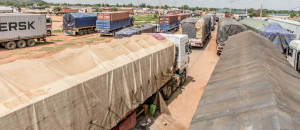
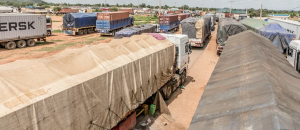
The prolonged closure of the border between Benin and Niger continues to weigh heavily on the economies of both countries. Trade blockades are stifling the transport sector, depriving local markets of essential goods and driving up the cost of living for border communities. The port of Cotonou, which historically served as Niger’s main maritime outlet, is suffering significant financial losses due to the slowdown in goods transit. Faced with this untenable situation, which is penalising economic actors on both sides, the urgent need to find a way out of the crisis has become an absolute priority. Faced with this economic deadlock, the Beninese authorities have opted to prioritise diplomatic channels to avert the crisis. The new Beninese President, Romuald Wadagni, has therefore made an official visit to Niger and Burkina Faso to restart discussions with the Alliance of Sahel States (AES). This initiative aims to restore trust, resolve disputes relating to the transport of Nigerien oil and consider a gradual reopening of transport routes. For Cotonou, resuming dialogue with the two countries is essential to stabilising neighbourly relations within West Africa.
Demolitions in neighbourhoods near Niamey Airport spark controversy
The Nigerien transitional authorities have launched a large-scale demolition operation in the neighbourhoods located in the immediate vicinity of Niamey International Airport. The residents affected have been ordered to leave the area quickly, leaving many families in a state of utter distress at the loss of their homes and small businesses. The authorities justify this decision on the grounds of national security and urban planning. The aim is to secure the airport area but also to clear the surroundings of the infrastructure to prevent any risk of attack or infiltration. However, the lack of immediate rehousing solutions is causing intense anger and great distress among the local population affected by the measure.
Major seizure of weapons and ammunition by security forces
Nigerien defence and security forces have carried out a seizure by intercepting a large shipment of weapons and ammunition. This operation led to the seizure of a significant quantity of arms intended to supply the armed groups responsible for the wave of insecurity in the region. For the authorities, this seizure confirms the effectiveness of the strengthened border controls, whilst highlighting the persistent flow of illicit arms into the country. As a result of this seizure, the armed groups have been deprived of essential combat resources; this demonstrates the security forces’ determination to protect the capital and the whole country.
Niger and Turkey strengthen their partnership
The President of Niger, General Abdourahamane Tiani, made a significant official visit to Ankara to formalise the strengthening of strategic relations between Niger and Turkey. This rapprochement has resulted in the signing of several cooperation agreements covering key sectors such as defence, the economy and the exploitation of mineral resources. For Niger, this partnership with Turkey represents an opportunity to diversify its international alliances and modernise its military capabilities in the face of terrorism, whilst moving away from its traditional Western partners. For its part, Ankara is consolidating its diplomatic and economic influence in the Sahel by establishing itself as a key player for the countries of the Alliance of Sahel States.
Timbuktu Institute Semaine 1 - juin 2026
Télécharger l'intégralité de la Météo Sahel
La fermeture prolongée de la frontière entre le Bénin et le Niger continue de peser très lourdement sur l'économie des deux pays. Les blocages commerciaux asphyxient le secteur des transports, privent les marchés locaux de produits essentiels et font grimper le coût de la vie pour les populations frontalières. Le port de Cotonou, qui servait historiquement de principal débouché maritime pour le Niger, subit d'importantes pertes financières en raison du ralentissement du transit des marchandises. Face à cette situation intenable qui pénalise les acteurs économiques des deux côtés, l'urgence de trouver une issue à la crise est devenue une priorité absolue. Face à cette impasse économique, les autorités béninoises ont choisi de privilégier la voie diplomatique pour éviter la crise. Le nouveau Président Béninois, Romuald Wadagni, a ainsi effectué un déplacement officiel au Niger et au Burkina Faso afin de relancer les discussions avec l'Alliance des États du Sahel (AES). Cette démarche vise à rétablir la confiance, à régler les différends liés au transport du pétrole nigérien et à envisager une réouverture progressive des voies de communication. Pour Cotonou, renouer le fil du dialogue avec les deux pays est indispensable pour stabiliser les relations de voisinage au sein de l'espace ouest-africain.
Les démolitions de quartiers proches de l'aéroport de Niamey font polémique
Les autorités de transition nigériennes ont lancé une vaste opération de démolition dans les quartiers situés à proximité immédiate de l'aéroport international de Niamey. Les habitants concernés ont reçu l'ordre de quitter les lieux rapidement, laissant de nombreuses familles dans le désarroi le plus total face à la perte de leurs logements et de leurs petits commerces. Cette décision est justifiée par le pouvoir pour des impératifs de sécurité nationale et d'urbanisme. L'objectif est de sécuriser cette zone aéroportuaire mais aussi de nettoyer les alentours de l'infrastructure afin de prévenir tout risque d'attaque ou d'infiltration. Toutefois, l'absence de solutions de relogement immédiates suscite une vive colère et une grande détresse chez la population locale impactée par la mesure.
Importante saisie d'armes et de munitions par les forces de sécurité
Les forces de défense et de sécurité nigériennes ont réalisé une saisie en interceptant une importante cargaison d'armes et de munitions. Cette opération a permis de saisir une importante quantité d’armement destiné à alimenter le matériel des groupes armés responsables de la vague d'insécurité dans la région. Pour les autorités, cette saisie confirme l'efficacité des contrôles renforcés au niveau des frontières, tout en mettant en lumière les flux persistants d'armements clandestins sur le territoire. A travers cette saisie, les groupes armés se trouvent privés de moyens de combat essentiels; ce qui démontre la détermination des forces de sécurité à protéger la capitale et l'ensemble du pays.
Le Niger et la Turquie renforcent leur partenariat
Le président nigérien, le général Abdourahamane Tiani, a effectué une visite officielle marquante à Ankara pour officialiser le renforcement des relations stratégiques entre le Niger et la Turquie. Ce rapprochement se traduit par la signature de plusieurs accords de coopération touchant des secteurs clés comme la défense, l'économie et l'exploitation des ressources minières. Pour le pays, ce partenariat avec la Turquie représente une opportunité de diversifier ses alliances internationales et de moderniser ses capacités militaires face au terrorisme, tout en s'affranchissant des partenaires occidentaux traditionnels. De son côté, Ankara consolide son influence diplomatique et économique au Sahel en s'affirmant comme un acteur incontournable pour les pays de l'Alliance des États du Sahel.
Timbuktu Institute Week 1 – June 2026
Download the full Sahel weather report
Since the coordinated attacks last April in several towns across the country, one thing has become clear: the persistence of assaults by armed groups. For many years now, the country has been embroiled in an increasingly intensifying war on terrorism . Since the 2012 coup, clashes were mainly concentrated in the north, but in recent years the conflict has become increasingly felt across the country, despite the support of foreign armed forces. Following the withdrawal of French troops, instability has worsened as the number of attackers has grown. To address this situation, collaboration with Russia has intensified with the arrival of the Africa Corps to replace Wagner. It established itself in the region following the successive coups d’état in Burkina Faso and Niger, carving out a place for itself within this already highly unstable region. With the arrival of these new forces, expectations were higher due to their reputation, but the reality on the ground quickly revealed the limitations of this military strategy. In truth, the Africa Corps’ intervention appears to serve more to consolidate the ruling power than to secure the territory. Research shows that the brutal methods employed by these forces, frequently targeting civilian populations, fuel a vicious circle by facilitating the recruitment of armed groups that exploit the distress of local residents. Rather than a solution, the presence of these external forces is turning the Sahel into a theatre of geopolitical rivalries, keeping the region in a state of militarisation and chronic instability, with civilians remaining the primary victims.
Security cooperation: Mali and Burkina Faso join forces
Mali and Burkina Faso have chosen to join forces to combat armed groups that move from one country to the other. By sharing intelligence and conducting joint operations along the borders, the two armies hope to be more effective. This alliance also allows the governments to demonstrate that they can manage security on their own, without the help of Western countries. It is a way of showcasing their independence and reassuring the population. On the ground, however, the situation remains difficult. Both countries lack equipment, particularly aircraft to monitor the vast desert areas. Furthermore, getting two armies to work together requires flawless coordination, which appears difficult to achieve. For this partnership to succeed, it will not be enough to simply sign agreements; the soldiers will need to achieve concrete results to secure the tri-border area in the long term. The population has high hopes for this cooperation, as the closure of borders and insecurity are stifling the economy and trade. If the two governments succeed in restoring calm to the affected areas, they will prove that their alliance is a sustainable solution for the Sahel. If not, public disappointment could undermine the support they currently enjoy.
The port of Conakry, a new strategic corridor for Malian military equipment
The port of Conakry, in Guinea, has become a key transit point for the transport of military equipment destined for Mali. Due to sanctions and diplomatic deadlocks with other neighbouring countries, Bamako has had to find new routes to allow the entry of new equipment purchased from its partners, notably Russia. Guinea, which shares a long border with Mali and maintains good relations with the authorities, emerged as the simplest and safest solution. These shipments of heavy equipment are unloaded at the port before being transported by lorry to the Malian- . For Bamako, securing this corridor is vital to continue equipping its army and maintaining its operations on the ground. It also shows that despite the country’s isolation on the international stage, solutions exist thanks to the solidarity of neighbours such as Guinea. However, this situation is attracting the attention of foreign intelligence services and international observers, who are closely monitoring the nature of the deliveries and movements in the region. For Guinea, accepting this role as a “bridge” carries diplomatic risks, but it strengthens its position as a key partner for the landlocked states of the Sahel. The long-term viability of this route will depend on political stability in Conakry and the ability of both countries to secure the road link to Bamako against attacks.
Between military operations in Koulikoro, a road tragedy on the Kita-Bamako route and supply operations under strain
In the Koulikoro region, the Malian armed forces have carried out operations that have resulted in the neutralisation of more than 60 terrorists. This offensive signals a clear determination to destroy the strongholds of armed groups near towns. By striking these bases, the army aims to reduce the armed groups’ capacity to cause harm and to restore confidence among local populations. These actions demonstrate that military pressure remains constant in the strategic areas surrounding the capital, even though the complete eradication of the threat requires long-term stabilisation efforts. Despite these efforts, the vulnerability of transport routes remains a daily challenge for civilians, as evidenced by the tragic explosion of a passenger coach on the road between Kita and Bamako, which killed five people and left dozens injured. This fatal incident serves as a reminder of the constant danger facing the movement of people and goods across the country. For the authorities, securing the national roads is proving just as crucial as frontline fighting, as the sense of insecurity on major roads is paralysing the economy and directly undermining public support for the transition. Meanwhile, economic pressure continues to mount due to the blockade of the capital. To break this isolation and alleviate the energy crisis, a strategic convoy of 765 fuel tankers has successfully reached Bamako under heavy military escort.
Anti-terrorist strategy: ban on motorbikes
In an attempt to curb the mobility of armed groups, the Malian authorities have taken a radical step by banning motorbikes from roads outside major cities. In many parts of the country, motorbikes have become the preferred means of transport for armed groups to carry out surprise attacks and retreat quickly to areas that are difficult to access. By restricting their use on secondary and rural roads, the government aims to deprive terrorist networks of their main means of transport and to facilitate the armed forces’ control of the territory. However, this strict ban is having a severe impact on the daily lives and economy of rural communities. In local communities, the motorbike is often the only way to transport crops to markets, access health centres or maintain links between isolated villages. Residents thus find themselves penalised by a measure that complicates their daily lives and limits their income-generating activities. The challenge for the state will be to successfully maintain this necessary security restriction without alienating local populations, who are already suffering the economic consequences of the conflict.
The government’s military strategy in the face of criticism
The debate over the situation in Mali is intensifying. Some observers and stakeholders in the region believe that the current government’s exclusively military approach is showing its limitations. In their view, the authorities’ responsibility for the current difficulties can no longer be concealed, particularly due to the lack of dialogue and the country’s international isolation. Critics argue that a solution based solely on force, without a return to civilian rule, will not be able to bring lasting peace to the country. For their part, government supporters reject these accusations. For the current government, the current insecurity stems mainly from the mistakes of former leaders and the failure of international armed forces. The authorities refuse to negotiate with armed groups in order to protect the country’s sovereignty. For the government, the main objective remains to keep the population united behind its army. This is a significant challenge, as this war is taking an ever-greater toll on the daily lives and economy of Malians.
The hunt for JNIM leaders at the heart of a propaganda war
The fight against jihadist leaders in Mali has sparked an intense information war between the army and the armed groups. Reports recently claimed that JNIM’s second-in-command had been killed in a targeted airstrike in the centre of the country. However, the organisation quickly issued an official denial, asserting that its leader was still alive. This situation highlights the difficulty of verifying actual casualties on the ground in conflict zones. For JNIM, denying the loss of its senior figures is essential to prevent its fighters from becoming demoralised. For the government, these announcements of successful strikes serve to highlight the army’s effectiveness and reassure a population severely affected by insecurity. At the same time, the authorities have decided to step up the manhunt by offering a bounty for the capture of Iyad Ag Ghalyand other terrorist leaders. The main leader of JNIM, considered the most wanted man in the Sahel, is now directly targeted by a statement promising a substantial financial reward for information leading to his arrest. This raises the question of whether, through this measure, the Malian government hopes to provoke internal divisions within the group or encourage the public to share any information they possess. In any case, this strategy appears aimed at disrupting the command structure of a terrorist group that continues to harass the Malian Armed Forces (FAMa) and block major roads. By targeting so visibly the historic figurehead of the rebellion and jihadism in the Sahel, the government is demonstrating its determination to reject any dialogue and resolve the crisis solely by force.
Timbuktu Institute Semaine 1 - juin 2026
Télécharger l'intégralité de la Météo Sahel
Depuis les attaques coordonnées survenues en avril dernier dans plusieurs villes du pays, un constat a été fait : la persistance des assauts des groupes armés. Le pays connaît depuis de nombreuses années une guerre contre le terrorisme qui s’intensifie de plus en plus. Depuis le coup d’Etat de 2012, les affrontements étaient essentiellement basés dans le Nord mais depuis quelques années, le conflit se fait de plus en plus sentir à travers le pays et cela, malgré l’appui des forces armées étrangères. Après le retrait des troupes françaises, l’instabilité s’est accentuée avec la multiplication des assaillants. Pour remédier à cette situation, la collaboration avec la Russie s’est intensifiée avec l’arrivée de l’Africa Corps en remplacement de Wagner. Elle s’est implantée dans la région suite aux différents coups d’Etat qui se sont succédé au Burkina Faso et au Niger, se faisant une place au sein de cette région déjà très instable. Avec l’arrivée de ces nouvelles forces, les attentes étaient plus élevées en raison de la réputation de celles-ci, mais la réalité du terrain a vite révélé les limites de cette stratégie militaire. En vérité, l'intervention de l'Africa Corps semble davantage servir à consolider le pouvoir en place qu'à sécuriser le territoire. Les recherches montrent que les méthodes brutales employées par ces forces, ciblant fréquemment les populations civiles, alimentent un cercle vicieux en facilitant le recrutement des groupes armés qui exploitent la détresse des habitants. Plus qu'une solution, la présence de ces forces extérieures transforme le Sahel en un théâtre de rivalités géopolitiques, maintenant la région dans un état de militarisation et d'instabilité chronique dont les civils restent les premières victimes.
Coopération sécuritaire : le Mali et le Burkina se serrent les coudes
Le Mali et le Burkina Faso ont choisi de s'associer pour lutter contre les groupes armés qui passent d'un pays à l'autre. En partageant leurs informations et en menant des opérations communes aux frontières, les deux armées espèrent être plus efficaces. Cette alliance permet aussi aux gouvernements de montrer qu'ils peuvent gérer la sécurité par eux-mêmes, sans l'aide des pays occidentaux. C'est une façon d'afficher leur indépendance et de rassurer la population. Sur le terrain, la situation reste pourtant difficile. Les deux pays manquent de matériel, surtout d'avions pour surveiller les zones désertiques qui sont immenses. De plus, faire travailler deux armées ensemble demande une coordination parfaite qui semble compliquée à mettre en place. Pour que cette union fonctionne, il ne suffira pas de signer des accords, les soldats devront obtenir des résultats concrets pour sécuriser durablement la zone des trois frontières.. La population attend beaucoup de cette coopération, car la fermeture des frontières et l'insécurité bloquent l'économie et le commerce. Si les deux gouvernements réussissent à ramener le calme dans les zones touchées, ils prouveront que leur alliance est une solution durable pour le Sahel. Dans le cas contraire, la déception des citoyens pourrait fragiliser le soutien de la population dont ils bénéficient actuellement.
Le port de Conakry, nouveau corridor stratégique pour le matériel militaire malien
Le port de Conakry, en Guinée, est devenu un point de passage essentiel pour le transport de matériel militaire destiné au Mali. En raison des sanctions et des blocages diplomatiques avec d'autres pays voisins, Bamako a dû trouver de nouvelles routes pour permettre l’entrée de nouveaux équipements achetés à ses partenaires, notamment la Russie. La Guinée, qui partage une longue frontière avec le Mali et maintient de bonnes relations avec les autorités, est apparue comme la solution la plus simple et la plus sûre. Ces livraisons de matériel lourd débarquent au port avant de prendre la route vers le territoire malien par camion. Pour Bamako, sécuriser ce corridor est capital pour continuer à équiper son armée et maintenir ses opérations sur le terrain. Cela montre aussi que malgré l'isolement du pays sur la scène internationale, des solutions existent grâce à la solidarité de voisins comme la Guinée. Cependant, cette situation attire l'attention des services de renseignement étrangers et des observateurs internationaux, qui surveillent de près la nature des livraisons et les mouvements dans la région. Pour la Guinée, accepter ce rôle de “pont” comporte des risques diplomatiques, mais cela renforce sa position de partenaire important pour les États enclavés du Sahel. La pérennité de cette route dépendra de la stabilité politique à Conakry et de la capacité des deux pays à sécuriser l'axe routier jusqu'à Bamako contre les attaques.
Entre opérations militaires à Koulikoro, drame routier sur l'axe Kita-Bamako et ravitaillement sous tension
Dans la région de Koulikoro, les forces armées maliennes ont mené des opérations qui ont permis de neutraliser plus de60 terroristes. Cette offensive marque une volonté claire de détruire les repères des groupes armés à proximité des villes. En frappant ces bases, l'armée cherche à réduire la capacité de nuisance des groupes armés et à redonner confiance aux populations locales. Ces actions démontrent que la pression militaire reste constante dans les zones stratégiques entourant la capitale, même si l'éradication complète de la menace demande des efforts de stabilisation sur le long terme. Malgré ces efforts, la vulnérabilité des axes de transport reste un défi quotidien pour les civils comme le témoigne l'explosion tragique d'un car de passagers sur la route entre Kita et Bamako qui a causé la mort de cinq personnes et fait des dizaines de blessés. Cet accident mortel rappelle le danger permanent qui pèse sur la circulation des personnes et des biens à travers le pays. Pour les autorités, la sécurisation des routes nationales s'avère aussi cruciale que les combats de première ligne, car le sentiment d'insécurité sur les grands axes routiers paralyse l'économie et fragilise directement le soutien de la population envers la transition. Parallèlement, la pression économique continue de grandir en raison du blocus exercé sur la capitale. Pour briser cet isolement et atténuer la crise énergétique, un convoi stratégique de 765 citernes de carburant a réussi à rejoindre Bamako sous haute escorte militaire.
Stratégie anti-terroriste : la circulation des motos interdite
Pour tenter de freiner la mobilité des groupes armés, les autorités maliennes ont pris une mesure radicale en interdisant la circulation des motos en dehors des grandes villes. Dans de nombreuses régions du pays, la moto est devenue le moyen de transport privilégié des groupes armés pour mener des attaques surprises et se replier rapidement dans les zones d'accès difficile. En restreignant son usage sur les axes secondaires et ruraux, le gouvernement cherche à priver les réseaux terroristes de leur principal moyen de déplacement et à faciliter le contrôle du territoire par les forces armées.. Cependant, cette interdiction stricte pèse lourdement sur la vie quotidienne et l'économie des populations rurales. Dans les localités, la moto est souvent l'unique moyen de transporter les récoltes vers les marchés, d'accéder aux centres de santé ou de maintenir le lien entre les villages isolés. Les habitants se retrouvent ainsi pénalisés par une mesure qui complique leur quotidien et limite leurs sources de revenus. L'enjeu pour l'État sera de réussir à maintenir cette restriction sécuritaire nécessaire sans se couper des populations locales, qui subissent déjà les conséquences économiques du conflit.
La stratégie militaire du pouvoir face aux critiques
Le débat sur la situation au Mali s’intensifie de plus en plus. Certains observateurs et acteurs de la région estiment que l'action uniquement militaire du gouvernement actuel montre ses limites. Selon eux, on ne peut plus cacher la responsabilité des autorités dans les difficultés actuelles, surtout à cause de l'absence de dialogue et de l'isolement du pays à l'international. Les critiques affirment qu'une solution uniquement basée sur la force et sans retour à un pouvoir civil, ne pourra pas ramener une paix durable dans le pays. De leur côté, les partisans du gouvernement rejettent ces reproches. Pour le pouvoir en place, l'insécurité actuelle vient surtout des erreurs des anciens dirigeants et de l'échec des forces armées internationales. Les autorités refusent de négocier avec les groupes armés pour protéger la souveraineté du pays. Pour le pouvoir, l'objectif principal reste de garder la population unie derrière son armée. C'est un défi important, car cette guerre pèse chaque jour un peu plus sur la vie quotidienne et l'économie des Maliens.
La traque des dirigeants du JNIM au cœur d'une guerre de communication
La lutte contre les chefs djihadistes au Mali donne lieu à une intense bataille d'informations entre l'armée et les groupes armés. Des rapports ont récemment annoncé la mort du numéro 2 JNIM lors d'une frappe aérienne ciblée dans le centre du pays. Cependant, l'organisation a rapidement publié un démenti officiel pour affirmer que son dirigeant était toujours en vie. Cette situation montre la difficulté de vérifier les pertes réelles sur le terrain en zone de conflit. Pour le JNIM, nier la perte de ses cadres est essentiel pour éviter le découragement de ses combattants. Du côté du pouvoir en place, ces annonces de frappes réussies permettent de valoriser l'efficacité de l'armée et de rassurer une population fortement éprouvée par l'insécurité. En parallèle, les autorités ont décidé d'accélérer la traque en mettant à prix la tête d'Iyad Ag Ghaly et d’autres chefs terroristes. Le chef principal du JNIM, considéré comme l'homme le plus recherché du Sahel est désormais directement ciblé par un communiqué promettant une importante enveloppe financière en récompense au partage d’informations permettant son arrestation. La question se pose ainsi de savoir si à travers cette mesure, le gouvernement malien espère provoquer des divisions internes au sein du groupe ou inciter les populations à partager des informations dont elles disposent. En tous les cas, cette stratégie viserait à désorganiser le commandement d'un groupe terroriste qui continue de harceler les FAMa et de bloquer des axes routiers. En s'attaquant de manière si visible à la figure historique de la rébellion et du djihadisme au Sahel, le pouvoir affiche sa détermination à refuser toute discussion et à régler la crise uniquement par la force.
Sacré-Coeur 3 – BP 15177 CP 10700 Dakar Fann – SENEGAL.
+221 33 827 34 91 / +221 77 637 73 15
contact@timbuktu-institute.org