 French
 Arabic
 English
 Portuguese
 Spanish
 Swahili


Sacré-Coeur 3 – BP 15177 CP 10700 Dakar Fann – SENEGAL.
+221 33 827 34 91 / +221 77 637 73 15
contact@timbuktu-institute.org

Timbuktu Institute – August 2026
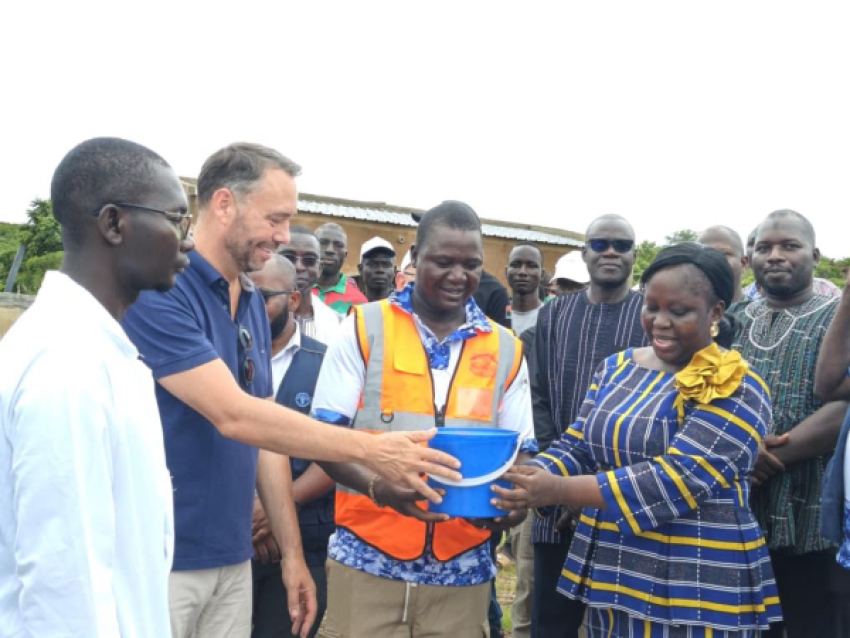
As nearly every Western chancellery has deserted the Sahel, only a handful of actors seem willing to fill the diplomatic void. The United States, through several visits by senior officials to Bamako in recent months, has shown as much in striking fashion. And in that same vein, it is now Belgium's turn to display remarkable diplomatic drive. Indeed, as part of official visits held from 26 to 28 August, Deputy Prime Minister Maxime Prévot travelled to Burkina Faso. In the same trip, Niger received the Belgian envoy's visit on 28 August. Does this move, unusual for a European minister, signal Belgium's return as a preferred interlocutor of the Sahel's military powers? Could Belgium's engagement, on its own, compensate for Europe's broader retreat from the region? Dialogue without conditionality, cooperation without judgment: can this doctrine hold up against the persistent distrust of military regimes? And what lasting visibility can it offer, when gunfire breaks out in Niamey just hours after the Belgian delegation's departure, a reminder of how unpredictable this region remains?
The Belgian visit takes place against a backdrop of massive disengagement by Western chancelleries. Since the September 2022 coup in Burkina Faso, Captain Ibrahim Traoré's government had received very few high-level European delegations, and no Western foreign minister had made a comparable trip. France, Ouagadougou's historic ally, saw its diplomatic relations severed by Burkina Faso in June 2026, while its mission in Niamey was closed. The situation in Niger is little different. In short, only a handful of European embassies remain in Niamey since the July 2023 coup, and diplomatic ties remain broken with several EU member states.
In this largely deserted space, does Belgium want to stand out as an exception? Indeed, it remains one of the last four European countries to maintain an embassy in Ouagadougou, and the EU delegation in the Burkinabè capital is itself headed by a Belgian diplomat. This continuity, rooted in Belgian-Burkinabè cooperation structured since 1993 and relaunched in 2015, gives Brussels a distinctive position: that of a partner who stayed present while the Western diplomatic landscape in the Sahel is being reshaped in favour of non-traditional actors—most notably Russia's presence through Africa Corps (formerly Wagner), the use of Turkish drones, and strengthened Chinese and Russian partnerships.
On substance, Maxime Prévot's tour illustrates a clear doctrinal shift from the conditionality-based logic that has long structured Western aid to the Sahel. In Ouagadougou, received first by his counterpart Karamoko Jean-Marie Traoré and then by the President of Faso himself—a high-level political audience unusual for a representative of an EU member state—the Belgian minister stressed the need to build a "cooperation of respect," acknowledging a gulf of misunderstanding between the European Union and AES countries. The message was hammered home in almost identical terms in Niamey, where Prévot said he wanted to strengthen relations with Nigerien authorities without locking them into a logic of conditions, favouring direct listening to local actors over what is often seen as the mechanical application of criteria set in Brussels.
In the Belgian strategy that appears to be taking shape, this approach translates in practice into a distinction between the political and technical registers of cooperation. The Belgian minister explicitly stated his wish to support the priorities set by Burkinabè authorities, notably through the national R.E.L.A.N.C.E. 2026-2030 plan, positioning Belgium as an "amplifying effect" rather than a substitute actor. This language, laced with terms such as "humility," "fraternity," and "efficiency," appears designed to break with the more prescriptive rhetoric of earlier Western partnerships, and calibrated so as not to reproduce the image of unilateral or dictated cooperation that the military powers of the central Sahel have used to legitimise their seizure of power.
The trip did not, however, paper over certain points of friction. Speaking to the Nigerien press, Deputy Prime Minister Prévot publicly voiced disapproval of certain aspects of local governance and said he was concerned about accusations, widespread across the Sahel, that European powers finance armed terrorist groups—accusations he described as a disinformation campaign that needed to stop. Notably, Niger's Minister of Technical Education, Farmo Moumouni, confirmed that these disagreements had indeed been raised, while recalling that Niamey no longer sought "Western legitimisation" but rather concrete investment opportunities. This adversarial dialogue—acknowledging disagreements without turning them into insurmountable obstacles—illustrates the difficulty facing Belgian diplomacy in reconciling its grounding in European values with the need to remain an audible interlocutor for military powers that are structurally wary of what they often call "outside directives."
The tour was also an occasion for the Belgian minister to announce a 25% cut in Belgian development aid to these countries, while assuring that humanitarian aid would probably not be affected. This announcement, likely to be met with reservations by some cooperation actors on the ground, underscores a tension inherent to the moment. It confirms that Belgium is seeking to maintain a strong political presence and diplomatic visibility, within a constrained domestic budgetary context that limits its real room for manoeuvre—and, above all, amid a palpable lack of interest from other European partners. The minister justified this trade-off in favour of a phased, short-term, humanitarian approach, deemed more effective in limiting the appeal of jihadist recruitment among idle youth; a stance that has sparked debate with other actors advocating longer-term investment geared more towards structural economic development.
Beyond the bilateral relationship, this visit should be read as a signal sent to the entire, now-fragmented architecture of Euro-Sahelian cooperation. ECOWAS's withdrawal from the three AES countries in January 2024, the de facto dissolution of the G5 Sahel, and the expulsion, in mid-July 2026, of members of the EU delegation to Burkina Faso have profoundly weakened the classic multilateral channels through which Europe had until now engaged with the region. In this institutional vacuum, bilateral visits by ministers of member states—rather than initiatives carried out in the name of the EU as a whole—have become, in effect, one of the few instruments still operative for maintaining a direct political channel between the EU, Ouagadougou, and Niamey.
The Belgian visit will inevitably be read by analysts through the lens of the broader competition for influence among European powers who disagree on their positions in the Sahel. Some commentators have seen it as a form of Belgium reasserting itself on ground where France has lost momentum, and a dynamic sometimes compared, implicitly, to the reverse relationship between Paris and Kigali in the Great Lakes region. Whether this reading reflects a deliberate strategy or mere circumstance, it points to a tangible fact: as some EU member states withdraw from the Sahel, others—Belgium among them, which is reportedly even considering turning its Ouagadougou embassy into a regional consular hub—are seeking to occupy the vacated space, with all the risks and opportunities this entails for the coherence of European action as a whole.
The question of this tour's relevance was brutally raised by events that unfolded in Niamey in the hours following the Belgian delegation's departure. On the night of 28-29 August, heavy gunfire and explosions were heard around the military base adjoining the international airport—a sensitive site that notably houses the headquarters of Russia's Africa Corps partners as well as the command centre of the AES's unified force. These simultaneous attacks also caused a blackout of the national public television signal (restored an hour later) and a deployment of armoured vehicles across several neighbourhoods of the capital. While the origin of these incidents remained uncertain, it was hard not to think of the jihadist attacks that had targeted the same site in January and June 2026. These episodes, taken together, are a reminder of just how precarious the stability of the interlocutors with whom Belgian diplomacy seeks to build a long-term dialogue truly is.
In a sense, Maxime Prévot's tour of Burkina Faso and Niger demonstrates, in practice, a diplomacy willing to engage with military regimes whose governance choices it does not share, on the strength of one conviction: that severing channels of exchange feeds precisely the dynamics of instability, rapprochement with rival powers, and the closing of civic space that Europe intends to combat. Even so, the Belgian gamble requires walking an exceedingly narrow line. How can a credible diplomatic presence and a capacity for frank political dialogue be maintained, without this being seen, in the eyes of Sahelian public opinion, as endorsing authoritarian excesses, nor, in the eyes of Belgian and European public opinion, as something else entirely? Moreover, how can an EU member state mitigate the reputational risks of appearing to abandon the founding principles of the EU's external action? It also remains to be seen whether this presence—today hailed by Burkinabè and Nigerien authorities as a "rare and respectful" partnership—will translate over time into concrete results for Sahelian populations, or whether it will remain, as this week's security context reminds us, hostage to the region's structural fragility.
Sacré-Coeur 3 – BP 15177 CP 10700 Dakar Fann – SENEGAL.
+221 33 827 34 91 / +221 77 637 73 15
contact@timbuktu-institute.org