 French
 Arabic
 English
 Portuguese
 Spanish
 Swahili


Sacré-Coeur 3 – BP 15177 CP 10700 Dakar Fann – SENEGAL.
+221 33 827 34 91 / +221 77 637 73 15
contact@timbuktu-institute.org

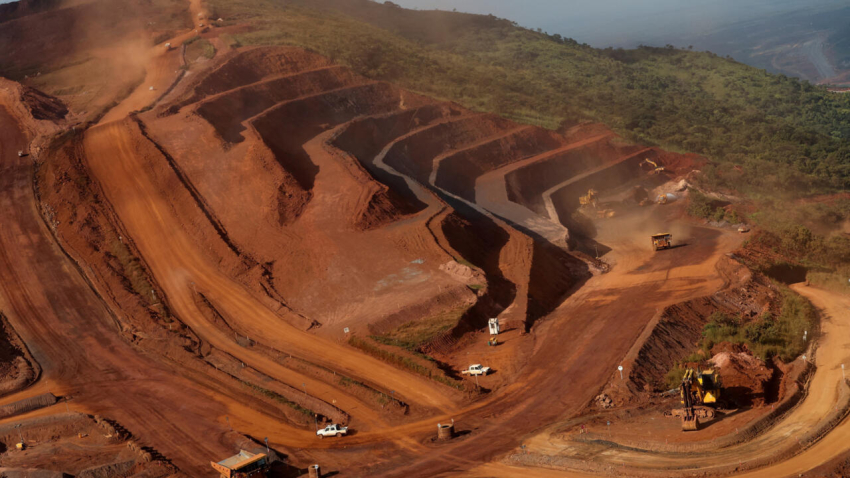 Source : RFI
Timbuktu Institute July 2026
It is one of the largest mining projects in the world, backed by investments of nearly $20 billion. Mining operations at the Simandou iron ore deposit in Guinea began last November. Promises of economic growth. But these promises must be accompanied by tangible benefits for local communities to avoid repeating the situation in Boké—a bauxite mining area where the lack of basic services is a recurring problem. This is one of the conclusions of a report recently published by the Timbuktu Institute in Dakar, titled *Beyond Simandou: Guinea, a Fragility with Many Faces*. To discuss this, the institute’s regional director, Bakary Sambe, is our guest. He answers questions from Magali Lagrange.
RFI: Mining of the Simandou iron ore deposit has begun. Can it help Guinea take off?
Bakary Sambe: Yes, the economic expectations surrounding this project are indeed considerable. Based on projections from the World Bank, Guinea is currently expected to experience some of the highest growth rates on the continent. The risk identified in this study is therefore not that Simandou will fail economically. The risk is that the project’s macroeconomic success will mask—as in Boké [a region in western Guinea with significant bauxite reserves, Ed.]—a fairly persistent local deprivation. It is this tension between macroeconomic promise and immediate local expectations that will be the true political test for Simandou in the coming years.
What is needed in this region to satisfy the local populations? What do they need?
The local populations need hospitals, schools, and infrastructure. What’s needed is the rapid and visible redistribution of wealth—which is no easy task. And what we see in the announced figures is that growth is expected. But on the other hand, there’s no mention of how this growth will be shared, or how this area will benefit—immediately and directly—from the economic benefits of Simandou and the resources it generates. In short, there is a whole range of demands for basic social services that Guinea sorely lacks, particularly in the vulnerable regions of Kankan and Nzérékoré, where the ore is certainly present, where the prospects are quite significant, but where the population is waiting for results.
You mentioned the example of Boké, which is a bauxite mining area. What is the assessment of the situation there, and what is the current state of affairs in that area?
In the report, we refer to Boké as a case study of the mining paradox. Boké alone holds nearly two-thirds of Guinea’s bauxite reserves, yet at the same time suffers from a glaring shortage of roads, water, electricity, and educational infrastructure—and the roads deteriorate with every rainy season. Outbursts of anger have been occurring there for nearly a decade, with recent riots demanding the restoration of water and electricity that left one person dead and about thirty injured. In December 2025, the teachers’ strike escalated, and I believe this is a sign that social discontent in Boké is now also turning toward local groups, beyond just the government or the mining companies.
What needs to be done to make the benefits more tangible and ensure that wealth is better redistributed? What has been missing so far?
What is missing—beyond the rhetoric of sovereignty about the state and Guineans taking control of their own wealth—is the ability to manage this multifaceted fragility, particularly in mining areas. It is worth noting that Simandou is located in areas that are among the most fragile in terms of ethnic tensions, and that today, if the Simandou project is not accompanied by a well-defined social policy capable of generating concrete benefits for the population in the medium term, then Simandou will not be able to eliminate Guinea’s structural vulnerabilities. The other recommendation is to recognize that this vulnerability in Guinea takes many forms. The situation varies depending on whether one is in Ratoma [near the capital, Conakry—Ed.], Dalaba [in the central-western part of the country—Ed.], Boké, or elsewhere. A differentiated approach to this structural fragility in Guinea is now needed in order to address the specific needs of all regions.
Another vulnerability you identify in the report is the political situation in Guinea. You note that, while there has certainly been a return to institutional normalcy following the elections at the end of the year, you believe that the situation remains fragile.
Yes, what we’re seeing in Guinea is a change in status rather than a change in the nature of power. The return to constitutional order has altered the legal status of Guinea and its government, without changing the actual practices. For example, the ban on demonstrations has been in effect since May 2022. We see that political parties and independent media have been suspended. And the most sensitive issue today, in my opinion, remains the disappearances and other phenomena we’re seeing in Guinea, which show that there is a shrinking of civic space that is not merely anecdotal. It deprives informal mediation mechanisms—such as the work of elders or religious leaders—of their ability to engage in dialogue with a state that has, until now, been perceived as one that curtails citizens’ freedoms and rights. Guinea, generally speaking, cannot be analyzed today solely through the lens of Simandou and all its economic promises. A policy of social inclusion is needed, and one of the most important issues in Guinea today is the question of social cohesion.
Title adapted by the Timbuktu Institute
Source: RFI
Sacré-Coeur 3 – BP 15177 CP 10700 Dakar Fann – SENEGAL.
+221 33 827 34 91 / +221 77 637 73 15
contact@timbuktu-institute.org