 French
 Arabic
 English
 Portuguese
 Spanish
 Swahili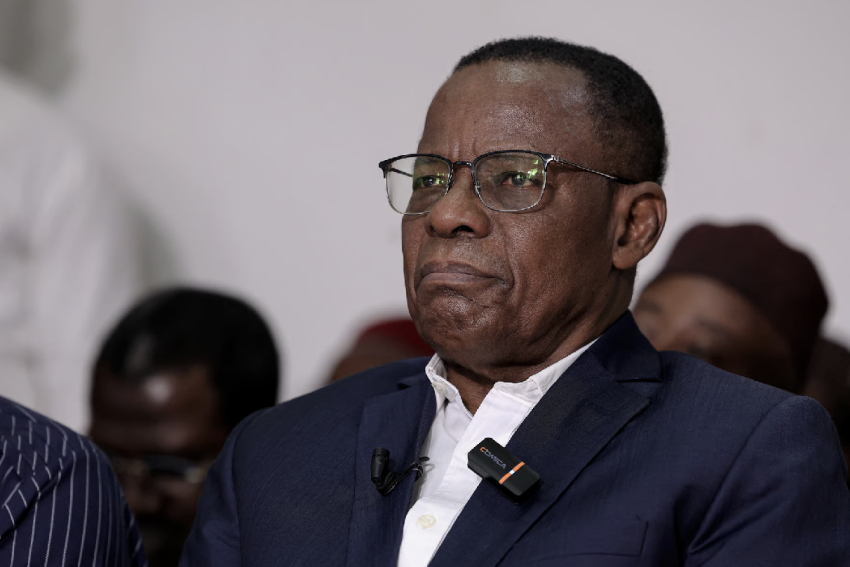

Sacré-Coeur 3 – BP 15177 CP 10700 Dakar Fann – SENEGAL.
+221 33 827 34 91 / +221 77 637 73 15
contact@timbuktu-institute.org

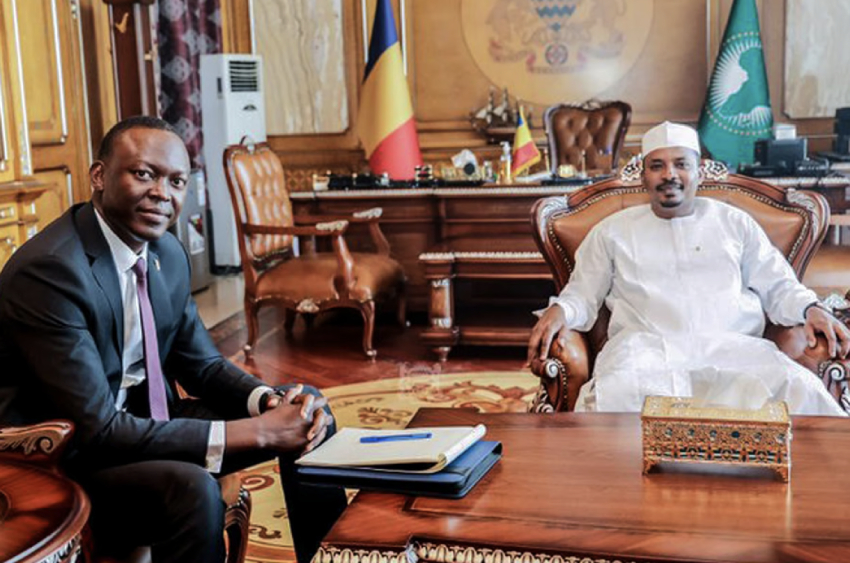
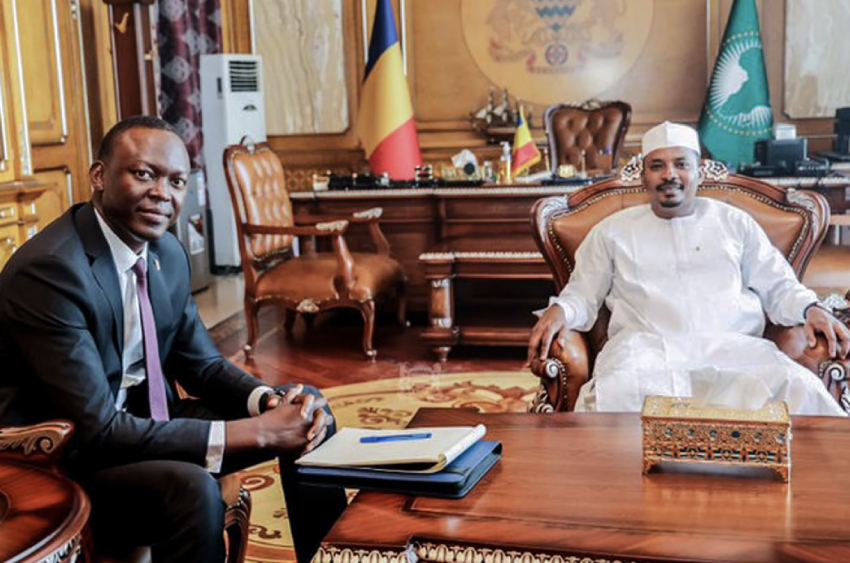
 © Président.td / X
Timbuktu Institute September 2026, Week 2
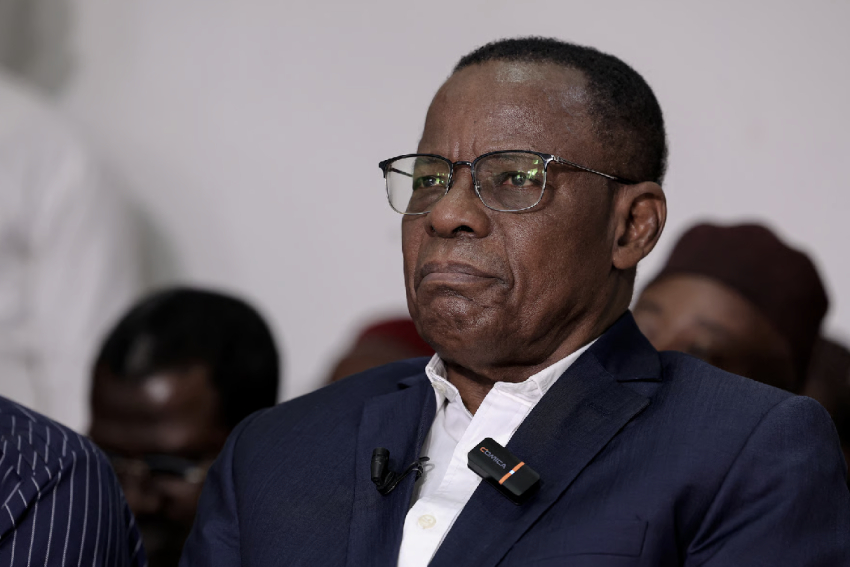
In a political landscape still marked by the aftereffects of the transition and then by Idriss Mahamat Déby Itno's consolidation of power at the head of the country, the presidential pardon granted last August to former Prime Minister Succès Masra, after a year in detention,took on the appearance of a gesture of appeasement. Upon his release, Succès Masra had also declared himself “collectively available” to take part in a new political dynamic and renewed his proposal for a unity government based on a “double parity,” between Christians and Muslims as well as between men and women. For now, the authorities have not followed up on this call for openness. The head of state renewed his confidence in Prime Minister Allamaye Halina and his government, while the executive had already ruled out the idea of a national unity government. Above all, a pardon is not the same as an amnesty. Indeed, it does not erase Masra's conviction and could continue to restrict his civic rights as well as his ability to officially resume leadership of the Transformers. Hence the calls from his lawyers and several political figures for an amnesty law. The opposition figure's release thus constitutes a sign of appeasement, though its political significance remains uncertain.
Controlled Openness
But beyond Succès Masra's case, it is the authorities' capacity to durably widen the political space that remains in question. The opposition continues to denounce the restrictions stemming from the ordinances adopted in 2023, which notably complicated the organization of rallies. The Standing Framework for Political Dialogue, set up last February and presented as a forum for consultation between the majority and the opposition, does not appear to have dispelled these reservations either. Succès Masra's party, Les Transformateurs, and several formations from the former GCAP opposition coalition (Group for Consultation of Political Actors) are not part of it; its critics denounce excessive executive “control” over the body. The call made in early September by opposition figure Albert Pahimi Padacké for the revocation of the loss of nationality imposed on activists Makaïla Nguebla and Charfadine Galmaye Saleh could, if favorably received, extend the momentum of appeasement. That said, gestures of openness remain limited for now and are not enough to convince the opposition of a genuine change of course.
This fragility is all the more visible given that several disputes linked to political violence remain unresolved. Two and a half years after the death of the late opposition figure Yaya Dillo, killed on February 28, 2024 during the army's assault on the headquarters of the Socialist Party Without Borders in N'Djamena, his brother Ousmane Dillo continues to demand an independent investigation. In early September, at a press conference held at the French National Assembly, Ousmane Dillo announced that the family hadtaken legal action both domestically and internationally. Through his lawyers, the family notably referred the matter to the Paris public prosecutor's office and brought the case before the relevant United Nations bodies. The deceased's family is therefore now considering referring the case to the International Criminal Court, with lawyer Pierre Masquart arguing that Yaya Dillo's death falls within a pattern of “systematic attacks against the opposition for political reasons.” Any such move would need to occur before the end of July 2027, the deadline by which Chad is reportedly planning to withdraw from the International Criminal Court (ICC). This case thus serves as a reminder that the violence of the transition period continues to weigh on the credibility of the political process launched by N'Djamena.
Consolidating Through the Economy
At the same time, domestically, N'Djamena is seeking to consolidate its economic and industrial capacities, notably through regional partnerships. The mission carried out on September 9 by the director-general of the Senegalese Standardization Association, El Hadji Abdourahmane Ndione, thus opened upa new avenue for cooperation with Chadian authorities around product quality and food security. Received by the Minister of Commerce and Industry, Dr. Guibolo Fanga Mathieu, on the occasion of a seminar devoted to the ISO 22000:2018 standard, the Senegalese official discussed strengthening production standards and developing “Made in Chad.” A closer relationship between the ASN and the Chadian standardization agency is also being considered in order to facilitate the sharing of expertise and improve Chadian products' access to regional and international markets. This initiative is part of the ambitions of the “Chad Connection 2030” plan and reflects a desire to diversify the country's levers of consolidation, beyond the purely security-focused register.
At bottom, the challenge for N'Djamena now seems to lie less in the day-to-day management of tensions than in its capacity to reform the underpinnings of its governance. The consolidation of power cannot durably and solely rest on the balance of political forces or on security and economic levers alone. It will also depend on the State's capacity to build institutions credible enough to absorb dissent and give substance to its promises of transformation.
Sacré-Coeur 3 – BP 15177 CP 10700 Dakar Fann – SENEGAL.
+221 33 827 34 91 / +221 77 637 73 15
contact@timbuktu-institute.org