 French
 Arabic
 English
 Portuguese
 Spanish
 Swahili










Sacré-Coeur 3 – BP 15177 CP 10700 Dakar Fann – SENEGAL.
+221 33 827 34 91 / +221 77 637 73 15
contact@timbuktu-institute.org


Timbuktu Institute – Week 2 – may 2026
Download the full Sahel weather report
In Nigeria, May is clearly continuing to be a month of intense security activity. Following the bloody setback suffered by the armed forces at the start of the month, Abuja has been steadily stepping up its military response. It is against this backdrop that Nigeria and the United States have intensified their military cooperation against the Islamic State group in West Africa through new operations carried out in the north-east of the country. On 17 May, joint air strikes targeted jihadist positions around Metele and Dogon Chukwu, in Borno State, near the borders with Niger and Chad. According to Nigerian authorities and the US Africa Command (AFRICOM), these operations resulted in the elimination of around 20 fighters, including senior jihadist leader Abu-Bilal al-Minuki and several of his lieutenants. Abuja, for its part, claims that the United States mainly provided intelligence, without any official deployment of ground troops, although US media reports suggest that a US commando unit took part in the assault. Two days prior to these operations, in the same state of Borno, several dozen children were abducted in the Askira Uba district during an attack attributed to jihadists. According to eyewitness accounts reported by Agence France-Presse (AFP), armed men on motorbikes stormed a school in the village of Mussa, near the Sambisa Forest, known as a stronghold of jihadist groups. Between 35 and 43 primary and nursery school pupils are reported to have been kidnapped in less than half an hour, shortly after a military patrol had passed through the area. On the same day, further child abductions were reported in Oyo State, in the south-west of the country, following coordinated attacks on several schools. Beyond the intensification of military operations, this sequence seems above all to reveal the scale of the security pressure weighing on Abuja, which must contain security threats that are geographically dispersed. Furthermore, this diversity of hotspots of in e security tends, at the same time, to accentuate the fragmentation of the Nigerian state’s response capabilities.
Another blunder by the Nigerian armed forces?
One of the week’s events was the deadly airstrike carried out on 10 May by the Nigerian army on the weekly market in Tumfa, in Zamfara State. According to several local sources, community leaders and Amnesty International, the bombing reportedly killed between 72 and over 100 people, mostly civilians, and left dozens injured. Witnesses claim that military aircraft first flew over the area before returning several hours later to strike the market at a time when it was particularly busy. For their part, the Nigerian military authorities reject the possibility of a mistake, maintaining that the operation targeted a gathering of terrorist leaders and armed criminal groups, commonly referred to as ‘bandits’. The army also claims to have acted on the basis of intelligence indicating a strategic meeting of fighters in the village of Tumfa, considered a stronghold of armed groups involved in kidnappings, looting and attacks on surrounding villages. According to Abuja, the strike is said to have neutralised several members of these groups. Beyond these conflicting accounts, this episode—which is by no means unprecedented—reignites questions about the operational limits of counter-terrorism efforts in Nigeria. Given that the armed forces often cite the difficulty of distinguishing with certainty between military targets and civilian areas in certain environments, the perception among civilians that they are victims of reprisals is unlikely to prevent a potential stalemate.
Timbuktu Institute - Semaine 2 - mai 2026
Télécharger l'intégralité de la Météo Sahel
Au Nigeria, le mois de mai continue manifestement d’être le théâtre d’une intense activité sécuritaire. Après la sanglante déconvenue essuyée par les forces armées en début de mois, Abuja n’a eu de cesse d’accroître sa riposte militaire. C’est dans ce cadre que le Nigeria et les États-Unis ont intensifié leur coopération militaire contre le groupe État islamique en Afrique de l’Ouest à travers de nouvelles opérations menées dans le nord-est du pays. Le 17 mai, des frappes aériennes conjointes ont visé des positions jihadistes autour de Metele et Dogon Chukwu, dans l’État de Borno, à proximité des frontières nigérienne et tchadienne. Selon les autorités nigérianes et le commandement américain pour l’Afrique (Africom), ces opérations ont permis d’éliminer une vingtaine de combattants, dont le haut responsable jihadiste Abu-Bilal al-Minuki et plusieurs de ses lieutenants. Abuja, pour sa part, affirme que les États-Unis ont principalement fourni du renseignement, sans déploiement officiel de soldats au sol, même si des médias américains évoquent la participation d’un commando américain à l’assaut. Deux jours avant ces opérations, c’est d’ailleurs dans le même Etat du Borno que plusieurs dizaines d’enfants ont été enlevés dans le district d’Askira Uba, lors d’une attaque attribuée à des jihadistes. Selon des témoignages relayés par l’Agence France Presse (AFP), des hommes armés à moto ont pris d’assaut une école du village de Mussa, près de la forêt de Sambisa, connue comme un bastion des groupes jihadistes. Entre 35 et 43 élèves des écoles primaire et maternelle auraient été kidnappés en moins d’une demi-heure, peu après le passage d’une patrouille militaire. Le même jour, d’autres enlèvements d’enfants ont été signalés dans l’État d’Oyo, dans le sud-ouest du pays, à la suite d’attaques coordonnées contre plusieurs écoles. Au-delà de l’intensification des opérations militaires, cette séquence semble surtout révéler l’ampleur de la pression sécuritaire qui pèse sur Abuja qui doit contenir des menaces sécuritaires géographiquement diffuses. De plus, cette diversité des foyers d’insécurité tend dans le même mouvement, à accentuer la dispersion des capacités de réponse de l’État nigérian.
Nouvelle bavure des forces armées nigérianes ?
L’un des événements de la semaine aura été la frappe aérienne meurtrière menée le 10 mai par l’armée nigériane sur le marché hebdomadaire de Tumfa, dans l’État de Zamfara. Selon plusieurs sources locales, des chefs communautaires et Amnesty International, le bombardement aurait fait entre 72 et plus de 100 morts, majoritairement des civils, ainsi que des dizaines de blessés. Des témoins affirment que des avions militaires ont d’abord survolé la zone avant de revenir plusieurs heures plus tard pour frapper le marché alors qu’il était particulièrement fréquenté. De leur côté, les autorités militaires nigérianes rejettent la possibilité d’une bavure, soutenant que l’opération visait un rassemblement de chefs terroristes et de groupes armés criminels, communément appelés « bandits ». L’armée affirme par ailleurs avoir agi sur la base de renseignements signalant une réunion stratégique de combattants dans le village de Tumfa, considéré comme un bastion de groupes armés impliqués dans des enlèvements, des pillages et des attaques contre les villages environnants. A en croire Abuja, la frappe aurait permis de neutraliser plusieurs membres de ces groupes. Au-delà de ces versions contradictoires, cet épisode, qui n’est pas inédit, ravive les interrogations sur les limites opérationnelles de la lutte antiterroriste au Nigeria. Dans la mesure où les forces armées évoquent souvent la difficulté à établir avec certitude la distinction entre cibles militaires et espaces civils dans certains environnements, la perception, par des civils, d’être victimes de représailles n’est pas de nature à enrayer un possible enlisement.
Timbuktu Institute – Week 2 – may 2026
Download the full Sahel weather report
Within the space of a few weeks, it would appear that, for N’Djamena, border threats have once again become the most pressing concerns. In addition to the security and humanitarian pressures on its border with Sudan, the recent attack (4 May) by the terrorist group Boko Haram has brought its border with Nigeria back to the forefront of concerns. Following this setback, the Chadian army carried out retaliatory air strikes against suspected Boko Haram positions in the Lake Chad region, in north-eastern Nigeria. These operations, presented by N’Djamena as part of the fight against terrorism, are nevertheless causing concern following allegations of around a hundred civilian casualties, according to Agence France-Presse (AFP). “It is crucial that the Nigerian and Chadian authorities conduct prompt, thorough, independent and impartial investigations into these disturbing incidents,” said the UN High Commissioner for Human Rights, Volker Türk, on 13 May. In response, the Chadian government has rejected the allegations made by the UN Office of the High Commissioner for Human Rights regarding possible civilian casualties during strikes against Boko Haram positions in the Lake Chad basin. Government spokesperson Gassim Chérif Mahamat contested “serious accusations aimed at discrediting a professional army on the front line against terrorism”. In a regional context marked by security emergencies and sovereignty issues, the fear remains that the political and security considerations at play will override the desire to establish the true responsibilities surrounding these strikes.
An opposition running out of steam?
The recent dissolution of the opposition coalition Groupe de concertation des acteurs politiques (GCAP) and the sentencing of several of its leaders to eight years in prison came as a crushing blow to the political opposition. At a press conference held on 13 May, the opposition party Les Patriotes denounced this sentencing as “an abuse of the justice system” within a national context of “authoritarian hardening” marked by insecurity, communal tensions and a rollback of civil liberties. It must be said that the dismantling of the GCAP was not followed by any significant upheaval within Chad’s political parties. In this sense, is this stand taken by the Patriots proving to be a waste of time? The fact remains that, given the current state of the political landscape, one reality is hard to dispute: the absence of a united opposition capable of providing a significant counterweight to the ruling power.
That said, since the start of the year, it is noteworthy that N’Djamena has been engaged in intense diplomatic activity. Thus, on the sidelines of the Africa Forward summit in Nairobi on 11 and 13 May, President Mahamat Idriss Déby Itno was received by his Kenyan counterpart William Ruto to strengthen cooperative relations between the two countries. Discussions focused on several African issues, notably security, economic and diplomatic matters, as well as the need for greater coordination between African states. Furthermore, the two leaders expressed their desire to give new impetus to their bilateral partnership, emphasising strategic sectors such as agriculture, technology, tourism, environmental protection and investment.
Timbuktu Institute - Semaine 2 - mai 2026
Télécharger l'intégralité de la Météo Sahel
En l’espace de quelques semaines, il semble bien que pour N’Djamena, les menaces aux frontières soient redevenues les principales urgences de l’heure. En sus des pressions sécuritaire et humanitaire à sa frontière soudanaise, la récente attaque (4 mai) du groupe terroriste Boko Haram aura remis sa frontière nigériane, au centre des préoccupations. Suite à cette déconvenue, l’armée tchadienne, a en représailles, mené des frappes aériennes contre des positions présumées de Boko Haram dans la région du lac Tchad, au nord-est du Nigeria. Ces opérations présentées par N’Djamena comme relevant de la lutte antiterroriste, suscitent toutefois des inquiétudes après des accusations faisant état d’une centaine de victimes civiles, selon l’Agence France Presse (AFP). « Il est crucial que les autorités nigérianes et tchadiennes mènent des enquêtes rapides, approfondies, indépendantes et impartiales sur ces incidents troublants », a déclaré le 13 mai, le haut-commissaire aux droits de l’homme de l’ONU, Volker Türk. En réponse, le gouvernement tchadien a rejeté les accusations du Haut-Commissariat des Nations unies aux droits de l’homme concernant de possibles victimes civiles lors de frappes menées contre des positions de Boko Haram dans le bassin du lac Tchad. Le porte-parole du gouvernement, Gassim Chérif Mahamat, a contesté des « accusations graves visent à discréditer une armée professionnelle en première ligne contre le terrorisme ». Dans un contexte régional marqué par l’urgence sécuritaire et des enjeux de souveraineté, il demeure que la crainte que les logiques politiques et sécuritaires en présence supplante la volonté d’établissement des responsabilités réelles autour de ces frappes.
Une opposition à bout de souffle ?
Survenu récemment, la dissolution de la coalition d’opposition Groupe de concertation des acteurs politiques (GCAP) ainsi que la condamnation de plusieurs de ses cadres à huit ans de prison eut l’effet d’un coup de massue pour l’opposition politique. Dans une conférence de presse tenue le 13 mai, le parti d’opposition Les Patriotes a dénoncé cette condamnation comme « une instrumentalisation de la justice » dans un contexte national de « durcissement autoritaire » marqué à la fois par l’insécurité, les tensions communautaires et un recul des libertés publiques. Il faut dire que le démantèlement du GCAP n’a pas été suivi d’un significatif remue-ménage au sein des partis politiques tchadiens. Dans ce sens, cette montée au créneau des Patriotes s’avère-t-elle un coup d’épée dans l’eau ? Toujours est-il qu’en l’état actuel de la configuration de l’espace politique, une réalité reste difficilement contestable : celui de l’absence d’union de forces d’opposition susceptibles de fournir un contrepoint significatif au pouvoir en place.
Ceci étant, depuis le début de l’année, il est remarquable que N’Djamena s’emploie à une intense activité diplomatique. Ainsi, en marge du sommet Africa Forward à Nairobi les 11 et 13 mai, le président Mahamat Idriss Déby Itno a été reçu par son homologue kényan William Ruto afin de renforcer les relations de coopération entre les deux pays. Les discussions ont porté sur plusieurs enjeux africains, notamment les questions sécuritaires, économiques et diplomatiques, ainsi que sur la nécessité d’une coordination accrue entre États africains. Par ailleurs, les deux dirigeants ont affiché leur volonté de donner une nouvelle impulsion à leur partenariat bilatéral, en mettant l’accent sur des secteurs stratégiques comme l’agriculture, les technologies, le tourisme, la protection de l’environnement et les investissements.
Timbuktu Institute – Week 2 – may 2026
Download the full Sahel weather report
The recent inauguration of the new Head of State, Romuald Wadagni, has attracted media attention in recent weeks as it appears to mark a significant moment of political change. However, the central question that remains is how the new administration – which some see as a continuation of the Talon ‘system’ – will handle the pressing issues and reforms initiated by the former president. The decade under the leadership of Head of State Patrice Talon has been a period of intense and diverse reforms, which have been met with both praise and criticism. In this instance, it is the latter sentiment that appears to be the prevailing view regarding one of the most recent reforms. Indeed, on 13 May, the Société de Radio et Télévision du Bénin – the public media service – (SRTB) announced its decision to dismiss 169 staff members. The SRTB justifies these redundancies as part of a wide-ranging plan to modernise public broadcasting, guided by a skills audit designed to align staffing levels with new performance and management requirements. Unsurprisingly, the unions were quick to speak out. The Union of Media Professionals in Benin (LUpmb) has condemned a decision that will “cause emotional distress and create a social situation with unpredictable consequences”. The Platform of Promoters and Actors for Media Development in Benin (Padem-Benin), for its part, expressed its “dismay” at a decision described as “unfair dismissal”. Faced with public criticism, which has reignited the debate over the consensual nature of the reforms undertaken under Talon, government spokesperson Wilfried Houngbédji has sought to absolve the state of responsibility in this matter. However, he acknowledged that the fact that those made redundant had received no prior information enabling them to anticipate the situation is “humanly deplorable”. In truth, it may be that the SRTB’s plan, which is creating a climate of uncertainty in Benin’s broadcasting sector, constitutes a new reform that will be criticised for a time before passing without major incident. As Benin prepares to welcome a new president, could these redundancies foreshadow a more rigorous economic management, against a backdrop of latent social discontent?
Between increased control and judicial rigour
As the government appears to be seeking to tighten its control over extractive resources, operations against illegal gold mining in the gold-bearing areas of the north of the country are becoming increasingly visible. On 11 May, a raid by Beninese security forces on the Koussigou gold site, in the Perma district of Natitingou, led to the arrest of around sixty illegal gold miners. The Koussigou site is located in a gold-bearing area now covered by an official mining licence. In October 2025, the Beninese government granted the Chinese company Xinquan Sarl a ten-year mining licence for a neighbouring site in Kouatèna. However, this intensified monitoring raises questions about the state’s ability to balance security imperatives, the legal framework for mining operations, and the management of local socio-economic dynamics.
Meanwhile, on the domestic front, the Beninese judiciary continues to take a hard line against those considered to be involved, directly or indirectly, in the failed coup of 7 December 2025. It is in this context that the former opposition MP Soumaïla Sounon Boké was sentenced on 12 May 2026 to five years’ imprisonment without parole for “glorifying crimes against state security” and “inciting rebellion via electronic means” by the Court for the Suppression of Economic Offences and Terrorism (Criet). He had been arrested on 16 December and placed in pre-trial detention for having published, according to the authorities, the message “It’s party time” in a WhatsApp group a few hours after the coup was announced.
Ultimately, it would not be unreasonable to see in these various dynamics (political, economic, security-related) the manifestation of a desire to simultaneously consolidate the state’s security and economic control. This is in a context where the line between the imperative of stability and the restriction of spaces for dissent seems increasingly blurred.
Timbuktu Institute - Semaine 2 - mai 2026
Télécharger l'intégralité de la Météo Sahel
L’investiture récente du nouveau Chef de l’État, Romuald Wadagni, a retenu l’attention des médias ces dernières semaines en ce qu’elle semble représenter un moment important de rupture politique. Cependant, la question centrale qui demeure est la manière dont le nouveau pouvoir que certains inscrivent dans la continuité du « système » Talon va gérer les dossiers brûlants et les réformes initiées par l’ancien président. La décennie sous la magistrature du chef de l’État Patrice Talon aura été une période d’intenses et diverses réformes, qui ont pu être tantôt appréciées ou sujet à critiques. En l'occurrence, c’est cette dernière expression qui s’avère le ressenti principal au sujet de l’une des réformes en date. En effet, le 13 mai, la Société de Radio et Télévision du Bénin - le service de médias publics - (SRTB) a annoncé sa décision de licencier 169 agents. Ces licenciements, justifie la SRTB, sont motivés par un vaste plan de modernisation de l’audiovisuel public, guidé par un audit de compétences destiné à adapter les effectifs aux nouvelles exigences de performance et de gestion. Sans surprise, les syndicats n’ont pas tardé à monter au créneau. L’Union des professionnels des médias au Bénin (LUpmb) a dénoncé une décision qui va « créer une détresse émotionnelle et une situation sociale aux conséquences sociales imprévisibles ». La Plateforme des promoteurs et acteurs pour le développement des médias au Bénin (Padem-Bénin) a exprimé pour sa part, sa « consternation » face à une décision qualifiée de « licenciement abusif ». Face aux critiques au sein de l’opinion publique, qui ont relancé le débat sur le caractère consensuel des réformes engagées sous Talon, le porte-parole du gouvernement Wilfried Houngbédji s’est attelé à écarter la responsabilité de l’Etat dans cette affaire. Toutefois, a-t-il reconnu, le fait que les licenciés n’auraient reçu aucune information préalable leur permettant d’anticiper la situation est « humainement déplorable ». A la vérité, il se pourrait que le projet de la SRTB qui instaure un climat d’incertitude dans l’audiovisuel béninois constitue une nouvelle réforme qui sera un temps critiquée, avant de passer sans encombre majeures. Alors que le Bénin s’apprête à investir un nouveau président, ces licenciements pourraient-ils préfigurer une gestion économique plus rigoureuse, sur fond de grogne sociale latente ?
Entre contrôle accru et rigueur judiciaire
Alors que le gouvernement semble vouloir renforcer sa politique de contrôle des ressources extractives, les opérations contre l’orpaillage clandestin dans les zones aurifères du nord du pays se font de plus en plus voir. Le 11 mai, une descente des forces de sécurité béninoises sur le site aurifère de Koussigou, dans l’arrondissement de Perma à Natitingou, a conduit à l’arrestation d’une soixantaine d’orpailleurs clandestins. Le site de Koussigou se trouve dans une zone aurifère désormais placée sous permis officiel d’exploitation. En octobre 2025, l’État béninois avait accordé à la société chinoise Xinquan Sarl un permis d’exploitation de dix ans sur un site voisin situé à Kouatèna. Toutefois, cette intensification du contrôle soulève des interrogations sur la capacité de l’Etat à concilier impératifs de sécurisation, encadrement légal de l’exploitation et gestion des dynamiques socio-économiques locales.
Parallèlement, au plan interne, la justice béninoise continue de se montrer intransigeante au sujet des personnes considérées comme impliquées de près ou de loin dans le coup d’Etat manqué du 7 décembre de 2025. C’est dans ce cadre que l’ancien député de l’opposition Soumaïla Sounon Boké a été condamné le 12 mai 2026 à cinq ans de prison ferme pour « apologie de crimes contre la sûreté de l’État » et « incitation à la rébellion par voie électronique » par la Cour de répression des infractions économiques et du terrorisme (Criet). Il avait été interpellé le 16 décembre puis placé en détention provisoire pour avoir publié, selon les autorités, le message « C’est la fête » dans un groupe WhatsApp quelques heures après l’annonce du putsch.
Au bout du compte, il ne serait pas téméraire de déceler dans ces diverses dynamiques (politiques, économiques, sécuritaires) la traduction d’une volonté de consolidation simultanée du contrôle sécuritaire et économique de l’État. Ceci dans un contexte où la frontière entre impératif de stabilité et restriction des espaces de contestation semble de plus en plus ténue.
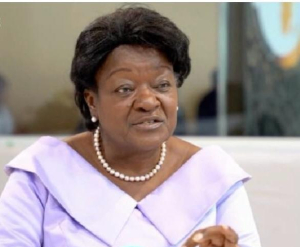
Op-ed by Ms. Laure Olga GONDJOUT
Former Minister of Foreign Affairs
Former Ombudsman of the Republic, Gabon
On this May 25, Africa Day must not be merely a symbolic date.
It must be a moment of truth, of collective awareness and responsibility for the African peoples.
Africa is entering a period of profound geopolitical, economic, cultural, and spiritual transformation.
The entire world is interested in its natural resources, its youth, its lands, its strategic minerals, its markets, and its future influence.
But while external powers move forward methodically, Africa too often remains fragmented, vulnerable, and divided.
Even more worrying, certain behaviors observed on our own continent are undermining the Pan-African ideal itself.
The violence, discrimination, and acts of rejection targeting other Black Africans in South Africa constitute a moral wound for all of Africa.
No economic or social frustration can justify hatred between African peoples.
Africa cannot defend Black dignity in the world while tolerating forms of humiliation, segregation, or rejection among Africans.
With all due respect to their ranks, I, Laure Olga GONDJOUT, in full knowledge of the facts, call upon Presidents Thabo Mbeki, Jacob Zuma, and Cyril Ramaphosa to remember the role played by all of Africa during the long years of imprisonment of Nelson Mandela and the other illustrious sons and daughters of South Africa.
African peoples shared their resources, their lands, their diplomatic voices, and sometimes even the blood of their children to support the struggle against apartheid.
MADIBA belongs to all of Africa.
His struggle cannot become the symbol of selective memory or forgotten solidarity.
Today, a fundamental question arises:
Who will help Africa remain true to itself while fully entering the 21st century?
The answer lies first and foremost with Africans themselves.
Africa must:
The challenge of the 21st century will not be merely economic.
It will also be civilizational.
Africa must learn to fully embrace modernity without losing its soul.
On this May 25th, may every African woman and every African man ask themselves this essential question:
What kind of Africa do we want to pass on to future generations?
A fragmented and timid Africa?
Or a strong, dignified, united Africa, faithful to the spirit of Pan-Africanism?
The time has come to choose.
WITH BEST AFRICAN REGARDS
Former Minister of Foreign Affairs, Gabon
Former Ombudsman of the Republic, Gabon
Tribune de Mme Laure Olga GONDJOUT
Ancien ministre des Affaires Étrangères
Ancien Médiateur de la République, Gabon
En ce 25 mai, Journée de l’Afrique ne doit pas être seulement une date symbolique.
Elle doit être un moment de vérité, de conscience et de responsabilité collective pour les peuples africains.
L’Afrique entre dans une période de profondes mutations géopolitiques, économiques, culturelles et spirituelles.
Le monde entier s’intéresse à son capital naturel, à sa jeunesse, à ses terres, à ses minerais stratégiques, à ses marchés et à son influence future.
Mais pendant que les puissances extérieures avancent avec méthode, l’Afrique demeure trop souvent fragmentée, vulnérable et divisée.
Plus inquiétant encore, certains comportements observés sur notre propre continent viennent fragiliser l’idéal panafricain lui-même.
Les violences, discriminations et actes de rejet visant d’autres Africains noirs en Afrique du Sud constituent une blessure morale pour toute l’Afrique.
Aucune frustration économique ou sociale ne peut justifier la haine entre peuples africains.
L’Afrique ne peut pas défendre la dignité noire dans le monde tout en tolérant des formes d’humiliation, de ségrégation ou de rejet entre Africains.
Avec tout le respect dû à leurs rangs, moi, Laure Olga GONDJOUT, en toute connaissance de cause, j’invite les Présidents Thabo Mbeki, Jacob Zuma et Cyril Ramaphosa à se souvenir du rôle joué par l’Afrique entière durant les longues années de privation de liberté de Nelson Mandela et des autres illustres fils et filles de l’Afrique du Sud.
Des peuples africains ont partagé leurs ressources, leurs terres, leurs voix diplomatiques et parfois même le sang de leurs enfants pour soutenir la lutte contre l’apartheid.
MADIBA appartient à toute l’Afrique.
Son combat ne peut devenir le symbole d’une mémoire sélective ou d’une solidarité oubliée.
Aujourd’hui, une question fondamentale se pose :
Qui aidera l’Afrique à rester elle-même tout en entrant pleinement dans le XXIe siècle ?
La réponse appartient d’abord aux Africaines et Africains eux-mêmes.
L’Afrique devra :
Le défi du XXIe siècle ne sera pas seulement économique.
Il sera aussi civilisationnel.
L’Afrique devra apprendre à entrer pleinement dans la modernité sans perdre son âme.
En ce 25 mai, que chaque Africaine et chaque Africain se pose cette question essentielle :
Quelle Afrique voulons-nous transmettre aux générations futures ?
Une Afrique fragmentée et frileuse ?
Ou une Afrique forte, digne, unie et fidèle à l’esprit du panafricanisme ?
L’heure est venue de choisir.
BIEN AFRICAINEMENT VÔTRE
Ancien ministre des Affaires Étrangères, Gabon
Ancien Médiateur de la République, Gabon
Timbuktu Institute – May, 2026
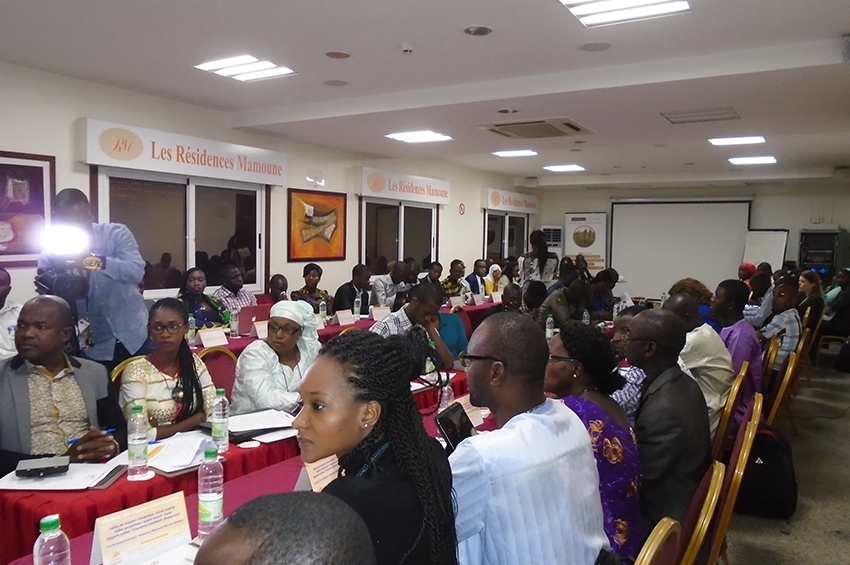
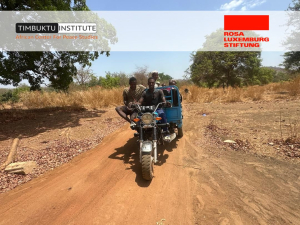
Building on its January 2026 pilot initiative—which laid the groundwork for a new understanding of migration as a driver of socioeconomic resilience in eastern Senegal—the Timbuktu Institute, in partnership with the Rosa Luxemburg Foundation, is launching a new, expanded phase of action research covering the departments of Goudiry and Bakel.Conducted within the framework of a consolidated institutional partnership, this study aims to produce evidence-based data, grounded in community realities, to inform public policies and the interventions of development actors in a border area facing multiple challenges.
A territory at the crossroads of mobility, fragility, and resilience
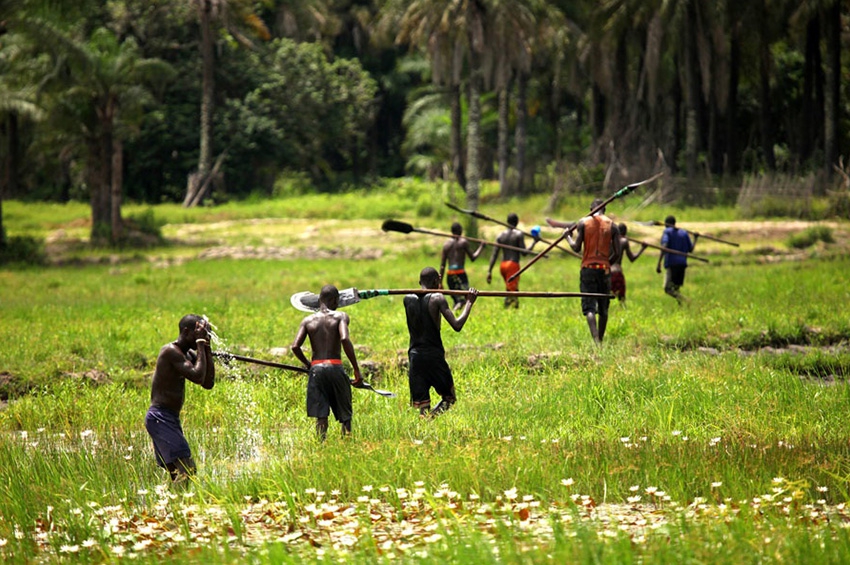
Located in the Tambacounda region of eastern Senegal, on the border with Mali and Mauritania, the departments of Goudiry and Bakel constitute one of the country’s main migration hubs. For generations, these territories have maintained an ambivalent relationship with migration that goes beyond security-focused approaches: while mobility serves as an essential safety net for households facing agricultural precariousness and climate-related risks, it is also accompanied by structural vulnerabilities and growing security challenges linked to the proximity of Mali, which has been in crisis for over a decade. It is precisely the interplay between these migratory, economic, security, and social dynamics that this action-research project aims to explore in depth in order to better inform authorities and stakeholders in the area.
A mixed-methods and participatory approach
The study employs three complementary tools: a quantitative household questionnaire, a semi-structured interview guide for key stakeholders—including returning migrants, community and religious leaders, as well as women leaders, youth, local elected officials, and representatives of the defense and security forces. The Timbuktu Institute also intends to collect up-to-date data using, among other tools, a direct observation guide at border crossings and migration departure points. According to Mbassa Thioune, Director of Research at the Timbuktu Institute, “this methodological triangulation allows us to cross-reference prevailing perceptions, individual trajectories, and collective dynamics, capturing the complexity of a region that univocal interpretations—whether exclusively security-focused or strictly development-oriented—have so far struggled to grasp.”
Continuing an ongoing research initiative
This study builds on the analysis initiated in January 2026, when a report by the Timbuktu Institute established that migration in eastern Senegal was also an endogenous mechanism of resilience.
“The new phase of this action-research project aims to further contextualize and quantify this reality, identify the conditions for its sustainability, and formulate operational recommendations for decision-makers,” explains Dr. Bakary Sambe, president of the Institute.
This aligns with the Institute’s founding mission, which the Rosa Luxemburg Foundation intends to support: generating endogenous knowledge through rigorous research methodology, rooted in reality and serving public policies better adapted to the challenges of peace and human security.
The results will be published in a month by the Timbuktu Institute and presented at a participatory workshop involving communities, local authorities, and various partners active in this region, which faces multidimensional challenges amid security pressures stemming from its border with the Kayes region in Mali.
Timbuktu Institute – Week 1 – May 2026
Download the full Sahel weather report
Labour Day celebrations in Niger were marked by an exceptional decision from the transitional government: the cancellation of the traditional military and civilian parades. The authorities justified this measure as a necessary response to the ‘current challenges’, referring to the tense security situation and the need to mobilise resources for the front line. The government opted for low-key ceremonies and awareness-raising messages focusing on national resilience and the sacrifices made by workers. This decision reflects a desire to move away from costly celebrations in order to focus the nation’s energy on defending territorial integrity. The trade unions, whilst acknowledging this decision, took the opportunity to present their list of grievances, emphasising that the fight for security must not overshadow the need to protect purchasing power in an economy under pressure. This imposed austerity underscores the shift towards permanent crisis management, where every public event is reassessed. The cancellation of the parade is a strong political signal aimed at establishing a climate of “general mobilisation”. By removing the festive nature of Labour Day, the transitional government reinforces the idea that the country is in a state of emergency. It is a strategy that helps legitimise budgetary restrictions and call for further sacrifices from the population. However, it also reduces the space for public expression by trade unions, transforming a day of social demands into a day of controlled national solidarity.
Popular mobilisation: march in support of the government in Niamey
The capital, Niamey, was the scene of a large-scale popular demonstration in support of the transitional authorities. This march, organised by several civil society groups, aimed to reaffirm the backing of a section of the population for the government’s strategic choices, particularly regarding national sovereignty and the diplomatic break. Demonstrators marched through the main streets to express their opposition to external pressure and their support for the Defence and Security Forces (FDS). This mobilisation comes amid a climate of regional tension, with Niger seeking to consolidate its alliances within the Economic and Monetary Community of West African States (ECOWAS). For the organisers, the aim was to demonstrate that the current government enjoys solid popular legitimacy in the face of international criticism. The march also served as a platform to denounce past economic sanctions and call for a united front around the ideals of the transition, illustrating the strength of patriotic sentiment in the current political debate. These support marches function as tools for internal and external legitimisation. For the government, they serve as proof of national consensus in the eyes of foreign partners. However, in a transitional context, the line between spontaneous support and orchestrated mobilisation is often a fine one. This demonstration proves that the idea of the country’s sovereignty remains a widely shared consensus among the population. This is what allows the people to remain united despite diplomatic tensions.
Economic inclusion: financial projects for women and young people
On a different note, the Nigerien government has announced the launch of two projects aimed at transforming the country’s financial landscape: improving access to financial services for women and young people. These initiatives aim to remove the structural barriers that exclude a large part of the population from the formal economy. By facilitating access to credit, microfinance and financial education, these projects seek to encourage local entrepreneurship and reduce poverty. The strategy is based on the digitalisation of financial services and the establishment of specific guarantee funds for vulnerable groups. The objective is twofold: to stimulate domestic economic growth by drawing on the country’s driving forces and to ensure social stability through financial empowerment. In a context where international funding is becoming increasingly scarce and is sometimes redirected, Niger is banking on mobilising local savings and the dynamism of its youth to build a more inclusive economy resilient to external shocks. These projects signal a commitment to moving from a subsistence economy to a participatory development economy. Targeting women and young people is a strategic decision, as these groups represent Niger’s most significant—but also its most fragile—driver of growth. The success of these measures will depend on the state’s ability to ensure the sustainability of funding and to overcome bureaucratic obstacles. This is an attempt to build national economic autonomy, in line with the political discourse on sovereignty championed by the transition.
Timbuktu Institute - Semaine 1 - mai 2026
Télécharger l'intégralité de la Météo Sahel
La célébration de la fête du Travail, a été marquée au Niger par une décision exceptionnelle du gouvernement de transition : l'annulation des traditionnels défilés militaires et civils. Cette mesure a été justifiée par les autorités comme une réponse nécessaire aux « défis du moment », faisant référence au contexte sécuritaire tendu et aux impératifs de mobilisation des ressources vers le front. Le gouvernement a privilégié des cérémonies restreintes et des messages de sensibilisation axés sur la résilience nationale et le sacrifice des travailleurs. Cette décision reflète une volonté de rompre d’avec les célébrations coûteuses pour concentrer l'énergie de la nation sur la défense de l'intégrité territoriale. Les syndicats, tout en prenant acte de cette décision, ont saisi l'occasion pour remettre leurs cahiers de doléances, soulignant que la lutte pour la sécurité ne doit pas cacher la nécessité de protéger le pouvoir d'achat dans une économie sous pression. Cette sobriété imposée souligne le passage à une gestion de crise permanente où chaque événement public est réévalué. L'annulation du défilé est un signal politique fort visant à instaurer un climat de "mobilisation générale". En supprimant le caractère festif de la fête du Travail, le pouvoir de transition renforce l'idée que le pays est en état d'exception. C’est une stratégie qui permet de légitimer les restrictions budgétaires et de demander un effort supplémentaire à la population. Toutefois, cela réduit également les espaces d'expression publique pour les syndicats, transformant une journée de revendications sociales en une journée de solidarité nationale encadrée.
Mobilisation populaire : marche de soutien au gouvernement à Niamey
La capitale Niamey a été le théâtre d'une vaste manifestation populaire en soutien aux autorités de transition. Cette marche, organisée par plusieurs collectifs de la société civile, visait à réaffirmer l'adhésion d'une partie de la population aux choix stratégiques du gouvernement, notamment en matière de souveraineté nationale et de rupture diplomatique. Les manifestants ont défilé dans les rues principales pour exprimer leur opposition aux pressions extérieures et leur appui aux Forces de Défense et de Sécurité (FDS). Cette mobilisation intervient dans un climat de tension régionale, où le Niger cherche à consolider ses alliances au sein de l'AES. Pour les organisateurs, il s'agissait de démontrer que le pouvoir en place bénéficie d'une légitimité populaire solide face aux critiques internationales. La marche a également servi de plateforme pour dénoncer les sanctions économiques passées et appeler à une union sacrée autour des idéaux de la transition, illustrant la force du sentiment patriotique dans le débat politique actuel. Ces marches de soutien fonctionnent comme des outils de légitimation interne et externe. Pour le gouvernement, elles servent de preuve de consensus national face aux partenaires étrangers. Cependant, dans un contexte de transition, la frontière entre soutien spontané et mobilisation orchestrée est souvent délicate. Cette manifestation prouve que l'idée de souveraineté du pays demeure un consensus largement partagé au sein de la population. C'est ce qui permet au peuple de rester uni malgré les tensions diplomatiques.
Inclusion économique : projets financiers pour les femmes et les jeunes
Sous un autre régistre, le gouvernement nigérien a annoncé le lancement de deux projets destinés à transformer le paysage financier du pays : le renforcement de l'accès des femmes et des jeunes aux services financiers. Ces initiatives visent à lever les barrières structurelles qui excluent une grande partie de la population du circuit économique formel. En facilitant l'octroi de crédits, le micro-financement et l'éducation financière, ces projets cherchent à encourager l'entrepreneuriat local et à réduire la pauvreté. La stratégie repose sur la numérisation des services financiers et la mise en place de fonds de garantie spécifiques pour les populations vulnérables. L'objectif est double : stimuler la croissance économique interne en s'appuyant sur les forces vives du pays et assurer une stabilité sociale par l'autonomisation financière. Dans un contexte où les financements internationaux se font de plus en plus rares et sont parfois réorientés, le Niger mise sur la mobilisation de l'épargne locale et le dynamisme de sa jeunesse pour bâtir une économie plus inclusive face aux chocs extérieurs. Ces projets marquent une volonté de passer d'une économie de subsistance à une économie de développement participatif. Cibler les femmes et les jeunes est une décision stratégique, car ces groupes représentent le levier de croissance le plus important mais aussi le plus fragile du Niger. Le succès de ces mesures dépendra de la capacité de l'État à assurer la pérennité des fonds et à surmonter les obstacles bureaucratiques. C'est une tentative de construire une autonomie économique nationale, en cohérence avec le discours politique de souveraineté porté par la transition.
Timbuktu Institute – Week 1 – May 2026
Download the full Sahel weather report
The week’s news was dominated by the dissolution of the Independent Electoral Commission, pending the establishment of a new system. This decision was announced on 6 March following a meeting of the Council of Ministers. Indeed, the commission in question was accused of breaching the principles of neutrality and impartiality. The opposition, for its part, was quick to voice reservations and make recommendations regarding the new body set to replace the CEI. For supporters of Tidjane Thiam, this is a “unilateral decision taken without consultation with the political class”, and they criticise the lack of transparency surrounding the structure. They are calling for dialogue with all political actors in order to “define the terms of the electoral system”, according to Soumaïla Bredoumy, the PDCI spokesperson.
The reform of the CEI reignites the debate on electoral transparency
In the same vein, the former First Lady of Côte d'Ivoire, Simone Gbagbo, calls for “an independent electoral body, a fair redrawing of electoral boundaries and a consensual revision of the electoral roll”. Meanwhile, the Pan-African Congress for Justice and Equality of Peoples (COJEP) welcomes the measure and sets out the path towards a “truly independent” electoral body. According to its members, this measure is an “implicit acknowledgement of the crisis of confidence that has surrounded the CEI for several years”. Supporters of Charles Blé Goudé believe that the country must establish an independent body to organise free and transparent elections and rectify the shortcomings of the old system.
Regional security: tensions along the Abidjan-Bamako axis are causing concern among economic stakeholders
On the security front, Malians living in Côte d’Ivoire have expressed concern over the continuing terrorist threat in Bamako. The latest attacks on 25 April have indeed heightened fears, particularly regarding the security of the Abidjan-Bamako route, a strategic road for both countries. Many lorry drivers are stranded due to the tense security situation. Nevertheless, the route remains passable, despite the adverse impact on trade. According to Diaby Ibrahim: “Arrangements have been made with the relevant authorities to ensure that issues concerning the operation of the Abidjan-Bamako corridor are resolved in advance, so as to avoid finding ourselves in unpleasant situations. In short, we are ensuring we are not caught off guard by unfortunate situations.” This clearly reflects a stated commitment to anticipate and coordinate actions with the relevant authorities in order to further secure the operation of the Abidjan-Bamako corridor and prevent any disruption that might affect the smooth flow of trade and the stability of economic activities.
The armed forces advocate for the promotion of female leadership based on merit
On a different note, Côte d’Ivoire celebrated the 5th edition of Women in the Military Day on 7 May. The Ivorian armed forces took this opportunity to reaffirm their commitment to equality. This year’s theme was ‘Law, discipline and merit: promoting equality within the armed forces’. Vice-Admiral N’Guessan Kouamé Célestin, Chief of Staff of the Navy, took part in the ceremony at the Locodjro naval base in the commune of Attécoubé and was keen to commend the choice of his institution. He also took the opportunity to highlight the low number of women in the ranks of the French Navy. It is therefore desirable to place greater emphasis on a policy of promoting women based on merit, in order to recognise the contribution of women to the armed forces in general.
Timbuktu Institute - Semaine 1 - mai 2026
Télécharger l'intégralité de la Météo Sahel
L’actualité de la semaine a été marquée par la dissolution de la Commission électorale indépendante, en attendant la mise en place d'un nouveau système. Cette décision a été annoncée le 6 mars dernier à l’issue du Conseil des ministres. En effet, ladite commission était accusée de manquement aux principes de neutralité et d'impartialité. L’opposition, de son côté, n’a pas manqué d’émettre des réserves et des recommandations quant à la nouvelle structure qui va remplacer la CEI. Pour les partisans de Tidjane Thiam, il s'agit d'une « décision unilatérale prise sans concertation avec la classe politique », et dénoncent l'opacité autour de la structure. Ces derniers appellent au dialogue avec tous les acteurs politiques afin de « définir les modalités du système électoral », selon Soumaïla Bredoumy, le porte-parole du PDCI.
La réforme de la CEI relance le débat sur la transparence électorale
Dans le même esprit, l’ancienne Première dame de Côte d'Ivoire, Simone Gbagbo, souhaite « un organe électoral indépendant, un redécoupage électoral équitable et une révision consensuelle de la liste électorale ». Pendant ce temps, le Congrès panafricain pour la justice et l’égalité des peuples (COJEP) salue la mesure et indique la voie à suivre pour un organe électoral « véritablement indépendant ». Selon ses membres, cette mesure est une « reconnaissance implicite de la crise de confiance qui entourait la CEI depuis plusieurs années ». Les partisans de Charles Blé Goudé estiment que le pays doit se doter d’un organe indépendant pour organiser des élections libres et transparentes et corriger les imperfections de l’ancien système.
Sécurité régionale : les tensions sur l’axe Abidjan-Bamako inquiètent les acteurs économiques
Sur le plan sécuritaire, les Maliens vivant en Côte d'Ivoire ont exprimé leur inquiétude face à la persistance de la menace terroriste à Bamako. Les dernières attaques du 25 avril ont en effet accru la peur, notamment concernant la sécurité de l’axe Abidjan-Bamako, une route stratégique pour les deux pays. De nombreux conducteurs de camions sont bloqués en raison de la situation sécuritaire tendue. Néanmoins, l'axe reste praticable, malgré les conséquences néfastes sur les échanges commerciaux. Selon Diaby Ibrahim. « Les dispositions ont été prises avec les autorités compétentes pour que les questions d'exploitation du corridor Abidjan-Bamako soient réglées en amont, afin d'éviter de nous retrouver face à des situations désagréables. En clair, nous évitons d'être pris au dépourvu par des situations malheureuses. » Il s'agit clairement d'une volonté affichée d'anticiper et de coordonner les actions avec les autorités compétentes afin de sécuriser davantage l'exploitation du corridor Abidjan-Bamako et de prévenir toute perturbation susceptible d'affecter la fluidité des échanges et la stabilité des activités économiques.
Les forces armées plaident pour une promotion du leadership féminin fondée sur le mérite
Dans un autre registre, la Côte d’Ivoire a célébré le 7 mai, la 5ème édition de la Journée de la femme militaire. Les forces armées ivoiriennes ont saisi cette occasion pour réaffirmer leur engagement en faveur de l’égalité. Le thème retenu cette année était « Droit, discipline et mérite : promouvoir l’égalité au sein des forces armées ». Le vice-amiral N'Guessan Kouamé Célestin, chef d'état-major de la Marine nationale, a pris part à la cérémonie à la base navale militaire de Locodjro, dans la commune d'Attécoubé, et a tenu à saluer le choix porté sur son institution. Il a également profité de l'occasion pour évoquer le faible nombre de femmes dans les rangs de la Marine nationale. Il est donc souhaitable de mettre davantage l’accent sur une politique de promotion féminine fondée sur le mérite, afin de reconnaître la contribution des femmes à l’armée en général.
Timbuktu Institute – Week 1 – May 2026
Download the full Sahel weather report
According to several observers, press freedom has declined in Burkina Faso since the 2022 coup. Indeed, according to Ibrahim Traoré, a “patriotic approach” to news coverage is needed at a time when the country is facing growing insecurity and disinformation affecting most countries in the Sahel. According to Reporters Without Borders’ 2026 ranking, the country is ranked 110th out of 180, reflecting a deterioration in access to diverse information and to free and independent journalism.
The Atiana Serge Oulon case reignites concerns over press freedom
The case of journalist Atiana Serge Oulon continues to make headlines across the country. According to the organisation responsible for promoting and defending the freedom to inform and be informed worldwide, the investigative journalist has reportedly been held in a secret prison for several months and has allegedly been subjected to inhuman treatment. As a reminder, the editor-in-chief of the bi-monthly investigative magazine L’Évènement had carried out an investigation into allegations of the embezzlement of 400 million CFA francs attributed to the head of the transition. Abducted from his home in June 2024, press freedom organisations are demanding his release. This case once again raises the issue of working conditions for journalists in Burkina Faso and calls public attention to the state of civil liberties. For their part, the authorities maintain that no journalist is deprived of their liberty in the course of their work. According to Ibrahima Traoré, “everyone is free to say what they want and to express their opinion”. He made this statement during an interview with journalists last April.
Sahel: between security imperatives and a shrinking media space
In the same vein, TV5 Monde is now banned in Burkina Faso; the military government accuses the French-language channel of disinformation and glorifying terrorism in its coverage of the country. Some observers see this as a further attempt to muzzle the media. Jeanne Lagarde of Reporters Without Borders sees this as a setback for press freedoms. “In fact, the Sahel is above all a region where patriotic journalism imposed by the authorities has taken precedence over independent journalism, which previously provided reliable, high-quality information. Now, we see that this is no longer the case at all,” says Ms Lagarde. It is important to highlight the growing tensions between security imperatives and respect for fundamental freedoms in several Sahel countries, where the military authorities are tightening their grip on the media landscape in the name of national sovereignty. She also highlights concerns regarding the decline in media pluralism and the weakening of the role of independent media in consolidating democratic governance and public trust.
Sacré-Coeur 3 – BP 15177 CP 10700 Dakar Fann – SENEGAL.
+221 33 827 34 91 / +221 77 637 73 15
contact@timbuktu-institute.org