 French
 Arabic
 English
 Portuguese
 Spanish
 Swahili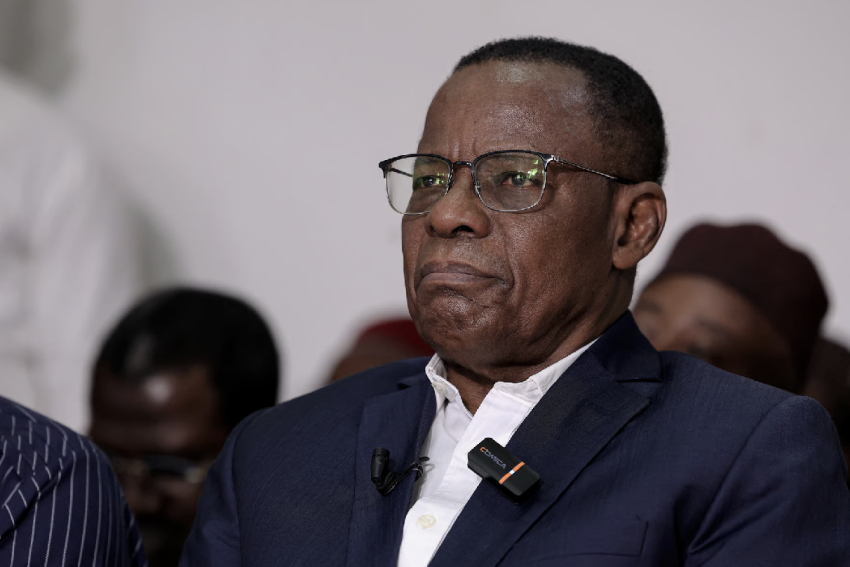






Sacré-Coeur 3 – BP 15177 CP 10700 Dakar Fann – SENEGAL.
+221 33 827 34 91 / +221 77 637 73 15
contact@timbuktu-institute.org

Timbuktu Institute September 2026, Week 2
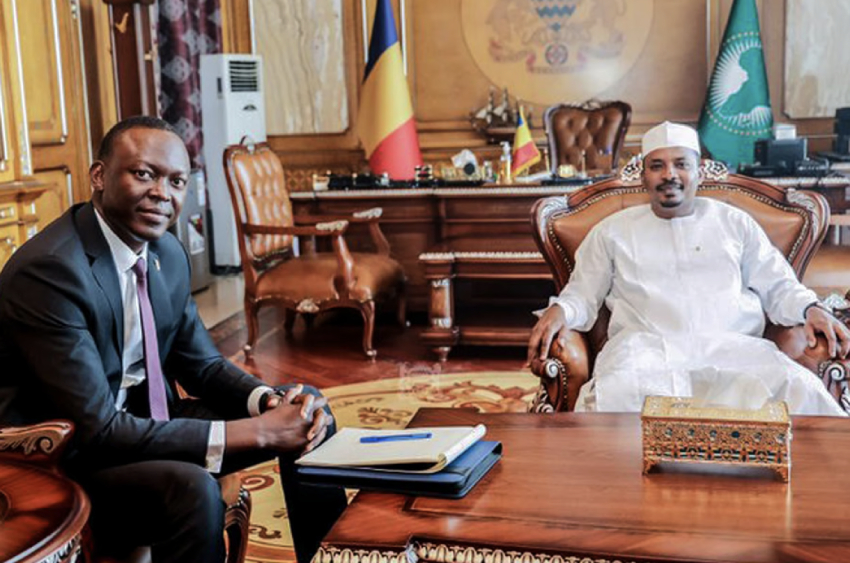
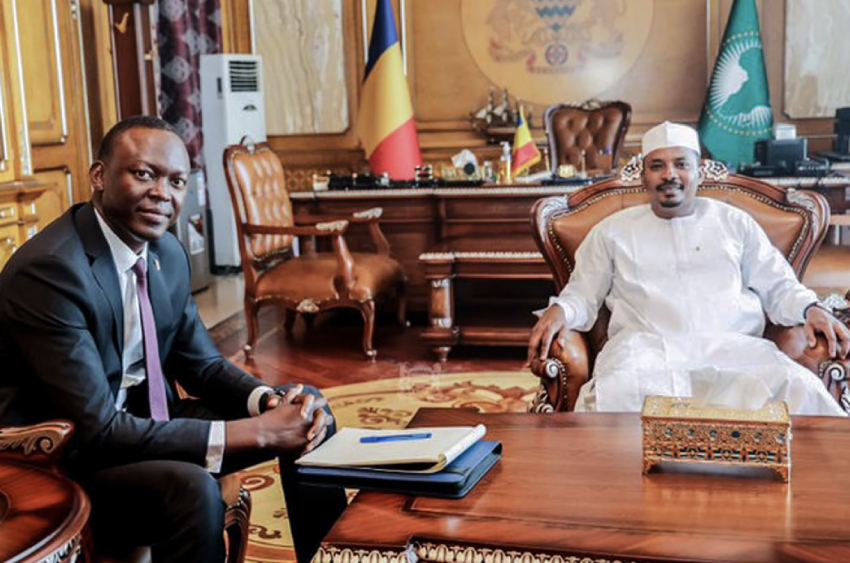
In a political landscape still marked by the aftereffects of the transition and then by Idriss Mahamat Déby Itno's consolidation of power at the head of the country, the presidential pardon granted last August to former Prime Minister Succès Masra, after a year in detention,took on the appearance of a gesture of appeasement. Upon his release, Succès Masra had also declared himself “collectively available” to take part in a new political dynamic and renewed his proposal for a unity government based on a “double parity,” between Christians and Muslims as well as between men and women. For now, the authorities have not followed up on this call for openness. The head of state renewed his confidence in Prime Minister Allamaye Halina and his government, while the executive had already ruled out the idea of a national unity government. Above all, a pardon is not the same as an amnesty. Indeed, it does not erase Masra's conviction and could continue to restrict his civic rights as well as his ability to officially resume leadership of the Transformers. Hence the calls from his lawyers and several political figures for an amnesty law. The opposition figure's release thus constitutes a sign of appeasement, though its political significance remains uncertain.
Controlled Openness
But beyond Succès Masra's case, it is the authorities' capacity to durably widen the political space that remains in question. The opposition continues to denounce the restrictions stemming from the ordinances adopted in 2023, which notably complicated the organization of rallies. The Standing Framework for Political Dialogue, set up last February and presented as a forum for consultation between the majority and the opposition, does not appear to have dispelled these reservations either. Succès Masra's party, Les Transformateurs, and several formations from the former GCAP opposition coalition (Group for Consultation of Political Actors) are not part of it; its critics denounce excessive executive “control” over the body. The call made in early September by opposition figure Albert Pahimi Padacké for the revocation of the loss of nationality imposed on activists Makaïla Nguebla and Charfadine Galmaye Saleh could, if favorably received, extend the momentum of appeasement. That said, gestures of openness remain limited for now and are not enough to convince the opposition of a genuine change of course.
This fragility is all the more visible given that several disputes linked to political violence remain unresolved. Two and a half years after the death of the late opposition figure Yaya Dillo, killed on February 28, 2024 during the army's assault on the headquarters of the Socialist Party Without Borders in N'Djamena, his brother Ousmane Dillo continues to demand an independent investigation. In early September, at a press conference held at the French National Assembly, Ousmane Dillo announced that the family hadtaken legal action both domestically and internationally. Through his lawyers, the family notably referred the matter to the Paris public prosecutor's office and brought the case before the relevant United Nations bodies. The deceased's family is therefore now considering referring the case to the International Criminal Court, with lawyer Pierre Masquart arguing that Yaya Dillo's death falls within a pattern of “systematic attacks against the opposition for political reasons.” Any such move would need to occur before the end of July 2027, the deadline by which Chad is reportedly planning to withdraw from the International Criminal Court (ICC). This case thus serves as a reminder that the violence of the transition period continues to weigh on the credibility of the political process launched by N'Djamena.
Consolidating Through the Economy
At the same time, domestically, N'Djamena is seeking to consolidate its economic and industrial capacities, notably through regional partnerships. The mission carried out on September 9 by the director-general of the Senegalese Standardization Association, El Hadji Abdourahmane Ndione, thus opened upa new avenue for cooperation with Chadian authorities around product quality and food security. Received by the Minister of Commerce and Industry, Dr. Guibolo Fanga Mathieu, on the occasion of a seminar devoted to the ISO 22000:2018 standard, the Senegalese official discussed strengthening production standards and developing “Made in Chad.” A closer relationship between the ASN and the Chadian standardization agency is also being considered in order to facilitate the sharing of expertise and improve Chadian products' access to regional and international markets. This initiative is part of the ambitions of the “Chad Connection 2030” plan and reflects a desire to diversify the country's levers of consolidation, beyond the purely security-focused register.
At bottom, the challenge for N'Djamena now seems to lie less in the day-to-day management of tensions than in its capacity to reform the underpinnings of its governance. The consolidation of power cannot durably and solely rest on the balance of political forces or on security and economic levers alone. It will also depend on the State's capacity to build institutions credible enough to absorb dissent and give substance to its promises of transformation.
Timbuktu Institute Semaine 2 - Septembre 2026
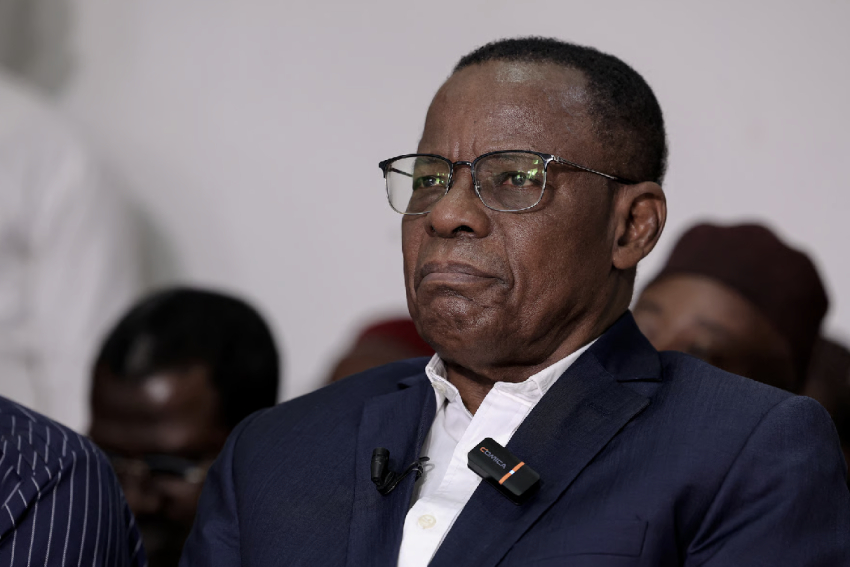
Depuis la réélection de Paul Biya l’an dernier, l’opposition camerounaise connaît une relative traversée du désert. Contrôlée voire parfois empêchée, elle cherche depuis, tant bien que mal, à se ménager des marges de manœuvres. C’est dans ce contexte que la rentrée politique camerounaise s’est ouverte sur une séquence quelque peu surprenante. La démission, le 8 septembre, de l’opposant Maurice Kamto de la présidence du Mouvement pour la renaissance du Cameroun (MRC), accompagnée de celle de son premier vice-président Mamadou Mota, intervient alors que le principal parti d’opposition prépare son retour dans le jeu électoral, après avoir boycotté les élections locales de 2020. Dans une lettre laconique, Kamto invoque « l’intérêt supérieur » de son parti, de ses militants et du « Peuple du Changement », sans préciser davantage les raisons de son retrait. Mota s’est montré plus explicite, dénonçant le « harcèlement constant de l’administration camerounaise » et expliquant vouloir se mettre en retrait pour éviter de fournir au pouvoir un « sujet de focalisation » susceptible d’entraver les activités du MRC. Mais à l’ombre de cette double démission se profile une équation politique complexe : préserver les chances électorales du parti tout en desserrant la pression administrative et judiciaire qui s’exerce sur ses principales figures.
L’opposition joue des coudes
La décision de Maurice Kamto intervient après plusieurs mois de contestation autour de son retour à la tête du MRC. Consacrée par une convention en décembre 2025, cette réinstallation avait fait l’objet de deux recours introduits par d’anciens militants du parti. Surtout, le 19 août dernier, le ministre de l’Administration territoriale Paul Atanga Nji, avait indiqué au secrétaire général du MRC qu’il n’avait pas jugé opportun de « prendre acte » de cette convention, alimentant les interrogations sur la reconnaissance du leadership de Kamto et par ricochet, sur la participation du parti aux prochaines échéances. Des responsables du camp présidentiel avaient même présenté publiquement le départ de l’ancien candidat à la présidentielle comme une condition à la participation du MRC aux scrutins à venir. Dans ces conditions, le retrait de Kamto peut apparaître comme un choix tactique. Les législatives et municipales prévues début 2027 constituent en effet un enjeu majeur pour une formation qui pourrait devenir le principal adversaire du parti au pouvoir le RDPC, après le retrait annoncé d’Issa Tchiroma Bakary. Cela étant, il convient de préciser que Kamto et Mota ne quittent pas le MRC. En attendant une nouvelle convention extraordinaire, convoquée le 10 octobre à Yaoundé, la deuxième vice-présidente Balbine Tiriane Noah assure la direction du parti. Cette solution permet de maintenir la machine électorale en mouvement, mais elle ne règle pas la question du leadership. Dans les rangs du MRC, certains présentent le départ des deux hommes comme un sacrifice consenti pour sauver les intérêts de la formation. D’autres y voient une séquence inédite qui pourrait contraindre l’opposition à repenser ses équilibres. Le pari est donc clair : retirer du premier plan les deux personnalités autour desquelles se concentrent les tensions avec l’administration, sans renoncer à la bataille électorale.
La crédibilité de l’État à l’épreuve
Cette séquence politique intervient alors que Yaoundé cherche parallèlement à reprendre le contrôle de ses équilibres financiers. Depuis août, le ministère des Finances conduit un audit de la « dette flottante » accumulée entre 2020 et 2025 par les administrations, entreprises publiques, universités et collectivités. Les créances concernées vont des rappels et primes dus aux fonctionnaires aux factures de fournisseurs et prestataires, en passant par des dettes académiques, sociales ou locatives. Les dossiers doivent être transmis à la Direction générale du budget avant le 31 octobre. L’exercice fait écho à un précédent audit réalisé en 2020 sur la période 2000-2019, qui avait établi un stock de 752,1 milliards de francs CFA, dont près des deux tiers ont depuis été apurés. Il avait toutefois également révélé l’existence de milliers de créances entachées de doublons ou de falsifications. Par ailleurs, ce nouvel audit vise aussi à établir avec davantage de précision l’étendue des engagements de l’État et à renforcer la crédibilité de leur gestion, alors que Yaoundé négocie un nouveau programme avec le FMI.
Parallèlement, c’est sur ce même terrain de la crédibilité institutionnelle que vient se greffer une autre affaire, autrement plus troublante du cambriolage du Tribunal criminel spécial (TCS) à Yaoundé, survenue dans la nuit du 29 au 30 août. Les cambrioleurs auraient emporté un ordinateur et une somme d’argent relativement modeste. Mais l’intrusion prend une tout autre dimension depuis que le greffier en chef Joel Tsik, en poste depuis la création du TCS il y a quatorze ans et arrivé à l’âge de la retraite en juin, demeure injoignable après avoir invoqué des problèmes de santé. Lui seul détiendrait la clé du coffre où sont conservés les scellés, les pièces à conviction, des objets de valeur, des documents sensibles et des espèces provenant notamment de procédures de plaider-coupable. Selon Jeune Afrique, plusieurs milliards de francs CFA pourraient se trouver dans ce coffre, issus notamment de procédures impliquant d’anciens responsables condamnés pour détournement de fonds publics. Rien ne permet à ce stade d’établir qu’une telle somme a disparu. Mais l’impossibilité de vérifier le contenu du coffre semble déjà nourrir l’hypothèse d’un vol plus important que celui constaté lors du cambriolage. La hiérarchie du tribunal a finalement saisi le ministre de la Justice, Laurent Esso, afin de lui faire part de ses soupçons. Si les faits étaient confirmés, l’affaire aurait une portée symbolique particulièrement lourde pour une juridiction créée précisément pour lutter contre les détournements de fonds publics.
Dans un certaine mesure, un certain paradoxe camerounais pourrait résider en ceci : à mesure que le pouvoir verrouille les espaces de contestation, il est aussi confronté à des signes de fragilité dans les institutions chargées d’incarner son autorité. L’opposition peut être contenue, mais elle ne disparaît pas ; les mécanismes administratifs peuvent être mobilisés pour encadrer le jeu politique, sans pour autant dissiper les soupçons qui entourent désormais le fonctionnement de l’État. À quelques mois des législatives et municipales de 2027, ces poches de tension ne peuvent qu’être de nature à interpeller. Car si le régime parvient encore à imposer les termes du jeu, il lui faudra désormais convaincre que les règles qu’il fixe restent suffisamment crédibles pour être acceptées.
Timbuktu Institute September 2026, Week 2
Since Paul Biya's re-election last year, the Cameroonian opposition has been going through something of a wilderness period. Controlled, and at times even obstructed, it has since been trying, one way or another, to carve out room to maneuver. It is against this backdrop that the Cameroonian political rentrée opened with a somewhat surprising sequence of events.The resignation, on September 8, of opposition figure Maurice Kamto from the presidency of the Cameroon Renaissance Movement (MRC), along with that of his first vice-president Mamadou Mota, comes as the main opposition party prepares its return to the electoral arena, having boycotted the 2020 local elections. In a terse letter, Kamto invoked the “higher interest” of his party, its members and the “People of Change,” without further specifying the reasons for his withdrawal. Mota was more explicit, denouncing “constant harassment by the Cameroonian administration” and explaining that he wanted to step back to avoid giving the authorities a “focal point” that could hamper the MRC's activities. But behind this double resignation lies a complex political equation: preserving the party's electoral chances while easing the administrative and judicial pressure on its leading figures.
The Opposition Jostles for Position
The decision by Maurice Kamto comes after several months of controversy surrounding his return to the leadership of the MRC. Formalized by a convention in December 2025, this reinstatement had been challenged by two appeals filed by former party members. More importantly, on August 19, the Minister of Territorial Administration, Paul Atanga Nji, informed the MRC Secretary-General that he had not deemed it appropriate to “take note” of the convention, raising questions about the recognition of Kamto’s leadership and, by extension, the party’s participation in upcoming elections. Officials from the presidential camp had even publicly presented the departure of the former presidential candidate as a condition for the MRC’s participation in future elections. Under these circumstances, Kamto’s withdrawal may appear to be a tactical choice. The legislative and municipal elections scheduled for early 2027 are indeed a major issue for a party that could become the ruling RDPC’s main opponent, following the announced withdrawal of Issa Tchiroma Bakary. That said, it should be clarified that Kamto and Mota are not leaving the MRC. Pending a new extraordinary convention, convened for October 10 in Yaoundé, Second Vice-President Balbine Tiriane Noah is taking over the party’s leadership. This solution keeps the electoral machinery moving, but it does not resolve the question of leadership. Within the MRC, some portray the departure of the two men as a sacrifice made to safeguard the party’s interests. Others see it as an unprecedented development that could force the opposition to rethink its internal balance. The strategy is therefore clear: remove the two figures at the center of tensions with the administration from the forefront, without abandoning the electoral battle.
The Credibility of the State Under Scrutiny
This political sequence comes as Yaoundé is simultaneously seeking to regain control of its financial situation. Since August, the Ministry of Finance has been conducting an audit of the “floating debt” accumulated between 2020 and 2025 by public administrations, state-owned enterprises, universities and local authorities. The claims concerned range from salary arrears and bonuses owed to civil servants to invoices from suppliers and service providers, as well as academic, social and rental debts. The files must be submitted to the Directorate-General of the Budget by October 31. The exercise echoes a previous audit conducted in 2020 covering the period from 2000 to 2019, which identified a stock of 752.1 billion CFA francs, nearly two-thirds of which have since been cleared. It also revealed, however, the existence of thousands of claims tainted by duplicate entries or falsifications. Furthermore, this new audit aims to establish a more precise picture of the State’s outstanding commitments and strengthen confidence in their management, as Yaoundé negotiates a new program with the IMF.
At the same time, another case—far more troubling—has emerged on this same issue of institutional credibility: the burglary of the Special Criminal Court (TCS) in Yaoundé, which occurred during the night of August 29–30. The burglars reportedly took a computer and a relatively modest sum of money. But the break-in has taken on an entirely different dimension since the chief registrar, Joel Tsik, who had been in office since the TCS was created fourteen years ago and reached retirement age in June, has remained unreachable after citing health problems. He alone reportedly held the key to the safe containing seized items, evidence, valuables, sensitive documents and cash, including money from plea-bargaining proceedings. According to Jeune Afrique, several billion CFA francs could be stored in this safe , including funds linked to proceedings involving former officials convicted of embezzling public funds. At this stage, there is no evidence establishing that such an amount has disappeared. But the inability to verify the contents of the safe already appears to be fueling speculation that the theft may have been far greater than what was observed during the burglary. The court’s leadership eventually referred the matter to the Minister of Justice, Laurent Esso, to report its suspicions. If the allegations were confirmed, the case would carry particularly serious symbolic implications for a court created precisely to combat the embezzlement of public funds.
To some extent, a certain Cameroonian paradox may lie in the following: as the authorities tighten their grip on spaces for dissent, they are also confronted with signs of fragility within the institutions meant to embody their authority. The opposition can be contained, but it does not disappear; administrative mechanisms can be used to regulate the political arena without necessarily dispelling the suspicions now surrounding the functioning of the State. Just months before the 2027 legislative and municipal elections, these pockets of tension are bound to raise questions. For while the regime may still be able to dictate the terms of the game, it will now have to convince people that the rules it sets remain credible enough to be accepted.
Sacré-Coeur 3 – BP 15177 CP 10700 Dakar Fann – SENEGAL.
+221 33 827 34 91 / +221 77 637 73 15
contact@timbuktu-institute.org