 French
 Arabic
 English
 Portuguese
 Spanish
 Swahili

Sacré-Coeur 3 – BP 15177 CP 10700 Dakar Fann – SENEGAL.
+221 33 827 34 91 / +221 77 637 73 15
contact@timbuktu-institute.org

 © Timbuktu Institute
Timbuktu Institute, 26 October 2026
Disinformation, as is well known, transcends borders just as much as the fractures it exploits. In the Sahel as in Europe, information manipulation thrives on distrust of institutions, fuels social, political and economic tensions, and weakens security balances. This is the central finding of the joint report presented in Dakar by the Timbuktu Institute and the Institute of Political Studies of the Polish Academy of Sciences, under the coordination of Dr Bakary Sambe and Agnieszka Cianciara. Entitled “Disinformation, Democracy and the Challenges of Stability and Security: What Shared Challenges for the Sahel and Europe?”, the study calls for rethinking responses to the information threat in light of the vulnerabilities specific to each society, without losing sight of the common drivers that run through them.
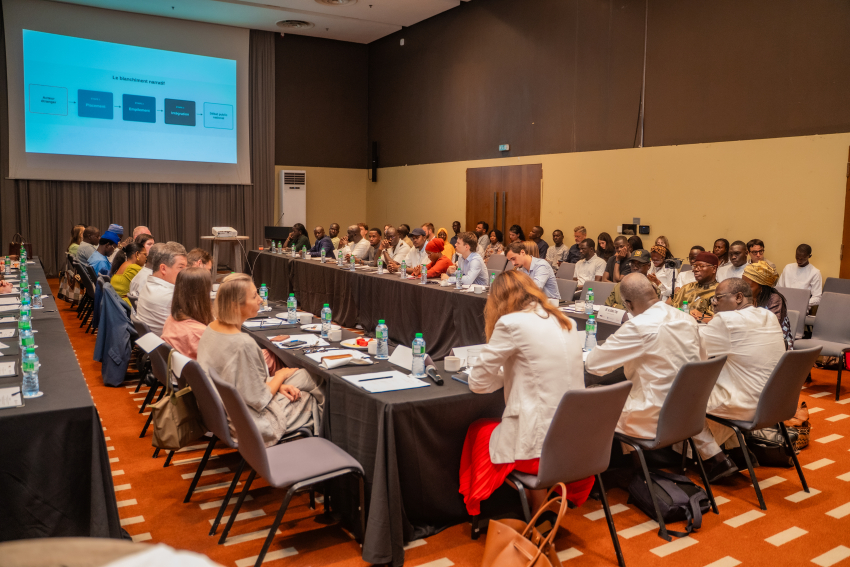
Organised with the support of the Embassy of Poland in Senegal, the presentation seminar brought together researchers, experts, journalists and civil society actors, including Momar Diongue, Director General of the Senegalese Press Agency (APS), Alioune Tine, President of AfrikaJom Center, and Professor Ndèye Astou Ndiaye, lecturer in political science at Cheikh Anta Diop University of Dakar. The discussions, moderated by Hamadou Tidiane Sy, Director of E-JICOM, helped to put into perspective the mechanisms of information manipulation and the conditions for a response that sacrifices neither public freedoms nor democratic pluralism. According to the report, disinformation is neither a passing anomaly nor reducible to the mere phenomenon of “fake news”. Rather, it acts as a crisis accelerator, inserting itself into pre-existing political and social fractures in order to amplify their effects and bend their trajectories to the benefit of particular interests. In this sense, it does not necessarily create the tensions it mobilises. However, it can give them new reach, exacerbate them and help turn them into drivers of instability.
This analysis builds on in-depth work undertaken by the Timbuktu Institute. Since 2024, its Observatory of Social Media in the Sahel and West Africa has documented the circulation of divisive content on social media (WhatsApp, Facebook, TikTok, X, Telegram, etc.), its capacity to polarise communities already tested by insecurity, and its contribution to the delegitimisation of states, regional organisations (ECOWAS, African Union, etc.) and international partners. As these narratives take root, they can fuel identity-based withdrawal, restrict civic space and strengthen regimes that came to power through coups d’état. Moreover, last September, the Timbuktu Institute had already devoted a study, Algorithms at War, to the appropriation of generative artificial intelligence (AI) by the actors of the crisis in Mali, and to the extent to which these new dynamics are reshuffling the cards in the ongoing conflict. It is from this perspective that this new report extends the reflection by opening up a comparison with Europe. In this respect, it upholds an essential orientation: responses to information manipulation must be designed as close as possible to the social and political realities they seek to protect, rather than reproducing models conceived in exogenous environments.
FIMI in the Sahel: The Art of Exploiting Fractures
The notion of FIMI (Foreign Information Manipulation and Interference) refers to information manipulation and interference operations conducted in a coordinated and concealed manner. The distinction is indeed decisive. While criticism of a foreign partner or the assertion of national sovereignty belong fully to legitimate political debate, the threat lies elsewhere, namely in the concealment of the origin of content, of its funding or of the actors who orchestrate it. In the Sahel, several factors combine to provide fertile ground for these operations. The exponential uptake of social media and encrypted messaging by young people, without critical media literacy always progressing at the same pace, is taking place in an environment marked by deteriorating security, political transitions and growing distrust of certain foreign partners. Sovereigntist discourses, when mixed with fabricated or manipulated narratives, can then become vectors of influence whose drivers are difficult to distinguish from the genuine aspirations of the populations.
This study distinguishes three main categories of actors: foreign powers engaged in what is now a multipolar competition; armed terrorist groups, notably JNIM and the Islamic State in the Sahel; and national and transnational actors, such as political leaders, influencers and influence entrepreneurs. Although their interests do not necessarily coincide, their narratives can converge and reinforce one another, without central coordination always being necessary. In this context, the Russian ecosystem, which is particularly well documented, illustrates this mechanism. This machinery combines state media, unofficial actors from the former Wagner galaxy or linked to the African Initiative news agency, and local relays. The strength of these set-ups lies precisely in their ability to blur the line between external production and domestic support. Content produced abroad thus acquires an appearance of legitimacy when it is picked up by a well-known local media outlet or attributed to an expert, real or fictitious. Influence is therefore exercised less by replacing existing narratives than by amplifying them, redirecting them and having them appropriated by local relays.
When Distrust Gains Ground in Democracy
The first consequence of these manipulations is the erosion of trust. Faced with contradictory information, misleading narratives and successive denials, citizens end up questioning the reliability of sources as much as the accuracy of facts. The danger then lies in the gradual disappearance of the common reference points on the basis of which a society can debate, settle its disagreements and exercise its political judgement. It therefore appears that, without a shared foundation of verifiable facts, democratic debate risks dissolving into a generalised competition of suspicions.
Election periods are, in this respect, moments of particular vulnerability. In Senegal, a fake poll attributed to a non-existent research centre circulated five days before the presidential election of March 2024, before being debunked by fact-checkers. This episode is a reminder of the capacity of such content to intervene at the very heart of democratic processes. From another perspective, in the countries of the Alliance of Sahel States (AES), social media accompanied the coups d’état and the reshaping of regional alliances. The narratives gradually hardened. Russia was first presented as an alternative to Western partners, before France (and the West more generally) was designated as the main party responsible for instability, and then accused of supporting terrorist groups. When these narratives are taken up by public officials, the line between propaganda and official discourse becomes more porous.
At the same time, the suspension of several international media outlets and the pressure exerted on the local press have reduced opportunities for confronting different points of view. The weakening of pluralism leaves more room for unverified content, while distrust of the media and institutions makes any attempt to re-establish the facts more difficult. Information manipulation thus thrives in a space where counter-narratives are gradually losing their ability to be heard.
Disinformation, a Catalyst for Insecurity
For armed groups, information is more than ever a weapon in its own right. It enables them to legitimise violence by exploiting local grievances, to glorify their military successes, to sow confusion through exaggerated casualty figures or misappropriated images, and also to divert attention from their own abuses. Numerous recent examples in the Sahel show how the circulation of misleading content can blur the understanding of security events. In Burkina Faso, a video presented as showing the army fleeing was in fact a propaganda sequence filmed in Mali, recycled during attacks in February 2026. Along similar lines, the stigmatisation of a community can turn a manipulation operation into a recruitment factor for armed groups, by heightening feelings of injustice and exclusion.
Information rivalry between foreign powers also contributes to weakening security cooperation. When actors accuse one another of supporting jihadist groups, attention is diverted from the perpetrators of attacks and counter-terrorism cooperation mechanisms are weakened. The threat, although cross-border, then comes up against a region divided by competing narratives. With the pressure exerted by JNIM in western Mali and the blockade of supply corridors, these dynamics now directly concern the coastal countries.
Sahel–Europe: Common Vulnerabilities, Distinct Realities
In Europe, interference operations exploit other fault lines: concerns about purchasing power, tensions around immigration, political polarisation and distrust of national or European institutions. The contexts are not the same as those of the Sahel, but the mechanisms show similarities that the report urges us not to underestimate. In both regions, manipulation relies on a pre-existing crisis of legitimacy, which it helps to aggravate. It also depends on domestic relays. In the Sahel, narratives are often co-produced by local actors; in Europe, they may undergo a form of “narrative laundering” that gives them an appearance of credibility. In both cases, external operations derive their effectiveness from their ability to fit into imaginaries and resentments already present within the societies concerned.
A third similarity lies in the risk that an exclusively repressive response would entail. Confusing the fight against manipulation with the control of criticism would fuel the very distrust that resilience policies seek to contain. Protecting the information space therefore requires distinguishing coordinated and concealed operations from investigative journalism, critical expression and legitimate political dissent. Any restrictive measure must be part of a clear legal framework and respect the principles of necessity, proportionality and transparency. The European experience, notably the European Union’s framework for countering FIMI, offers useful avenues in this regard. However, it cannot be mechanically transposed to different political, institutional and media environments. Cooperation between the European Union, the African Union and ECOWAS would therefore benefit from being based on an exchange of practices and the joint design of responses, rather than on the export of norms developed elsewhere.
Building Shared Information Resilience
In response to these challenges, the report makes seven recommendations aimed at states, regional organisations, digital platforms and civil society. It advocates the creation of a permanent cooperation mechanism between the European Union, the African Union and ECOWAS for information sharing, monitoring and early warning, with reinforced arrangements during election periods and crises. It also calls for better integration of information dynamics into early warning mechanisms and into the protection of democratic processes, as well as for coordinated responses to foreign manipulation operations. Digital platforms are also called upon to play their part, through enhanced cooperation on the detection of coordinated campaigns, the transparency of recommendation systems, researchers’ access to data and content moderation in national and local languages. Added to this are sustained support for independent media, fact-checkers and media literacy initiatives, as well as the preservation of pluralism and fundamental freedoms. Finally, joint research and evaluation must form the foundation of a partnership intended to last.
These recommendations reflect a deeper conviction: no strategy to combat disinformation can succeed in the long term if it merely fights narratives without tackling the grievances on which they feed. In the face of an exploited injustice, the most solid response remains the one that strives to correct it. Information resilience thus depends on the robustness of institutions, the independence of the media and the ability of citizens to weigh competing discourses in order to form an informed judgement.
Senegal and, more broadly, West Africa have resources on which to build this effort: institutions capable of withstanding tensions, societies shaped by a plurality of voices, and a tradition of dialogue that can still serve as a bulwark against attempts at polarisation. The challenge now is to turn these assets into lasting capacities for prevention and response. For in an information space where narratives travel faster than denials, vigilance cannot be the business of a single state or a single continent. It requires seeing earlier, coordinating responses and speaking accurately, right down to the local languages in which the battle for trust is fought every day.
The full report is available here: https://timbuktu-institute.org/media/attachments/2026/10/22/rapport---desinformation-dmocratie-et-enjeux-de-stabilit-et-de-scurit---quels-dfis-partags-entre-le-sahel-et-leurope-.pdf
Sacré-Coeur 3 – BP 15177 CP 10700 Dakar Fann – SENEGAL.
+221 33 827 34 91 / +221 77 637 73 15
contact@timbuktu-institute.org