 French
 Arabic
 English
 Portuguese
 Spanish
 Swahili






Sacré-Coeur 3 – BP 15177 CP 10700 Dakar Fann – SENEGAL.
+221 33 827 34 91 / +221 77 637 73 15
contact@timbuktu-institute.org

Timbuktu Institute – March 2026
Nigeria has turned to foreign intervention to navigate their escalating security crisis. At the end of 2025, the US military bombed northern Nigeria in coordination with the Nigerian government, targeting jihadist terrorist groups in the region. Shortly after, in February 2026 it was confirmed that the US government would be sending troops to Nigeria to train and support the Nigerian military with jihadist violence in the north. These actions come after a period of tension between the U.S government and Nigeria. The Trump administration claimed the Nigerian government was ignoring and potentially allowing the mass killings of Nigerian Christians, which Nigerian President Tinubu strongly denied. Trump’s engagement with Nigeria is seemingly driven by religion, as his administration and political supporters are using a narrative of Christian persecution by Muslim actors, to justify military intervention.
Nigeria’s Security Situation
Nigeria’s current security problems are multifaceted with no singular narrative. For nearly 15 years, the northeast of the country has been impacted by terrorist violence from jihadist militant groups. Islamic State West Africa (ISWAP) and Boko Haram have been terrorizing communities in this region with violent attacks. In the northwest, organized armed groups locally called bandits, carry out kidnappings for ransom. These types of attacks have become increasingly common, with these bandit groups kidnapping individuals but also cattle, and raiding villages. Then, resource competition, exacerbated by climate change, has escalated tensions between herding and farming communities in the middle belt region of the country. This has resulted in violent clashes, exposing ethnic and religious tensions. While in the south, separatist agitation persists. The Nigerian government struggles to control these situations.
During this complex domestic security situation, the US government under the new leadership of President Trump began to question the Nigerian government about violence against Christians in the country. In late 2025, President Trump accused the Nigerian government of ignoring or even allowing widespread killings of Christians. He threatened diplomatic and military actions if the situation was not addressed. Nigerian President Bobi Ahmed Tinubu denied the accusations that Nigeria allows Christians to be killed, emphasizing that terrorism impacts all Nigerians. Then on December 25, President Trump announced a successful military strike in northern Nigeria. The US military struckseveral sites in the northwestern state Sokoto targeting jihadist militant groups. According to the US military, a military vessel in the Gulf of Guinea fired around a dozen Tomahawk missiles, striking approximately four locations. Nigerian Foreign Minister Yusuf Maitama Tuggar stated it was a joint military operation with the United States.
From Religious Advocacy to Military Action
There has been growing concern from US right wing religious groups and politicians about violence towards Christians in Nigeria. While there are well-documented incidents of violence perpetrated against Christian Nigerians, violence in Nigeria is widespread and impacts all communities. In March 2025, the United States Congress held a hearingtitled “Conflict and Persecution in Nigeria: The Case for a CPC Designation”. Members of Congress called on President Trump to designate Nigeria a Country of Particular Concern (CPC). This designation is given by the US State Department for countries considered to engage in violations of religious freedoms. Once a country has this designation, the US government can take diplomatic action against the government, with severe actions such as withholding aid or economic sanctions. The situation escalated when in October, a letter was written to President Trump from 30 different Christian organizations about the persecution of Christians in Nigeria, and to officially designate Nigeria a country of particular concern. On 31 October, President Trump re-instated Nigeria to the CPC list, threatening military action if the Nigerian government did not attempt to stop the killing of Christians by Islamist terrorists. Then in early December, a delegation of US Congress members visited Abuja on a fact-finding mission where they heard from government officials, victims of violence, and religious leaders and organizations from Benue state in the middle belt region. The military strikes were carried out a few weeks after the visit. Despite new military cooperation between the US and Nigeria, a bill was introduced in US Congress in February 2026 that threatens visa bans and asset freezes on specific Nigerians accused of religious freedom abuses.
Targets of the Missile Strike
The US military confirmed that the missile strikes were successful in targeting training camps for an ISIS affiliated group in Sokoto state. There are no reported casualties at this time, but residents of nearby villages reported seeing fighters fleeing on motorbikes. Local reports say the strikes hit training camps of the Lakurawa group, who are a Islamic group the Nigerian government designated a terrorist organization in January 2025. Lakurawa arrived in Nigeria in 2017, after being invited by local communities for protection from bandit groups. They are situated in a remote area of Sokoto state near the border of Niger and are believed to have come from Mali and Niger and are not Nigerian. Despite initially arriving with intentions to provide protection for vulnerable communities in an isolated part of the country, they now rule over the area with fear, imposing strict interpretations of Islam. Both US and Nigerian officials assert Lakurawa is affiliated to Islamic State (IS) groups in the Sahel but their connection to IS is disputed by researchers. Lakurawa operates in northwest Nigeria, while most Islamic terrorist groups such as Boko Haram are in northeastern Nigeria.
It is unclear on why the US military targeted Lakurawa with the missile strikes. The Trump administration stated their intervention was an attempt to protect Christians in Nigeria. Sokoto state, where the strikes were sent, is a majority Muslim area like most of Northern Nigeria, and more specifically the communities impacted by Lakurawa are Muslim. It is surprising that larger Islamist terrorist groups such as Boko Haram or ISWAP were not targeted, which are in the northeast. In the months before the strikes, US politicians specifically discussed violence against Christians in clashes between herder and farming communities in the middle belt region. When members of the US Congress visited Abuja in early December, they specifically met with people from Benue state in the middle belt, a conflict happening in a different part of the country than where the missile strikes were launched.
Looking Forward
In the White House’s 2025 National Security Strategy (NSS), US engagement with Africa should recognize Islamist terrorist activity without long-term American presence or commitments. The US’s recent engagement with Nigeria under Trump is addressing violence from jihadist groups but is increasing the US’s military presence. After the air strikes in December, the US military sent 100 US soldiers northeastern Nigeria to assist and train local forces. Despite the NSS policy on Africa, the right-wing Christian movement to protect Christian Nigerians has motivated the Trump administration make military commitments to the Nigerian government.
Prepared with Saveena Suri, Research Intern, Peace & Security
Timbuktu Institute - Semaine 4 - Février 2026
Télécharger l'intégralité de la Météo Sahel
Entre ouverture à de nouveaux partenaires extra-occidentaux, renforcement de la coopération transfrontalière avec le Ghana et institutionnalisation accélérée de l'AES, le Burkina Faso confirme une triple dynamique stratégique. Ces séquences diplomatiques et sécuritaires, concentrées autour de la fin du mois de février 2026, traduisent une recomposition assumée des alliances, une régionalisation pragmatique de la réponse à la menace djihadiste et une volonté de structuration doctrinale à l'échelle confédérale.
Burkina Faso–Iran : une inflexion diplomatique au service d’une souveraineté sécuritaire assumée
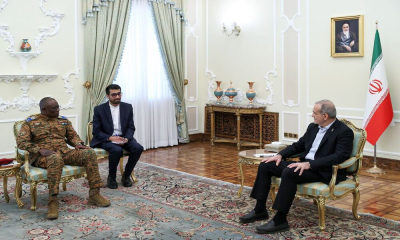
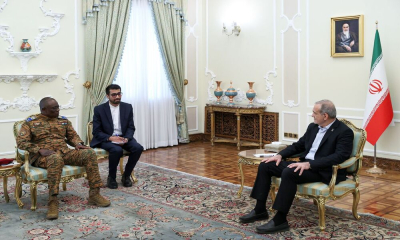
Cette semaine, le Burkina Faso a été marqué par la visite historique du général Célestin Simporé à Téhéran, le 23 février 2026. Cette visite marque en effet une inflexion diplomatique notable et la poursuite de la diversification des partenariats engagés depuis le départ de la France il y a quelques années. Reçu par le Président iranien, Massoud Pezeshkian, et par le Ministre de la Défense, Aziz Nasirzadeh, le Ministre burkinabè a engagé un dialogue stratégique axé sur la coopération sécuritaire. Le Président iranien a profité de l'occasion pour affirmer que « l'Iran est désireux d'utiliser ses vastes capacités pour améliorer ses relations avec les pays africains, ce qui constitue une priorité stratégique de sa politique étrangère ». Cette visite illustre la poursuite d'une diplomatie souverainiste et pragmatique, axée sur la sécurisation du territoire et l'autonomie stratégique, mais qui redéfinit progressivement la place du Burkina Faso dans les jeux d'alliances internationaux. Il s'agit d'une continuité dans leur stratégie de diversification des fournisseurs d'équipements militaires, avec un accès à une coopération technologique et logistique « non occidentale ».
Ouagadougou–Accra : vers une régionalisation pragmatique de la réponse sécuritaire
Pendant ce temps, le Burkina Faso a signé, le 20 février dernier, sept accords bilatéraux avec le Ghana concernant le transport, la sécurité, la gestion transfrontalière et la lutte contre le trafic de stupéfiants. Cette coopération s'inscrit dans un contexte de vulnérabilité frontalière accrue, comme en témoigne la mort de commerçants ghanéens lors d'une attaque djihadiste revendiquée par le JNIM, évoquée dans les précédents numéros de Météo Sahel. Selon Karamoko Jean-Marie Traoré, ministre des Affaires étrangères du Burkina Faso, « nos peuples attendent de nous plus que des déclarations ». Ils attendent des infrastructures, des opportunités économiques, une sécurité renforcée, une mobilité facilitée et des échanges commerciaux fluidifiés. La commission mixte doit être le moteur d'une coopération ambitieuse, structurée, réaliste et axée sur les résultats. » Ces propos témoignent de la prise de conscience stratégique du Burkina Faso et du Ghana selon laquelle la menace du JNIM ne se limite pas aux frontières nationales et exige une réponse coordonnée intégrant la sécurité, la gouvernance frontalière et la lutte contre les trafics transnationaux. Ces accords entre les deux pays traduisent une logique de régionalisation de la réponse sécuritaire, dans laquelle la coopération transfrontalière devient un levier stratégique indispensable face à la diffusion du risque djihadiste et à l'interconnexion croissante des menaces criminelles et terroristes dans l'espace sahélien. Ainsi, la coopération sécuritaire avec Accra représente une tentative de stabilisation horizontale visant à lutter contre ce conflit.
Ouagadougou : vers l’institutionnalisation stratégique de l’An II de l’AES
Les travaux de la feuille de route de la deuxième année de l’AES ont été lancés à Ouagadougou les 24 et 25 février 2026. L’objectif est de structurer une doctrine commune en matière de défense, de diplomatie et de développement. Cet acte majeur marque en effet une étape importante dans l'institutionnalisation du projet confédéral entre les trois pays, visant à dépasser la coopération conjoncturelle pour formaliser une doctrine intégrée en matière de défense, de diplomatie et de développement. Selon Bassolma Bazié, président de la Commission nationale AES pour le Burkina, « il est nécessaire de se retrouver pour apprécier le contenu et voir quels types d'éléments on peut mettre ensemble en termes de projets de feuilles de route à transmettre d'abord à l'équipe ministérielle confédérale, qui pourra les apprécier et les transmettre à leur tour à leurs Excellences pour adoption définitive ». Cette démarche témoigne d'une volonté de structuration ascendante, révélatrice d'une tentative de consolidation institutionnelle et de coordination stratégique face aux défis sécuritaires et aux recompositions géopolitiques régionales.
Timbuktu Institute - Week 4 - February 2026
Between opening up to new non-Western partners, strengthening cross-border cooperation with Ghana and accelerating the institutionalisation of the AES, Burkina Faso is confirming a three-pronged strategic dynamic. These diplomatic and security developments, concentrated around the end of February 2026, reflect a deliberate realignment of alliances, a pragmatic regionalisation of the response to the jihadist threat, and a desire for doctrinal structuring at the confederal level.
Burkina Faso–Iran: a diplomatic shift in the service of assertive security sovereignty
This week, Burkina Faso was marked by the historic visit of General Célestin Simporé to Tehran on 23 February 2026. This visit marks a notable diplomatic shift and the continuation of the diversification of partnerships that began with France's departure a few years ago. Received by Iranian President Massoud Pezeshkian and Defence Minister Aziz Nasirzadeh, the Burkinabe minister engaged in a strategic dialogue focused on security cooperation. The Iranian President took the opportunity to affirm that ‘Iran is keen to use its vast capabilities to improve its relations with African countries, which is a strategic priority of its foreign policy.’ This visit illustrates the pursuit of a sovereignist and pragmatic diplomacy, focused on securing the territory and strategic autonomy, but which is gradually redefining Burkina Faso's place in the game of international alliances. This is a continuation of their strategy of diversifying military equipment suppliers, with access to ‘non-Western’ technological and logistical cooperation.
Ouagadougou–Accra: towards a pragmatic regionalisation of the security response
Meanwhile, on 20 February, Burkina Faso signed seven bilateral agreements with Ghana on transport, security, cross-border management and the fight against drug trafficking. This cooperation comes at a time of increased border vulnerability, as evidenced by the death of Ghanaian traders in a jihadist attack claimed by JNIM, as reported in previous issues of Météo Sahel. According to Karamoko Jean-Marie Traoré, Burkina Faso's Minister of Foreign Affairs, ‘our peoples expect more from us than just statements’. They expect infrastructure, economic opportunities, enhanced security, easier mobility and smoother trade. The joint commission must be the driving force behind ambitious, structured, realistic and results-oriented cooperation. These remarks reflect the strategic awareness of Burkina Faso and Ghana that the threat posed by JNIM is not limited to national borders and requires a coordinated response that integrates security, border governance and the fight against transnational trafficking. These agreements between the two countries reflect a logic of regionalisation of the security response, in which cross-border cooperation becomes an indispensable strategic lever in the face of the spread of jihadist risk and the growing interconnection of criminal and terrorist threats in the Sahel region. Thus, security cooperation with Accra represents an attempt at horizontal stabilisation aimed at combating this conflict.
Ouagadougou: towards the strategic institutionalisation of Year II of the AES
Work on the roadmap for the second year of the AES was launched in Ouagadougou on 24 and 25 February 2026. The aim is to structure a common doctrine on defence, diplomacy and development. This major step marks an important milestone in the institutionalisation of the confederal project between the three countries, which aims to go beyond ad hoc cooperation to formalise an integrated doctrine on defence, diplomacy and development. According to Bassolma Bazié, President of the AES National Commission for Burkina Faso, ‘it is necessary to meet to assess the content and see what types of elements can be put together in terms of draft roadmaps to be sent first to the confederal ministerial team, which will be able to assess them and in turn forward them to Their Excellencies for final adoption’. This approach demonstrates a desire for bottom-up structuring, revealing an attempt at institutional consolidation and strategic coordination in the face of security challenges and regional geopolitical realignments.
Timbuktu Institute - Semaine 4 - Février 2026
Télécharger l'intégralité de la Météo Sahel
Entre la recomposition du paysage partisan à Toumodi, la consolidation du partenariat historique avec la France et l'approfondissement de la coopération sécuritaire avec les États-Unis dans le nord du pays, la Côte d'Ivoire confirme sa double trajectoire : une stabilité politique encadrée à l'intérieur et un ancrage stratégique pro-occidental à l'extérieur. Ces dynamiques traduisent la volonté de préserver la centralité de la Côte d’Ivoire dans un environnement régional marqué par l’instabilité sahélienne et la concurrence des influences internationales.
Toumodi : le PDCI confirme sa résilience électorale face au RHDP
La reprise partielle des élections législatives de 2025, organisée en février 2026, a confirmé la résilience du Parti démocratique de Côte d'Ivoire à Toumodi. En effet, le parti de Tidiane Thiam a obtenu 56,11 % des suffrages, devançant ainsi le candidat du RHDP. Cette victoire confirme l'ancrage territorial du parti à Toumodi et sa capacité de mobilisation électorale persistante dans un contexte politique ivoirien marqué par une compétition structurée entre blocs dominants. Malgré l'absence de leur leader sur le terrain, les responsables politiques parviennent à obtenir des résultats. Selon Soumaïla Bredoumy, le porte-parole du parti, « le président rentrera quand les conditions, que nous estimons favorables, seront réunies ». Pour rappel, le paysage politique est toujours dominé par le Rassemblement des houphouëtistes pour la démocratie et la paix (RHDP), dans un contexte de pluralisme sous contrôle.
Paris–Abidjan : consolidation d’un partenariat stratégique et affirmation d’un pôle de stabilité
Du 14 au 25 février 2026, le Président Alassane Ouattara a effectué un séjour stratégique à Paris afin de consolider les investissements et la coopération sécuritaire entre les deux pays amis. La France demeure un partenaire économique majeur dans les secteurs de l’énergie, des infrastructures et des télécommunications. Ce voyage renforce ainsi la position de la Côte d'Ivoire en tant que pôle de stabilité « pro-occidental » dans l’espace sahélien. Au cours de son séjour, le Président Ouattara a rencontré des représentants du gouvernement français, des institutions financières et des chefs d’entreprise afin de renforcer la coopération économique et d'attirer des investissements stratégiques. Les discussions ont porté sur la sécurité régionale, le développement durable et les priorités ivoiriennes en matière d'industrialisation, de transformation locale des matières premières et d'amélioration du climat des affaires.
Zone nord ivoirienne : un partenariat sécuritaire structurant avec Washington
Parallèlement, la coopération renforcée avec les États-Unis dans la zone opérationnelle nord vise à contenir les risques d'infiltration djihadiste en provenance du Burkina Faso. Cette approche repose sur la formation, la fourniture d'équipements et le renforcement des capacités opérationnelles. La Côte d'Ivoire adopte une stratégie combinant prévention militaire et développement local. Selon Junaid Munir, chargé d’affaires à l’ambassade des États-Unis, “ notre partenariat repose sur nos intérêts communs et un principe simple : une stabilité durable ouvre des opportunités. Ensemble, nous construisons un environnement plus sûr qui soutient la croissance économique et un avenir plus prospère pour nos deux pays”. Il s'agit donc d'une approche stratégique américaine qui lie sécurité et développement, dans laquelle la stabilité est considérée comme une condition préalable aux opportunités économiques. Cette approche inscrit ainsi le partenariat dans une logique d'intérêts mutuels et de projection d'influence durable des États-Unis.
Timbuktu Institute - Week 4 - February 2026
Between the reshaping of the political landscape in Toumodi, the consolidation of its historic partnership with France, and the deepening of security cooperation with the United States in the north of the country, Côte d'Ivoire is confirming its dual trajectory: political stability at home and a pro-Western strategic anchoring abroad. These dynamics reflect the desire to preserve Côte d'Ivoire's central role in a regional environment marked by instability in the Sahel and competition between international influences.
Toumodi: the PDCI confirms its electoral resilience against the RHDP
The partial resumption of the 2025 legislative elections, held in February 2026, confirmed the resilience of the Democratic Party of Côte d'Ivoire in Toumodi. Tidiane Thiam's party won 56.11% of the vote, ahead of the RHDP candidate. This victory confirms the party's territorial roots in Toumodi and its ability to mobilise voters in a political context marked by structured competition between dominant blocs. Despite the absence of their leader on the ground, political leaders are managing to achieve results. According to Soumaïla Bredoumy, the party's spokesperson, ‘the president will return when the conditions, which we consider favourable, are in place’. As a reminder, the political landscape is still dominated by the Rassemblement des Houphouëtistes pour la Démocratie et la Paix (RHDP), in a context of controlled pluralism.
Paris–Abidjan: consolidation of a strategic partnership and affirmation of a hub of stability
From 14 to 25 February 2026, President Alassane Ouattara made a strategic visit to Paris to consolidate investment and security cooperation between the two friendly countries. France remains a major economic partner in the energy, infrastructure and telecommunications sectors. This trip thus strengthens Côte d'Ivoire's position as a ‘pro-Western’ pole of stability in the Sahel region. During his stay, President Ouattara met with representatives of the French government, financial institutions and business leaders to strengthen economic cooperation and attract strategic investments. Discussions focused on regional security, sustainable development and Côte d'Ivoire's priorities in terms of industrialisation, local processing of raw materials and improving the business climate.
Northern Côte d'Ivoire: a structural security partnership with Washington
At the same time, enhanced cooperation with the United States in the northern operational zone aims to contain the risks of jihadist infiltration from Burkina Faso. This approach is based on training, equipment provision and operational capacity building. Côte d'Ivoire is adopting a strategy that combines military prevention and local development. According to Junaid Munir, chargé d'affaires at the US Embassy, "our partnership is based on our common interests and a simple principle: lasting stability opens up opportunities. Together, we are building a safer environment that supports economic growth and a more prosperous future for both our countries." This is therefore a strategic US approach that links security and development, in which stability is seen as a prerequisite for economic opportunities. This approach thus places the partnership within a logic of mutual interests and the projection of lasting US influence.
Timbuktu Institute - Semaine 4 - Février 2026
Télécharger l'intégralité de la Météo Sahel
De la mise en œuvre du programme d'urgence pour la région des Savanes au Togo à l'initiative d'arbitrage maritime engagée par le Ghana, en passant par le repositionnement logistique du port autonome de Lomé au profit du Niger, l'espace ouest-africain connaît une profonde reconfiguration stratégique. Ces dynamiques, qui mêlent prévention des conflits, sécurisation juridique des ressources maritimes et redéfinition des corridors commerciaux sahéliens, traduisent une volonté convergente de stabilisation par des instruments économiques, diplomatiques et structurels, dans un contexte régional marqué par l’insécurité et les recompositions en dehors de l’espace CEDEAO.
PURS 2026–2027 : une stratégie de stabilisation intégrée pour la région des Savanes face à l’insécurité et aux déplacements forcés
Le plan 2026-2027 du Programme d'urgence pour la région des Savanes (PURS), doté d'un budget de 18 milliards de francs CFA, vise plus de 430 000 personnes vulnérables. L’approche mise sur l’inclusion sociale et l’intégration durable des personnes déplacées au sein des communautés d’accueil. Cette stratégie s'inscrit en effet dans une logique de prévention structurelle, fondée sur le développement socio-économique comme levier de stabilisation. Selon la coordinatrice résidente du système onusien, « ensemble, avec détermination et solidarité, nous pourrons faire en sorte que chaque déplacé, chaque réfugié et chaque membre des communautés hôtes puissent vivre dans la sécurité, la dignité et l’espoir ». Le programme vise à réduire les risques de violences basées sur le genre et les menaces sécuritaires, à améliorer les conditions d’accueil des ménages déplacés hébergés par des familles déjà fragilisées et à combler les carences structurelles en matière d'eau, d'hygiène et d'assainissement. Ce programme intervient dans une zone en proie à une insécurité grandissante depuis plusieurs années, avec son lot de victimes et de déplacés.
Différend maritime entre le Ghana et le Togo : l’arbitrage comme instrument de stabilisation stratégique
Le Ghana a choisi de recourir à l’arbitrage international pour régler son différend maritime avec le Togo, tandis que Lomé a officiellement pris acte de cette initiative. Ce contentieux, qui porte sur la délimitation des espaces maritimes et l’exploitation des ressources offshore, s'inscrit dans une stratégie de judiciarisation visant à prévenir toute escalade des tensions diplomatiques. L’objectif ultime est de consolider et de préserver les relations historiques de coopération et de bon voisinage entre les deux pays. Le règlement de ce contentieux est essentiel pour les intérêts économiques et diplomatiques des deux pays, car il conditionne la maîtrise des ressources maritimes et la clarification des compétences juridictionnelles en mer. Ce différend persistant découle de l'absence d'une délimitation maritime formellement reconnue entre les deux pays. Cette décision fait suite à huit années de pourparlers infructueux, les discussions entre les deux pays n'ayant pas permis de trouver un compromis acceptable pour les deux parties.
Le Port autonome de Lomé, pivot logistique du Togo dans la recomposition sahélienne
Parallèlement, le Port autonome de Lomé s’active pour sécuriser l’acheminement de 20 000 tonnes d’engrais à destination du Niger, ce qui permet au Togo de consolider son positionnement en tant que hub logistique stratégique dans le nouveau contexte régional marqué par la recomposition des échanges avec les États sahéliens en dehors de l’espace CEDEAO. L’annonce a été faite le 25 février 2026 par le Ministre togolais chargé de l’économie maritime, à l’issue d’une réunion de travail avec Mahaman Elhadj Ousmane, Ministre nigérien de l’agriculture. Cette initiative s'inscrit dans le cadre du renforcement des relations économiques entre le Togo et le Niger, qui se sont intensifiées depuis le retrait du Niger de la Communauté économique des États de l'Afrique de l'Ouest. Dans un contexte de tensions avec le Bénin, notamment marqué par la fermeture des frontières terrestres, Niamey s'appuie désormais davantage sur la plateforme portuaire togolaise pour acheminer ses marchandises vers ses partenaires commerciaux.
Timbuktu Institute - Week 4 - February 2026
From the implementation of the emergency programme for the Savanes region in Togo to Ghana's maritime arbitration initiative and the logistical repositioning of the autonomous port of Lomé to benefit Niger, West Africa is undergoing a profound strategic reconfiguration. These dynamics, which combine conflict prevention, legal security for maritime resources and the redefinition of Sahelian trade corridors, reflect a converging desire for stabilisation through economic, diplomatic and structural instruments, in a regional context marked by insecurity and restructuring outside the ECOWAS area.
PURS 2026–2027: an integrated stabilisation strategy for the Savanes region in the face of insecurity and forced displacement
The 2026-2027 plan of the Emergency Programme for the Savanes Region (PURS), with a budget of 18 billion CFA francs, targets more than 430,000 vulnerable people. The approach focuses on social inclusion and the sustainable integration of displaced persons into host communities. This strategy is part of a structural prevention approach based on socio-economic development as a lever for stabilisation. According to the UN resident coordinator, ‘together, with determination and solidarity, we can ensure that every displaced person, every refugee and every member of the host communities can live in safety, dignity and hope.’ The programme aims to reduce the risk of gender-based violence and security threats, improve reception conditions for displaced households hosted by already vulnerable families, and address structural deficiencies in water, hygiene and sanitation. This programme is being implemented in an area that has been plagued by growing insecurity for several years, with its share of victims and displaced persons.
Maritime dispute between Ghana and Togo: arbitration as a strategic stabilisation tool
Ghana has chosen to resort to international arbitration to settle its maritime dispute with Togo, while Lomé has officially taken note of this initiative. This dispute, which concerns the delimitation of maritime areas and the exploitation of offshore resources, is part of a judicial strategy aimed at preventing any escalation of diplomatic tensions. The ultimate goal is to consolidate and preserve the historic relations of cooperation and good neighbourliness between the two countries. The settlement of this dispute is essential for the economic and diplomatic interests of both countries, as it determines control over maritime resources and clarifies jurisdictional powers at sea. This ongoing dispute stems from the absence of a formally recognised maritime boundary between the two countries. This decision follows eight years of unsuccessful talks, with discussions between the two countries failing to produce a compromise acceptable to both parties.
The Autonomous Port of Lomé, Togo's logistical hub in the Sahelian
At the same time, the Autonomous Port of Lomé is working to secure the transport of 20,000 tonnes of fertiliser to Niger, enabling Togo to consolidate its position as a strategic logistics hub in the new regional context marked by the restructuring of trade with Sahelian states outside the ECOWAS area. The announcement was made on 25 February 2026 by the Togolese Minister for Maritime Economy, following a working meeting with Mahaman Elhadj Ousmane, Nigerien Minister of Agriculture. This initiative is part of the strengthening of economic relations between Togo and Niger, which have intensified since Niger's withdrawal from the Economic Community of West African States. Against a backdrop of tensions with Benin, marked in particular by the closure of land borders, Niamey is now relying more heavily on the Togolese port platform to transport its goods to its trading partners.
Timbuktu Institute - Semaine 4 - Février 2026
Télécharger l'intégralité de la Météo Sahel
Dès son entame, le Tchad n’a pas cessé de veiller au grain au sujet du conflit soudanais. Face à la crise humanitaire due à l’afflux de réfugiés à sa frontière Est, N’Djamena s’est efforcé d’en endiguer les répercussions. Toutefois, les choses semblent désormais se déliter. Le 23 février, le Tchad a annoncé la fermeture de sa frontière avec le Soudan jusqu'à nouvel ordre. Selon le communiqué du ministre de la communication, cette décision se justifie par des « incursions répétées et aux violations commises par les forces en conflit au Soudan sur le territoire tchadien ». N’Djamena assure vouloir prévenir « tout risque d’expansion du conflit » et « se réserve le droit de riposter contre toute agression ou violation de l’intangibilité de son territoire et de ses frontières ».
Quelques jours auparavant, le 21 février, les Forces de soutien rapide (FSR) soudanaises annonçaient la prise d’Al-Tina, zone stratégique du Darfour-Nord à la frontière tchadienne, après la chute d’El-Fasher fin octobre 2025, qui fut suivie de massacres, viols et enlèvements massifs selon l’ONU. De plus, le mois dernier, sept soldats tchadiens perdaient la vie dans une altercation avec des paramilitaires FSR. Dès lors, cette fermeture frontalière semble traduire une exaspération de N’Djamena et l’épuisement d’une diplomatie de la retenue face à un conflit dont le débordement inquiète les autorités tchadiennes. Ceci d’autant plus que d’une part, aucune issue de solution ne semble se profiler dans cette guerre civile et d’autre part, ses potentiels effets centrifuges ne peuvent être totalement écartés considérant la place du Tchad dans la stabilité régionale.
Troubles aux frontières
Manifestement, il apparaît que la sécurisation des frontières tchadiennes s'impose comme l'un des défis structurels les plus pressants auxquels le Tchad est aujourd'hui confronté. Après sa frontière soudanaise, c’est maintenant à celle libyenne que N'Djamena est d’astreinte. En effet, lors d’une opération conjointe menée dans la nuit du 20 février dans une zone désertique à l’extrême nord du pays, la force conjointe libyo-tchadienne a effectué une importante opération sécuritaire. Au terme de celle-ci, un important stock d'armes lourdes, dont des missiles sol-air et de grandes quantités de munitions a été saisi. Dans la foulée, les parties tchadienne et libyenne ont formalisé leur coopération sécuritaire en mettant en place une salle d'opérations commune destinée à coordonner patrouilles, contrôles et déminage en l’occurrence dans l’espace méridional libyen marqué par la porosité des frontières et la circulation d’armes.
Par ailleurs, les premiers fruits de la réconciliation entre N’Djamena et Paris semblent déjà tomber. Le 25 février, l'Agence française de Développement (AFD) et le gouvernement tchadien ont signé une convention de financement de 15 millions d'euros destinée à soutenir deux domaines clés : la modernisation des infrastructures de transport et le renforcement de la filière cotonnière. Certes, cet appui financier est sans doute le bienvenu dans l’objectif de N’Djamena de développer sa croissance macro-économique, cependant, il ne serait pas téméraire d’avancer que ce réengagement financier de la France s’inscrive dans une logique qui dépasse le seul cadre du développement, eu égard à un contexte où la France avance à pas mesurés dans son projet d’un hypothétique retour au Sahel.
Sacré-Coeur 3 – BP 15177 CP 10700 Dakar Fann – SENEGAL.
+221 33 827 34 91 / +221 77 637 73 15
contact@timbuktu-institute.org