 French
 Arabic
 English
 Portuguese
 Spanish
 Swahili


Sacré-Coeur 3 – BP 15177 CP 10700 Dakar Fann – SENEGAL.
+221 33 827 34 91 / +221 77 637 73 15
contact@timbuktu-institute.org


Sacré-Coeur 3 – BP 15177 CP 10700 Dakar Fann – SENEGAL. +221 33 827 34 91 / +221 77 637 73 15
contact@timbuktu-institute.org
Timbuktu Institute October 2026 - Week 1
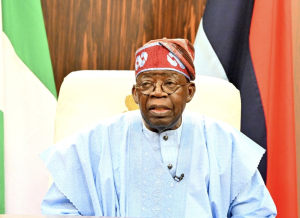
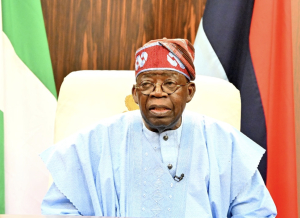
Three years after taking office and on the eve of a presidential election, President Bola Tinubu is now focused on showcasing his record as he seeks a new term. On the occasion of the 66th anniversary of Nigeria’s independence, on 1stOctober, the Head of State chose to defend the economic trajectory launched since he came to power in 2023. As his term draws to a close, Tinubu presents the first results as signs of an economy gradually being put back on track: growth above 4% expected in 2026, inflation falling after its peak, rebuilt foreign exchange reserves, a stabilised foreign exchange market and non-oil exports that exceeded 6 billion dollars in 2025. “Our reforms did not create the weaknesses in our economy. They confronted them,” he said. However, this record clearly clashes with the daily reality of the population. The removal of certain subsidies and the adjustments made since 2023 have sharply increased the cost of living, while the benefits of macroeconomic stabilisation are still unevenly felt. Tinubu himself admits it: “We cannot erase in four years what has accumulated over generations. But we can change its trajectory.” For the next phase of his programme, the Head of State therefore says he wants to shift the centre of gravity of his policy towards jobs, industrialisation and lowering the cost of living, with investment in agriculture, irrigation, fertilisers, storage and major transport networks. The aim is now to carry reform from macroeconomic indicators through to the productive base and, ultimately, to household incomes.
The industrialisation gamble
In this outlook, gas holds a special place. Indeed, it plays a particular role in this new phase. Abuja aims to increase its production from 7.5 to 10 billion cubic feet per day by 2030 and plans nearly 30 billion dollars of investment in the sector. But the challenge is not only to produce more. Above all, the government wants to improve the delivery of gas to power plants and industries so as to make it a lever for energy supply and industrialisation. The 671 billion naira mobilised through the Midstream and Downstream Gas Infrastructure Fund are notably intended to finance this intermediate infrastructure, which is still lacking. This choice is revealing of the new stage Tinubu is seeking. After trying to correct the economy’s financial imbalances, the government is now seeking to convert its resources into productive capacity. Yet the resources mobilised by the State must actually reach the sectors for which they are intended, and at this level the question of resource governance arises again with particular acuity. Hence the particular resonance of the report published on 22 September by the Platform to Protect Whistleblowers in Africa and the Anti-Corruption Data Collective. The two organisations say they have identified 284 properties in the United States linked to 61 Nigerian figures who have held political, administrative or security positions, with a combined estimated value of 271 million dollars. More than 80% of these purchases were reportedly made in cash, with funds the report’s authors suspect come from the embezzlement of public resources. While the report obviously cannot, on its own, establish the guilt of the people named, it does at least bring back into focus a contradiction that is hard to ignore. At the very moment the government is asking Nigerians to accept the costs of a profound economic overhaul, part of the country’s resources is still suspected of having been diverted from their public purpose. The authors believe the funds concerned could have helped finance hospitals, schools or rural electrification. The question of growth then joins that of its redistribution and, more fundamentally, of trust in the State’s capacity to turn its resources into public goods.
Security, a permanent ordeal
This trust is all the harder to consolidate as the State still struggles to guarantee the security of many communities. Recent kidnappings show that the problem is not confined to areas traditionally associated with insecurity. On 26 and 27 September, more than 80 people, mainly women and children, were abducted in Niger and Zamfara states by criminal groups known as “bandits”. In some rural communities, the threat has become pervasive enough to disrupt the most ordinary activities. In Maigama Mairake, one resident said that “half the inhabitants” were in the hands of armed groups. According to SBM Intelligence, some 7.78 billion naira were reportedly paid in ransoms between July 2025 and June 2026. The phenomenon takes a different, though similar, form in the South-East, where some twenty young graduates of the National Youth Service Corps were kidnapped on 1 October while travelling to their posting in Imo State. Security forces tracked them to a forest camp, but the presence of improvised explosive devices further complicates their intervention. Such is the persistence of a violence that now reaches into the most ordinary acts of survival: fetching firewood, farming, fishing or collecting scrap metal can expose people to reprisals. In any case, a few months before the January 2027 presidential election, it is a safe bet that the security situation could weigh heavily for Bola Tinubu.
Timbuktu Institute Octobre 2026 - Semaine 1
Trois ans après son arrivée au pouvoir et à la veille d’une présidentielle, l’heure est, pour le président Bola Tinubu, à la mise en valeur de son bilan, alors qu’il brigue un nouveau mandat. À l’occasion du 66e anniversaire de l’indépendance du Nigeria, le 1er octobre, le chef de l’Etat a choisi de défendre la trajectoire économique engagée depuis son arrivée au pouvoir en 2023. Tandis que son mandat touche à sa fin, Tinubu présente les premiers résultats comme les signes d’une économie progressivement remise sur ses rails : une croissance supérieure à 4 % attendue en 2026, un recul de l’inflation après son pic, la reconstitution des réserves de change, une stabilisation du marché des changes et des exportations non pétrolières qui ont dépassé 6 milliards de dollars en 2025. « Nos réformes n’ont pas créé les faiblesses de notre économie. Elles s’y sont attaquées », a-t-il affirmé. Seulement, ce bilan affiché se heurte manifestement à la réalité du quotidien des populations. La suppression de certaines subventions et les ajustements opérés depuis 2023 ont profondément renchéri le coût de la vie, alors même que les bénéfices de la stabilisation macroéconomique restent encore inégalement perceptibles. Tinubu en convient lui-même : « Nous ne pouvons pas effacer en quatre ans ce qui s’est accumulé au fil des générations. Mais nous pouvons en changer la trajectoire. » Pour la prochaine phase de son programme, le chef de l’État affirme vouloir donc déplacer le centre de gravité de sa politique vers l’emploi, l’industrialisation et la baisse du coût de la vie, avec des investissements dans l’agriculture, l’irrigation, les engrais, le stockage et les grands réseaux de transport. L’objectif est désormais de faire passer la réforme des indicateurs macroéconomiques au tissu productif et, à terme, aux revenus des ménages.
Le pari de l’industrialisation
Dans cette projection, le gaz occupe une place particulière. En effet, Abuja occupe une place particulière dans cette nouvelle étape. Abuja ambitionne de porter sa production de 7,5 à 10 milliards de pieds cubes par jour d’ici 2030 et prévoit près de 30 milliards de dollars d’investissements dans le secteur. Mais l’enjeu ne consiste pas seulement à produire davantage. Le gouvernement veut surtout améliorer l’acheminement du gaz vers les centrales et les industries afin d’en faire un levier d’approvisionnement énergétique et d’industrialisation. Les 671 milliards de nairas mobilisés à travers le Fonds d’infrastructure gazière Midstream et Downstream doivent notamment financer cette infrastructure intermédiaire qui fait encore défaut. Ce choix est révélateur de la nouvelle étape recherchée par Tinubu. Après avoir tenté de corriger les déséquilibres financiers de l’économie, le gouvernement cherche désormais à convertir ses ressources en capacités productives. Encore faut-il que les moyens mobilisés par l’État atteignent effectivement les secteurs auxquels ils sont destinés ; et à ce niveau c’est la question de la gouvernance des ressources qui se repose avec acuité. Partant, le rapport publié le 22 septembre par la Plateforme de protection des lanceurs d’alerte en Afrique et l’Anti-Corruption Data Collective y donne une résonance particulière. Les deux organisations affirment avoir identifié 284 biens immobiliers aux États-Unis liés à 61 personnalités nigérianes ayant exercé des fonctions politiques, administratives ou sécuritaires, pour une valeur cumulée estimée à 271 millions de dollars. Plus de 80 % de ces acquisitions auraient été réalisées en liquide, avec des fonds que les auteurs du rapport soupçonnent d’être issus de détournements de ressources publiques. Si le rapport ne permet évidemment pas, à lui seul, d’établir la culpabilité des personnes citées, il remet tout au moins en lumière une contradiction difficile à éluder. Puisqu’au moment où le gouvernement demande aux Nigérians d’accepter les coûts d’une profonde réorganisation économique, une partie des ressources du pays est encore soupçonnée d’avoir été soustraite à leur destination publique. Les auteurs estiment que les fonds concernés auraient pu contribuer au financement des hôpitaux, des écoles ou de l’électrification rurale. La question de la croissance rejoint alors celle de sa redistribution et, plus fondamentalement, de la confiance dans la capacité de l’État à transformer ses ressources en biens publics.
La sécurité, permanente épreuve
Cette confiance est d’autant plus difficile à consolider que l’État peine encore à garantir la sécurité de nombreuses communautés. Les enlèvements récents montrent que le problème ne se cantonne pas aux zones traditionnellement associées à l’insécurité. Les 26 et 27 septembre, plus de 80 personnes, principalement des femmes et des enfants, ont été enlevées dans les États de Niger et de Zamfara par des groupes criminels dits « bandits ». Dans certaines communautés rurales, la menace est devenue suffisamment prégnante pour bouleverser les activités les plus ordinaires. À Maigama Mairake, un habitant affirmait ainsi que « la moitié des habitants » était aux mains des groupes armés. Selon SBM Intelligence, près de 7,78 milliards de nairas auraient été versés en rançons entre juillet 2025 et juin 2026. Le phénomène prend une autre forme bien que similaire dans le Sud-Est, où une vingtaine de jeunes diplômés du National Youth Service Corps ont été enlevés le 1er octobre alors qu’ils rejoignaient leur lieu d’affectation dans l’État d’Imo. Les forces de sécurité ont retrouvé leur trace dans un camp forestier, mais la présence d’engins explosifs improvisés complique encore leur intervention. Telle se manifeste la persistance d’une violence qui s’inscrit désormais dans les gestes les plus ordinaires de la survie à l’instar d’aller chercher du bois, cultiver, pêcher ou récupérer de la ferraille peut exposer les populations à des représailles. En tous les cas, à quelques mois de la présidentielle de janvier 2027, il y aurait fort à parier que la situation sécuritaire puisse peser dans la balance pour Bola Tinubu.
Timbuktu Institute October 2026 - Week 1
Nearly ten years after the outbreak of the Anglophone crisis, Cameroon is still facing a rift that has brought interrupted schooling, displaced families and territories durably scarred by fear. In the North-West and South-West regions, persistent violence, population displacement and disruption of daily life are a constant reminder that peace remains largely to be built. And Yaoundé is well aware of this. On a visit to the city of Buea, Prime Minister Joseph Dion Ngute again called, on 28 September, for an end to the cycle of violence. But at the same time, the kidnappings, the threats against schools and the “ghost town” operations held on the same day were a reminder, if one were needed, that political dialogue continues to run up against a persistent security reality. “Dialogue must produce results,” the head of government insisted, as if to underline that the challenge remains to change the actual conditions for peace. That said, the choice of Buea is not insignificant. In the South-West, the crisis has deeply disrupted public services, particularly education. Five teachers were kidnapped on 8 September in Wum before being released the next day. On 25 September, the head of a public secondary school had been shot and wounded during an attempted kidnapping in Bamenda. In several localities, separatist groups also continue to impose curfews and threaten parents who send their children to school. The September school term thus offered a new measure of the conflict’s grip on daily life. It was in this context that the “ghost town” day of 1 October confirmed this state of affairs. For the separatists, the anniversary of the 1961 reunification retains strong symbolic value, especially as it coincides with the proclamation of “Ambazonia” in 2017. In Bamenda, Buea and neighbouring localities, the slowdown in activity was accompanied by a large security deployment. Ten years after the start of the crisis, the toll remains heavy: several NGOs report more than 6,000 deaths and hundreds of thousands of displaced people.
Media standoff
This difficulty in restoring lasting order in the Anglophone regions finds another echo in the standoff now pitting the Cameroonian authorities against part of the media landscape. On 29 September, the National Communication Council (CNC) suspended Vision 4 for one month, the channel owned by businessman Jean-Pierre Amougou Belinga, after several months of tension with the regulator. The sanction stemmed from the broadcast, on 2 June, of a particularly critical report targeting a lawyer for the civil party in the Martinez Zogo case. Journalist Martial Owona had already been suspended for three months, while the L’Anecdote group had refused to respond to the CNC’s summonses. Its media director, Philippe Boney, had even declared that he “couldn’t care less about the CNC”. The confrontation then moved to a different arena, with the group challenging the legality of the sanctions in court and questioning the mandate of the Council’s chairman, Joseph Chebongkeng Kalabubsu. The regulator’s response matched this escalation: Vision 4 and Philippe Boney were suspended for one month, Martial Owona’s sanction was extended to six months, and Jean-Claude Fouda Abega, publication director of L’Anecdote, was also suspended. However, the channel was able to keep broadcasting in Cameroon through Vision 4 RCA, its Central African version, which falls outside the CNC’s jurisdiction.
Between levers and dependencies
In parallel, Yaoundé also intends to strengthen its room for manoeuvre on the economic front, notably by focusing on infrastructure capable of supporting regional trade. It was in this context that, on 4 October, President Paul Biya authorised a loan of around 390 million dollars from the International Bank for Reconstruction and Development (IBRD) to modernise the Douala-Bangui corridor. The route is strategic for the Central African Republic, but also for Chad, whose goods travel the more than 800 kilometres between Douala and Garoua-Boulaï. This investment is part of a broader infrastructure modernisation policy, including more than 212 million euros of financing from the Islamic Development Bank for the Douala-Bafoussam road. These projects are meant to strengthen Cameroon’s role as a gateway to the sea for several landlocked Central African countries. However, they add to an already closely watched financial equation, with several experts warning of the risks of accumulating debt.
Strengthening infrastructure also opens up another dimension of Yaoundé’s strategy: its external partnerships. On the diplomatic front, relations with Washington in turn illustrate both the room for manoeuvre and the dependencies Cameroon has to contend with. The appointment on 28 September of Christian Jové Ehrhardt as United States ambassador to Yaoundé has thus brought back into focus an agreement discreetly concluded between the two countries in December 2025. The diplomat had previously played a role in the US policy of deporting migrants to third countries, notably in the discussions that led to Cameroon’s commitment to receive up to 1,000 people deported from the United States. The arrangement, revealed several months later, had sparked controversy. Migrant rights organisations denounce the US policy of deportations to third countries and the risks of persecution or torture to which some migrants could be exposed. Cameroon, for its part, has remained discreet about the terms of the agreement. In this respect, Christian Jové Ehrhardt’s appointment to Yaoundé takes on particular resonance. The man who contributed in Washington to the policy of deporting migrants to third countries is arriving in a country that is itself expected to play a role in that system. Beyond bilateral cooperation, this appointment thus raises the question of Yaoundé’s capacity to negotiate its interests in a relationship where American priorities may also translate into new expectations of it.
Timbuktu Institute Octobre 2026 - Semaine 1
Près de dix ans après le déclenchement de la crise anglophone, le Cameroun reste confronté à une fracture avec son lot de scolarité interrompue, de familles déplacées et de territoires durablement marqués par la peur. Dans les régions du Nord-Ouest et du Sud-Ouest, la persistance des violences, les déplacements de population et les perturbations de la vie quotidienne rappellent constamment que le retour à la paix demeure encore largement à construire. Et cela, Yaoundé en est plus que conscient. En déplacement dans la ville de Buea, le Premier ministre Joseph Dion Ngute a de nouveau appelé, le 28 septembre, à mettre un terme à l’engrenage des violences. Mais au même moment, les enlèvements, les menaces contre les écoles et les opérations de « ville morte » qui ont lieu le même jour rappellent s’il en était que le dialogue politique continue de se heurter à une réalité sécuritaire persistante. « Le dialogue doit produire des résultats », a insisté le chef du gouvernement, comme pour souligner que l’enjeu demeure de parvenir à modifier concrètement les conditions d’une paix. Cela étant, le choix de Buea n’est pas anodin. Dans le Sud-Ouest, la crise a profondément désorganisé les services publics et notamment l’éducation. Cinq enseignants ont ainsi été enlevés le 8 septembre à Wum avant d’être libérés le lendemain. Le 25 septembre, le proviseur d’un lycée public avait été blessé par balle lors d’une tentative d’enlèvement à Bamenda. Dans plusieurs localités, les groupes séparatistes continuent par ailleurs d’imposer des couvre-feux et de menacer les parents qui envoient leurs enfants à l’école. La rentrée de septembre aura ainsi offert une nouvelle mesure de l’emprise exercée par le conflit sur la vie quotidienne. C’est dans ce contexte que la journée « ville morte » du 1er octobre est venue confirmer cet état de fait. Pour les séparatistes, la date anniversaire de la réunification de 1961 conserve une forte portée symbolique, d’autant qu’elle correspond à la proclamation de l’« Ambazonie » en 2017. À Bamenda, Buea et dans les localités voisines, le ralentissement des activités s’est accompagné d’un important déploiement sécuritaire. Dix ans après le début de la crise, les bilans restent lourds. En effet, plusieurs ONG évoquent plus de 6 000 morts et des centaines de milliers de déplacés.
Bras de fer médiatique
Cette difficulté à rétablir un ordre durable dans les régions anglophones trouve un autre écho dans le bras de fer qui oppose désormais les autorités camerounaises à une partie du paysage médiatique. Le 29 septembre, le Conseil national de la communication (CNC) a suspendu pour un mois Vision 4, la chaîne de l’homme d’affaires Jean-Pierre Amougou Belinga, après plusieurs mois de tensions avec le régulateur. À l’origine de la sanction, la diffusion, le 2 juin, d’un reportage particulièrement critique visant une avocate de la partie civile dans l’affaire Martinez Zogo. Le journaliste Martial Owona avait déjà été suspendu trois mois, tandis que le groupe L’Anecdote avait refusé de répondre aux convocations du CNC. Son directeur des médias, Philippe Boney, avait même affirmé n’avoir « que faire du CNC ». La confrontation a ensuite changé de terrain, le groupe contestant devant la justice la légalité des sanctions et mettant en cause le mandat du président du Conseil, Joseph Chebongkeng Kalabubsu. La réponse du régulateur a été à la mesure de cette escalade : suspension de Vision 4 et de Philippe Boney pendant un mois, tandis que Martial Owona voit sa sanction portée à six mois et que Jean-Claude Fouda Abega, directeur de publication de L’Anecdote, est également suspendu. Toutefois, la chaîne a pu maintenir sa programmation au Cameroun en passant par Vision 4 RCA, sa déclinaison centrafricaine, qui échappe à la compétence du CNC.
Entre leviers et dépendances
En parallèle, Yaoundé entend en outre renforcer ses marges de manœuvre sur le front économique, notamment en misant sur des infrastructures capables de soutenir les échanges régionaux. C’est à ce titre que le 4 octobre, le président Paul Biya a autorisé un prêt d’environ 390 millions de dollars auprès de la Banque internationale pour la reconstruction et le développement (BIRD), destiné à moderniser le corridor Douala-Bangui. L’axe est stratégique pour la Centrafrique, mais aussi pour le Tchad, dont les marchandises empruntent la liaison entre Douala et Garoua-Boulaï sur plus de 800 kilomètres. Cet investissement s’inscrit dans une politique plus large de modernisation des infrastructures, avec notamment un financement de plus de 212 millions d’euros de la Banque islamique de développement pour l’axe Douala-Bafoussam. Ces chantiers doivent renforcer la vocation du Cameroun comme porte d’accès à la mer pour plusieurs pays enclavés d’Afrique centrale. Ils viennent toutefois alourdir une équation financière déjà surveillée, plusieurs experts mettant en garde contre les risques liés à l’accumulation des emprunts.
Le renforcement des infrastructures ouvre aussi sur une autre dimension de la stratégie de Yaoundé, celle de ses partenariats extérieurs. Sur le terrain diplomatique donc, les relations avec Washington illustrent à leur tour les marges de manœuvre, mais aussi les dépendances, auxquelles le Cameroun doit composer. La nomination, le 28 septembre, de Christian Jové Ehrhardt comme ambassadeur des États-Unis à Yaoundé remet ainsi en lumière un accord conclu discrètement entre les deux pays en décembre 2025. Le diplomate avait auparavant joué un rôle dans la politique américaine d’expulsion de migrants vers des pays tiers, et notamment dans les discussions ayant abouti à l’engagement du Cameroun d’accueillir jusqu’à 1 000 personnes expulsées des États-Unis. L’arrangement, révélé plusieurs mois plus tard, avait suscité la controverse. Les organisations de défense des migrants dénoncent la politique américaine d’expulsions vers des pays tiers et les risques de persécution ou de torture auxquels certains migrants pourraient être exposés. Pour sa part, le Cameroun est resté discret sur les modalités de l’accord. La nomination de Christian Jové Ehrhardt à Yaoundé prend, à cet égard, une résonance particulière. Celui qui a contribué à Washington à la politique d’expulsion de migrants vers des pays tiers arrive dans un pays appelé à jouer lui-même un rôle dans ce dispositif. Au-delà de la coopération bilatérale, cette nomination pose ainsi la question de la capacité de Yaoundé à négocier ses intérêts dans une relation où les priorités américaines peuvent aussi se traduire par de nouvelles attentes à son égard.
Timbuktu Institute October 2026 - Week 1
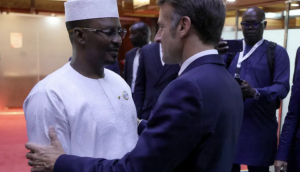
For several months now, N’Djamena has set a clear course: giving the economy a greater role in its external relations as well as in its domestic agenda. The ambition set out in the national development plan “Chad Connection 2030” is considerable. It aims to attract up to 26 billion euros of investment by 2030 and to diversify an economy still largely dependent on sectors that create few jobs. To achieve this, the government is counting on improving the business climate, modernising infrastructure and better matching available skills with labour market needs. It is also with this in mind that Chad is betting – albeit rather soberly – on its renewed economic partnership with France, after a long cold spell. The Chadian government is highlighting several reforms intended to make business easier: a new Labour Code, tax exemptions, digitalisation of procedures and the creation of a one-stop shop through the National Agency for Investment and Exports (ANIE), among others. For the interim administrator of the Chamber of Commerce and Industry, Abderrahmane Gademi, these measures should support “Chad’s economic development, economic diversification” and the transformation of the industrial base.
However, the drive to bring investors back is running up against an obstacle that goes beyond regulatory measures. Access to electricity remains one of the country’s main handicaps; Chad ranks 49th out of 54 in the Amadeus Institute’s 2024 attractiveness index. Economist Djimadoum Mandekor thus points to “a gap between commitments and (...) practical implementation”. A few projects nevertheless point to the beginnings of a recovery. The French company Qair has notably signed an agreement to build two 30 MW solar power plants on the outskirts of N’Djamena. Medef International also sees opportunities in infrastructure, energy and health, as well as in a possible resumption of security cooperation.
In search of economic relays
Across the African continent, the trend is towards diversifying partners, and N’Djamena is no exception. The new Minister of State for Foreign Affairs, Ahmed Kogri, received on 28 September Morocco’s ambassador to N’Djamena, Abdellatif Erroja. Beyond congratulating the new minister, the two officials discussed deepening a cooperation that already extends to agriculture, energy, transport, logistics and education. Morocco already has a well-structured relationship with Chad. Six agreements were signed in 2020, and those concluded in December 2021 raised to 150 per year the number of Moroccan scholarships awarded to Chadian students. The Casablanca-N’Djamena air link and infrastructure projects complete this cooperation network. On Throne Day, 30 July, the Moroccan ambassador had described the relationship as a model of “South-South partnership”. This diversification of partnerships is all the more significant as N’Djamena is at the same time seeking to reorganise its own economic tools. Chad wants not only to convince foreign partners, but also to create the conditions for their investments to find a more favourable environment. Hence the particular importance given to modernising infrastructure.
Building the conditions for attractiveness
In this drive, Hassan Djamous International Airport is an equally important project. On 30 September, the Chadian authorities began validating its Emergency Plan with ASECNA, bringing together airport services, security forces, emergency services, health facilities and administrative authorities. The aim is to clarify responsibilities and chains of command so as to be able to respond rapidly to an incident. The system accompanies the airport’s modernisation works, launched in January 2025 with 32.5 million euros of funding from the French Development Agency (AFD) and the Chadian State. Renovation and extension of the main runway, upgrading of infrastructure in line with ICAO recommendations, renovation of the terminal and extension of the aircraft parking area should enable the country’s main air gateway to take a new step towards international certification.
However, physical modernisation alone will not be enough. The revision of the National Employment and Vocational Training Policy, launched on 2 October, shows that the government is also seeking to act on the other side of attractiveness, namely the availability of a workforce capable of supporting economic transformation. In a country of around 21.5 million inhabitants where more than half the population is under 20, tens of thousands of young people enter the labour market every year. To this end, the Interministerial Technical Committee set up on this occasion has six months to carry out a diagnosis and propose a new policy built around apprenticeship, matching training with jobs, entrepreneurship, youth and women’s employment, the informal economy, digital technology and artificial intelligence. Minister Abdoulaye Mbodou Mbami sums up the challenge in three words: “rigour”, “inclusion” and “operationality”. In the end, this demand for effectiveness appears to be common to all the projects undertaken by N’Djamena, in pursuit of a clear but delicate triptych: attracting capital while solving the energy question; modernising infrastructure, which requires appropriate procedures and skills; and diversifying partnerships to turn diplomatic agreements into real, effective economic projects.
Timbuktu Institute Octobre 2026 - Semaine 1
Depuis maintenant plusieurs mois, N’Djamena affiche un cap clair : donner davantage de place à l’économie dans ses relations extérieures comme dans son agenda intérieur. Ainsi, l’ambition affichée avec le plan national de développement « Tchad Connexion 2030 » est considérable. Il s'agit d'attirer jusqu’à 26 milliards d’euros d’investissements d’ici 2030 et engager une diversification de l’économie encore largement dépendante de secteurs peu créateurs d’emplois. Pour y parvenir, le gouvernement mise sur l’amélioration du climat des affaires, la modernisation des infrastructures et une meilleure adéquation entre les compétences disponibles et les besoins du marché du travail. Et c’est par ailleurs dans cette perspective que le Tchad mise – quoique plutôt sobrement – sur son partenariat économique renouvelé avec la France, après une longue période de froid. Le gouvernement tchadien met en avant plusieurs réformes destinées à faciliter l’activité des entreprises : nouveau Code du travail, exonérations fiscales, digitalisation des procédures et création d’un guichet unique à travers l’Agence nationale des investissements et des exportations (Anie), etc. Pour l’administrateur provisoire de la Chambre de commerce et d’industrie, Abderrahmane Gademi, de la Chambre de commerce et d’industrie, ces mesures doivent accompagner « le développement économique du Tchad, la diversification économique » et la transformation du tissu industriel.
Toutefois, la volonté de faire revenir les investisseurs se heurte toutefois à un obstacle qui excède les mesures réglementaires. En effet, l’accès à l’électricité demeure l’un des principaux handicaps du pays, classé 49è sur 54 dans l’indice d’attractivité de l’Institut Amadeus pour 2024. L’économiste Djimadoum Mandekor relève ainsi « un décalage entre des engagements et (...) une mise en œuvre pratique ». Quelques projets témoignent néanmoins d’un début de reprise. L’entreprise française Qair a notamment signé un accord pour construire deux centrales solaires de 30 MW chacune aux portes de N’Djamena. Le Medef International identifie également des possibilités dans les infrastructures, l’énergie et la santé, ainsi que dans une éventuelle reprise de la coopération sécuritaire.
A la recherche de relais économiques
Partout sur le continent africain, le temps est à la diversification des partenaires ; et N’Djamena ne fait pas exception. Dès lors, le nouveau ministre d’État chargé des Affaires étrangères, Ahmed Kogri, recevait le 28 septembre l’ambassadeur du Maroc à N’Djamena, Abdellatif Erroja. Au-delà des félicitations adressées au nouveau ministre, les deux responsables ont évoqué l’approfondissement d’une coopération déjà étendue à l’agriculture, l’énergie, les transports, la logistique et l’enseignement. En l’occurrence, le Maroc dispose d’une relation déjà structurée. Six accords avaient été signés en 2020 et les accords conclus en décembre 2021 avaient porté à 150 par an le nombre de bourses marocaines accordées aux étudiants tchadiens. La liaison aérienne Casablanca-N’Djamena et les projets d’infrastructures complètent ce réseau de coopération. Lors de la Fête du Trône, le 30 juillet, l’ambassadeur marocain avait d’ailleurs présenté cette relation comme un modèle de « partenariat sud-sud ». Cette diversification des partenariats prend d’autant plus de relief que N’Djamena cherche parallèlement à réorganiser ses propres outils économiques. Ainsi, le Tchad souhaite non seulement convaincre les partenaires étrangers, mais aussi créer les conditions permettant à leurs investissements de trouver un environnement plus favorable. D’où l’importance particulière accordée à la modernisation des infrastructures.
Bâtir les conditions de l’attractivité
Dans cet élan, l’Aéroport international Hassan-Djamous constitue à cet égard un chantier non moins important. Le 30 septembre, les autorités tchadiennes ont engagé la validation de son Plan d’urgence avec l’ASECNA, en réunissant services aéroportuaires, forces de sécurité, secours, structures sanitaires et autorités administratives. L’objectif étant de clarifier les responsabilités et les chaînes de commandement afin de pouvoir répondre rapidement à un incident. Le dispositif accompagne les travaux de modernisation de l’aéroport, engagés en janvier 2025 avec un financement de 32,5 millions d’euros apporté par l’AFD Agence française de développement (AFD) et l’État tchadien. Rénovation et prolongement de la piste principale, mise aux normes des infrastructures selon les recommandations de l’OACI, rénovation de l’aérogare et extension du parking avion doivent permettre à la principale porte d’entrée aérienne du pays de franchir une nouvelle étape vers sa certification internationale.
Cependant, la modernisation matérielle ne suffira pas à elle seule. La révision de la Politique nationale de l’emploi et de la formation professionnelle, lancée le 2 octobre, montre que le gouvernement cherche également à agir sur l’autre versant de l’attractivité, en l’espèce la disponibilité d’une main-d’œuvre capable d’accompagner la transformation économique. Dans un pays d'environ 21,5 millions d’habitants où plus de la moitié de la population a moins de 20 ans, des dizaines de milliers de jeunes arrivent chaque année sur le marché du travail. Pour ce faire, le Comité technique interministériel installé à cette occasion dispose de six mois pour établir un diagnostic et proposer une nouvelle politique articulée autour de l’apprentissage, de l’adéquation formation-emploi, de l’entrepreneuriat, de l’emploi des jeunes et des femmes, de l’économie informelle, du numérique et de l’intelligence artificielle. Le ministre Abdoulaye Mbodou Mbami résume l’enjeu en trois mots : « la rigueur », « l’inclusion » et « l’opérationnalité ». Il apparaît au bout du compte que cette exigence d’effectivité semble être commune à l’ensemble des chantiers engagés par N’Djamena. Ceci pour un triptyque clair mais délicat : attirer les capitaux tout en résolvant la question énergétique, moderniser les infrastructures qui suppose de disposer de procédures et de compétences adaptées ainsi que diversifier les partenariats pour transformer les accords diplomatiques en projets économiques effectifs et véritables.
Timbuktu Institute October 2026 - Week 1
After the territorial gamble of organising Benin into six development hubs, the State is continuing to strengthen its public action, which also depends on its capacity to mobilise the resources needed to finance its ambitions over time. As the country seeks to consolidate its infrastructure, broaden access to essential services and support employment, the use of mechanisms combining concessional financing, international guarantees and private capital reflects a desire to scale up public investment while limiting the State’s financial exposure. Cotonou thus recently announced that on 18 September it had concluded a financing operation of around CFA 328 billion, with the support of the African Development Bank (AfDB) and the African Development Fund (ADF). With a twelve-year maturity, the operation benefits from a partial guarantee from the ADF and second-loss insurance provided by the insurance arm of the Islamic Development Bank. The envelope is intended to support several priority sectors: health, education, access to water, infrastructure, renewable energy and agriculture, as well as the professional integration of young people and women. For Robert Masumbuko, head of the AfDB country office, the aim is to “mobilise capital market resources on a large scale”. The mechanism, already used with Benin in 2023, seeks to reduce the risk borne by lenders in order to attract long-term private capital.
At the same time, this capacity to raise resources is accompanied by a more visible determination to regain control over certain parts of the territory and the economy. In the Mono department, Prefect Bienvenu Milohin led, on 29 September, an inspection operation of quarries in the communes of Houéyogbé and Comé. Several sites were still being operated even though their permits had expired. The irregular works were halted and local authorities were called on to play a greater role in monitoring. The approach, under way since 2021, also has a social dimension, as young people employed in these informal quarries are being encouraged to turn to the Azôli programme.
Tracking down clandestine networks
However, this reassertion of control is not limited to natural resources. It also extends to markets more directly linked to security and public health. In Parakou, in the Borgou department, two successive seizures revealed the scale of clandestine ammunition networks. On 28 September, the Republican Police intercepted 3,250 12-gauge cartridges hidden in bags carried on a motorbike. The next day, in a wooded area of the Danmambou neighbourhood, an anonymous tip-off led police officers to a cache containing a further 1,975 cartridges. These two operations bring to more than 5,200 the number of cartridges seized in a few days in the same city, following other interceptions in Bétérou and on the Bétérou-Djougou road. While investigations have yet to establish the origin of the ammunition, its intended recipients and the possible ramifications of these networks, the repeated seizures give the issue particular weight. They are a reminder that securing the territory is not only about identified threats at the borders, but also about the logistical channels that feed clandestine economies inside the country.
The same concern for control appears in a less directly security-related area with the seizure in Massè of 37 kg of counterfeit medicines. The operation made it possible to trace the chain from the transporter to an alleged supplier, who is still wanted. Here again, behind a one-off offence lies the broader question of product traceability and of public services’ capacity to monitor networks that operate outside regulated channels. It is in this context that the strengthening of the anti-human trafficking system should be seen. On 2 October, the United States announced funding of 250,000 dollars to improve victim follow-up, through tools handed over to the National Committee to Combat Trafficking in Persons. Implemented by UNODC, the system notably includes a standardised questionnaire, a methodological guide and a national referral mechanism designed to better coordinate the interventions of security, justice and social welfare actors. The choice of common tools reflects another form of consolidation of public action: better knowing the victims and following up cases becomes a condition for the system’s effectiveness. More broadly, the desire to strengthen national capacities also extends to the international stage. Speaking at the 81st United Nations General Assembly on 28 September, Benin advocated an approach based on security cooperation, multilateralism and respect for international law. In the face of cross-border threats, Cotonou emphasised coordination between States and diplomatic dialogue. In this light, the operation with the AfDB appears to be part of a drive to consolidate the economic and social capacities that can give public action greater traction. Development financing, the fight against clandestine economies and security cooperation thus appear as different facets of the same ambition: to extend the State’s effective presence while strengthening the means at its disposal to act.
Timbuktu Institute Octobre 2026 - Semaine 1
Après le pari territorial consistant à organiser le Bénin en six pôles de développement, l’Etat poursuit le renforcement de son action publique ; ce qui passe aussi par sa capacité à mobiliser les moyens nécessaires à ses ambitions de financement sur la durée. Alors que le pays cherche à consolider ses infrastructures, à élargir l’accès aux services essentiels et à soutenir l’emploi, le recours à des mécanismes associant financements concessionnels, garanties internationales et capitaux privés traduit ainsi une volonté de donner davantage d’ampleur à l’investissement public, tout en limitant l’exposition financière de l’État. C’est ainsi que Cotonou a récemment annoncé avoir conclu le 18 septembre, une opération de financement d’environ 328 milliards de FCFA, avec le soutien de la Banque africaine de développement (BAD) et du Fonds africain de développement (FAD). D’une maturité de douze ans, l’opération bénéficie d’une garantie partielle du FAD et d’une assurance de seconde perte apportée par la branche assurance de la Banque islamique de développement. Cette enveloppe doit soutenir plusieurs secteurs considérés comme prioritaires : santé, éducation, accès à l’eau, infrastructures, énergies renouvelables et agriculture, mais aussi l’insertion professionnelle des jeunes et des femmes. Pour Robert Masumbuko, responsable du bureau pays de la BAD, il s’agit de « mobiliser à grande échelle les ressources des marchés de capitaux ». Le mécanisme, déjà utilisé avec le Bénin en 2023, cherche à réduire le risque supporté par les prêteurs afin d’attirer des capitaux privés de long terme.
Parallèlement, cette capacité à lever des ressources s’accompagne d’une volonté plus visible de reprendre le contrôle de certains segments du territoire et de l’économie. Ainsi, dans le département du Mono, le préfet Bienvenu Milohin a conduit, le 29 septembre, une opération de contrôle des carrières dans les communes de Houéyogbé et Comé. En effet, plusieurs sites continuaient d’être exploités alors que leurs autorisations étaient arrivées à expiration. Les travaux irréguliers ont été interrompus et les autorités locales appelées à participer davantage à la surveillance. La démarche, engagée depuis 2021, prend aussi une dimension sociale puisque les jeunes employés dans ces carrières informelles sont invités à se tourner vers le programme Azôli.
La traque des circuits clandestins
Toutefois, cette reprise en main ne concerne pas uniquement les ressources naturelles. Elle touche aussi des marchés plus directement liés à la sécurité et à la santé publique. À Parakou, dans le département du Borgou, deux saisies successives ont révélé l’ampleur des circuits clandestins de munitions. Le 28 septembre, la Police républicaine a intercepté 3 250 cartouches de calibre 12 dissimulées dans des sacs transportés à moto. Le lendemain, dans une zone boisée du quartier Danmambou, un signalement anonyme a conduit les policiers vers une cache contenant 1 975 cartouches supplémentaires. Ces deux opérations portent à plus de 5 200 le nombre de cartouches saisies en quelques jours dans la même ville, après d’autres interceptions réalisées à Bétérou et sur l’axe Bétérou-Djougou. Si les enquêtes doivent encore établir l’origine des munitions, leurs destinataires et les éventuelles ramifications de ces réseaux, la répétition des saisies donne une épaisseur particulière à la question. Elle rappelle que la sécurisation du territoire ne se joue pas seulement face à des menaces identifiées aux frontières, mais aussi dans les circuits logistiques qui alimentent les économies clandestines à l’intérieur du pays.
Le même souci de contrôle apparaît dans un registre moins directement sécuritaire avec la saisie, à Massè, de 37 kg de médicaments contrefaits. L’opération a permis de remonter du transporteur vers une fournisseuse présumée, toujours recherchée. Là encore, derrière une infraction ponctuelle se dessine la question plus large de la traçabilité des produits et de la capacité des services publics à surveiller des réseaux qui échappent aux circuits réglementés. C’est donc dans ce contexte que s’inscrit le renforcement du dispositif de lutte contre la traite des personnes. Les États-Unis ont ainsi annoncé, le 2 octobre, un financement de 250 000 dollars pour améliorer le suivi des victimes, à travers des outils remis au Comité national de lutte contre la traite des personnes. Mis en œuvre par l’ONUDC, le dispositif comprend notamment un questionnaire standardisé, un guide méthodologique et un mécanisme national de référencement destiné à mieux articuler les interventions des acteurs de la sécurité, de la justice et de l’action sociale. Le choix d’outils communs traduit ici une autre forme de consolidation de l’action publique, celle de mieux connaître les victimes et suivre les dossiers devient une condition de l’efficacité du dispositif. Dans une perspective plus large, la volonté de renforcer les capacités nationales trouve également un prolongement sur la scène internationale. À la tribune de la 81è Assemblée générale des Nations unies, le 28 septembre, le Bénin a défendu une approche fondée sur la coopération sécuritaire, le multilatéralisme et le respect du droit international. Face aux menaces transfrontalières, Cotonou a mis l’accent sur la coordination entre États et le dialogue diplomatique. A cette aune, il apparaît que l’opération avec la BAD s’inscrit dans un sillage cherchant à consolider les capacités économiques et sociales susceptibles de donner davantage de prise à l’action publique. Le financement du développement, la lutte contre les économies clandestines et la coopération sécuritaire apparaissent ainsi comme les différentes faces d’une même ambition : étendre la présence effective de l’État, tout en renforçant les moyens dont il dispose pour agir.
Timbuktu Institute October 2026 - Week 1
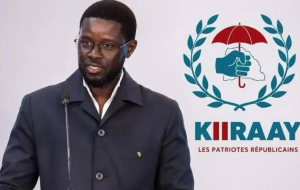
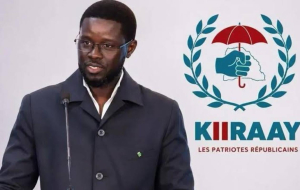
Like a serial whose final episode no one yet knows, it seems that we will have to get used to the coming years being paced by the twists and turns of the open political duel between President Diomaye Faye and the President of the National Assembly, Ousmane Sonko. And, making the best of the situation, the Head of State is pursuing his goal of turning the young presidential party Kiiraay into a political and territorial force. In this quest for grassroots presence, Kiiraay’s first rainy-season university, held on 3 October in Dakar, marked a new stage in building the party launched on 25 July. There, the party sought to define an identity based on “pragmatic sovereignism” and “balanced diplomacy”, with a discourse meant to be more measured than ideological.
Behind this still-tentative ideological line lies a much more immediate concern: the ground. A few months before the 2027 local elections, Kiiraay now claims the support of nearly 400 of Senegal’s 557 mayors. Several of these elected officials come from former President Macky Sall’s Alliance for the Republic (APR). This progress, however, has yet to be consolidated. With this in mind, a membership card distribution campaign is soon expected to enable the party to move from rallying elected officials to building a genuine activist network. Meanwhile, the National Assembly continues to offer a crystal-clear picture of the power play this new political configuration must face. Admittedly, the tensions expressed there are not formally linked to Kiiraay, but they reflect the same movement of political realignment.
The Assembly chamber, stage of a power struggle
In this tug-of-war, Pastef’s parliamentary majority, as is well known, is determined to bring its full weight to bear on the executive machinery. The National Assembly thus appears to have become one of the clearest mirrors of the battle between the Faye and Sonko camps. Parliamentary sessions now frequently give rise to heated debates, sparring matches or altercations. The latest episode: the examination on 30 September of the bill on health care in prisons, sponsored by Pastef MPs Khady Sarr, Anta Dia, Cheikh Faye and Mamadou Lamine Diaité. According to them, the text aims to fill the absence of a coherent legal framework for detainees’ health care and to guarantee them access to care equivalent to that of free citizens. However, MP Abdou Mbow, a member of the Takku Wallu parliamentary group and of the APR, opposed the examination of the prison health bill sponsored by Pastef MPs. Calling for the deliberations to be postponed while acknowledging the seriousness of detention conditions and the importance of detainees’ health, he notably declared: “Let us not legislate in anger”, arguing, in his own words, that the text was flimsy. Immediately afterwards, the Takku Wallu Sénégal parliamentary group denounced an altercation in the corridors of the chamber involving its MP Abdou Mbow, who, according to the group, was confronted and insulted by Pastef MP Ousmane Fall. Its chair, Aïssata Tall Sall, denounced “verbal violence” and a breach of the Assembly’s rules of procedure, while Abdou Mbow announced that he would file a complaint.
Furthermore, after being corrected on procedural grounds following the decision of 25 August, the bill on special appropriations was back before the National Assembly in the form of an organic law. The Senegalese government tabled an amendment seeking to remove the category of “special appropriations or funds” from the organic law on finance laws. Presented by the Minister of Justice, Maître Moussa Sarr, amendment no. 2 modifies Article 14 of Organic Law no. 2020-07 of 26 February 2020. But on 1 October, the National Assembly rejected all the amendments defended by the Minister of Justice, Maître Moussa Sarr, despite the government’s use of a block vote, before adopting the single article of the organic bill on finance laws. MPs notably rejected the amendment to Article 14, which sought to remove the specific reference to “special appropriations or funds” and incorporate them into the overall allocation of the constitutional institutions. The amendment to Article 70, which provided a different framework for parliamentary oversight of these appropriations, was also rejected. Both amendments had already been rejected by the Finance and Budgetary Control Committee. The single article was finally adopted in the wording sought by the MPs, with the aim of explicitly including special funds in budget allocations and strengthening oversight of them.
Shedding light on the 2021-2024 violence?
As voices were increasingly denouncing the slowness of the justice system in shedding light on the political events of 2021 to 2024, a few steps are now beginning to be taken in that direction. At the end of September, four people were thus charged with “crimes against humanity” and “complicity”, four of them in the case of the violence inflicted on Pape Abdoulaye Touré and one in the investigation into the death of Mamadou Ndoye, killed in Bargny after being, according to the prosecutor’s office, deliberately struck by a police vehicle. Along the same lines, on 2 October, the Dakar prosecutor’s office announced a provisional count of 76 deaths and more than 200 alleged victims of torture or inhuman treatment during the politico-judicial violence of that period. Forty-one of these deaths were reportedly recorded in the Dakar region alone. In total, 166 victims and witnesses have already been heard in the investigation opened in July 2025. Admittedly, these first proceedings represent progress, but they already raise a weightier question: how far up the chain of responsibility will the justice system go? The amnesty law adopted in March 2024 in principle covers offences linked to the political events of 2021-2024. But in April 2025 the Constitutional Council ruled that it did not preclude prosecutions for homicide or torture. In the current political sequence between Pastef and Kiiraay, would it be rash to see this judicial revival as a sign of anything? One thing at least is hardly in doubt: while the victims and some Pastef activists are calling for the proceedings to be speeded up, the striking contrast of the rapprochement between President Faye and Macky Sall is fuelling unease among those still awaiting truth, justice and reparation.
Timbuktu Institute Octobre 2026 - Semaine 1
A la manière d’un feuilleton dont nul ne connaîtrait encore le dernier épisode, il semble bien qu’il faudra s’accoutumer à ce que les prochaines années soit rythmées à l’aune des soubresauts du duel politique ouvert entre le président Diomaye Faye et le président de l’Assemblée Ousmane Sonko. Et, à la guerre comme à la guerre, le chef de l’Etat poursuit son objectif de transformer le jeune parti présidentiel Kiiray en force politique et territoriale. Dans cette quête d’ancrage, la première université d’hivernage de Kiiraay, organisée le 3 octobre à Dakar, a ainsi constitué une nouvelle étape dans la construction du parti lancé le 25 juillet dernier. La formation tente d’y préciser une identité fondée sur un « souverainisme pragmatique » et une « diplomatie d’équilibre », avec un discours qui se veut davantage mesuré qu’idéologique.
En filigrane de cette balbutiante ligne idéologique, se trouve une préoccupation beaucoup plus immédiate : celle du terrain. À quelques mois des élections locales de 2027, Kiiraay affirme bénéficier désormais du soutien de près de 400 maires sur les 557 que compte le Sénégal. Plusieurs de ces élus sont issus de l’Alliance Pour la République (APR) de l’ex-président Macky Sall. Une progression, qui resterait toutefois à être consolidée. C’est dans cette optique qu’une campagne de distribution de cartes d’adhésion doit d’ailleurs prochainement permettre au parti de passer du ralliement d’élus à la constitution d’un véritable réseau militant. Pendant ce temps, l’Assemblée nationale continue de projeter une limpide peinture du jeu des puissances auxquelles cette nouvelle configuration politique doit faire face. Certes, les tensions qui s’y expriment ne sont certes pas formellement liées à Kiiraay, mais elles témoignent du même mouvement de recomposition.
L’hémicycle, théâtre d’un rapport de forces
Dans ce bras de fer, la majorité parlementaire du Pastef, on le sait, est décidée à peser de tout son poids sur la machine de l’exécutif. C’est ainsi que l’Assemblée nationale semble être devenue l’un des miroirs les plus cristallins de la bataille entre les camps Faye et Sonko. En effet, les séances parlementaires ne manquent plus de souvent donner lieu à des débats houleux, passes d’armes ou altercations. Nouvel épisode : l’examen le 30 septembre de la proposition de loi sur la santé en milieu carcéral, portée par les députés de Pastef Khady Sarr, Anta Dia, Cheikh Faye et Mamadou Lamine Diaité. Selon ces derniers, le texte vise à combler l’absence de cadre juridique cohérent pour la prise en charge sanitaire des détenus et à garantir un accès aux soins équivalent à celui des citoyens libres. Toutefois, le député Abdou Mbow, membre du groupe parlementaire Takku Wallu et de l’APR, s’est opposé à l’examen de la proposition de loi sur la santé en milieu carcéral portée par des députés de Pastef. Demandant le report des délibérations tout en reconnaissant la gravité des conditions de détention et l’importance de la santé des détenus, il a notamment déclaré : « Qu’on ne légifère pas dans la colère », arguant selon ses dires, de la légèreté du texte. Aussitôt après, le parlementaire Takku Wallu Sénégal a dénoncé une altercation dans les couloirs de l’hémicycle impliquant son député Abdou Mbow, qui aurait été pris à partie et insulté, selon le groupe, par le député de Pastef Ousmane Fall. Sa présidente Aïssata Tall Sall a dénoncé une « violence verbale » et une violation du règlement intérieur, tandis qu’Abdou Mbow annonçait une plainte.
Par ailleurs, corrigée sur la forme après la décision du 25 août, la proposition de loi sur les crédits spéciaux était de nouveau sur la table de l'Assemblée nationale sous la forme d'une loi organique. En effet, le gouvernement sénégalais a déposé un amendement visant à supprimer de la loi organique relative aux lois de finances la catégorie des « crédits ou fonds spéciaux ». Porté par le ministre de la Justice, Me Moussa Sarr, l’amendement n°2 modifie l’article 14 de la loi organique n°2020-07 du 26 février 2020. Mais, le 1er octobre, l’Assemblée nationale a rejeté l’ensemble des amendements défendus par le ministre de la Justice, Me Moussa Sarr, malgré le recours du gouvernement au vote bloqué, avant d’adopter l’article unique de la proposition de loi organique sur les lois de finances. Les députés ont notamment écarté l’amendement à l’article 14 qui visait à supprimer la mention spécifique des « crédits ou fonds spéciaux » pour les intégrer à la dotation globale des institutions constitutionnelles. La modification de l’article 70, qui encadrait différemment le contrôle parlementaire de ces crédits, a également été rejetée. Ces deux amendements avaient déjà été refusés en Commission des Finances et du Contrôle budgétaire. L’article unique a finalement été adopté dans la rédaction souhaitée par les parlementaires, avec l’objectif d’inscrire explicitement les fonds spéciaux dans les dotations budgétaires et de renforcer leur contrôle.
Vers la lumière sur les violences entre 2021-2024 ?
Alors que les voix commençaient à se multiplier pour dénoncer les lenteurs de la justice à faire la lumière sur les événements politiques de 2021 à 2024, quelques pas commencent désormais à être esquissés dans cette direction. Fin septembre dernier, quatre personnes avaient ainsi été inculpées pour « crimes contre l’humanité » et « complicité » dont quatre dans le dossier des violences infligées à Pape Abdoulaye Touré et une dans l'enquête sur la mort de Mamadou Ndoye, tué à Bargny après avoir été, selon le parquet, volontairement percuté par un véhicule de police. En ce sens, le 2 octobre, le parquet de Dakar a annoncé avoir recensé provisoirement 76 morts et plus de 200 personnes présumées victimes de tortures ou de traitements inhumains durant les violences politico-judiciaires de cette période. Quarante et un de ces décès auraient été enregistrés dans la seule région de Dakar. Au total, 166 victimes et témoins ont déjà été entendus dans le cadre de l’enquête ouverte en juillet 2025. Certes, ces premières procédures constituent une avancée, mais elles soulèvent déjà une question plus lourde : jusqu’où la justice ira-t-elle dans la chaîne des responsabilités ? La loi d’amnistie adoptée en mars 2024 couvre en principe les infractions liées aux événements politiques de 2021-2024. Mais le Conseil constitutionnel avait estimé en avril 2025 qu’elle ne faisait pas obstacle aux poursuites pour homicide ou torture. Dans la présente séquence politique entre le Pastef et Kiiraay, serait-il téméraire de voir dans ce regain judiciaire, un quelconque signe ? Une chose, du moins, ne fait guère de doute : pendant que les victimes et une partie des militants de Pastef réclament une accélération des procédures, le certain contraste du rapprochement entre le président Faye et Macky Sall, n’est pas sans nourrir un malaise chez ceux qui attendent encore vérité, justice et réparation.
Sacré-Coeur 3 – BP 15177 CP 10700 Dakar Fann – SENEGAL.
+221 33 827 34 91 / +221 77 637 73 15
contact@timbuktu-institute.org