 French
 Arabic
 English
 Portuguese
 Spanish
 Swahili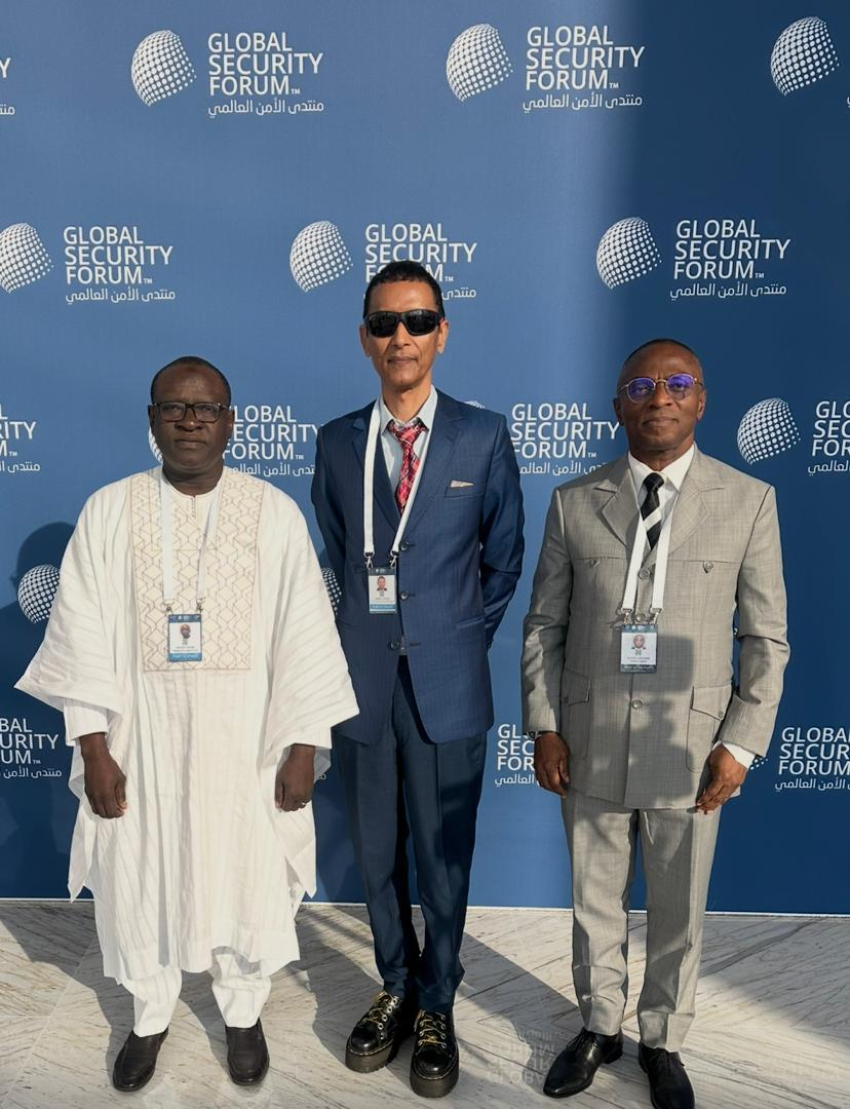



Sacré-Coeur 3 – BP 15177 CP 10700 Dakar Fann – SENEGAL.
+221 33 827 34 91 / +221 77 637 73 15
contact@timbuktu-institute.org


Sacré-Coeur 3 – BP 15177 CP 10700 Dakar Fann – SENEGAL. +221 33 827 34 91 / +221 77 637 73 15
contact@timbuktu-institute.org
Timbuktu Institute 23 Octobre 2026
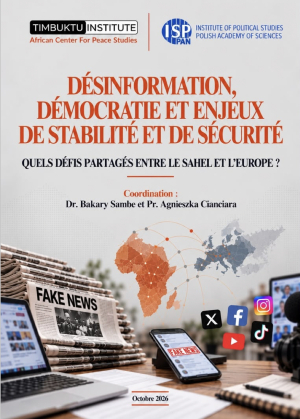
À l’échelle du globe, la désinformation s’impose aujourd’hui comme une épreuve majeure pour les démocraties, dont elle fragilise les institutions, éprouve la cohésion sociale et altère les conditions du débat public. Le rapport du Timbuktu Institute et de l’Institut d’études politiques de l’Académie polonaise des sciences met en lumière les ressorts d’une menace qui puise dans les fractures sociales, la défiance politique et les rivalités géopolitiques. Il apparaît en ce sens que l’enjeu dépasse la seule circulation de fausses informations, en ceci qu’il touche à la confiance des citoyens et à leur capacité à distinguer les faits des récits destinés à infléchir leurs perceptions et représentations.
Au Sahel, la dégradation sécuritaire, les transitions politiques, les discours souverainistes ou populistes et les stratégies de puissance et d’influence constituent autant de terrains propices aux opérations de manipulation. En Europe, celles-ci exploitent les inquiétudes sociales, les tensions autour de l’immigration et la défiance envers les institutions nationales et européennes. Si leurs manifestations diffèrent, ces dynamiques obéissent à une logique commune : les opérations informationnelles trouvent leur force dans des mécontentements ou imaginaires préexistants, qu’elles amplifient et réorientent au service d’intérêts politiques ou géopolitiques.
Cette convergence invite à dépasser une lecture strictement technique de la désinformation. La circulation des contenus trompeurs ne suffit pas, à elle seule, à expliquer leur influence. En effet, celle-ci dépend aussi des relais locaux qui les diffusent, des vulnérabilités qu’ils mobilisent et de la crédibilité qu’ils acquièrent auprès des populations. Dès lors, les réponses exclusivement répressives risquent de manquer leur cible, voire d’affaiblir les libertés qu’elles prétendent défendre. La lutte contre les manipulations informationnelles suppose donc de renforcer les capacités de prévention sans restreindre indûment le pluralisme du débat public.
Le présent rapport préconise, dans cette perspective, une coopération plus étroite entre l’Europe et l’Afrique, fondée sur le partage de l’information, le renforcement des mécanismes de veille et d’alerte, la coordination avec les plateformes numériques et le soutien aux médias indépendants. L’éducation aux médias, la vérification des faits et la protection des libertés fondamentales constituent également des leviers essentiels. Il est indispensable de consolider les institutions et la société civile sans lesquelles aucune lutte contre la désinformation ne saurait durablement prospérer. À cette nécessité doit répondre une exigence plus fondamentale, celle de faire de la résilience informationnelle l’un des piliers de la résilience démocratique.
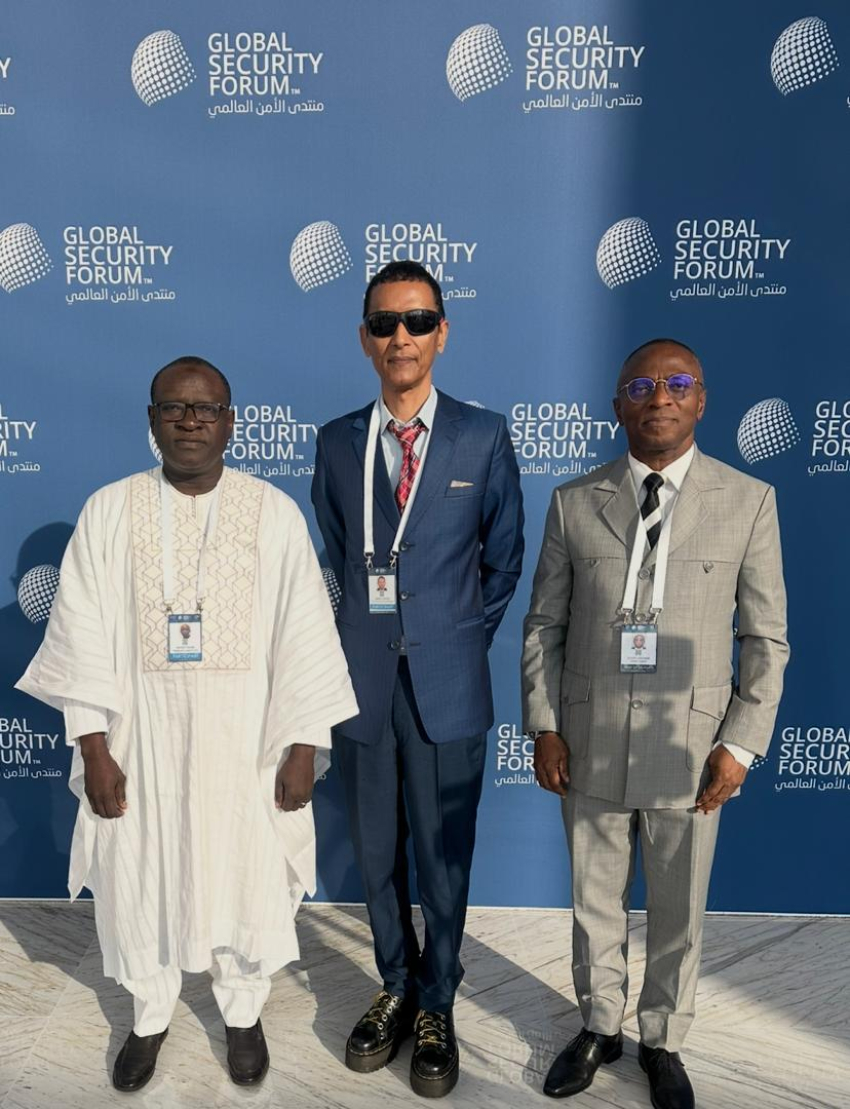
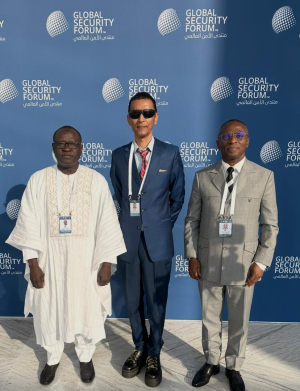
From October 19 to 21, 2026, Doha is hosting the 8th edition of the Global Security Forum, organized by The Soufan Center and the Qatar International Academy for Security Studies (QIASS). Amid delegations from more than 100 countries, West Africa is represented by two leading institutions. The Timbuktu Institute – African Center for Peace Studies is represented by its founding president, Dr. Bakary Sambe. The International Academy for Combating Terrorism (AILCT) in Jacqueville is represented by its Director General, General Allah Kouamé Joseph, accompanied by counter-terrorism expert Nasser Ould El Yassa, associate researcher at the AILCT. Their presence is a reminder of an obvious truth: there can be no discussion of the future of collective security without hearing from those who, day in and day out, grapple with the Sahelian crisis and its spread toward the coastal states.
“The Future of Alliances” as Seen from the Sahel
Opened on October 19 by Qatar's Prime Minister and Minister of Foreign Affairs, Sheikh Mohammed bin Abdulrahman Al-Thani, this year's Global Security Forum brings together senior officials, military officers, diplomats and researchers from more than 100 countries. Their working theme, “The Future of Alliances,” is closely in step with world events. The organizers intend to examine alliances that are “tested, reconfigured and sometimes profoundly rethought.” The context lends itself to this: international institutions are faltering, emerging powers and non-state actors are gaining influence, and mediation is once again becoming a central instrument of security.
For West Africa, this theme is anything but abstract. Few regions are experiencing the reshaping of alliances as intensely. Since the effective withdrawal of Mali, Burkina Faso and Niger from ECOWAS in January 2025, two regional architectures have coexisted, each with its own collective force facing the same armed groups. The departure of Western forces, the arrival of new security partners and the accompanying war of narratives have turned the Sahel into a veritable laboratory of what the Doha forum seeks to understand. It is against this backdrop that the presence of a West African delegation takes on its full significance.
Two Institutions, One Reading of the Threat
This delegation brings together two complementary profiles: independent peace research and institutional counter-terrorism expertise. Dr. Bakary Sambe, founding president of the Timbuktu Institute and coordinator of the FOWARD observatory, has established himself as one of the most widely heeded voices on the Sahel and religious radicalization. He has long advocated responses that go beyond a purely military logic. General Allah Kouamé Joseph heads the International Academy for Combating Terrorism, an institution designed, in his own words, “to grasp the terrorist threat in all its forms.” He is accompanied by Nasser Ould El Yessa, a recognized counter-terrorism expert and associate researcher at the AILCT. The latter has notably worked on radicalization in prisons in West Africa, one of the blind spots of prevention policies.
What brings these three experts together goes beyond the complementarity of their backgrounds. They share the same reading of the threat: terrorism in West Africa cannot be understood without knowledge of the ground, nor fought without the people.
Jacqueville, a Hub for Regional Strategic Thinking
The AILCT was born of a painful lesson. Its creation was decided by Côte d'Ivoire and France in the aftermath of the Grand-Bassam attack of March 13, 2016. It was inaugurated in June 2021 in Jacqueville, some sixty kilometers from Abidjan. The academy brings together three components. A training division welcomes senior civil servants. An operational division trains specialized units. Finally, an Institute for Strategic Research produces applied knowledge in support of public decision-making.
It is this last pillar that makes the AILCT far more than a training center. In May 2025, for instance, its research institute presented work on radicalization in prisons, on the links between violent extremism and refugee flows in northern Côte d'Ivoire, and on female jihadism in the Sahelian border areas. Its international standing confirms this status as a hub. In addition to its two founders, the academy has eleven active members, including Germany, the United States, Canada, Italy and the European Union. ECOWAS and the African Union sit on it as permanent associate members.
This influence extends that of Côte d'Ivoire itself. Exposed to jihadist pressure on its northern border, the country has combined investment in intelligence, a security presence and social programs. It has thus established itself as an anchor point for regional strategic thinking, at the junction of the Sahel and the Gulf of Guinea.
The Timbuktu Institute: Ten Years of a Bottom-Up Approach
The Timbuktu Institute – African Center for Peace Studies celebrated its tenth anniversary in February 2026 with a regional seminar on the transformations of terrorism in West Africa. Its line has not changed: Sahelian jihadism is increasingly homegrown, fueled by local grievances, and a military response alone cannot suffice. “No one has ever seen a Kalashnikov kill an ideology,” Dr. Sambe summed up at the time.
This conviction took concrete form in July with the launch of the Fragility Observatory for West and Central Africa (FOWARD). The observatory continuously monitors fragility factors, whether sociopolitical, religious, economic, climate-related or gender-related. It relies on a network of researchers and field correspondents to detect weak signals before they turn into crises. It publishes near-real-time monitoring reports, policy briefs and an annual report, and is developing a West African fragility index. Its first report, devoted to Guinea, shows how the Simandou mining boom “reshapes rather than resolves” the country's structural fragilities.
The Institute complements this monitoring with perception surveys. A pilot study of more than 1,100 people in Côte d'Ivoire, Niger, Senegal and Togo measures the growing distrust of populations toward external security partners. The Institute also brings its analyses to major international forums. In June, at the World Bank's Fragility Forum in Washington, it advocated “sustained, differentiated, adaptive engagement” in the Sahel and the Gulf of Guinea. On October 15, it delivered a similar message at the Rome Humanitarian Congress. Finally, it was among the first voices to consistently call for a formal dialogue between ECOWAS and the Alliance of Sahel States (AES), whose first ministerial meeting was held in Dakar on October 17.
What West Africa Brings to the Doha Debate
The presence of these two institutions in Doha addresses specific challenges. The first is the spread of the threat toward the coastal states. Armed groups from the central Sahel are exerting growing pressure on northern Benin, Togo, Ghana and Côte d'Ivoire. Dr. Lassina Diarra, director of the AILCT's Institute for Strategic Research, even speaks of a “Sahelization” of the Gulf of Guinea. For Abidjan, this is not a theoretical scenario but a reality to be contained.
The second challenge stems from the fragmentation of security architectures. The coexistence of ECOWAS and the AES Confederation makes it necessary to build, beyond political differences, interoperability between forces and intelligence sharing. Without these, no cross-border response can be effective, and the dialogue opened in Dakar is only the first step. Added to this is the geopolitical and informational competition that followed the departure of Western partners, which lies at the very heart of the Doha debates on the future of alliances.
The final challenge, perhaps the most decisive, concerns root causes. The joint study conducted by the Timbuktu Institute and the AILCT shows that poverty and unemployment are cited by 97% of respondents as the main gateway to jihadist recruitment. Collective security therefore cannot be reduced to its military dimension. This is where the West African contribution becomes irreplaceable: these institutions bring to major forums what they often struggle to grasp — a fine-grained knowledge of local dynamics, data drawn from the field, and the experience of frontline countries.
A Partnership Built on the Ground
The joint presence in Doha crowns a rapprochement under way for more than a year and a half. In March 2025, the AILCT leadership, accompanied by a large delegation, paid a working visit to the Timbuktu Institute in Dakar. There, the two institutions identified training, strategic research and threat analysis as areas of cooperation, and Dr. Sambe was already advocating “a bottom-up approach” grounded in listening to local populations. In February 2026, Dr. Lassina Diarra, director of the IRS (Institute for Strategic Research), spoke at the seminar launching the scientific activities of the 10th Anniversary of the Timbuktu Institute, alongside its president, Dr. Bakary Sambe.
This collaboration found its most complete expression in a joint study on young people and terrorist recruitment in Ménaka, Mali, and Diffa, Niger. Conducted from January to April 2026 under the scientific coordination of Dr. Sambe, it was presented in Jacqueville by the AILCT's research institute, then published in August. Its conclusions are unequivocal: awareness campaigns “disconnected from any economic support do not work,” any more than vocational training without job prospects. The study recommends making youth employment the top priority and funding programs over a minimum of three to five years, with the involvement of local communities.
The prospects now opening up match the scale of this convergence. FOWARD's data could feed more directly into the AILCT's training programs and doctrinal thinking, so that early warning translates into public action. Joint research is set to expand to coastal states, border areas and prisons, where the future of the threat is being played out. Finally, Doha offers an opportunity to build ties with Gulf actors, starting with Qatar, whose mediation diplomacy is making it an increasingly present interlocutor in Africa.
The two institutions share a conviction that Dr. Sambe expressed as early as 2025: “terrorism has made us countries that now share vulnerability in the face of a global evil.” In Doha, then, West Africa has not come merely to listen to the debates on the future of alliances. It has come to remind everyone that tomorrow's alliances will also be built on its knowledge, its institutions and its experience on the ground.
Doha, le 19 octobre 2026
Du 19 au 21 octobre 2026, Doha accueille la 8e édition du Global Security Forum, organisée par The Soufan Center et la Qatar International Academy for Security Studies (QIASS). Au milieu de délégations venues de plus de 100 pays, l'Afrique de l'Ouest y est représentée par deux institutions de référence. Le Timbuktu Institute – African Center for Peace Studies est représenté par son président-fondateur, le Dr Bakary Sambe. L'Académie internationale de lutte contre le terrorisme (AILCT) de Jacqueville est représentée par son directeur général, le Général Allah Kouamé Joseph, accompagné de l'expert international en contre-terrorisme Nasser Ould El Yassa, chercheur associé à l'AILCT. Leur présence rappelle une évidence : on ne peut parler de l'avenir de la sécurité collective sans entendre ceux qui pensent, au quotidien, la crise sahélienne et sa progression vers les pays côtiers.
« L'avenir des alliances » vu depuis le Sahel
Ouvert le 19 octobre par le Premier ministre et ministre des Affaires étrangères du Qatar, Cheikh Mohammed bin Abdulrahman Al-Thani, le Global Security Forum réunit cette année de hauts responsables, des militaires, des diplomates et des chercheurs venus de plus de 100 pays. Leur thème de travail, « The Future of Alliances », colle à l'actualité mondiale. Les organisateurs entendent examiner des alliances « mises à l'épreuve, reconfigurées et parfois profondément repensées ». Le contexte s'y prête : les institutions internationales vacillent, les puissances émergentes et les acteurs non étatiques gagnent en influence, et la médiation redevient un instrument central de la sécurité.
Pour l'Afrique de l'Ouest, ce thème n'a rien d'abstrait. Peu de régions vivent aussi intensément la recomposition des alliances. Depuis le retrait effectif du Mali, du Burkina Faso et du Niger de la CEDEAO en janvier 2025, deux architectures régionales coexistent, chacune dotée de sa propre force collective face aux mêmes groupes armés. Le départ des forces occidentales, l'arrivée de nouveaux partenaires sécuritaires et la guerre des récits qui l'accompagne ont fait du Sahel un véritable laboratoire de ce que le forum de Doha cherche à comprendre. C'est dans ce contexte que la présence d'une délégation ouest-africaine prend tout son sens.
Deux institutions, une même lecture de la menace
Cette délégation associe deux profils complémentaires : la recherche indépendante sur la paix et l'expertise institutionnelle en contre-terrorisme. Dr Bakary Sambe, président-fondateur du Timbuktu Institute et coordonnateur de l'observatoire FOWARD, s'est imposé comme l'une des voix les plus écoutées sur le Sahel et les radicalisations religieuses. Il plaide de longue date pour des réponses qui dépassent la seule logique militaire. Le Général Allah Kouamé Joseph dirige l'Académie internationale de lutte contre le terrorisme, une institution conçue, selon ses propres mots, « pour cerner la menace terroriste sous toutes ses formes ». Il est accompagné de Nasser Ould El Yessa, expert, reconnu, en contre-terrorisme et chercheur associé à l'AILCT. Ce dernier a notamment travaillé sur la radicalisation en milieu carcéral en Afrique de l'Ouest, l'un des angles morts des politiques de prévention.
Ce qui rapproche ces trois experts dépasse la complémentarité de leurs parcours. Ils partagent une même lecture de la menace : le terrorisme en Afrique de l'Ouest ne se comprend pas sans le terrain et ne se combat pas sans les populations.
Jacqueville, pôle de la réflexion stratégique régionale
L'AILCT est née d'une leçon douloureuse. Sa création a été décidée par la Côte d'Ivoire et la France au lendemain de l'attentat de Grand-Bassam du 13 mars 2016. Elle a été inaugurée en juin 2021 à Jacqueville, à une soixantaine de kilomètres d'Abidjan. L'académie réunit trois composantes. Un pôle de formation accueille les cadres des administrations. Un pôle opérationnel entraîne les unités spécialisées. Un Institut de recherche stratégique, enfin, produit un savoir appliqué au service de la décision publique.
C'est ce dernier pilier qui fait de l'AILCT bien plus qu'un centre d'entraînement. En mai 2025, son institut de recherche présentait ainsi des travaux sur la radicalisation en prison, sur les liens entre extrémisme violent et flux de réfugiés dans le nord ivoirien, et sur le djihadisme féminin dans les zones frontalières sahéliennes. Son assise internationale confirme ce statut de hub. Outre ses deux fondateurs, l'académie compte onze membres actifs, parmi lesquels l'Allemagne, les États-Unis, le Canada, l'Italie et l'Union européenne. La CEDEAO et l'Union africaine y siègent comme membres associés permanents.
Ce rayonnement prolonge celui de la Côte d'Ivoire elle-même. Exposé à la pression jihadiste sur sa frontière nord, le pays a conjugué investissement dans le renseignement, présence sécuritaire et programmes sociaux. Il s'est ainsi imposé comme un point d'ancrage de la réflexion stratégique régionale, à la charnière du Sahel et du golfe de Guinée.
Le Timbuktu Institute, dix ans d'une approche par le bas
Le Timbuktu Institute – African Center for Peace Studies a célébré ses dix ans en février 2026 par un séminaire régional consacré aux transformations du terrorisme en Afrique de l'Ouest. Sa ligne n'a pas varié : le jihadisme sahélien est de plus en plus endogène, nourri par des griefs locaux, et la réponse militaire ne saurait suffire. « On n'a jamais vu une kalachnikov tuer une idéologie », résumait alors le Dr Sambe.
Cette conviction s'est traduite en juillet par le lancement du Fragility Observatory for West and Central Africa (FOWARD). L'observatoire assure une veille continue des facteurs de fragilité, qu'ils soient sociopolitiques, religieux, économiques, climatiques ou liés au genre. Il s'appuie sur un réseau de chercheurs et de correspondants de terrain pour détecter les signaux faibles avant qu'ils ne deviennent des crises. Il publie des rapports de suivi en quasi temps réel, des notes d'orientation et un rapport annuel, et développe un indice de fragilité ouest-africain. Son premier rapport, consacré à la Guinée, montre comment le boom minier de Simandou « recompose plutôt qu'il ne résout » les fragilités structurelles du pays.
L'Institut complète cette veille par des enquêtes de perception. Une étude pilote menée auprès de plus de 1 100 personnes en Côte d'Ivoire, au Niger, au Sénégal et au Togo mesure ainsi la défiance croissante des populations envers les partenaires sécuritaires extérieurs. Il porte aussi ses analyses dans les grandes enceintes internationales. En juin, au Fragility Forum de la Banque mondiale à Washington, il a défendu « un engagement soutenu, différencié, adaptatif » au Sahel et dans le golfe de Guinée. Le 15 octobre, il portait un message proche au Rome Humanitarian Congress. Il figure enfin parmi les premières voix qui ont constamment appelé à un dialogue formel entre la CEDEAO et l'AES, dont la première réunion ministérielle s'est tenue à Dakar le 17 octobre.
Ce que l'Afrique de l'Ouest apporte au débat de Doha
La présence de ces deux institutions à Doha répond à des enjeux précis. Le premier est l'extension de la menace vers les pays côtiers. Les groupes armés du Sahel central exercent une pression croissante sur le nord du Bénin, du Togo, du Ghana et de la Côte d'Ivoire. Le Dr Lassina Diarra, directeur de l'Institut de recherche stratégique de l'AILCT, parle même d'une « sahélisation du golfe de Guinée ». Pour Abidjan, ce n'est pas une hypothèse d'école mais une réalité à contenir.
Le deuxième enjeu tient à la fragmentation des architectures sécuritaires. La coexistence de la CEDEAO et de la Confédération AES impose de construire, au-delà des divergences politiques, l'interopérabilité des forces et le partage du renseignement. Sans eux, aucune riposte transfrontalière n'est efficace, et le dialogue ouvert à Dakar n'en est que la première étape. S'y ajoute la concurrence géopolitique et informationnelle qui a suivi le départ des partenaires occidentaux, au cœur même des débats de Doha sur l'avenir des alliances.
Le dernier enjeu, peut-être le plus décisif, concerne les causes profondes. L'étude conjointe menée par le Timbuktu Institute et l'AILCT montre que la pauvreté et le chômage sont cités par 97 % des personnes interrogées comme la première porte d'entrée vers le recrutement jihadiste. La sécurité collective ne peut donc se réduire à sa dimension militaire. C'est là que l'apport ouest-africain devient irremplaçable : ces institutions apportent aux grands forums ce qu'ils peinent souvent à saisir, la connaissance fine des dynamiques locales, des données issues du terrain et l'expérience de pays en première ligne.
Un partenariat construit sur le terrain
La présence conjointe à Doha couronne un rapprochement engagé depuis plus d'un an et demi. En mars 2025, les dirigeants de l'AILCT accompagnés d’une forte délégation effectuaient une visite de travail au Timbuktu Institute à Dakar. Les deux institutions y identifiaient la formation, la recherche stratégique et l'analyse des menaces comme axes de coopération, et Dr Sambe défendait déjà « une approche par le bas », fondée sur l'écoute des populations locales. En février 2026, le Dr Lassina Diarra, directeur de l’IRS (Institut de recherches stratégiques) intervenait au séminaire de lancement des activités scientifiques du 10e Anniversaire du Timbuktu Institute, aux côtés de son président, Dr. Bakary Sambe.
Cette collaboration a trouvé sa traduction la plus aboutie dans une étude conjointe sur les jeunes et le recrutement terroriste à Ménaka, au Mali, et à Diffa, au Niger. Menée de janvier à avril 2026 sous la coordination scientifique du Dr Sambe, elle a été restituée à Jacqueville par l'institut de recherche de l'AILCT, puis publiée en août. Ses conclusions sont sans appel : les campagnes de sensibilisation « déconnectées de tout appui économique ne fonctionnent pas », pas plus que les formations professionnelles sans débouchés. L'étude recommande de faire de l'emploi des jeunes la première priorité et de financer les programmes sur trois à cinq ans au minimum, en y associant les communautés.
Les perspectives qui s'ouvrent sont à la mesure de cette convergence. Les données de FOWARD pourraient nourrir plus directement les programmes de formation et la réflexion doctrinale de l'AILCT, afin que l'alerte précoce se traduise en action publique. Les recherches conjointes ont vocation à s'étendre aux pays côtiers, aux zones frontalières et au milieu carcéral, là où se joue l'avenir de la menace. Doha offre enfin l'occasion de tisser des liens avec les acteurs du Golfe, à commencer par le Qatar, dont la diplomatie de médiation fait un interlocuteur de plus en plus présent en Afrique.
Les deux institutions partagent une conviction que le Dr Sambe formulait dès 2025 : « le terrorisme a fait de nous des pays qui avons désormais la vulnérabilité en partage face à un mal global ». À Doha, l'Afrique de l'Ouest ne vient donc pas seulement écouter les débats sur l'avenir des alliances. Elle vient rappeler que les alliances de demain se construiront aussi à partir de ses savoirs, de ses institutions et de son expérience du terrain.
Since Mali, Burkina Faso and Niger formally withdrew in January 2025, West Africa has been living with two regional architectures that face each other with mistrust. The ministerial meeting held in Dakar on 17 October opens a new phase. Co-chaired by Senegal’s Cheikh Niang and Burkina Faso’s Karamoko Jean-Marie Traoré, it follows the Bamako consultations of May 2025. It provides for joint thematic working groups and sets an explicit goal: a cooperation framework agreement between ECOWAS and the AES Confederation. The issue is no longer reintegration or rupture, but cooperation between two entities that recognise each other. For Dr Bakary Sambe, founding president of the Timbuktu Institute – African Center for Peace Studies and coordinator of the Fragility Observatory for West and Central Africa (FOWARD), recently set up to produce alerts and analyses on political, security and diplomatic trends in the region, this is “a turning point in method more than in substance”. A Sahel specialist, he was among the first to call for dialogue between the two organisations. In this interview with the Senegalese national daily Le Soleil, he reviews the priority areas: interoperability of forces, intelligence sharing, free movement, trade corridors and monetary coordination. He also explains the bridging role Senegal can play now that it holds both the chairmanship of the Conference of Heads of State and the presidency of the Commission. In his view, faced with armed groups that exploit every gap in coordination, dialogue is no longer one diplomatic option among others: it is an imperative of collective security.
You have always called for formal dialogue between ECOWAS and the AES. As a high-level meeting between the two organisations has opened in Dakar, how do you analyse the launch of these formal consultations?
First of all, it is a moment of lucidity, and I sincerely welcome it, having always advocated not only for dialogue but also for a more assertive Senegalese role. Since Mali, Burkina Faso and Niger formally withdrew in January 2025, West Africa has been living with two regional architectures that regarded each other with mistrust. Neither a complete divorce nor a reconciliation took place; relations swung between residual confrontation and functional pragmatism. The ministerial meeting held in Dakar on 17 October moves this relationship from the realm of declarations to that of method.
The joint communiqué bears witness to this. The two delegations, led by Senegal’s Minister Cheikh Niang, Chair of the ECOWAS Council of Ministers, and by Burkina Faso’s Minister Karamoko Jean-Marie Traoré, Chair of the AES Ministerial Steering Committee, co-chaired the meeting. This co-chairmanship is no mere protocol detail: it establishes a relationship between equals and a politically formalised mutual recognition, which is the precondition for any serious negotiation.
Above all, there is a geographical truth that no one can ignore: none of our countries, whether a member of ECOWAS or of the AES, can move out of West Africa. We share the same borders, the same populations, the same trade corridors and, unfortunately, the same threats from armed groups that ignore borders. The security of one is inseparable from that of the other. Dialogue is therefore not one diplomatic option among others; it is an imperative of collective security.
Can this be seen as a real turning point in relations between the two organisations?
Yes, it is a turning point, but one of method more than of substance, and this must be said realistically. The substance, that is, the differences over the political legitimacy of the transitions, the security architecture or the monetary question, will not be resolved in a single meeting. The method, however, is genuinely changing.
Three elements lead me to speak of a turning point in the sense of an evolution. First, continuity: Dakar extends the consultations held in Bamako on 22 May 2025, which shows that a process now exists and no longer depends on circumstances alone. Second, institutionalisation, as the parties have decided to create joint thematic working groups whose findings will be submitted to the ministers before their next session. Finally, and most importantly, the objective is clearly named: a cooperation framework agreement between ECOWAS and the AES Confederation.
In other words, we are no longer talking about reintegration or a definitive break, but about cooperation between two entities that recognise each other. This is a major development. The most realistic path to stabilising the region is not a simple return to the status quo ante; it is differentiated and functional cooperation that secures our vital interdependencies without waiting for a comprehensive political settlement whose horizon remains uncertain.
For the AES Confederation, three imperatives should guide future negotiations: preserving the sovereignty of States, consolidating the Confederation and protecting the interests of the populations of the confederal space. Can these principles serve as a basis for negotiations between the two entities?
Absolutely, provided they are read as a starting point and not as rigid preconditions. These three imperatives are, moreover, not foreign to what the two parties signed in Dakar. The joint communiqué states that relations must be guided by good neighbourliness, respect for sovereignty, and the dignity and well-being of West African populations. Sovereignty and the interests of populations are therefore already common ground.
The most delicate point remains the consolidation of the AES. For a long time, the fundamental issue pitted the primacy of community law, defended by ECOWAS through its Protocol on Democracy and Good Governance, against the primacy of national sovereignty, claimed by the transitional authorities. By agreeing to negotiate a framework agreement with the Confederation as such, ECOWAS acknowledges an undeniable institutional reality. This paves the way for an association or partnership status, rather than a political reintegration that the AES countries consider irrevocably ruled out.
As for the third imperative, the protection of populations, it must take precedence over all the others. Traders, transporters, transhumant herders and cross-border families have no interest in institutional quarrels. Their daily lives depend on free movement, the transit of goods and the security of roads. If the two organisations take this imperative seriously, they will find enough points of convergence to move forward. We have clearly seen how a country like Senegal has been affected by the disruption of traffic caused by insecurity on the Dakar–Bamako corridor, which is vital for both States.
In your view, what are the main issues likely to have been discussed during these consultations, particularly in terms of security, the fight against terrorism, the free movement of people and goods, and economic cooperation?
The thematic working groups provided for in the communiqué should logically be organised around four priority areas.
First, security and the fight against terrorism. This is the most urgent issue. Today, two collective defence frameworks coexist in the same space where the same armed groups operate: the AES unified force, whose target strength has been set at 15,000 troops, and the ECOWAS standby force. This situation could become counterproductive in the face of a jihadist threat that ignores institutional borders. The aim is not to merge chains of command, but to get the military general staffs of both spaces to work together concretely on three fronts: the interoperability of their forces, so that neighbouring units can communicate and act in a coordinated manner on either side of a border; the pooling of certain assets, particularly air, logistics and surveillance capabilities, which States cannot always finance alone; and intelligence sharing, without which no cross-border operation can be effective. A joint committee of general staffs, with direct lines of communication, could provide the framework for this. The free movement of people and goods is a historic achievement of our region, now weakened: difficulties at borders, an ECOWAS motor insurance scheme that may no longer cover the AES space, and significant economic costs for the whole region. Mutual recognition of identity documents and passports, and the securing of commercial transit, can be the subject of specific agreements without waiting for a comprehensive political settlement.
Next, on the crucial issue of economic and financial cooperation, the model already exists: the AES countries take part in GIABA and the ECOWAS Bank for Investment and Development (EBID) as non-ECOWAS member countries. This logic can be extended to other technical areas such as customs, energy, health and statistics. It will also be necessary to preserve the corridors linking coastal ports to the Sahel, which are vital for both spaces that, in reality, form a single one. As for the monetary question, between the common currency project mentioned by the AES and ECOWAS’s Eco, technical consultation between central banks is essential to avoid uncontrolled monetary fragmentation, of which the populations most dependent on remittances would be the first victims.
To what extent can these consultations help bring ECOWAS and AES positions closer together in the face of the security and geopolitical challenges of the Sahel and West Africa?
They can make a decisive contribution, provided they become a permanent framework and not merely a series of disjointed meetings. The Senegalese chairmanship of ECOWAS could make this process smoother. The communiqué speaks of a “balanced, realistic” cooperation framework that preserves the interests of the peoples. These two words, balance and realism, are key. On the security front, the threat makes no distinction between an ECOWAS country and an AES country. Armed groups exploit precisely the gaps in coordination, the grey areas along borders and the mistrust between administrations and between intelligence services. Every time two neighbouring States stop talking to each other, armed groups gain ground. The pressure now being exerted on the northern regions of coastal countries shows that collective security is not a slogan. Yet the fight against terrorism requires a minimum of trust between countries that share the same space. You do not share sensitive intelligence, allow a neighbouring unit to pursue an armed group across your border, or pool resources with a partner you distrust. That is why the political dialogue opened in Dakar is the precondition for any military cooperation. By restoring this trust, it can enable general staffs to move from coexistence to coordination.
All the more so because, geopolitically, the risk is that our region becomes the arena for rivalries between external powers, with each bloc perceived as aligned with different partners. Direct dialogue between Africans, on African soil, is the best response to this instrumentalisation. This is also why the financing of our collective security must rely more on our own resources. Finally, from now on, bilateral crises must be prevented from contaminating the overall dialogue. Tensions between an AES country and a coastal country can undermine the necessary trust. A permanent format, involving the African Union and the diplomacies most committed to the rapprochement, would make it possible to defuse such crises before they block the entire process.
These formal consultations are starting at a time when Senegal holds both the current chairmanship of the Conference of Heads of State and the presidency of the Commission. What contribution could our country make so that these two entities can work together calmly?
First, President Bassirou Diomaye Faye’s initiative must be commended. By hosting this first ministerial meeting, he is restoring Senegal to the place that has always been its own: that of a country of dialogue and mediation, committed to African integration. The fact that both parties, ECOWAS and AES alike, chose to express in their communiqué their deep gratitude to President Faye, the government and the Senegalese people for their hospitality and their constant commitment to integration is telling. Dakar is now seen as a credible interlocutor by both sides. This credibility has deep roots. Senegal has always favoured dialogue and regional solidarity, including in times of tension. It shares a long border and centuries-old human, commercial and cultural ties with Mali. The port of Dakar and the Dakar–Bamako corridor make it a natural partner of the Sahel. Our country therefore has no interest in confrontation, and every interest in the stability of its neighbourhood.
In this context of Senegalese chairmanship, I see three possible contributions from our country. First, bridge-building diplomacy. Within ECOWAS, Senegal can champion an approach based on mutual respect and pragmatism, while reassuring the AES countries that cooperation will not be conditional on demands they consider unacceptable. Second, an inclusive and sustained method. Here, the aim is to ensure that the thematic working groups meet quickly and produce concrete results, so that the next ministerial session can mark real progress towards the framework agreement. Finally, priority should be given to populations. Free movement, commercial transit and border security cooperation are the issues on which visible results can quickly restore trust. On the security side, Senegal can in particular encourage regular meetings between the chiefs of staff of both spaces, devoted to interoperability, the pooling of resources and intelligence sharing.
Ultimately, the message that Senegal can and must above all convey is simple: ECOWAS or AES, we are bound to live together, because none of our countries will move out of West Africa. The only question is whether we will face our common challenges together, or separately, to the benefit of those who thrive on our divisions.
Depuis le retrait effectif du Mali, du Burkina Faso et du Niger en janvier 2025, l’Afrique de l’Ouest vit avec deux architectures régionales qui se font face avec méfiance. La réunion ministérielle tenue le 17 octobre à Dakar ouvre une autre séquence. Coprésidée par le Sénégalais Cheikh Niang et le Burkinabè Karamoko Jean-Marie Traoré, elle fait suite aux consultations de Bamako de mai 2025. Elle prévoit des groupes de travail thématiques conjoints et fixe un objectif explicite : un accord-cadre de coopération entre la CEDEAO et la Confédération AES. Il ne s’agit plus de réintégration ni de rupture, mais d’une coopération entre deux entités qui se reconnaissent mutuellement. Pour Dr Bakary Sambe, président-fondateur du Timbuktu Institute – African Center for Peace Studies et coordonnateur du Fragility Observatory for West and Central Africa (FOWARD), récemment mis en place pour produire alertes et analyses sur les tendances politico-sécuritaires et diplomatiques dans la région, c’est « un tournant de méthode plus que de fond ». Ce spécialiste du Sahel figure parmi ceux qui ont appelé très tôt au dialogue entre les deux organisations. Dans cet entretien, accordé au Quotidien national sénégalais, Le Soleil, il passe en revue les chantiers prioritaires : l’interopérabilité des forces, le partage du renseignement, la libre circulation, les corridors commerciaux et la concertation monétaire. Il détaille aussi le rôle de passerelle que le Sénégal peut jouer, maintenant qu’il assure la présidence de la Conférence des chefs d’État et celle de la Commission. Selon lui, face à des groupes armés qui exploitent chaque faille de coordination, dialoguer n’est plus une option diplomatique parmi d’autres : c’est un impératif de sécurité collective.
Vous avez toujours appelé à des dialogues formels entre la CEDEAO et l’AES. Alors qu’il s’est s’ouverte à Dakar une rencontre de haut niveau entre les deux organisations, comment analysez-vous l’ouverture de ces consultations formelles ?
C’est tout d’abord un moment de lucidité, et je m’en réjouis sincèrement pour avoir toujours plaidé non seulement pour le dialogue mais pour un rôle sénégalais plus affirmé. Depuis le retrait effectif du Mali, du Burkina Faso et du Niger en janvier 2025, l’Afrique de l’Ouest vit avec deux architectures régionales qui se regardaient avec méfiance. Ni le divorce total ni la réconciliation ne se sont produits ; on oscillait entre confrontation résiduelle et pragmatisme fonctionnel. La réunion ministérielle du 17 octobre à Dakar fait passer cette relation du registre des déclarations à celui de la méthode.
Le communiqué conjoint en témoigne. Les deux délégations, conduites par le ministre sénégalais Cheikh Niang, président du Conseil des ministres de la CEDEAO, et par le ministre burkinabè Karamoko Jean-Marie Traoré, président du Comité ministériel de pilotage de l’AES, ont coprésidé la rencontre. Cette coprésidence n’est pas un détail protocolaire : elle consacre une relation d’égal à égal, d’une reconnaissance mutuelle politiquement actée, condition de toute négociation sérieuse.
Surtout, il y a une vérité géographique que personne ne peut ignorer : aucun de nos pays, qu’il soit membre de la CEDEAO ou de l’AES, ne pourra déménager de l’Afrique de l’Ouest. Nous partageons les mêmes frontières, les mêmes populations, les mêmes corridors commerciaux et, malheureusement, les mêmes menaces par des groupes armés ignorant les frontières. La sécurité de l’un est indissociable de celle de l’autre. Dialoguer n’est donc pas une option diplomatique parmi d’autres ; c’est un impératif de sécurité collective.
Peut-on y voir un véritable tournant dans les relations entre les deux organisations ?
Oui, c’est un tournant, mais un tournant de méthode plus que de fond, et il faut le dire avec réalisme. Le fond, c’est-à-dire les divergences sur la légitimité politique des transitions, l’architecture sécuritaire ou la question monétaire, ne se réglera pas en une réunion. En revanche, la méthode change réellement.
Trois éléments me font parler de tournant au sens d’une évolution. D’abord, la continuité : Dakar prolonge les consultations du 22 mai 2025 à Bamako, ce qui montre qu’un processus existe désormais et qu’il ne dépend plus des seules circonstances. Ensuite, l’institutionnalisation avec les parties décident de créer des groupes de travail thématiques conjoints, dont les résultats seront soumis aux ministres avant leur prochaine session. Enfin, et c’est le plus important, l’objectif est clairement nommé avec un accord-cadre de coopération entre la CEDEAO et la Confédération AES.
Autrement dit, on ne parle plus de réintégration ni de rupture définitive, mais de coopération entre deux entités qui se reconnaissent mutuellement. C’est une évolution majeure. La voie la plus réaliste pour stabiliser la région n’est pas un retour pur et simple au statu quo ante ; c’est une coopération différenciée et fonctionnelle, qui sécurise nos interdépendances vitales sans attendre un règlement politique global dont l’horizon reste incertain.
Pour la Confédération AES, trois impératifs devront orienter les futures négociations : la préservation de la souveraineté des États, la consolidation de la Confédération et la protection des intérêts des populations de l’espace confédéral. Ces bases peuvent-elles permettre des négociations entre les deux entités ?
Absolument, à condition de les lire comme un point de départ et non comme des préalables figés. Ces trois impératifs ne sont d’ailleurs pas étrangers à ce que les deux parties ont signé à Dakar. Le communiqué conjoint précise que les relations doivent être guidées par le bon voisinage, le respect de la souveraineté, la dignité et le bien-être des populations ouest-africaines. La souveraineté et l’intérêt des populations sont donc déjà un terrain commun.
Le point le plus délicat reste celui de la consolidation de l’AES. Pendant longtemps, la question de fond a opposé la primauté du droit communautaire, défendue par la CEDEAO à travers son protocole sur la démocratie et la bonne gouvernance, à la primauté de la souveraineté nationale, revendiquée par les autorités de transition. En acceptant de négocier un accord-cadre avec la Confédération en tant que telle, la CEDEAO prend acte d’une réalité institutionnelle indéniable. Cela ouvre la voie à un statut d’association ou de partenariat, plutôt qu’à une réintégration politique que les pays de l’AES jugent irrévocablement exclue.
Quant au troisième impératif, la protection des populations, c’est celui qui doit primer sur tous les autres. Les commerçants, les transporteurs, les éleveurs transhumants et les familles transfrontalières n’ont que faire des querelles institutionnelles. Leur quotidien dépend de la libre circulation, du transit des marchandises et de la sécurité des routes. Si les deux organisations prennent réellement cet impératif au sérieux, elles trouveront assez de points de convergence pour avancer. On voit bien comment un pays comme le Sénégal a pu être impacté par la perturbation de la circulation due à l’insécurité sur le corridor Dakar – Bamako vital pour les deux États.
Quels sont selon vous les principaux sujets qui étaient susceptibles d’être abordés lors de ces consultations, notamment en matière de sécurité, de lutte contre le terrorisme, de libre circulation des personnes et des biens, et de coopération économique ?
Les groupes de travail thématiques prévus par le communiqué devraient logiquement s’organiser autour de quatre chantiers.
Il y a d’abord, la sécurité et la lutte contre le terrorisme. C’est le sujet le plus urgent. Aujourd’hui coexistent deux cadres de défense collective dans un même espace où opèrent les mêmes groupes armés : la force unifiée de l’AES, dont l’objectif est porté à 15 000 hommes, et la force en attente de la CEDEAO. Cette situation peut devenir contre-productive face à une menace jihadiste qui ignore les frontières institutionnelles. Il ne s’agit pas de fusionner les chaînes de commandement, mais d’amener les états-majors militaires des deux espaces à travailler concrètement ensemble sur trois chantiers : l’interopérabilité de leurs forces, pour que des unités voisines puissent communiquer et agir de manière coordonnée de part et d’autre d’une frontière ; la mutualisation de certains moyens, notamment aériens, logistiques et de surveillance, que les États ne peuvent pas toujours financer seuls ; et le partage du renseignement, sans lequel aucune opération transfrontalière n’est efficace. Un comité mixte d’états-majors, avec des lignes de communication directes, pourrait en être le cadre. La libre circulation des personnes et des biens est un acquis historique de notre région, aujourd’hui fragilisé : difficultés aux frontières, assurance automobile CEDEAO qui ne couvrirait plus l’espace AES, coûts économiques importants pour toute la région. La reconnaissance mutuelle des documents d’identité et des passeports, et la sécurisation du transit commercial, peuvent faire l’objet d’accords spécifiques sans attendre un règlement politique global.
Ensuite, sur la question cruciale de la coopération économique et financière, le modèle existe déjà : les pays de l’AES participent au GIABA et à la BIDC avec un statut de pays non membres de la CEDEAO. On peut étendre cette logique à d’autres domaines techniques comme les douanes, l’énergie, la santé ou les statistiques. Il faudra aussi préserver les corridors qui relient les ports côtiers au Sahel et qui sont vitaux pour les deux espaces qui, en réalité, n’en font qu’un. Maintenant sur la question monétaire, entre le projet de monnaie commune évoqué par l’AES et l’Eco de la CEDEAO, une concertation technique entre banques centrales est indispensable pour éviter une fragmentation monétaire incontrôlée, dont les populations les plus dépendantes des transferts de fonds seraient les premières victimes.
Dans quelle mesure ces consultations peuvent-elles contribuer à rapprocher les positions de la CEDEAO et de l’AES face aux défis sécuritaires et géopolitiques du Sahel et de l’Afrique de l’Ouest ?
Elles peuvent y contribuer de manière décisive, à condition de devenir un cadre permanent et pas seulement une série de rencontres décousues. La présidence sénégalaise de la CEDEAO pourrait faciliter cette fluidité. Le communiqué parle d’un cadre de coopération « équilibré, réaliste » et qui préserve les intérêts des peuples. Ces deux mots, équilibre et réalisme, sont la clé. Sur le plan sécuritaire, la menace ne fait aucune distinction entre un pays de la CEDEAO et un pays de l’AES. Les groupes armés exploitent précisément les failles de coordination, les zones grises frontalières et la méfiance entre administrations et entre les services de renseignement. Chaque fois que deux États voisins cessent de se parler, les groupes gagnent du terrain. Les pressions qui s’exercent aujourd’hui sur le nord des pays côtiers montrent que la sécurité collective n’est pas un slogan. Or la lutte contre le terrorisme impose un minimum de confiance entre pays qui partagent le même espace. On ne partage pas un renseignement sensible, on ne laisse pas une unité voisine poursuivre un groupe armé au-delà de sa frontière, on ne mutualise pas des moyens avec un partenaire dont on se méfie. C’est pourquoi le dialogue politique ouvert à Dakar est la condition de toute coopération militaire. En rétablissant cette confiance, il peut permettre aux états-majors de passer de la coexistence à la coordination.
Surtout que sur le plan géopolitique, le risque est que notre région devienne le théâtre de rivalités entre puissances extérieures, chaque bloc étant perçu comme aligné sur des partenaires différents. Un dialogue direct entre Africains, sur le sol africain, est la meilleure réponse à cette instrumentalisation. C’est aussi pourquoi le financement de notre sécurité collective doit reposer davantage sur nos propres ressources. Il faudra enfin éviter, désormais, que les crises bilatérales ne contaminent le dialogue d’ensemble. Des tensions entre un pays de l’AES et un pays côtier peuvent fragiliser la confiance nécessaire. Un format permanent, associant l’Union africaine et les diplomaties les plus engagées dans le rapprochement, permettrait de désamorcer ces crises avant qu’elles ne bloquent tout le processus.
Ces consultations formelles démarrent au moment où le Sénégal assure à la fois la présidence en exercice de la Conférence des chefs d’État et celle de la Commission. Quelles touches notre pays pourrait-il apporter afin que ces deux entités puissent collaborer de façon sereine ?
Il faut d’abord saluer l’initiative du Président Bassirou Diomaye Faye. En accueillant cette première réunion ministérielle, il redonne au Sénégal la place qui a toujours été la sienne : celle d’un pays de dialogue et de médiation, attaché à l’intégration africaine. Le fait que les deux parties, CEDEAO comme AES, aient tenu à exprimer dans leur communiqué leur profonde gratitude au Président Faye, au gouvernement et au peuple sénégalais, pour leur hospitalité et leur engagement constant en faveur de l’intégration, est révélateur. Dakar est, désormais, perçu comme un interlocuteur crédible par les deux camps. Cette crédibilité vient de loin. Le Sénégal a toujours privilégié le dialogue et la solidarité régionale, y compris dans les moments de tension. Il partage une longue frontière et des liens humains, commerciaux et culturels séculaires avec le Mali. Le port de Dakar et le corridor Dakar-Bamako en font un partenaire naturel du Sahel. Notre pays n’a donc aucun intérêt à la confrontation, et tout intérêt à la stabilité de son voisinage.
Dans ce contexte de présidence sénégalaise, je vois trois touches possibles pour notre pays. D’abord, une diplomatie de passerelle. Le Sénégal peut porter, au sein de la CEDEAO, une approche fondée sur le respect mutuel et le pragmatisme, tout en rassurant les pays de l’AES sur le fait que la coopération ne sera pas conditionnée à des exigences qu’ils jugent inacceptables. Ensuite, une méthode inclusive et suivie. Là, il s’agit de veiller à ce que les groupes de travail thématiques se réunissent rapidement et produisent des résultats concrets, pour que la prochaine session ministérielle puisse marquer une avancée réelle vers l’accord-cadre. Enfin, la priorité devrait être donnée aux populations. Car la libre circulation, le transit commercial, la coopération sécuritaire aux frontières, ce sont là les dossiers sur lesquels des résultats visibles peuvent rapidement restaurer la confiance. Sur le volet sécuritaire, le Sénégal peut notamment encourager des rencontres régulières entre chefs d’état-major des deux espaces, consacrées à l’interopérabilité, à la mutualisation des moyens et au partage du renseignement.
Au fond, le message que le Sénégal peut et doit surtout porter est simple : CEDEAO ou AES, nous sommes condamnés à vivre ensemble, car aucun de nos pays ne déménagera de l’Afrique de l’Ouest. La seule question est de savoir si nous ferons face ensemble à nos défis communs, ou séparément, au profit de ceux qui prospèrent sur nos divisions.
Timbuktu Institute October 2026 - Week 1
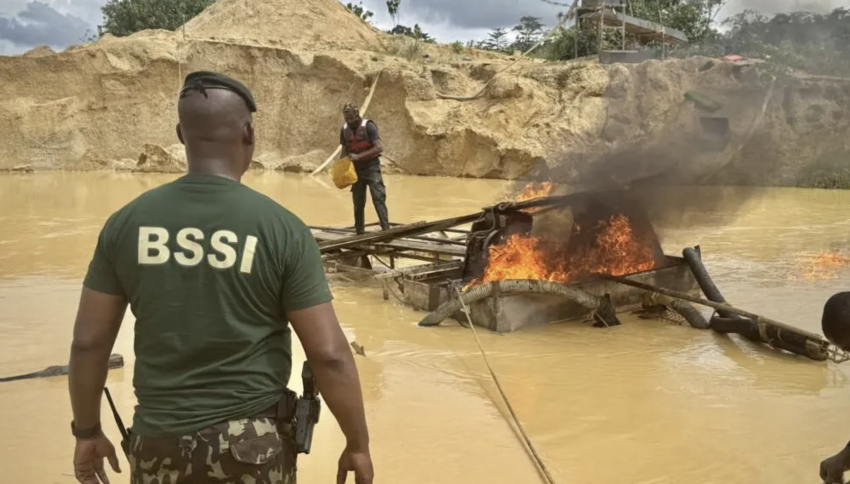
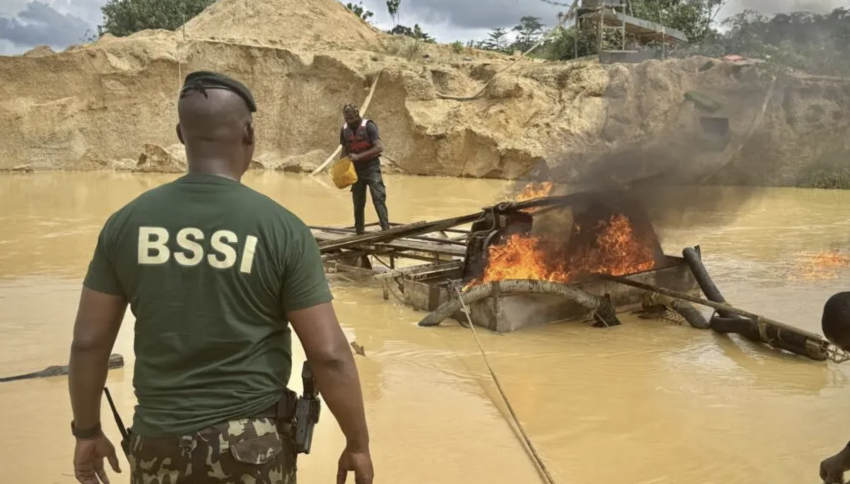
Gold panning remains one of the main issues in the country’s news. This time, there has been a decisive shift: the phenomenon is now considered a matter of national security. For the authorities, it is no longer just an economic offence but a national security issue. For Fidèle Sarassoro, Executive Secretary of the National Security Council, the fight against illegal gold mining is “a national security requirement”. Operations to dismantle clandestine sites are therefore continuing, and the State remains determined to eradicate them within six months.
Illegal gold mining raised to a national security issue
For Defence Minister Téné Birahima Ouattara, “the State of Côte d’Ivoire is determined to eradicate illegal gold mining throughout the national territory. Given the scale of this phenomenon, the Ivorian State is adopting a firm stance. This must be done in strict compliance with the law and the rights of the population.” He thus called on everyone to take responsibility in the face of this scourge, which is eating away at the economy and the environment. To this end, the security forces were provided with hundreds of vehicles on 30 September so that they can “conduct operations on land and on water”, “by day and by night”. Added to this is the toughening of penalties, notably through higher fines and longer prison sentences. As a reminder, the Special Group to Combat Illegal Gold Mining was created in 2021 with the aim of eradicating this phenomenon.
Côte d’Ivoire: open closeness with Conakry, cautious thaw with the Sahel
On the diplomatic front, Alassane Ouattara sent Robert Beugré Mambé to Guinea’s national day celebrations. The authorities issued a solemn appeal to Ivorian nationals to give their guest a warm welcome. A note published by the Embassy of Côte d’Ivoire in Guinea reads: “The Embassy invites all Ivorians in Conakry to turn out to give the Prime Minister a warm welcome on Friday 2 October 2026, from 7 a.m., at Ahmed Sékou Touré International Airport in Conakry.” The two countries have indeed enjoyed good diplomatic relations for several decades. This visit is likely to strengthen these historic ties of cooperation between Abidjan and Conakry. At every opportunity, General Mamadi Doumbouya presents Ouattara as his big brother, which reflects the strength of their relationship. As a reminder, a few weeks ago the Guinean president was at his Ivorian counterpart’s side for a working visit.
A diplomatic thaw tested by security and political differences
In addition, relations between Côte d’Ivoire and the Sahel were in the spotlight. In recent years, relations were far from good; they were marked by a climate of suspicion and recurring accusations of infiltration made by States such as Burkina Faso against Côte d’Ivoire. For some time now, however, a thaw seems to be under way. According to Jeune Afrique, their relations have recently strengthened, notably to develop cooperation and exchanges. This “détente” between Côte d’Ivoire and the AES above all reflects a pragmatism dictated by the need to contain cross-border security risks, without erasing political and strategic differences. It should be stressed that these countries are collectively weakened by growing insecurity. They would benefit from working together to better confront the terrorist threat. This rapprochement is therefore likely to reduce tensions in the short term, but its consolidation will depend on the actors’ ability to establish confidence-building mechanisms, notably on border security, economic cooperation and relations with regional organisations.
Timbuktu Institute Octobre 2026 - Semaine 1
La question de l’orpaillage reste l’une des principales actualités du pays. Cette fois-ci, il est à noter un tournant décisif : le phénomène est désormais considéré comme une question de sécurité nationale. Il ne s'agit plus seulement d'une infraction économique, mais d'un enjeu sécuritaire national pour les autorités. Pour Fidèle Sarassoro, secrétaire exécutif du Conseil national de sécurité, la lutte contre l'orpaillage illégal est « une exigence de sécurité nationale ». Ainsi, les opérations de démantèlement des sites clandestins se poursuivent et l’État reste déterminé à les éradiquer dans un délai de six mois.
L’orpaillage illégal érigé en enjeu de sécurité nationale
Pour le ministre de la Défense, Téné Birahima Ouattara, « l'État de Côte d'Ivoire est déterminé à éradiquer l'orpaillage illégal sur toute l’étendue du territoire national. Face à l'ampleur de ce phénomène, l'État ivoirien adopte une posture de fermeté. Cela doit se faire dans le strict respect de la loi et des droits des populations ». Il en appelle ainsi à la responsabilité de tous face à ce fléau qui gangrène l’économie et l'environnement. Pour ce faire, les forces de sécurité ont été dotées de centaines de véhicules le 30 septembre afin de pouvoir « mener des opérations sur terre comme sur l’eau », « de jour comme de nuit ». À cela s’ajoutent le durcissement des sanctions, notamment par le biais de l’augmentation des amendes et des peines d’emprisonnement. Pour rappel, le Groupement spécial de lutte contre l’orpaillage illégal a été créé en 2021 dans le but d'éradiquer ce phénomène.
Côte d’Ivoire : complicité affichée avec Conakry, dégel prudent avec le Sahel
Sur le plan diplomatique, Alassane Ouattara a dépêché Robert Beugré Mambé à la fête nationale de la Guinée. Les autorités ont lancé un appel solennel aux ressortissants ivoiriens pour qu'ils réservent un accueil chaleureux à leur hôte. Dans une note publiée par l’ambassade de Côte d’Ivoire en Guinée, on peut lire : « L'ambassade invite tous les Ivoiriens de Conakry à se mobiliser pour réserver au Premier ministre un accueil chaleureux, le vendredi 2 octobre 2026, à partir de 7 h, à l’aéroport international Ahmed Sékou Touré de Conakry. » Les deux pays entretiennent en effet de bonnes relations diplomatiques depuis plusieurs décennies. Cette visite est de nature à renforcer ces liens historiques de coopération entre Abidjan et Conakry. À chaque occasion, le général Mamadi Doumbouya présente Ouattara comme son grand frère, ce qui témoigne de la solidité de leurs relations. Pour rappel, il y a quelques semaines, le président guinéen était chez son homologue ivoirien dans le cadre d'une visite de travail.
Dégel diplomatique à l’épreuve des divergences sécuritaires et politiques
En outre, les relations entre la Côte d’Ivoire et le Sahel ont été au cœur de l’actualité. Ces dernières années, les rapports n'étaient pas au beau fixe ; ils étaient marqués par un climat de suspicion et des accusations récurrentes d'infiltration de la part d'États comme le Burkina Faso contre la Côte d’Ivoire. Depuis quelque temps, un dégel semble toutefois se produire. Selon Jeune Afrique, leurs relations se sont récemment renforcées, notamment pour développer la coopération et les échanges. Cette « détente » entre la Côte d’Ivoire et l’AES traduit surtout un pragmatisme dicté par la nécessité de contenir les risques sécuritaires transfrontaliers, sans pour autant effacer les divergences politiques et stratégiques. Il faut souligner que ces pays sont collectivement fragilisés par l’insécurité grandissante. Ils gagneraient à collaborer pour mieux faire face à la menace terroriste. Ainsi, ce rapprochement est de nature à réduire les tensions à court terme, mais sa consolidation dépendra de la capacité des acteurs à instaurer des mécanismes de confiance, notamment en matière de sécurité des frontières, de coopération économique et de relations avec les organisations régionales.
Timbuktu Institute October 2026 - Week 1
In Burkina Faso, the fourth anniversary of Captain Traoré’s rise to power was celebrated with great pomp by the nation. The “Night of the Popular Progressive Revolution” brought together thousands of residents on 30 September on the Place de la Résistance in Ouagadougou. Under the slogan “The people watch over the revolution”, the participants glorified the action of their leader, the man of 30 September 2022, throughout the festive evening. As a reminder, the current authorities took power in a particularly tense security context.
Between a claimed security record…
Over these years in power, they claim military successes, notably the recapture of a large part of the territory. For Prime Minister Rimtalba Jean Emmanuel Ouédraogo, “all these victories on the development front, in health, education, infrastructure, industry, food security, and so on – I am surely forgetting some. You can be proud of all these victories. Because if we have achieved all this, it is thanks to the commitment and the awakening of an entire people behind its visionary leader.” Nevertheless, civil society and international organisations point to restrictions on freedoms. In this regard, Burkinabe journalist Issouf Ouédraogo believes that this record “does not erase the current government’s difficulty in resolving crucial issues relating to the fight against corruption, freedom of expression and human rights violations”. For many observers, while major progress has indeed been made in terms of security and patriotic momentum, human rights must still be better guaranteed, particularly for politicians and journalists.
… and a civic space seen as shrinking
The record is therefore mixed. Civic space is shrinking ever further. In this regard, the Anti-Putschist Front has drawn up a list of 86 people “detained or abducted” since 2022. For them, “this is widespread repression. In practice, it is forbidden to have an opinion under this regime,” confirms one of the authors of the list, who wishes to remain anonymous. “Imagine that, for some, it was a simple comment on Facebook or WhatsApp that led to their abduction! The tragedy in this affair is that, as they have become widespread, these abductions and detentions have become commonplace…” The document entitled “Ibrahim Traoré’s disappeared” was published to shed light on, but also and above all to “denounce the authoritarianism of the junta in power in Ouagadougou and honour the memory of those who have been victims of its repression”. These accusations were brushed aside by the authorities, who continue to tout their economic and military successes.
Financial sovereignty in support of the war effort
Still in the context of the fight against terrorism, tangible results have been achieved on the ground. According to the Ministry of Economy, the Patriotic Support Fund mobilised more than 250 million CFA francs in just 9 months. The authorities published these encouraging figures for the period from 1 January to 29 September. It should be noted that this fund, created in 2023 to finance the fight against terrorism and the strengthening of national defence, is made up of, among other things, levies and taxes, levies on imported products, compulsory deductions from civil servants’ salaries, and levies on telephony and television, in order to ensure financial sovereignty. This is a Burkinabe strategy aimed at self-financing a large part of the country’s security. The supervising minister, Aboubakar Nacanabo, thanked the “valiant Burkinabe people” for all the efforts made. The fund mobilises citizens around the war in order to finance the army’s equipment and supplies.
The rise of a more specialised army in the face of the terrorist threat
Along the same lines, the authorities are stepping up the resources deployed in the fight against armed groups. On 30 September, 136 new specialist officers, trained in 29 different fields, joined the Burkinabe Armed Forces to strengthen their ranks. Graduates of the 16th class of the Georges-Namoano Military Academy, they will strengthen human and operational capacities against the insecurity that has affected the country for several years. The Chief of General Staff of the Armed Forces, Major General Moussa Diallo, who presided over the ceremony, congratulated the graduates and urged them to “remain committed to the values of honour, discipline and loyalty”. The Burkinabe authorities seem to understand that this war against terrorism requires specialists in every field: intelligence, cybersecurity, medicine, technology, and so on. Building an increasingly specialised army meets a security imperative.
Burkinabe gold: from extraction to processing, the new frontier of economic sovereignty
Mining sovereignty also made the news. The authorities are more determined than ever to ensure that gold returns to the people who own it. On 28 September, Captain Traoré announced a new stage in the nationalisation of the precious metal in Burkina Faso. At the inauguration of RAFFINOR-BF, the country’s first gold refinery, he declared that “from now on, Burkina Faso’s gold must not only be extracted in the country, it must also be processed, controlled, valorised and certified”. This is a notable step forward that requires not only political courage, but also enormous material, human and financial resources, as well as strategic partnerships. For the leader of the transition, gold must contribute to the country’s economic and social development by creating wealth and jobs. The authorities have understood that processing their resources elsewhere reduced their room for manoeuvre and slowed their progress towards sovereignty. Nationalisation also makes it possible to improve traceability and develop the country’s industrial skills. The initiative required an investment of CFA 11 billion, financed by the State through the National Company for Precious Substances of Burkina Faso (SONASP) and private partners. It already has a foundry, an analysis laboratory, a secure storage area and a jewellery unit. The remaining challenges are artisanal mining, which needs to be better regulated, as well as cross-border flows and the presence of armed groups in some mines.
Timbuktu Institute Octobre 2026 - Semaine 1
Au Burkina Faso, les quatre ans de l’arrivée au pouvoir du capitaine Traoré ont été célébrés en grande pompe par la nation. En effet, la « Nuit de la Révolution progressiste populaire » a réuni des milliers d’habitants le 30 septembre dernier sur la place de la Résistance à Ouagadougou. Sous le slogan « Le peuple veille sur la révolution », les manifestants ont magnifié l’action de leur leader, l’homme du 30 septembre 2022, pendant toute la soirée festive. Pour rappel, les autorités actuelles ont pris le pouvoir dans un contexte sécuritaire assez tendu.
Entre bilan sécuritaire revendiqué…
Durant ces années de règne, ils revendiquent des succès militaires, notamment avec la reconquête d’une grande partie du territoire. Pour le Premier ministre Rimtalba Jean Emmanuel Ouédraogo, « toutes ces victoires sur le front du développement, en matière de santé, d’éducation, d’infrastructures, d’industrie, de sécurité alimentaire, etc., c’est sûr que j’en oublie. Toutes ces victoires, vous pouvez en être fiers. Parce que si nous avons réussi tout cela, c’est grâce à l’engagement et au sursaut d’un peuple entier derrière son dirigeant visionnaire. » Néanmoins, des restrictions aux libertés sont notées de la part de la société civile et des organisations internationales. En ce sens, le journaliste burkinabè Issouf Ouédraogo estime que ce bilan « n'efface pas la difficulté du pouvoir actuel à résoudre des questions cruciales liées à la lutte contre la corruption, à la liberté d'expression et aux atteintes aux droits humains ». Pour beaucoup d’observateurs, s’il est vrai que de grandes avancées ont été notées en matière de sécurité et d'élan patriotique, il n’en demeure pas moins que les droits humains doivent davantage être garantis, notamment pour les hommes politiques et les journalistes.
… et un espace civique jugé rétréci
Il est à noter que le bilan est donc mitigé. L’espace civique se rétrécit de plus en plus. À ce propos, le Front anti-putschiste a dressé une liste de 86 personnes « séquestrées ou enlevées » depuis 2022. Pour eux, « il s'agit d'une répression généralisée ». Dans les faits, il est interdit d'avoir une opinion sous ce régime », confirme l'un des auteurs de cette liste qui souhaite rester anonyme. Imaginez que, pour certains, c'est un simple commentaire sur Facebook ou WhatsApp qui a conduit à leur enlèvement ! Le drame dans cette affaire, c'est qu'avec leur généralisation, ces enlèvements et ces séquestrations sont devenus banals… » Le document intitulé « Les disparus d'Ibrahim Traoré » a été publié pour mettre en lumière, mais aussi et surtout, « dénoncer l'autoritarisme de la junte au pouvoir à Ouagadougou et honorer la mémoire de celles et ceux qui ont été victimes de sa répression ». Des accusations balayées d’un revers de main par les autorités, qui continuent de vanter leurs succès dans les domaines économique et militaire.
La souveraineté financière au service de l’effort de guerre
Toujours dans le cadre de la lutte contre le terrorisme, des résultats probants ont été obtenus sur le terrain. Selon les services du ministère de l’Économie, le Fonds de soutien patriotique a mobilisé plus de 250 millions de FCFA en seulement 9 mois. Les autorités ont publié ces chiffres encourageants concernant la période du 1er janvier au 29 septembre. Il faut préciser que ce fonds, créé en 2023 pour financer la lutte contre le terrorisme et le renforcement de la défense nationale, est composé, entre autres, de prélèvements et de taxes, de prélèvements sur les produits importés, de retenues obligatoires sur les salaires des fonctionnaires, de prélèvements sur la téléphonie et la télévision, etc., afin d’assurer une souveraineté financière. Il s'agit d'une stratégie du Burkina Faso qui vise à financer lui-même une grande partie de sa sécurité. Le ministre de tutelle, Aboubakar Nacanabo, a tenu à remercier le « vaillant peuple burkinabè » pour tous les efforts consentis. En effet, ce fonds mobilise les citoyens autour de la guerre afin de financer les équipements et les approvisionnements de l’armée.
La montée en puissance d’une armée davantage spécialisée face à la menace terroriste
Dans la même perspective, les autorités intensifient les moyens déployés dans le cadre de la lutte contre les groupes armés. Le 30 septembre dernier, 136 nouveaux officiers spécialistes, formés dans 29 domaines différents, ont rejoint les Forces armées burkinabè pour renforcer leurs effectifs. Sortis de la 16ème promotion de l’Académie militaire Georges-Namoano, ces éléments viennent renforcer les capacités humaines et opérationnelles face à l’insécurité qui affecte le pays depuis plusieurs années. Le chef d’état-major général des armées, le général de division Moussa Diallo, qui est venu présider la cérémonie, a tenu à féliciter les récipiendaires et les a exhortés à « rester attachés aux valeurs d’honneur, de discipline et de loyauté ». Les autorités burkinabè semblent comprendre que cette guerre contre le terrorisme nécessite des spécialistes de tous les domaines : renseignement, cybersécurité, médecine, technologies, etc. La mise en place d’une armée de plus en plus spécialisée répond à un impératif sécuritaire.
Or burkinabè : de l’extraction à la transformation, le nouveau chantier de la souveraineté économique
Par ailleurs, la souveraineté minière a également fait l'actualité. Les autorités sont plus que jamais déterminées à faire en sorte que l’or revienne au peuple qui en est le propriétaire. Le 28 septembre, le capitaine Traoré a annoncé une nouvelle étape de la nationalisation du métal précieux au Burkina Faso. À l'occasion de l'inauguration de RAFFINOR-BF, la première raffinerie d’or du pays, il a affirmé que « désormais, l’or du Burkina Faso ne doit plus seulement être extrait dans le pays, il doit aussi être transformé, contrôlé, valorisé et certifié ». Il s'agit là d'une avancée notoire qui nécessite non seulement un courage politique, mais aussi la mise à disposition de moyens matériels, humains et financiers colossaux, ainsi que des partenariats stratégiques. Pour le leader de la transition, l’or doit participer au développement économique et social du pays en créant des richesses et des emplois. Les autorités ont compris que le fait de transformer leurs ressources ailleurs réduisait leur marge de manœuvre et freinait leur marche vers la souveraineté. De même, la nationalisation permet d’améliorer la traçabilité et de développer les compétences industrielles du pays. Cette initiative a nécessité un investissement de 11 milliards de FCFA, financé par l’État à travers la Société nationale des substances précieuses du Burkina Faso (SONASP) et des partenaires privés. Elle dispose déjà d'une fonderie, d'un laboratoire d'analyse, d'un espace sécurisé de stockage et d'une unité de bijouterie. Les défis restent l’exploitation artisanale, qu’il faut davantage encadrer, ainsi que les flux transfrontaliers et la présence de groupes armés dans certaines mines.
17 October 2026 · Dakaractu
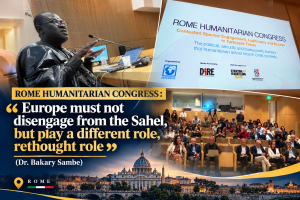
The Timbuktu Institute – African Center for Peace Studies carried the voice of the Sahel to the Rome Humanitarian Congress, held on 15 October 2026 at the Ara Pacis Museum in Rome. Organised by the Italian NGO INTERSOS on the theme “Contested Spaces: Engagement, Legitimacy and Access in Turbulent Times”, the event brought together humanitarian, diplomatic, academic and media actors to discuss the political, security and bureaucratic obstacles that hinder humanitarian action in crisis zones.
Director and Founder of the Timbuktu Institute, Dr Bakary Sambe spoke on the panel dedicated to “Humanitarian access and strategic engagement in the Sahel”. He was joined by Alda Cappelletti, Deputy Director General of INTERSOS, and Andrea Palamidessi, Head of the West and Central Africa Office at the Italian Ministry of Foreign Affairs and International Cooperation. The discussions of this high-level panel were moderated by Vincenzo Giardina, head of the international desk of the DIRE news agency.
Back from Rome, he speaks to Dakaractu about the role of humanitarians, who in his view have become “the last thread” between Europe and the Sahel, and about the need for a new vision of European engagement in the region.
Humanitarians: the last thread between Europe and the Sahel?
Dakaractu: You opened your remarks in Rome with the striking image of a humanitarian convoy. Why that choice?
Dr Bakary Sambe: Because that image says everything about the current situation. Take a humanitarian convoy between Gao and Ménaka, or on a dirt track in the Liptako-Gourma. There is no longer a European military operation, no longer a United Nations mission, and hardly any European ambassador left to talk to. In entire parts of the Sahel, that convoy is all that remains of Europe. It is the last thread. The question I asked in Rome is simple: are we going to let this last thread of solidarity break?
Dakaractu: In concrete terms, what do humanitarians represent for Sahelian populations today?
B. S : When embassies cut their staff, when cooperation agencies hesitate, when military missions pack up and cooperation programmes are suspended, who stays? Humanitarians. They are the ones still negotiating access, often with great courage and not without risk. They know the village chiefs, the women’s committees, the youth associations. For millions of Sahelians, they are, very concretely, the last human face of Europe. In the Sahel zone alone, there are more than 3 million internally displaced people, and behind that figure are their teams, working hard despite shrinking resources and the ostracism of regimes that are hostile to them.
Dakaractu: Should they, then, be entrusted with the relationship between Europe and the Sahel?
B. S : Absolutely not. That was not what I meant. I always tell European decision-makers: you cannot ask humanitarians to carry the weight of the political relationship between Europe and the Sahel on their own. They must not become diplomatic instruments. Their neutrality is one of the few guarantees of their protection in a political and security context marked above all by suspicion. If you use them as tools, you expose them, and then you lose them.
What is needed is to support them more: fund them over the long term, not according to the rhythm of media attention, which often determines the priorities of donors; protect them politically; and preserve humanitarian space. At a time when aid budgets are shrinking across much of the Western world, cutting this last link would be a historic mistake. It would be telling Sahelians: you no longer exist for us.
Dakaractu: You also directly addressed humanitarian organisations such as INTERSOS. What role do you expect NGOs to play beyond emergency response?
B. S : In my remarks in Rome, I did not ask humanitarians to become negotiators or political actors. Their neutrality must remain intact. But because they are present where no one else goes, and because they have the trust of communities, they can help create the conditions for dialogue. First, by carrying the voices of communities to where decisions are made, in Rome, Brussels or Geneva. Second, by documenting what works: local mediation, community agreements, the reintegration of young people who have left armed groups. Third, by supporting the social fabric that makes dialogue possible: education, livelihoods, psychosocial support, reconciliation between herders and farmers and between cross-border communities. And finally, by telling European decision-makers clearly that the all-military strategy has reached its limits. The Sahel does not need more weapons. It needs more trust. And trust is precisely what humanitarians have built, patiently, over the years, despite the current difficulties in the central Sahel.
Towards a new vision of European engagement
Dakaractu: Europe has been a major topic of discussion. How is Europe perceived today in the Sahel and in West Africa?
B. S : I will not use diplomatic language that would somewhat obscure the reality shown by hard evidence: Europe, and I am not talking about humanitarians, still needs to improve its image. At the Timbuktu Institute, we conducted a pilot perception survey of more than 1,100 representative respondents in Côte d’Ivoire, Niger, Senegal and Togo. The figures are harsh. 70% believe that Western partners, including the European Union, act first and foremost to protect their own security interests. 58% say the same about development aid. 61% believe that security cooperation with foreign partners does more harm than good. And these are not only AES countries: they also include coastal countries that are considered stable and, at times, friendly.
Dakaractu: Is this, then, a total rejection of Europe as such?
B. S : Not necessarily, and that is the key point. This rejection is rarely a rejection in principle. It is often a lack of knowledge. Most of the people surveyed simply do not know what Europe does. The Sahel Alliance, with its 1,200 projects, has remained invisible to ordinary citizens. At the same time, 73% get their information mainly from social media, where very effective disinformation campaigns are being waged, certainly against Europe. Europe is not only losing ground in this space. It is also losing the battle of narratives, sometimes simply by not being there or by not communicating enough about what it does.
There is also a gap in perspective. From Brussels, Paris or Rome, the Sahel is read through three words: coups, terrorism, migration. These words certainly reflect a reality. But in Kaya, Tillabéri or Mopti, the situation they describe is lived through other words: dignity, sovereignty, survival. People do not reject cooperation. They reject condescension, opacity and domination, whatever the nationality of the partner.
Dakaractu: Faced with this distrust, some in Europe are tempted to leave. What is your answer to them?
B. S : That no partner has solved the security crisis: not France, over ten years, with a regular army working in cooperation with the states of the region, and not Russia today, with Wagner mercenaries turned Africa Corps who have never changed their methods. The “Russian myth” itself is crumbling in the face of the security reality in the region, as we have seen with military setbacks in many areas of the AES countries. The Sahel has not found a saviour, and in any case it should not have expected one from outside. Instead, it has found competitors who have turned this space into an information battlefield, with a fierce war of narratives. That is precisely why Europe must not disengage: not to take back or restore yesterday’s role, but to play a different, rethought one.
Europe may at times seem to have reasons to disengage: frustration, diplomatic humiliation, fatigue, as can be perceived in the rhetoric. But it must be aware of the price of leaving. Others would immediately fill the vacuum, the crisis would spread to the coastal countries, migration flows would increase, and radicalisation explicitly targeting Europe would intensify. Staying will be costly, it is true. Leaving will cost much more, especially in terms of image.
Dakaractu: How can one stay engaged with regimes that have sometimes driven Europeans out with rhetoric that was anything but diplomatic?
B. S : I am often asked that question. My answer is simple: Europe does not engage with regimes that are hostile to it; it engages with peoples and with a shared future. The military regimes of the AES will not last forever. The history of our continent shows that transitions end, one way or another; they are parentheses in the long history of relations between our peoples. The real question is: on that day, when the regimes have passed, will Europe still have friends in the Sahel? Or will it have let an entire generation grow up convinced that it was abandoned? Total isolation only increases these countries’ dependence on other powers that do not share the same values. All studies show people’s strong attachment to democracy and freedom, despite populist rhetoric. For Europe, as for other partners, real but conditional and respectful engagement is better than a complete break, which would make no sense in light of collective security imperatives.
Dakaractu: What would this new vision, this new approach towards what you call a “Europe brand”, look like in practice?
B. S : First, moving away from the all-military approach. For more than ten years, the dominant response has been military, despite efforts on development, and violence has not receded: it has spread and changed in nature. Terrorism in the Sahel is largely endogenous. Terrorists are no longer hordes of invaders coming from abroad. Those who take up arms are often, for example, young herders who have lost their cattle, young people humiliated at checkpoints, communities that feel abandoned or stigmatised and that have become enemies of their own states, where they no longer have a place. Jihadist groups did not create these grievances; they exploited them. You do not bomb a grievance; you address it at its root.
So room must be made for dialogue, alongside security. This dialogue already exists on the ground, with local negotiations on truces and the lifting of blockades: it is carried by religious leaders, traditional chiefs, women’s networks and local peace committees. These endogenous solutions are still treated as second-class or merely alternative solutions. They must be given the dignity of a solution.
Dakaractu: But Dr. Sambe, the region has changed profoundly, and relations between states have become complex with the AES–ECOWAS rifts. Where would Europe fit in all this?
B. S : Indeed, the region has become very complex. But channels must be kept open, even indirect ones, by relying on credible intermediary countries such as Senegal, Togo, Mauritania or Algeria. No AES or ECOWAS country can move out of West Africa. They will be secure or insecure together. Humanitarians, the last faces of a Europe in retreat in some areas, must have the means to keep investing where others do not go: justice, local governance, food and pastoral security, and the border areas of Liptako-Gourma and Lake Chad, where armed groups recruit. Talking about human rights, yes: it means defending values shared with the peoples of the region; but through dialogue and discreet mechanisms, not through public statements that feed anti-Western narratives. As we say back home, you don’t mop the floor while it is still raining. Without renouncing anything, each moment has its own tempo. And finally, giving real substance to the “Europe brand”: a more collective Europe, carrying less historical baggage than bilateral engagements.
Dakaractu: The congress was held in Rome. Does Italy have a particular role to play, and what about European partners more generally?
B. S : Italy is not a spectator of the Sahel crisis: it is one of its borders. Every fragility in the Sahel eventually shows up in Lampedusa, Sicily or Calabria. The central Mediterranean route runs through Niger and then through Libya, where the Fezzan is becoming the link between Sahelian instability and the Mediterranean. But Italy also has assets: it is hardly perceived in the Sahel as a former colonial power, despite its history in the east of the continent. Like Belgium, Germany and Switzerland, it did not close the door to dialogue at critical moments, and with the Mattei Plan it has set out the ambition of a partnership between equals with Africa. It could take its full place within a European engagement based on solidarity, including all Member States, but necessarily rethought. It could embrace its de facto status as a bridge between the stability of the Sahel and that of the Mediterranean. Spain should also play this bridging role, as should France, which still has a Special Envoy for the Sahel and continues to host a large Sahelian diaspora in its universities and businesses. Its relationship with the Sahel cannot be reduced to these passing tensions, which are temporary in light of the long history it shares, and is still writing, with the countries and peoples of this region.
Dakaractu: What is the main message to take away from your time in Rome, and especially from your participation in this humanitarian congress?
B. S : Stay engaged in the Sahel, but differently: with humility, attentive listening, consistency and patience. Let us dare dialogue, which in any case will be the ultimate solution. Let us trust the solutions that Sahelians are building themselves, and support those who never left the ground, namely humanitarian organisations. Today, humanitarians are holding the last thread of the essential solidarity between Europe and the Sahel. The Sahel of tomorrow is being built today. And on that day, when the guns fall silent and the passing tensions and resentments fade away, Sahelians will remember who stood by them when all seemed lost.
Interview by Cheikh Sadibou Fall, Dakaractu.
Sacré-Coeur 3 – BP 15177 CP 10700 Dakar Fann – SENEGAL.
+221 33 827 34 91 / +221 77 637 73 15
contact@timbuktu-institute.org