Timbuktu Institute – Week 3 – February 2026

Download the full Sahel weather report 

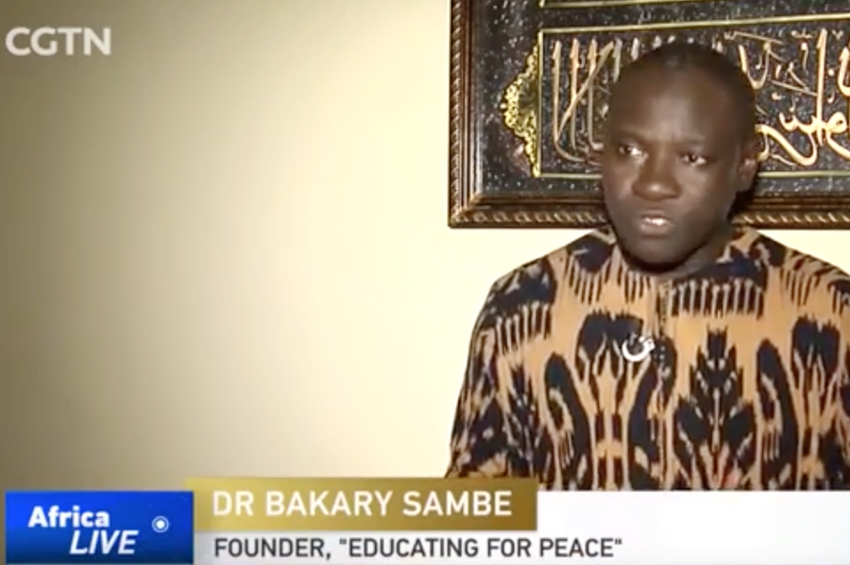
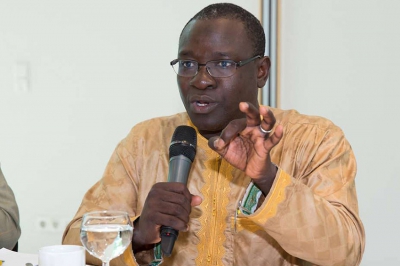
Imam Mahmoud Dicko, a central figure in Malian socio-political life, now finds himself at the heart of an ‘ambiguous adventure’ marked by his transition from being an indispensable power broker to a vocal opponent in exile. After playing a decisive role in the fall of Ibrahim Boubacar Keïta in 2020, he gradually distanced himself from the military rulers, denouncing their failure to respect the transition timetable. Now a refugee in Algeria, Dicko is seeking to redefine his roleby positioning himself as a mediator for peace, while joining opposition coalitions abroad, such as the Coalition of Forces for the Republic (CFR). His rhetoric, which skilfully blends religious rigour, populism and criticism of the elites, continues to divide opinion: his supporters see him as an indispensable moral bulwark against an authoritarian junta, while his detractors are concerned about his theocratic influence and ultra-conservative positions, which they believe threaten the secular nature of the state. Despite the dissolution of his movement (CMAS) by the authorities in Bamako, the imam remains a key figure whose ability to mobilise support, even from a distance, continues to pose a major challenge to the colonels in power.

FAMa operation in Ségou: Terrorists neutralised and equipment seized

According to a statement issued by the army general staff on Monday 16 February 2026, the Malian Armed Forces (FAMa) carried out a major search operation on the previous Sunday in the Nampala area (Ségou region). The intervention, which targeted the areas around the villages of Toulé and Akoub, resulted in the neutralisation of several terrorists. In addition to the human toll, the army seized a significant amount of equipment, including weapons, ammunition and communications equipment. Through this operation, the military hierarchy reaffirms its determination to track down armed groups throughout the national territory to ensure the safety of the population.

The AES launches its roadmap for its second year

On 17 February 2026, the Malian government officially examined the roadmap for Year II of the Confederation of Sahel States (AES), which aims to consolidate the achievements of the first year and operationalise the commitments made by Mali, Burkina Faso and Niger. This step follows the recent ratification of four major protocols on defence, diplomacy, development and the creation of a confederal parliament. Under the rotating presidency of Captain Ibrahim Traoré, the confederation intends to transform these legal texts into concrete actions to meet the urgent needs of the population in terms of security, free movement and infrastructure. The authorities reaffirm the irreversible nature of this regional integration process, born out of the break with ECOWAS and the desire of the three states to build a sovereign and secure space.

Timbuktu Institute - Semaine 3 - Février 2026

Télécharger l'intégralité de la Météo Sahel


L’imam Mahmoud Dicko, figure centrale de la vie socio-politique malienne, se trouve aujourd'hui au cœur d'une « aventure ambiguë » marquée par son passage du statut de pivot incontournable du pouvoir à celui d'opposant frontal en exil. Après avoir joué un rôle déterminant dans la chute d'Ibrahim Boubacar Keïta en 2020, il s'est progressivement distancé des militaires au pouvoir, dénonçant le non-respect du calendrier de transition. Désormais réfugié en Algérie, Dicko cherche à redéfinir son rôle en se positionnant comme un médiateur pour la paix, tout en intégrant des coalitions d'opposition à l'étranger, comme la Coalition des Forces pour la République (CFR). Son discours, qui mêle habilement rigueur religieuse, populisme et critique des élites, continue de diviser : ses partisans y voient un rempart moral indispensable face à une junte autoritaire, tandis que ses détracteurs s'inquiètent de son influence théocratique et de ses positions ultra-conservatrices qui menacent la laïcité de l'État. Malgré la dissolution de son mouvement (la CMAS) par les autorités de Bamako, l'imam reste une figure incontournable dont la capacité de mobilisation, même à distance, demeure un défi majeur pour les colonels au pouvoir.

Opération des FAMa à Ségou : Terroristes neutralisés et matériel saisi

Selon un communiqué de l'état-major général des armées du lundi 16 février 2026, les Forces Armées Maliennes (FAMa) ont mené une importante opération de ratissage le dimanche précédent dans le secteur de Nampala (région de Ségou). L'intervention, qui a ciblé les zones des villages de Toulé et d'Akoub, s'est soldée par la neutralisation de plusieurs terroristes. En plus du bilan humain, l'armée a saisi une quantité significative d'équipements, incluant des armes, des munitions ainsi que du matériel de communication. À travers cette opération, la hiérarchie militaire réaffirme sa détermination à traquer les groupes armés sur l'ensemble du territoire national pour assurer la sécurité des populations.

L’AES lance la feuille de route de sa deuxième année

Le gouvernement malien a officiellement examiné, ce 17 février 2026, la feuille de route de l'An II de la Confédération des États du Sahel (AES), visant à consolider les acquis de la première année et à opérationnaliser les engagements pris par le Mali, le Burkina Faso et le Niger. Cette étape fait suite à la ratification récente de quatre protocoles majeurs portant sur la défense, la diplomatie, le développement et la création d'un parlement confédéral. Sous la présidence tournante du capitaine Ibrahim Traoré, la confédération entend transformer ces textes juridiques en actions concrètes pour répondre aux besoins urgents des populations en matière de sécurité, de libre circulation et d'infrastructures. Les autorités réaffirment le caractère irréversible de ce processus d'intégration régionale, né de la rupture avec la CEDEAO et de la volonté des trois États de bâtir un espace souverain et sécurisé.

Timbuktu Institute - Week 3 - February 2026

Download the full Sahel weather report 

At the end of January, Chadian President Mahamat Idriss Déby's visit to the Élysée Palace formalised the resumption of diplomatic relations between France and Chad, one year after French forces withdrew from the country. While both sides laconically welcomed a ‘revitalised partnership based on mutual respect and shared interests’, the meeting also provided an opportunity to lay the foundations for a new form of military cooperation. According to Le Monde, the cooperation projects underpinning this reconciliation include ‘a discreet military component’. Under the new arrangements, Paris could provide intelligence support and training to Chadian forces without deploying large numbers of soldiers, as was previously the case. This new formula seems to be adapted to the new realities of the sub-region, where the geopolitical situation remains fluid and complex. Chad, a strategic country in the Sahel belt, now faces worrying instability on its eastern border, marked by the conflict in neighbouring Sudan. From a broader perspective, Paris appears to be making a discreet but effective return to the sub-region via N'Djamena, which is likely to raise questions among observers of a sub-region whose geopolitical situation remains fluid and complex.


North under surveillance

The vast and rugged north of Chad remains the scene of persistent security concerns. In the province of Borkou, on the road linking Faya to Kouba Oulanga, an ambush attributed to suspected road bandits on the night of 17 to 18 February resulted in the death of a travel agency driver. The army was dispatched to the scene and intervened to repel the attackers. Unofficial reports indicate that four officers were killed, while three attackers were neutralised and another captured. Aware of these security challenges, the Chadian authorities are striving to address them. It was in this context that officials from the United States Drug Enforcement Administration (DEA) and the Chadian Ministry of Public Security and Immigration held a strategic meeting on 16 February on the fight against narcotics. Following the meeting, the US agency presented the Chadian ministry with the ‘Drug Identification Bible,’ a strategic document on the treatment and prevention of illicit drugs. N'Djamena hopes to consolidate its cooperation with the United States while improving its ability to identify criminal networks through an integrated approach to preventing crime and consolidating both national and regional stability.

Lake Chad Basin: a constant equation

In the Lake Chad Basin, the issue of human mobility lies at the intersection of security, environmental and socio-economic challenges. Faced with these interrelated issues, the International Organisation for Migration (IOM) and the Lake Chad Basin Commission (LCBC) signed a memorandum of understanding in N'Djamena on 19 February 2026 to strengthen their cooperation in community stabilisation efforts in the Lake Chad Basin region. This agreement institutionalises an existing partnership. But this time, it aligns with the Regional Stabilisation, Recovery and Resilience Strategy (SR-SRR 2.0) adopted in 2025. Given the complexity of the challenges, this example of institutional cooperation highlights the need for a coordinated approach at the sub-regional level, which continues to share vulnerability.

Timbuktu Institute - Semaine 3 - Février 2026

Télécharger l'intégralité de la Météo Sahel

Fin janvier, la visite du Président tchadien Mahamat Idriss Déby à l’Élysée officialisait la reprise des relations diplomatiques entre la France et le Tchad, un an après le retrait des forces françaises du pays. Si les deux parties se sont félicités assez laconiquement d’un « partenariat revitalisé, fondé sur le respect mutuel et des intérêts partagés », cette rencontre aurait été aussi l’occasion d’établir les bases d’une coopération militaire réinventée. Ainsi, d’après Le Monde, les projets de coopération qui sous-tendent cette réconciliation comprennent « un discret volet militaire ». En effet, selon des  nouvelles modalités, Paris pourrait fournir un appui en renseignement et dispenser des formations aux forces tchadiennes sans pour autant effectuer un déploiement massif de soldats, comme ce fut jadis le cas. Cette nouvelle formule semble s’adapter aux nouvelles réalités de la sous-région dont la situation géopolitique reste mouvante et complexe. Le Tchad, pays stratégique dans la ceinture sahélienne, doit maintenant faire face à une instabilité préoccupante à sa frontière Est, marquée par le conflit du Soudan voisin. Dans une perspective plus globale, Paris semble opérer un retour discret mais effectif  dans la sous-région par le biais de N’Djamena ; devrait susciter l’interrogation des observateurs d’une sous-région dont la situation géopolitique demeure mouvante et complexe.

Septentrion sous surveillance

Le nord du Tchad, vaste et âpre, reste le théâtre d’inquiétudes sécuritaires persistantes. Dans la province du Borkou sur l’axe reliant Faya à Kouba Oulanga, une embuscade attribuée à des coupeurs de route présumés, dans la nuit du 17 au 18 février, a causé la mort d’un chauffeur d’une agence de voyage. Dépêchée sur place, l’armée est intervenue pour repousser les assaillants. Un bilan non officiel fait état de quatre officiers décédés d’une part ainsi que trois assaillants neutralisés et un autre capturé, d’autre part. Conscientes de ces défis sécuritaires, les autorités tchadiennes s’évertuent à y faire  face. C’est dans ce sillage que des responsables de la Drug Enforcement Administration (DEA) des États‑Unis et le Ministère tchadien de la Sécurité publique et de l’Immigration ont tenu le 16 février, une réunion stratégique sur la lutte contre les stupéfiants. Au sortir de cette rencontre, l’organisme américain a remis au ministère tchadien « la Bible d’identification des Drogues », un document stratégique sur le traitement et la prévention des drogues illicites. Ainsi, N’Djamena espère consolider sa coopération avec les Etats-Unis tout en améliorant ses capacités d’identification des réseaux criminels par une approche intégrée pour prévenir la criminalité et consolider la stabilité tant nationale que régionale. 

Bassin du Lac du Tchad :une constante équation

Dans le Bassin du Lac Tchad, la problématique de la mobilité humaine se retrouve à l’intersection des défis sécuritaires, environnementaux et socio-économiques. Face à ces enjeux interdépendants, l’Organisation internationale pour les Migrations (OIM) et la Commission du Bassin du Lac Tchad (CBLT) ont signé un protocole d’accord à N’Djaména le 19 février 2026 pour renforcer leur coopération dans les efforts de stabilisation communautaire dans la région du Bassin du Lac Tchad. Cet accord institutionnalise un partenariat déjà existant. Mais cette fois-ci, il s’aligne sur la Stratégie Régionale de Stabilisation, de Relèvement et de Résilience (SR‑SRR 2.0) adoptée en 2025. Au vu de l’enchevêtrement des défis, cet exemple de coopération institutionnelle rappelle la nécessité d’une approche coordonnée à l’échelle d’une sous-région qui ne cesse d’avoir la vulnérabilité en partage.

Timbuktu Institute - Week 3 - February 2026

 Download the full Sahel weather report 

This week, Burkina Faso is facing a complex equation combining persistent insurrection, a major humanitarian crisis and political and judicial tensions. Between Captain Ibrahim Traoré's assertions of sovereignty, the resurgence of attacks in the north of the country and tensions surrounding sensitive legal cases, the country is facing a systemic crisis in which security, governance and social resilience are closely linked. The central issue is the authorities' ability to transform their rhetoric of reconquest and sovereignty into tangible and lasting stabilisation of the territory.

A systemic and multidimensional humanitarian crisis?

Since 2015, the country has been facing a terrorist insurgency that has profoundly transformed its political, security and diplomatic architecture. Under the leadership of Captain Ibrahim Traoré, the country has taken a strong sovereignist stance, focused on territorial reconquest and the reorientation of its international partnerships. However, the humanitarian situation remains alarming. The National Humanitarian Response Plan (PNRH) for 2026 targets 4,474,321 vulnerable people, at a total cost of 769,841,825,700 CFA francs. This plan specifically targets 1,294,232 internally displaced persons and 902,042 returnees, reflecting a profound demographic and social crisis marked by massive population displacement, forced territorial restructuring and the lasting fragility of community structures. The Minister of Family and Solidarity, who is also President of the National Council for Emergency Relief and Rehabilitation (CONASUR), emphasises that sectoral priorities cover ‘food security and nutrition, health, protection, water, hygiene and sanitation, education in emergencies, and shelter’. She emphasises the interdependence of sectors, which implies greater overall effectiveness of humanitarian action. Burkina Faso is thus facing a systemic crisis in which security, governance and social resilience are closely intertwined. 

Attack on Titao: persistent insecurity with regional repercussions

Meanwhile, on Saturday 14 February, armed individuals carried out a large-scale attack on the town of Titao, located in the north of the country, about fifty kilometres from Ouahigouya. The military camp, telephone facilities and shops were destroyed and looted. To date, the government has not released an official assessment of the attack, leaving citizens waiting for accurate information. According to statements by Ghana's Minister of the Interior, seven of the traders killed were Ghanaian nationals. This situation highlights the cross-border dimension of the security crisis. The presence of Ghanaian nationals among the victims testifies to the intensity of regional trade dynamics and serves as a reminder that local instability can have diplomatic and economic repercussions. It also highlights the need for enhanced security cooperation between neighbouring states to protect civilians and secure trade corridors in West Africa. This attack also demonstrates the intact operational capacity of armed groups, capable of attacking a strategic urban centre, and the continuing vulnerability of the north of the country, despite efforts to regain control of the territory.

Ouagadougou Court of Appeal: a judicial decision at the heart of political and security tensions

On the legal front, on Tuesday 17 February 2026, the Ouagadougou Court of Appeal handed down its decision on the appeal lodged by lawyer Ina Benjamine Esther Doli in her dispute with the public prosecutor's office. This proceeding follows posts published at the end of August 2025 on her Facebook profile, which the public prosecutor's office of the Ouaga I High Court considers to be criminally liable. In her message, the lawyer criticised the practices of ‘three Sahelian states’ which, according to her, claim to be close to Russia, while adopting behaviours that she considered ‘in total contradiction with the respectability’ of the Russian president. In particular, she referred to certain abuses observed in Burkina Faso.

Ultimately, the lawyer was given a twelve-month suspended prison sentence and a fine of one million CFA francs. She was prosecuted for ‘treason’, ‘insulting the head of state’ and ‘undermining the morale of the armed forces’. The country is plagued by constant tension between asserting its sovereignty and persistent structural weaknesses. The central challenge now is to translate the stated political direction into concrete and lasting stabilisation of the territory.


Timbuktu Institute - Semaine 3 - Février 2026

Télécharger l'intégralité de la Météo Sahel


Cette semaine, le Burkina Faso est confronté à une équation complexe mêlant insurrection persistante, crise humanitaire majeure et tensions politico-judiciaires. Entre l'affirmation souverainiste du capitaine Ibrahim Traoré, la recrudescence d'attaques dans le nord du pays et les tensions autour de dossiers judiciaires sensibles, le pays est confronté à une crise systémique dans laquelle la sécurité, la gouvernance et la résilience sociale sont étroitement liées. L’enjeu central est la capacité des autorités à transformer le discours de reconquête et de souveraineté en une stabilisation tangible et durable du territoire.

Une crise humanitaire systémique et multidimensionnelle ?

Depuis 2015, le pays est confronté à une insurrection terroriste qui a profondément transformé son architecture politique, sécuritaire et diplomatique. Sous la direction du capitaine Ibrahim Traoré, le pays affiche une ligne souverainiste affirmée, axée sur la reconquête territoriale et la réorientation de ses partenariats internationaux. La situation humanitaire reste toutefois alarmante. Le Plan national de réponse humanitaire (PNRH) pour 2026 cible 4 474 321 personnes vulnérables, pour un coût total de 769 841 825 700 francs CFA. Ce plan vise spécifiquement 1 294 232 personnes déplacées internes et 902 042 personnes de retour, ce qui témoigne d'une crise démographique et sociale profonde, marquée par des déplacements de population massifs, une recomposition territoriale contrainte et une fragilisation durable des structures communautaires. Le ministre de la Famille et de la Solidarité, qui est également président du Conseil national de secours d'urgence et de réhabilitation (CONASUR), souligne que les priorités sectorielles couvrent « la sécurité alimentaire et la nutrition, la santé, la protection, l'eau, l'hygiène et l'assainissement, l'éducation en situation d'urgence, ainsi que les abris ». Elle insiste sur l'interdépendance des secteurs, ce qui implique une plus grande efficacité globale de l'action humanitaire. Le Burkina Faso est ainsi confronté à une crise systémique dans laquelle la sécurité, la gouvernance et la résilience sociale sont étroitement imbriquées.

Attaque de Titao : une insécurité persistante aux répercussions régionales

Pendant ce temps, le samedi 14 février, des individus armés ont mené une attaque d'une grande ampleur contre la ville de Titao, située dans le nord du pays, à environ cinquante kilomètres de Ouahigouya. Le camp militaire, les installations téléphoniques et les commerces ont été détruits et pillés. À ce jour, le gouvernement n'a pas communiqué de bilan officiel de cette attaque, laissant les citoyens dans l'attente d'informations précises. Selon les déclarations du ministre de l'Intérieur du Ghana, sept des commerçants tués seraient de nationalité ghanéenne. Cette situation souligne la dimension transfrontalière de la crise sécuritaire. La présence de ressortissants ghanéens parmi les victimes témoigne de l'intensité des dynamiques commerciales régionales et rappelle que l'instabilité locale peut avoir  des répercussions diplomatiques et économiques Elle souligne également la nécessité d'une coopération sécuritaire renforcée entre les États voisins pour protéger les civils et sécuriser les corridors commerciaux en Afrique de l'Ouest. Cette attaque témoigne également de la capacité opérationnelle intacte des groupes armés, capables d'attaquer un centre urbain stratégique, et de la vulnérabilité persistante du nord du pays, malgré les efforts de reconquête du territoire.

Cour d'appel de Ouagadougou : une décision judiciaire au cœur des tensions politico-sécuritaires

Sur le plan juridique, la cour d'appel de Ouagadougou a rendu, le mardi 17 février 2026, sa décision concernant l'appel formé par l'avocate Ina Benjamine Esther Doli dans le cadre du litige qui l'oppose au ministère public. Cette procédure fait suite à des publications diffusées fin août 2025 sur son profil Facebook, que le parquet du Tribunal  de grande instance de Ouaga I estime susceptibles d'être qualifiées pénalement. Dans son message, l'avocate critiquait les pratiques de « trois États du Sahel » qui, selon elle, se revendiquent proches de la Russie, tout en adoptant des comportements qu'elle jugeait « en totale contradiction avec la respectabilité » de la personne du président russe. Elle évoquait notamment certaines dérives observées au Burkina Faso.

En définitive, l'avocate a été condamnée à douze mois de prison avec sursis, ainsi qu'à une amende ferme d'un million de francs CFA. Elle a été poursuivie pour « trahison », « outrage au chef de l’État » et « entreprise de démoralisation des forces armées ». Le pays est en proie à une tension permanente entre affirmation souverainiste et fragilités structurelles persistantes. Le défi central consiste désormais à traduire l'orientation politique affichée en une stabilisation concrète et durable du territoire.