 French
 Arabic
 English
 Portuguese
 Spanish
 Swahili




Sacré-Coeur 3 – BP 15177 CP 10700 Dakar Fann – SENEGAL.
+221 33 827 34 91 / +221 77 637 73 15
contact@timbuktu-institute.org

Timbuktu Institute - Week 4 - March 2026
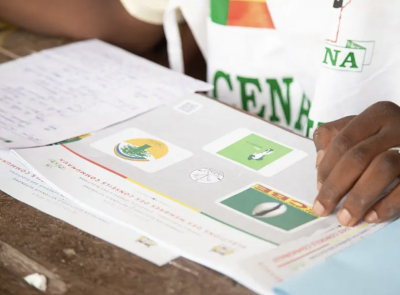
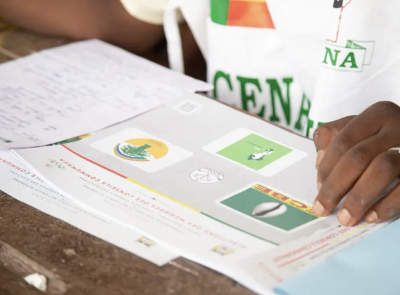
In Benin, the final phase before the April presidential election is underway. On 26 March, the Independent National Electoral Commission (CENA) officially launched the election campaign, scheduled to last fifteen days. This election, which is expected to mobilise around 8 million voters and over 5,000 observers, forms part of the first ‘general elections’ since the democratic renewal of 1990. It is against this backdrop that the CENA has called for a peaceful campaign, centred on the debate of ideas, whilst assuring that logistical and organisational preparations are nearing completion.
The presidential coalition’s candidate, the Minister of Economy and Finance, Romuald Wadagni, launched his presidential campaign on 27 March in the north of the country. His tour took him through the towns of Kandi, Banikoara and Ségbana, where he successively promised measures to improve agriculture, mechanisation, a pension scheme for farmers, security, the modernisation of the army and community policing, as well as the development of local infrastructure. As for the second candidate in the running, from the FCBE (Forces Bénin pour un Bénin Émergent) party, confidence remains high. “The match isn’t over yet (…) this isn’t a friendly match,” declared candidate Paul Hounkpè during the presentation of his vision for society. In his programme entitled “Rebuilding Beninese pride together”, his key pledges include reforms in education, health, sport, culture and the economy, as well as measures to boost youth employment and nurture local talent. On the political and security front, he proposes a government of national unity, the revision of electoral laws, the release of political prisoners, the strengthening of the defence forces and the securing of borders.
A presidential race already decided?
Already in the midst of a crisis, the main opposition party, Les Démocrates (LD), continues to crumble. Whilst the party is not participating in the presidential election, questions regarding its stance on the matter have been the subject of public debate. But whilst the party has officially announced that it will not support any of the licensed parties, this week has been marked by significant defections from its ranks. Firstly, after resigning in early March, Chabi Yayi (son of the party’s former president, Thomas Boni Yayi, and former secretary for external relations) announced his defection to Romuald Wadagni. A choice that is surprising to say the least, guided, according to him, by ‘pragmatism’, ‘carefully considered’ and the result of a ‘convergence’, as he explains. Subsequently, it was the party’s national communications secretary, Guy Mitopkè, who also announced his resignation, followed immediately by his decision to join Romuald Wadagni.
Meanwhile, the position of party president was the subject of controversy. Indeed, interim president Eric Houndété strongly opposed the decision of the LD National Council on 22 March to appoint Nourénou Atchadé as party leader. That was all it took for Eric Houndété to announce, on 26 March, his support for Romuald Wadagni. A choice he says he stands by ‘courageously’ whilst advocating for a ‘pluralistic Benin’. In a tit-for-tat move, the LD announced the suspension of Eric Houndété and 21 party officials. In light of this political soap opera, one question arises: what remains of the opposition in Benin? It would not be rash to suggest that these numerous defections reveal not so much a sincere endorsement of Wadagni’s project as a pragmatic reshuffling of the Beninese political landscape, where political survival seems to take precedence more than ever. In this sense, the outcome of this presidential election seems already a foregone conclusion in a scenario where the scope for competition is minimal for any opposition, however moderate, such as Paul Hounkpè’s FCBE party.
Timbuktu Institute - Semaine 4 - Mars 2026
Au Bénin, c’est la phase finale avant la présidentielle d’avril. Le 26 mars, la Commission électorale nationale autonome (CENA) a officiellement donné le coup d’envoi de la campagne électorale, prévue pour durer quinze jours. Cette élection qui devrait mobiliser environ 8 millions d’électeurs et plus de 5 000 observateurs s’inscrit dans le cadre des premières « élections générales » depuis le renouveau démocratique de 1990. C’est fort de cela que la CENA a appelé à une campagne apaisée, centrée sur le débat d’idées tout en assurant que les préparatifs logistiques et organisationnels sont en voie d’achèvement.
Candidat de la coalition présidentielle, le ministre de l’Economie et des Finances, Romuald Wadagni a lancé sa campagne présidentielle le 27 mars dans le Nord du pays. Un parcours marqué par les villes de Kandi, Banikoara et Ségbana où il a, tour à tour, promis des mesures pour améliorer l’agriculture, la mécanisation, une retraite pour les agriculteurs, la sécurité, la modernisation de l’armée et des polices de proximité ainsi que le développement d’infrastructures locales. Du côté du second candidat en lice, chez le parti FCBE (Forces Bénin pour un Bénin Émergent), la confiance reste de mise. « Le match n’est pas plié (…) il ne s’agit pas d’un match amical », a déclaré le candidat Paul Hounkpè, lors de la présentation de son projet de société. Dans son programme intitulé « Rebâtir ensemble la fierté béninoise », des réformes dans l’éducation, la santé, le sport, la culture et l’économie, ainsi que des mesures pour l’emploi des jeunes et la valorisation des talents locaux sont ses promesses phares. Sur le plan politique et sécuritaire, il propose un gouvernement d’union nationale, la révision des lois électorales, la libération des détenus politiques, le renforcement des forces de défense et la sécurisation des frontières.
Une présidentielle jouée d’avance ?
Déjà en pleine crise, le principal parti d’opposition Les Démocrates (LD) continue crescendo de s’effriter. Alors que le parti ne participe pas à la présidentielle, les interrogations sur son positionnement à cet égard faisaient l’objet de discussions au sein de l’opinion publique. Mais alors que le parti a officiellement annoncé qu’il ne soutiendra aucun des partis en licence, cette semaine aura été marquée par d’importantes défections en son sein. Tout d’abord, après avoir démissionné début mars, Chabi Yayi (fils de l’ex président du parti, Thomas Boni Yayi et ex-secrétaire aux relations extérieures) a annoncé son ralliement à Romuald Wadagni. Un choix pour le moins surprenant, guidé à l’en croire par un « pragmatisme », « mûrement réfléchi » et fruit d’une « convergence », justifie-t-il. Par la suite, c’est le secrétaire national à la communication du parti Guy Mitopkè qui a lui aussi annoncé sa démission, puis annoncé dans la foulée, son ralliement à Romuald Wadagni.
Pendant ce temps, ce fut le poste de président du parti qui était sujet à polémiques. En effet, le président intérimaire Eric Houndété s’est vivement opposé à la décision du Conseil national des LD, le 22 mars, de porter Nourénou Atchadé à la tête du parti. Il n’en fallait pas plus pour que Eric Houndété annonce, le 26 mars, son soutien à Romuald Wadagni. Un choix qu’il dit assumer « courageusement » tout en plaidant pour un « Bénin pluriel ». Comme une réponse du berger à la bergère, LD a annoncé la suspension d’Eric Houndété ainsi que de 21 cadres du parti. Eu égard à ce feuilleton politique, une question émerge : que reste-il de l’opposition au Bénin ? Il ne serait pas téméraire d’avancer que ces nombreux ralliements ne révèlent pas tant une adhésion sincère au projet de Wadagni, qu’une recomposition pragmatique du paysage politique béninois, où la survie politique semble plus que jamais primer. En ce sens, le sort de cette présidentielle semble déjà joué d’avance dans une configuration où les couloirs de compétition sont infimes pour toute opposition, fusse-t-elle modérée comme le parti FCBE de Paul Hounkpè.
Timbuktu Institute – Week 3 – March 2026
Download the full Sahel weather report
In March 2026, political developments in Togo are marked by rising tensions between the government and the opposition, against a backdrop of controversy surrounding the state of emergency and institutional reforms. Between restrictions on political activities and suspicions of a reshuffle of power, the political climate is becoming increasingly polarised.
Restrictions on political activities and controversy surrounding the state of emergency in the Savanes region
MP Brigitte Kafui Adjamagbo-Johnson, a leading figure in the Togolese opposition, was prevented by police and gendarmerie forces from continuing a parliamentary tour in the Savanes region, shortly after the vote against extending the state of emergency. This incident comes against a backdrop of high political tensions and has reignited criticism from the opposition, which accuses the authorities of exploiting the state of emergency to restrict people’s freedom of movement and the ability of elected representatives to carry out their duties. The mission was initially due to continue in the Kara region, considered a political stronghold of Faure Gnassingbé, but it could not proceed as planned. This episode highlights the growing politicisation of security measures, which can be perceived as tools of political control beyond their original purpose. It also underscores the risk of the erosion of institutional balances, against a backdrop of worsening tensions between the executive and the opposition.
Opposition to institutional reforms and mistrust of the government
On 12 March 2026, a coalition comprising the ‘Don’t Touch My Constitution’ Front, the Movement for the Majority of the People, the Monseigneur Kpodzro Movement and Light for Development in Peace held a joint press conference. At the conference, these opposition organisations denounced what they described as a strategy by the government aimed at consolidating its political grip: opening a dialogue with the opposition within the Permanent Consultation Framework, adopting new constitutional reforms, dissolving the National Assembly, organising early parliamentary elections, and then repositioning Faure Gnassingbé as President of the Council, endowed with renewed electoral legitimacy. This interpretation highlights the opposition’s structural mistrust of institutional reform processes, which it perceives as favouring the maintenance of the status quo. It also reflects a political climate marked by low levels of trust between the various actors, which is likely to undermine the credibility of dialogue mechanisms and fuel pre-election tensions. The political situation in Togo reveals growing tension surrounding issues of governance and institutional reform. In this context, the central challenge is to restore trust between political actors in order to prevent a lasting deterioration of the socio-political climate.
Timbuktu Institute - Semaine 3 - Mars 2026
Télécharger l'intégralité de la Météo Sahel
En mars 2026, l’actualité politique au Togo est marquée par une montée des tensions entre le pouvoir et l’opposition, sur fond de controverses autour de l’état d’urgence et des réformes institutionnelles. Entre restrictions des activités politiques et soupçons de recomposition du pouvoir, le climat politique est de plus en plus polarisé.
Restrictions des activités politiques et controverse autour de l’état d’urgence dans la région des savanes
La députée Brigitte Kafui Adjamagbo-Johnson, figure de l’opposition au Togo, a été empêchée par les forces de police et de gendarmerie de poursuivre une tournée parlementaire dans la région des Savanes, peu après le vote contre la prorogation de l’état d’urgence. Cet incident survient dans un contexte de fortes tensions politiques et ravive les critiques de l'opposition, qui accuse les autorités d'instrumentaliser l'état d'urgence pour restreindre la liberté de circulation des populations ainsi que l'exercice des fonctions des élus. La mission devait initialement se poursuivre dans la région de la Kara, considérée comme un bastion politique de Faure Gnassingbé, mais elle n'a pas pu se dérouler comme prévu. Cet épisode montre une politisation croissante des dispositifs sécuritaires, qui peuvent être perçus comme des outils de contrôle politique au-delà de leur finalité initiale. Il souligne également le risque d'érosion des équilibres institutionnels, dans un contexte où les tensions entre le pouvoir exécutif et l'opposition s'aggravent.
Contestation des réformes institutionnelles et défiance du pouvoir
Le 12 mars 2026, une coalition composée du Front « Touche pas à ma constitution », de la Dynamique pour la majorité du peuple, de la Dynamique Monseigneur Kpodzro et de Lumière pour le développement dans la paix a tenu une conférence de presse conjointe. Ces organisations d'opposition y ont dénoncé ce qu'elles présentent comme une stratégie du pouvoir visant à consolider son emprise politique : ouverture d'un dialogue avec l'opposition dans le cadre du Cadre permanent de concertation, adoption de nouvelles réformes constitutionnelles, dissolution de l'Assemblée nationale, organisation d'élections législatives anticipées, puis repositionnement de Faure Gnassingbé en tant que président du Conseil, doté d'une légitimité électorale renouvelée. Cette lecture met en évidence la méfiance structurelle de l'opposition à l'égard des processus de réforme institutionnelle, qu'elle perçoit comme favorisant le maintien du pouvoir en place. Elle traduit également un climat politique marqué par une faible confiance entre les acteurs, susceptible de compromettre la crédibilité des mécanismes de dialogue et d'alimenter des tensions préélectorales. La situation politique togolaise révèle une crispation croissante autour des enjeux de gouvernance et de réformes institutionnelles. Dans ce contexte, l'enjeu central est de restaurer la confiance entre les acteurs politiques afin de prévenir une dégradation durable du climat sociopolitique.
Timbuktu Institute – Week 3 – March 2026
Download the full Sahel weather report
Current events in Côte d’Ivoire are characterised by two key trends: on the one hand, the strengthening of preventive measures against the terrorist threat in the north of the country, and on the other, a reorganisation of the opposition ahead of the upcoming elections. These developments reflect both regional security challenges and the political realignments currently underway.
Heightened vigilance against the terrorist threat in the north of the country
On 12 March 2026, Ouattara Zoumana, commander of the Northern Operational Zone and the 4th Military Region, issued a call for vigilance and mobilisation from religious leaders and the public in the face of the terrorist threat, speaking from Korhogo. The north of Côte d’Ivoire remains highly strategic due to its proximity to the Sahelian zones plagued by insecurity. Recurring security incidents in the Bounkani and Tchologo regions confirm that the risk of infiltration is very real. This situation highlights the need for a preventive approach based on anticipation and the involvement of community stakeholders in managing the threat. However, the persistence of border incidents underscores the limitations of current measures and the need to strengthen cross-border coordination as well as local operational capabilities. As a reminder, since February 2026, the US authorities have formally identified the northern border regions of Côte d’Ivoire with Mali and Burkina Faso as areas of high security risk linked to terrorism. French travel advice classifies these areas as ‘formally not recommended’ due to the risk of terrorism and kidnapping.
A strategic reorganisation of the PDCI against a backdrop of internal tensions
On the political front, on 16 March 2026, despite persistent internal tensions, Tidjane Thiam initiated a strategic restructuring of the Executive Secretariat of the Democratic Party of Côte d’Ivoire. This reorganisation notably resulted in the appointment of a Head of Legal Affairs, Ms Béatrice Nemin, as well as the strengthening of functions related to strategy and political training. This reorganisation demonstrates a clear commitment to modernising the party and preparing for upcoming local and parliamentary elections, despite the president’s physical absence and persistent questions regarding his legitimacy. The PDCI is thus already looking ahead to the 2030 elections, adopting a proactive approach to organisational planning. This reorganisation aims to strengthen preparations for and ensure the smooth running of the elections, improve legal support for party members, anticipate national political challenges and align the party’s political training with its strategic priorities. This dynamic reflects an attempt at organisational consolidation against a backdrop of internal political fragility, where mastery of legal and strategic levers is crucial. It could also enable the PDCI to reposition itself as a credible and competitive political force, provided it resolves the leadership tensions that could hinder its cohesion and electoral effectiveness. Côte d’Ivoire has therefore evolved within a context marked by security imperatives and political realignments. Strengthening resilience in the face of the terrorist threat, combined with the restructuring of political forces, will be crucial to preserving national stability and preparing for upcoming elections.
Timbuktu Institute - Semaine 3 - Mars 2026
Télécharger l'intégralité de la Météo Sahel
L’actualité ivoirienne est marquée deux dynamiques structurantes : d'une part, le renforcement des dispositifs de prévention contre la menace terroriste dans le nord du pays, et d'autre part, une recomposition de l'opposition en vue des prochaines échéances électorales. Ces évolutions témoignent à la fois des enjeux sécuritaires régionaux et des reconfigurations politiques en cours.
Une vigilance accrue face à la menace terroriste dans le nord du pays
Le 12 mars 2026, Ouattara Zoumana, commandant de la zone opérationnelle Nord et de la 4ème région militaire, a lancé un appel à la vigilance et à la mobilisation des leaders religieux et des populations face à la menace terroriste depuis Korhogo. Le nord de la Côte d'Ivoire conserve en effet un caractère hautement stratégique en raison de sa proximité avec les zones sahéliennes en proie à l'insécurité. Les incidents sécuritaires récurrents observés dans les régions du Bounkani et du Tchologo confirment que le risque d'infiltration est bien réel. Cette dynamique met en évidence une approche préventive fondée sur l'anticipation et l'implication des acteurs communautaires dans la gestion de la menace. Toutefois, la persistance d'incidents frontaliers souligne les limites des dispositifs actuels et la nécessité de renforcer la coordination transfrontalière ainsi que les capacités opérationnelles locales. Pour rappel, depuis février 2026, les autorités américaines ont formellement identifié les régions frontalières nord de la Côte d'Ivoire avec le Mali et le Burkina Faso comme des zones à risque sécuritaire élevé lié au terrorisme. Les conseils aux voyageurs français classent ces zones comme « formellement déconseillées » en raison du risque terroriste et d'enlèvement.
Une recomposition stratégique du PDCI dans un contexte de tensions internes
Au plan politique, le 16 mars 2026, malgré des tensions internes persistantes, Tidjane Thiam a engagé une reconfiguration stratégique du Secrétariat exécutif du Parti démocratique de Côte d'Ivoire. Cette réorganisation s'est notamment traduite par la nomination d'une responsable des Affaires juridiques, Me Béatrice Nemin, ainsi que par le renforcement des fonctions liées à la stratégie et à la formation politique. Cette réorganisation témoigne d'une volonté affirmée de moderniser le parti et d'anticiper les échéances électorales locales et législatives, malgré l'absence physique du président et les interrogations persistantes quant à sa légitimité. Le PDCI se projette ainsi dès à présent vers les scrutins de 2030, dans une logique de structuration anticipée. Cette réorganisation vise à renforcer la préparation et la sécurisation des échéances électorales, à améliorer le suivi juridique des militants, à anticiper les défis politiques nationaux et à aligner la formation politique sur les priorités stratégiques du parti. Cette dynamique traduit une tentative de consolidation organisationnelle dans un contexte de fragilité politique interne, où la maîtrise des leviers juridiques et stratégiques est déterminante. Elle pourrait également permettre au PDCI de se repositionner comme une force politique crédible et compétitive, à condition de résoudre les tensions liées au leadership qui pourraient entraver sa cohésion et son efficacité électorale. La Côte d'Ivoire a donc évolué dans un contexte marqué par des impératifs sécuritaires et des recompositions politiques. Le renforcement de la résilience face à la menace terroriste, conjugué à la structuration des forces politiques, sera déterminant pour préserver la stabilité nationale et se préparer aux échéances électorales à venir.
Timbuktu Institute – Week 3 – March 2026
Download the full Sahel weather report
In Burkina Faso, the week has been marked by two worrying trends: a worsening of insecurity in border areas, due to the actions of armed groups, and a narrowing of political space, illustrated by attacks on the freedoms of opposition figures. These concurrent developments reflect a multidimensional weakening of the state, both in terms of security and institutional stability.
A deterioration in security in border areas
A report published on 12 March 2026 by the NGO Human Rights Watch highlights the severity of the abuses perpetrated by the Group for the Support of Islam and Muslims in northern and eastern Burkina Faso. The report details a heavy toll: at least 38 civilians have been killed, 9 women have been abducted and numerous homes have been set on fire. It also identifies the border area with Benin, Togo and Niger as the main focus of the deteriorating security situation. This resurgence of violence is part of a strategic campaign of territorial encirclement being carried out by JNIM. This development demonstrates the group’s growing ability to exploit poorly controlled border areas to extend its influence and disrupt state security measures. It also reveals a desire to create cross-border corridors, which increases the risk of insecurity spreading to the coastal countries of West Africa.
Political tension illustrated by an infringement of political freedoms
Meanwhile, on 18 March 2026, Idrissa Barry, national secretary of the opposition movement Servir et non se servir (SENS), was arrested in Ouagadougou by individuals presenting themselves as gendarmes whilst he was attending a meeting at Saaba town hall. Since then, his whereabouts have been unknown. This incident occurred four days after SENS issued a statement in which the organisation accused government forces and the VDP of being responsible for “deadly attacks” against civilians. Human Rights Watch has described this arrest as an enforced disappearance, which constitutes a serious violation of international law. This situation illustrates a worrying hardening of the political climate, marked by a growing restriction on the space for opposition figures to express themselves, which has been extensively studied by the Timbuktu Institute in recent months. It could also heighten internal tensions and further undermine the legitimacy of the authorities, in a context where the security situation is already severely deteriorated. Recent developments in Burkina Faso highlight a critical convergence between the security crisis and political tension. This dual pressure undermines the state’s capacity to respond and increases the risks of lasting instability, both nationally and regionally.
Timbuktu Institute - Semaine 3 - Mars 2026
Télécharger l'intégralité de la Météo Sahel
Au Burkina Faso, la semaine est marquée par deux dynamiques préoccupantes : une aggravation de l'insécurité dans les zones frontalières, due aux actions des groupes armés, et un resserrement de l'espace politique, illustré par des atteintes aux libertés des acteurs de l'opposition. Ces évolutions concomitantes traduisent une fragilisation multidimensionnelle de l’État, tant sur les plans sécuritaire qu'institutionnel.
Une dégradation sécuritaire dans les zones frontalières
Un rapport publié le 12 mars 2026 par l'ONG Human Rights Watch met en lumière la gravité des exactions perpétrées par le Groupe de soutien à l'islam et aux musulmans dans le nord et l'est du Burkina Faso. Le document fait état d'un bilan lourd : au moins 38 civils ont été tués, 9 femmes ont été enlevées et de nombreuses habitations ont été incendiées. Il identifie par ailleurs la zone frontalière avec le Bénin, le Togo et le Niger comme le principal foyer de la détérioration de la situation sécuritaire. Cette recrudescence des violences s'inscrit dans une dynamique stratégique d'encerclement territorial mise en œuvre par le JNIM. Cette évolution témoigne de la capacité croissante du groupe à exploiter les zones frontalières faiblement contrôlées pour étendre son influence et perturber les dispositifs sécuritaires étatiques. Elle révèle également une volonté de créer des couloirs de mobilité transfrontaliers, ce qui renforce le risque de diffusion de l’insécurité vers les pays côtiers d’Afrique de l’Ouest.
Une crispation politique illustrée par une atteinte aux libertés politiques
Pendant ce temps, le 18 mars 2026, Idrissa Barry, secrétaire national du mouvement d'opposition Servir et non se servir (SENS), a été interpellé à Ouagadougou par des individus se présentant comme des gendarmes alors qu'il participait à une réunion à la mairie de Saaba. Depuis, on ignore où il est détenu. Cet événement est survenu quatre jours après la publication par le SENS d'un communiqué dans lequel l'organisation accusait les forces gouvernementales et les VDP d'être responsables d'« attaques meurtrières » contre des civils. Human Rights Watch a qualifié cette interpellation de disparition forcée, ce qui constitue une violation grave du droit international. Cette situation illustre un durcissement préoccupant de l'environnement politique, marqué par une restriction croissante de l'espace d'expression des acteurs de l'opposition qui a été largement étudiée par le Timbuktu Institute ces derniers mois. Elle pourrait également accentuer les tensions internes et fragiliser davantage la légitimité des autorités, dans un contexte déjà fortement dégradé sur le plan sécuritaire. L’évolution récente du contexte burkinabè met en exergue une convergence critique entre crise sécuritaire et crispation politique. Cette double pression fragilise les capacités de réponse de l’État et accroît les risques d'une instabilité durable, tant au niveau national que régional.
Sacré-Coeur 3 – BP 15177 CP 10700 Dakar Fann – SENEGAL.
+221 33 827 34 91 / +221 77 637 73 15
contact@timbuktu-institute.org