 French
 Arabic
 English
 Portuguese
 Spanish
 Swahili








Sacré-Coeur 3 – BP 15177 CP 10700 Dakar Fann – SENEGAL.
+221 33 827 34 91 / +221 77 637 73 15
contact@timbuktu-institute.org


Timbuktu Institute – Juillet 2026
Le Timbuktu Institute a annoncé le lancement du Fragility Observatory of West and Central Africa for Resilience and Democracy (FOWARD), un nouvel outil de recherche et d'action dédié à la compréhension des dynamiques de fragilité qui traversent l'Afrique de l'Ouest et du Centre. Conçu pour combler le déficit d'institutions capables de produire des données fiables et d'éclairer les politiques publiques, l'Observatoire capitalise sur plus d'une décennie d'expertise et d'ancrage local du Timbuktu Institute auprès des communautés de la région, notamment les plus exposées à l'insécurité.
Une région sous tension, des instabilités qui se déplacent
Depuis plusieurs années, l'Afrique de l'Ouest et du Centre traverse une vague d'instabilités qui pèsent lourdement sur les communautés locales et continue d'entraver les efforts de développement social et économique. Si la majeure partie des violences et de l'insécurité s'est d'abord concentrée dans la région sahélienne, sous l'effet de l'action de groupes extrémistes violents, de nombreux signaux indiquent désormais que les pays côtiers d'Afrique de l'Ouest, mais aussi certains espaces d'Afrique centrale, sont tout aussi exposés à ces risques.
Fort de plus d'une décennie d'expertise reconnue dans la recherche et l'action en zone sahélienne, le Timbuktu Institute a développé, ou pris part à, plusieurs programmes dans les pays côtiers d'Afrique de l'Ouest et du Centre visant à favoriser l'apprentissage par les politiques publiques, en capitalisant sur les enseignements tirés du Sahel pour des mesures de prévention et de lutte plus efficaces. C'est précisément ce travail de terrain, mené sur dix ans, qui a convaincu l'Institut de structurer son expertise à travers un outil pérenne et systématique en plus des dispositifs existants.
Le paradigme de la fragilité, une grille de lecture plus pertinente
Longtemps, différentes formes de violence et l'instabilité politique ont été mobilisées de manière quasi exclusive pour expliquer l'insécurité en Afrique de l'Ouest et du Centre. Ces dernières années, la recherche s'est toutefois progressivement tournée vers le paradigme de la fragilité. Approche davantage tournée vers le temps long, holistique et fondée sur les données probantes, ce paradigme offre une pertinence pratique et opérationnelle plus grande, en permettant de mieux appréhender les multiples dynamiques qui peuvent consolider ou fragiliser la paix et la stabilité.
Dans la région, des facteurs tels que le changement climatique, les violences basées sur le genre, les conflits liés au foncier et aux ressources naturelles, ou encore le recul des institutions démocratiques, sont désormais reconnus comme des clés de lecture essentielles de l'instabilité en cours. À cette équation déjà complexe s'ajoute la présence de nouveaux acteurs extérieurs, notamment dans le domaine sécuritaire et ses incidences géopolitiques, un signal préoccupant qu'il convient également de prendre en compte. Une lecture strictement sécuritaire, centrée sur l'extrémisme violent, le terrorisme et les seules violences visibles, risquerait ainsi de passer à côté de ces dynamiques structurelles, qui constituent souvent le véritable terreau de l'instabilité. C'est pourquoi une approche différenciée, tenant compte des spécificités de chaque contexte national et sous-régional, s'impose pour produire une analyse réellement utile aux décideurs.
Contribuer à combler un vide institutionnel
Malgré l'existence d'initiatives internationales et régionales majeures autour du concept de fragilité à l'image du Global Fragility Act adopté en 2019, de la Stratégie du Groupe de la Banque africaine de développement pour remédier à la fragilité et renforcer la résilience en Afrique 2022-2026, ou encore de la Stratégie FCV revue de la Banque mondiale, le besoin persiste en Afrique de l'Ouest et du Centre davantage d’institutions de recherche capables de collecter et d'analyser des données actualisées, de produire des connaissances fondées sur des faits et de diffuser un savoir endogène sur la fragilité, ainsi que de développer des outils quantitatifs et qualitatifs permettant de saisir la complexité de ces dynamiques pour éclairer les politiques publiques.
C'est précisément pour contribuer à ces efforts que le FOWARD a été conçu, avec l'ambition de favoriser une prise de décision davantage fondée sur des données probantes pour répondre aux diverses fragilités et mieux penser et soutenir la résilience.
Un accès et une légitimité construits sur dix ans de terrain
L'un des atouts les plus distinctifs du Timbuktu Institute réside dans sa capacité à opérer là où beaucoup d'institutions de recherche, notamment internationales, ne peuvent plus se déployer directement. Grâce à son dense réseau de chercheurs associés, ancrés localement, l'Institut conserve un accès à des zones parfois difficiles d'accès en raison de l'insécurité.
Cet accès ne suffirait toutefois pas s'il n'était pas adossé à une légitimité réelle auprès des populations. Cet ancrage local est renforcé par une légitimité et une confiance construites au fil du temps auprès des communautés, avec lesquelles l'Institut a maintenu, depuis une décennie, des cadres de dialogue permanents, régulièrement actualisés pour intégrer les évolutions les plus récentes ainsi que les dynamiques politico-sécuritaires changeantes de la région. C'est cette confiance patiemment construite qui permet de recueillir des données fiables, mais aussi de restituer les analyses aux communautés elles-mêmes, dans une logique de dialogue plutôt que de simple extraction d'informations.
Les objectifs de l'Observatoire
Le FOWARD a pour objectif de construire, gérer et diffuser une connaissance orientée vers l'action sur les facteurs de fragilité en Afrique de l'Ouest et du Centre, tout en développant des synergies entre les différentes parties prenantes afin de promouvoir la résilience et de contenir l'insécurité par le renforcement de la résilience communautaire. Plus précisément, l'Observatoire se donne pour mission de :
Observer, à travers la veille et la détection de signaux faibles, l'évolution à moyen et long terme des mécanismes, dynamiques et processus conduisant aux conflits, aux instabilités politiques ou aux menaces sécuritaires affectant le Sahel et l'Afrique de l'Ouest et du Centre, dans une perspective d'alerte précoce et d'une meilleure anticipation des crises et des instabilités ;
Promouvoir une prise de décision fondée sur l'évidence à travers des données robustes et actualisées, en conduisant des recherches sur les facteurs de fragilité et les dynamiques de résilience ;
Collecter et interpréter en continu des données multi-sources, qualitatives et quantitatives, sur les dynamiques sécuritaires en Afrique de l'Ouest et du Centre, à travers une approche holistique intégrant les dimensions sociopolitique, religieuse, environnementale, économique, climatique, etc. ;
Conduire des recherches thématiques et publier des notes, rapports et études destinés à mener des actions de plaidoyer auprès des décideurs et des communautés ;
Formuler des recommandations à l'attention des États, des organisations régionales, internationales et des acteurs intervenant dans la région.
Une méthodologie fondée sur la veille continue et les signaux faibles
Sur le plan méthodologique, le FOWARD repose sur une collecte continue de données multi-sources, à la fois qualitatives et quantitatives, sur les dynamiques sécuritaires en Afrique de l'Ouest et du Centre. Il adopte une approche résolument holistique, qui intègre des facteurs socio-politiques, religieux, environnementaux, économiques, climatiques et de genre, plutôt que de se limiter à une seule grille de lecture sécuritaire.
Cette méthodologie s'appuie sur la détection de signaux faibles : le réseau de chercheurs associés et correspondants du Timbuktu Institute, présents sur le terrain, permet de suivre en continu l'évolution des mécanismes et des processus pouvant conduire à des conflits, à des instabilités politiques ou à des menaces sécuritaires, à moyen et long terme. Ce travail quotidien de veille alimente ensuite l'ensemble des analyses et des publications de l'Observatoire, tout en permettant de construire progressivement un réseau solide pour une meilleure collecte de données dans la durée.
Quatre axes d'action stratégiques
Pour mettre en œuvre ces objectifs, le FOWARD articule son action autour de quatre axes stratégiques :
Veille stratégique et alerte, à travers la détection de signaux faibles pour des stratégies de prévention plus efficaces ;
Production de connaissances, collecte de données probantes et gestion de l'apprentissage par les politiques publiques et le partage de bonnes pratiques ;
Promotion de la collaboration et du dialogue multi-acteurs, pour stimuler des efforts inclusifs et intégrés face à la fragilité et au renforcement de la résilience ;
Intégration des dimensions climatiques et de genre, dans la lutte contre la fragilité et la promotion de la résilience.
Le FIND, un outil scientifique au service de la prévention
Pour une approche différenciée de sa lecture de la fragilité, le Timbuktu Institute développe un outil phare : le FIND (Fragility Index in West Africa), l'Indice de Fragilité en Afrique de l'Ouest. Conçu comme un outil scientifique à visée préventive, il fournira une évaluation des facteurs de fragilité et de résilience dans la région. Conformément à l'approche multidisciplinaire et orientée vers la prévention de l'Observatoire, il sera développé grâce aux efforts croisés d'experts issus de différents champs disciplinaires, afin de saisir le plus complètement possible les facteurs de fragilité, mais surtout les dynamiques de résilience, souvent moins documentées.
Le FIND s'appuiera, à la fois, sur des sources quantitatives et qualitatives, et capitalisera notamment sur les rapports de veille continue produits par l'Observatoire en lien avec son réseau de partenaires dans la région. Il est appelé à devenir un outil de référence pour la prévention des conflits et des violences, mais aussi un moyen de combler le déficit de données quantitatives qui reste aujourd'hui un obstacle majeur à des politiques publiques réellement informées.
Des « produits » diversifiés, au service de l'action
Le FOWARD prévoit plusieurs familles de produits, chacune répondant à un objectif spécifique :
Le COMON (Continuous Monitoring Reports) — les rapports de veille continue, sous forme de notes de synthèse, de rapports et de papiers occasionnels, donnant des instantanés en temps quasi réel de la situation sécuritaire. Il s'agit de l'activité quotidienne de l'Observatoire, celle qui nourrit l'ensemble de ses autres productions.
L'AFAR (Annual Fragility and Resilience Report) — le rapport annuel sur la fragilité et la résilience, qui dressera chaque année un état des lieux de la situation sécuritaire en Afrique de l'Ouest et du Centre, présentera les défis et les acteurs impliqués, mettra en lumière les innovations en matière de politiques publiques, et donnera la parole aux experts de la paix et de la sécurité ainsi qu'aux leaders communautaires, en particulier les jeunes et les femmes.
Les Policy Briefs — plus analytiques et orientés vers le moyen terme, destinés aux décideurs aux niveaux local, national et régional, et qui pourront également présenter des enseignements tirés d'initiatives mises en œuvre dans la région.
La WIFI (Women in Fragility Initiative) — une initiative dédiée à l'intégration pleine et entière de la dimension de genre dans la compréhension et la réponse à la fragilité, incluant également des volets de renforcement des capacités, de développement du leadership et d'autonomisation des femmes.
Les rencontres FRIENDS (Fragility and Resilience Inclusive Engagements & Dialogues) — des sessions de dialogue multi-acteurs réunissant autorités étatiques, universitaires, leaders communautaires, forces de sécurité et société civile, avec une attention particulière portée aux organisations de femmes et de jeunes.
Une ambition : faire de la connaissance un levier de paix durable et de résilience
Avec le lancement du FOWARD, le Timbuktu Institute réaffirme une conviction qui l'anime depuis sa création : faire de la connaissance un levier central de la prévention des conflits et de la construction d'une paix durable en Afrique de l'Ouest et du Centre. L'ambition affichée est de doter la région, à travers une démarche holistique et des stratégies endogènes, d'un outil de recherche et d'action de renforcement de la résilience à la hauteur des défis de fragilité auxquels elle est aujourd'hui confrontée.
By Yague Samb, Researcher and Senegal Director of the Timbuktu Institute
Abstract
Since the formal withdrawal of Mali, Burkina Faso, and Niger from the Economic Community of West African States (ECOWAS) on January 29, 2025, West Africa has been operating under two quasi-competing regional frameworks: ECOWAS, an organization of fifteen (now twelve) states based on economic, social, and cultural integration, and the Sahel States Alliance (AES), a bloc born of military regimes and structured around sovereignty and collective defense. More than a year after the split, neither a complete break nor reconciliation has occurred: the two blocs oscillate between residual confrontation and functional pragmatism. This note provides an overview of the points of friction (political legitimacy, security, currency, free movement), identifies the ongoing dynamics of rapprochement—notably the African Union’s mediation and ECOWAS’s appointment of a chief negotiator—and proposes pragmatic solutions for regional stabilization, based on differentiated cooperation rather than a return to institutional unity.
From a Political Crisis to an Institutional Rift
The rift has its origins in the wave of coups that struck Mali (2020–2021), Burkina Faso (2022), and Niger (2023).
In response to these military takeovers, ECOWAS applied its standard doctrine of suspension and economic sanctions, including a financial and trade blockade that entailed the closure of borders and the freezing of Malian assets held at the Central Bank of West African States (BCEAO). The three military regimes interpreted this sequence of events as proof that a country deemed too sovereignist could be cut off from the regional banking system from afar, which fueled lasting mistrust toward the organization.
In response, Mali, Burkina Faso, and Niger—under the framework of the “Liptako-Gourma Pact”—established the Alliance of Sahel States in September 2023, which was transformed into a confederation at the Niamey summit in July 2024. That same year, the three countries notified the ECOWAS of their intention to withdraw; in accordance with the organization’s treaty, which requires one year’s notice, the withdrawal took effect on January 29, 2025. At the same time, the Sahel States Alliance (AES) began issuing its own biometric passport. Now reduced to twelve members, ECOWAS has lost a large portion of its territory and a combined Sahelian population of more than 70 million people, while the AES claims a defense zone extending “from Rosso to the Senegal-Mauritania border” to the borders of Libya.
Structural Divisions
Four key divisions have been identified in light of this divergence
Political Legitimacy and Constitutional Doctrine
ECOWAS remains committed to its Protocol on Democracy and Good Governance, which makes the reintegration of the three countries contingent on a timeline for restoring constitutional order. The transitional authorities in Bamako, Ouagadougou, and Niamey reject this condition, which they perceive as interference in their sovereignty, and have described their withdrawal as “irrevocable.” This doctrinal divergence—arising from the primacy of community law versus the primacy of national sovereignty—remains the most difficult political knot to untangle.
A Dual Security Architecture
On the military front, the AES has accelerated the development of an autonomous defense capability. A unified force of 5,000 troops, officially launched on December 20, 2025, in Bamako, saw its strength increased to 6,000 and then, at a meeting of chiefs of staff in Ouagadougou in April 2026, to a target of 15,000 soldiers, equipped with their own air, ground forces, and intelligence capabilities. For its part, ECOWAS is continuing to establish its own standby force, a project estimated at $2.6 billion per year, conceived before the rift but whose operational coherence with the AES force has yet to be established. This coexistence of two collective defense frameworks within the same region, where the same armed groups operate, constitutes an unprecedented and potentially counterproductive situation in the face of a cross-border jihadist threat.
Monetary Issue: The Announced Exit from the CFA Franc Zone
The leader of the Nigerien junta announced as early as February 2024 that the AES was considering an exit from the CFA franc zone and the creation of a common currency. This project, driven primarily by political considerations of sovereignty, carries significant economic risks, and withdrawal from the union would, in theory, deprive AES nationals of the freedom of movement, residence, and access to employment guaranteed by the UEMOA treaty. However, no official timeline has been made public, as Sahelian authorities are proceeding cautiously in light of the risks of monetary instability and loss of confidence that a poorly managed currency creation would entail. At the same time, ECOWAS is moving forward with its own single currency project, the Eco, now slated for 2027 under a scenario that could unfold without the UEMOA, raising the prospect of a multi-speed West African monetary zone.
Free movement of people and goods: an achievement under threat
The 1979 ECOWAS Protocol on Free Movement remains theoretically in force, but its implementation is increasingly erratic. For example, ECOWAS auto insurance no longer covers the AES area. Furthermore, according to estimates presented at an Ivorian parliamentary meeting, barriers to free movement result in an annual loss of approximately 2% of regional GDP. The AES responded by introducing its own passport (in circulation since January 2025), while affirming that it would maintain a reciprocal visa-free regime with ECOWAS nationals.
Very Real Trends Toward Rapprochement
Despite the political rift, several channels of functional cooperation have been maintained or reopened:
Special technical status: In late 2025, ECOWAS admitted Mali, Burkina Faso, and Niger as non-ECOWAS members of the Intergovernmental Action Group Against Money Laundering in West Africa (GIABA) and approved their continued participation in the ECOWAS Bank for Investment and Development (ECIBD) as “non-regional countries,” thereby ensuring the continuity of banking operations and ongoing development projects.
African Union mediation: The AU intensified its diplomatic efforts to prevent a complete breakdown, appointing a special representative for Mali and the Sahel, who was received in March 2026 by Sierra Leonean President Julius Maada Bio—then the current chair of ECOWAS—to develop a roadmap for enhanced collaboration.
Appointment of a Chief Negotiator: On March 29, 2026, ECOWAS entrusted former Guinean Prime Minister Lansana Kouyaté with the task of leading negotiations with the AES, with a mandate to reconcile regional interests and preserve the achievements of integration.
B Bilateral pragmatism:B Several coastal states—Senegal, Togo, Ghana, and more recently Benin under the presidency of Romuald Wadagni—are increasingly extending overtures toward the AES outside the ECOWAS framework. Ghanaian President John Mahama described the AES as an “irreversible reality” and appointed a special envoy dedicated to security cooperation with the Sahel bloc. During his inauguration in May 2026, the Beninese president called for strengthened regional cooperation in the face of common security threats. In June 2026, a convergence of views emerged between Dakar and Cotonou in favor of dialogue and regional solidarity.
Mutual declarations of good faith: The three AES heads of state reaffirmed their willingness to negotiate “in good faith”with ECOWAS while maintaining their participation in several of the regional organization’s technical bodies.
This situation illustrates an unprecedented regional architecture in which political division coexists with ongoing sectoral cooperation.
Persistent Obstacles
Several obstacles continue to weigh on the negotiations:
External geopolitical manipulation: the AES has drawn closer to Russia, while ECOWAS continues to be perceived by the juntas as aligned with Western interests; this does not rule out the influence of both blocs, which would undermine the credibility of any mediation.
B Bilateral crises spilling over into collective dialogueB : The deterioration of relations between Burkina Faso and Côte d’Ivoire—exacerbated by sensitive legal and diplomatic issues—illustrates how bilateral tension between an AES country and a major coastal member of ECOWAS can undermine the trust necessary for comprehensive negotiations.
Persistent mistrust between administrations: diplomats reportedly point to enduring mistrust between AES member states and their coastal neighbors, which hinders the very implementation of technical agreements already concluded.
Possible Solutions for Regional Stabilization
In light of these observations, lasting stabilization requires not so much a return to institutional unity as a differentiated and functional cooperation, organized around five pillars.
Consolidating an association status rather than seeking political reintegration
Rather than making all cooperation contingent on the AES’s return to ECOWAS, extending the model already initiated with GIABA and BIDC—the statuses of “non-regional countries” or “non-ECOWAS members”—to other technical institutions (customs, statistics, health, energy) would help secure the gains of integration without reopening the debate on the political legitimacy of military regimes.[1] This associate status would create a stable intermediate level between member and non-member.
Building Security Interoperability Without Merging Command Structures
Some analysts recommend reestablishing direct lines of communication between the general staffs of the two blocs to resume intelligence sharing and the coordination of cross-border operations, without necessarily merging the AES Unified Force and the ECOWAS Standby Force. A coordination mechanism—modeled after a joint staff committee—could be led jointly with the African Union as a neutral mediator, in order to address a jihadist threat that disregards institutional boundaries. Funding for the ECOWAS force should rely on the member states’ own resources rather than on Western partners, in order to avoid any perception that security cooperation is viewed through the lens of rivalry among external powers.
Securing the gains of free movement through bilateral or regional treaties
In light of the observed erosion of free movement (denial of entry, expiration of auto insurance coverage), a pragmatic solution is to negotiate specific bilateral or multilateral agreements between the Economic Community of West African States (ECOWAS) and coastal countries, focusing exclusively on the mutual recognition of identification documents, the free movement of people, and commercial transit, without waiting for a comprehensive political settlement. The reciprocal recognition already announced by the AES for ECOWAS passport holders provides a foundation that should be formalized and extended to national biometric ID cards.
Decoupling the monetary issue from the timeline for political separation
Given the identified economic risks (loss of freedom of movement for migrants and their remittances, inflationary risk, loss of confidence) in the event of a hasty exit from the Franc Zone, a gradual and technically sound approach—including joint impact studies, transition mechanisms for remittances, and a published timeline—would limit the shocks to the Sahelian populations, who are also the most dependent on these remittance flows. The ECO ECOWAS project and the AES common currency project should, at the very least, be the subject of technical consultations among central banks to prevent uncontrolled monetary fragmentation in the subregion.
Ensure the sustainability of the African Union’s mediation and establish it as a permanent mechanism
The appointment of a chief negotiator on the ECOWAS side and a special representative on the AU side represents a significant procedural step forward. To be effective, this framework should be formalized as a permanent dialogue mechanism (such as an ECOWAS-AES-AU “contact group”), involving the diplomatic missions most committed to reconciliation—Senegal, Ghana, Togo, and Benin—which have a direct interest in the stability of their northern borders and in preserving trade flows to the Sahel.
Conclusion
More than a year after the AES’s effective withdrawal, West Africa is moving neither toward full institutional reconciliation nor toward a complete break between the two blocs. The appointment of a chief negotiator by ECOWAS and the mediating efforts of the African Union and countries such as Togo show that structured dialogue remains possible, but the fundamental differences—the political legitimacy of the juntas, overlapping security structures, the announced exit from the CFA franc zone, and the erosion of free movement—will not be resolved by a simple return to the status quo ante. The most realistic path to regional stabilization lies in differentiated and functional cooperation that safeguards vital interdependencies (security, trade, the free movement of people, and monetary stability) without making such cooperation contingent on a comprehensive political settlement, the timeline for which remains, at this stage, uncertain.
Par Yague Samb, Chercheure, Directrice Sénégal du Timbuktu Institute
Résumé
Depuis le retrait formel, le 29 janvier 2025, du Mali, du Burkina Faso et du Niger de la Communauté économique des États de l'Afrique de l'Ouest (CEDEAO), l'Afrique de l'Ouest fonctionne avec deux architectures régionales quasi concurrentes : la CEDEAO, organisation de quinze (désormais de douze) États fondée sur l'intégration économique, sociale et culturelle, et l'Alliance des États du Sahel (AES), bloc né de régimes militaires et structuré autour de la souveraineté et de la défense collective. Plus d'un an après la rupture, ni le divorce total ni la réconciliation ne se sont produits : les deux ensembles oscillent entre confrontation résiduelle et pragmatisme fonctionnel. Cette note dresse un état des lieux des points de friction (légitimité politique, sécurité, monnaie, libre circulation), recense les dynamiques de rapprochement en cours - notamment la médiation de l'Union africaine et la nomination d'un négociateur en chef par la CEDEAO - et propose des pistes de solutions pragmatiques pour une stabilisation régionale, fondées sur une coopération différenciée plutôt que sur le retour à l'unité institutionnelle.
D’une crise politique à une fracture institutionnelle
La rupture trouve son origine dans la vague de coups d'État qui a frappé le Mali (2020-2021), le Burkina Faso (2022) et le Niger (2023). Face à ces transitions militaires, la CEDEAO a appliqué sa doctrine habituelle de suspension et de sanctions économiques, dont le blocus financier et commercial imposé qui a inclus la fermeture des frontières et le gel des avoirs maliens auprès de la Banque centrale des États de l'Afrique de l'Ouest (BCEAO). Les trois régimes militaires ont interprété cette séquence comme la preuve qu'un pays jugé trop souverainiste pouvait être coupé du système bancaire régional à distance, ce qui a nourri une défiance durable envers l'organisation.
En réaction, le Mali, le Burkina Faso et le Niger dans le cadre du « Pacte du Liptako-Gourma », créent en septembre 2023 l'Alliance des États du Sahel, transformée en confédération lors du sommet de Niamey en juillet 2024. Les trois pays notifient la même année leur intention de quitter la CEDEAO ; conformément au traité de l'organisation, qui prévoit un préavis d'un an, le retrait devient effectif le 29 janvier 2025. Dans le même temps, l'AES met en circulation son propre passeport biométrique. Désormais réduite à douze membres, la CEDEAO a perdu une grande partie de sa superficie et une population sahélienne combinée de plus de 70 millions d'habitants, tandis que l'AES revendique un espace de défense s'étendant « de Rosso à la frontière sénégalo-mauritanienne » jusqu'aux confins de la Libye.
Des lignes de fracture structurantes
Quatre lignes de fracture sont identifiés à l’aune de cette divergence
Légitimité politique et doctrine constitutionnelle
La CEDEAO reste attachée à son protocole sur la démocratie et la bonne gouvernance, qui conditionne la réintégration des trois pays à un calendrier de retour à l'ordre constitutionnel. Les autorités de transition de Bamako, Ouagadougou et Niamey rejettent ce conditionnement, qu'elles perçoivent comme une ingérence dans leur souveraineté, et ont qualifié leur retrait d'« irrévocable ». Cette divergence de doctrine née de la primauté du droit communautaire contre primauté de la souveraineté nationale, demeure le nœud politique le plus difficile à dénouer.
Architecture sécuritaire dédoublée
Sur le plan militaire, l'AES a accéléré la construction d'un outil de défense autonome. Une force unifiée de 5 000 hommes, lancée officiellement le 20 décembre 2025 à Bamako a vu ses effectifs portés à 6 000 puis, lors d'une réunion des chefs d'état-major à Ouagadougou en avril 2026, à un objectif de 15 000 soldats, dotés de moyens aériens, terrestres et de renseignement propres. De son côté, la CEDEAO poursuit la mise en place de sa propre force en attente, un projet estimé à 2,6 milliards de dollars par an, conçu avant la rupture mais dont la cohérence opérationnelle avec la force AES reste à construire. Cette coexistence de deux cadres de défense collective dans un même espace où opère les mêmes groupes armés, constitue une configuration inédite et potentiellement contre-productive face à une menace jihadiste transfrontalière.
Question monétaire : la sortie annoncée de la zone franc CFA
Le chef de la junte nigérienne a annoncé dès février 2024 une réflexion de l'AES sur une sortie de la zone franc et la création d'une monnaie commune. Ce projet, motivé avant tout par des considérations politiques de souveraineté, comporte des risques économiques significatifs et une sortie de l'union prive en théorie les ressortissants de l'AES de la liberté de circulation, d'installation et d'accès à l'emploi garantie par le traité de l'UEMOA. Aucun calendrier officiel n'a toutefois été rendu public, les autorités sahéliennes avançant prudemment face aux risques d'instabilité monétaire et de perte de confiance qu'impliquerait une création monétaire mal maîtrisée. En parallèle, la CEDEAO maintient son propre projet de monnaie unique, l'Eco, désormais envisagé pour 2027 selon un scénario qui pourrait se construire sans l'UEMOA, ouvrant la perspective d'une zone monétaire ouest-africaine à plusieurs vitesses.
Libre circulation des personnes et des biens : un acquis fragilisé
Le protocole CEDEAO de 1979 sur la libre circulation reste théoriquement en vigueur, mais son application est de plus en plus erratique. À titre d’exemple, l'assurance automobile CEDEAO ne couvrirait plus l'espace AES. Aussi, selon des estimations présentées lors d'une rencontre parlementaire ivoirienne, des obstacles à la libre circulation entraîneraient une perte annuelle de l'ordre de 2 % du PIB régional. L'AES a répliqué en instaurant son propre passeport (en circulation depuis janvier 2025), tout en affirmant maintenir un espace sans visa réciproque avec les ressortissants de la CEDEAO.
Des dynamiques de rapprochement bien réelles
Malgré la rupture politique, plusieurs canaux de coopération fonctionnelle ont été maintenus ou rouverts :
Statuts techniques spéciaux : fin 2025, la CEDEAO a admis le Mali, le Burkina Faso et le Niger comme membres non-CEDEAO du Groupe intergouvernemental d'action contre le blanchiment d'argent en Afrique de l'Ouest (GIABA) et a approuvé leur participation continue à la Banque d'investissement et de développement de la CEDEAO (BIDC) en tant que « pays non régionaux », préservant ainsi la continuité des opérations bancaires et des projets de développement en cours.
Médiation de l'Union africaine : l'UA a intensifié ses efforts diplomatiques pour éviter une rupture totale, avec la désignation d'un représentant spécial pour le Mali et le Sahel, reçu en mars 2026 par le président sierra-léonais Julius Maada Bio, alors président en exercice de la CEDEAO, afin d'élaborer une feuille de route de collaboration renforcée.
Nomination d'un négociateur en chef : le 29 mars 2026, la CEDEAO a confié à l'ancien Premier ministre guinéen Lansana Kouyaté la mission de conduire les négociations avec l'AES, avec pour mandat de concilier les intérêts régionaux et de préserver les acquis de l'intégration.
Pragmatisme bilatéral : plusieurs États côtiers - Sénégal, Togo, Ghana, et plus récemment le Bénin sous la présidence de Romuald Wadagni - multiplient les gestes d'ouverture envers l'AES en dehors du cadre CEDEAO. Le président ghanéen John Mahama a qualifié l'AES de « réalité irréversible » et nommé un envoyé spécial dédié à la coopération sécuritaire avec le bloc sahélien. Lors de son investiture en mai 2026, le président béninois a appelé à une coopération régionale renforcée face aux menaces sécuritaires communes. En juin 2026, une convergence de vues s'est affichée entre Dakar et Cotonou en faveur du dialogue et de la solidarité régionale.
Déclarations de bonne foi réciproques : les trois chefs d'État de l'AES ont réaffirmé leur volonté de négocier « de bonne foi » avec la CEDEAO tout en maintenant leur participation à plusieurs structures techniques de l'organisation régionale.
Cette situation illustre une architecture régionale inédite où la fracture politique coexiste avec des coopérations sectorielles maintenues.
Facteurs de blocage persistants
Plusieurs obstacles continuent de peser sur les négociations :
L'instrumentalisation géopolitique externe : l'AES s'est rapprochée de la Russie tandis que la CEDEAO demeure perçue par les juntes comme proche des intérêts occidentaux; ce qui n’exclut pas les influences des deux blocs qui nuirait à la crédibilité de toute médiation.
Les crises bilatérales qui rejaillissent sur le dialogue collectif : la détérioration des relations entre le Burkina Faso et la Côte d'Ivoire, exacerbée par des affaires judiciaires et diplomatiques sensibles, illustre la manière dont une tension bilatérale entre un pays de l'AES et un poids lourd côtier de la CEDEAO peut fragiliser la confiance nécessaire à des négociations d'ensemble.
La méfiance persistante entre administrations : des diplomates feraient état d'une méfiance durable entre les États de l'AES et leurs voisins côtiers, qui freine l'opérationnalisation même des accords techniques déjà conclus.
Pistes de solutions pour une stabilisation régionale
Au regard de ces constats, une stabilisation durable suppose moins un retour à l'unité institutionnelle qu'une coopération différenciée et fonctionnelle, organisée autour de cinq axes.
Consolider un statut d'association plutôt que viser une réintégration politique
Plutôt que de subordonner toute coopération à un retour de l'AES dans la CEDEAO, l'extension du modèle déjà amorcé avec le GIABA et la BIDC - statuts de « pays non régionaux » ou « membres non-CEDEAO » - à d'autres institutions techniques (douanes, statistiques, santé, énergie) permettrait de sécuriser les acquis de l'intégration sans rouvrir le débat sur la légitimité politique des régimes militaires.[1] Ce statut d'association créerait un palier intermédiaire stable entre membre et non-membre.
Construire une interopérabilité sécuritaire sans fusion des chaînes de commandement
Certains analystes recommandent de rétablir des lignes de communication directes entre les états-majors des deux blocs pour relancer le partage de renseignement et la synchronisation des opérations transfrontalières, sans nécessairement fusionner la Force unifiée de l'AES et la force en attente de la CEDEAO. Un mécanisme de coordination - sur le modèle d'un comité mixte d'état-major - pourrait être piloté conjointement avec l'Union africaine en tant que médiateur neutre, afin de répondre à une menace jihadiste qui ignore les frontières institutionnelles. Le financement de la force CEDEAO devrait reposer sur les ressources propres de ses États membres plutôt que sur des partenaires occidentaux, afin d'éviter toute lecture de la coopération sécuritaire à travers le prisme de la rivalité entre puissances extérieures.
Sécuriser par traité bilatéral ou régional les acquis de la libre circulation
Face à l'érosion constatée de la libre circulation (refus d'entrée, perte de validité de l'assurance automobile), une solution pragmatique consiste à négocier des accords bilatéraux ou multilatéraux spécifiques entre l'AES et les pays côtiers, portant exclusivement sur la reconnaissance mutuelle des pièces d'identité, la libre circulation des personnes et le transit commercial, sans attendre un règlement politique global. La reconnaissance réciproque déjà annoncée par l'AES pour les détenteurs du passeport CEDEAO constitue un point d'appui à formaliser et à étendre aux cartes d'identité biométriques nationales.
Découpler la question monétaire du calendrier de rupture politique
Compte tenu des risques économiques identifiés (perte de la liberté de circulation des migrants et de leurs transferts, risque inflationniste, perte de confiance) en cas de sortie précipitée de la zone franc, une approche graduelle et techniquement préparée - études d'impact conjointes, mécanismes de transition pour les transferts de fonds, calendrier publié - limiterait les chocs pour les populations sahéliennes, qui sont aussi les plus dépendantes de ces flux. Le projet d'Eco CEDEAO et le projet de monnaie commune AES devraient à tout le moins faire l'objet d'une concertation technique entre banques centrales pour éviter une fragmentation monétaire incontrôlée de la sous-région.
Pérenniser la médiation de l'Union africaine et l'ancrer dans un format permanent
La nomination d'un négociateur en chef côté CEDEAO et celle d'un représentant spécial côté UA constituent une avancée procédurale importante. Pour être efficace, ce format devrait être formalisé en mécanisme permanent de dialogue (type « groupe de contact » CEDEAO-AES-UA), associant les diplomaties les plus engagées dans le rapprochement -Sénégal, Ghana, Togo, Bénin - qui ont un intérêt direct à la stabilité de leurs frontières nord et à la préservation des flux commerciaux vers le Sahel.
Conclusion
Plus d'un an après le retrait effectif de l'AES, l'Afrique de l'Ouest ne se dirige ni vers une réconciliation institutionnelle complète, ni vers une rupture totale entre les deux blocs. La désignation d'un négociateur en chef par la CEDEAO et l'activisme médiateur de l'Union africaine et des pays comme le Togo montrent qu'un dialogue structuré reste possible, mais les divergences de fond - légitimité politique des juntes, doublon sécuritaire, sortie annoncée de la zone franc, fragilisation de la libre circulation - ne se résoudront pas par un retour pur et simple au statu quo ante. La voie la plus réaliste pour une stabilisation régionale réside dans une coopération différenciée et fonctionnelle, qui sécurise les interdépendances vitales (sécurité, commerce, mobilité des personnes, stabilité monétaire) sans subordonner cette coopération à un règlement politique global dont l'horizon reste, à ce stade, incertain.
By Yague Samb, Researcher and Senegal Director of the Timbuktu Institute
Abstract
Since the coordinated attacks of April 25, 2026 —the first of such magnitude carried out jointly by JNIM and the Azawad Liberation Front (FLA) since 2012—the Malian government appears so shaken by the scale of its losses that it has publicly declared its refusal to engage in any dialogue with the groups it labels as terrorists. Although local mediation has already yielded tangible results, it is important to note that it has often ended in failure in the long term—and even in the medium term. This is all the more true given that the two historic attempts at direct dialogue with jihadist leaders (in 2020, the authorities at the time sent emissaries to explore dialogue with jihadist leaders Iyad Ag Ghaly and Hamadoun Koufa, and the 2015 peace agreement with the northern movements) resulted in setbacks: the discreet abandonment of contacts following the August 2020 coup, followed by the outright denunciation of the Algiers Agreement by the transitional authorities in January 2024. This history sheds light on Bamako’s current caution while also raising questions about its long-term sustainability.
Beyond the unprecedented security crisis created by the scourge of terrorism, this note aims to outline several well-documented arguments in favor of dialogue, before addressing the unfortunate costs of an anti-terrorism response focused exclusively on military means, then examining the foundations of the Malian government’s official refusal to engage in dialogue, as well as analyzing the obstacles that must be overcome.
Well-Documented Arguments in Favor of Dialogue
Among the key developments supporting dialogue is local mediation as a preliminary form of dialogue within a limited framework. In this regard, the president of the Timbuktu Institute, Bakary Sambe, advocated for strengthening endogenous mediation efforts involving village chiefs and neutral families—for example, in the Kayes region—to heal social rifts (such as those stemming from the legacy of descent-based slavery and farmer-herder conflicts) that JNIM systematically exploits for recruitment purposes. Furthermore, in a report focused on central Mali, the International Crisis Group recommended as early as 2020 that dialogue efforts be intensified and harmonized in order to negotiate local ceasefires through village peace committees overseen by a regional committee.
These mediations, while effective in the short term, remain precarious. In September 2018, the leader of the Dan Nan Ambassagou militia signed a unilateral ceasefire agreement before breaking it two months later, illustrating the limitations of local arrangements not guaranteed by a broader framework.
Additionally, there is a precedent for direct dialogue with Katiba Macina. In this regard, a report on Katiba Macina—a branch of JNIM active in central Mali—documents regular contacts established over several years by community leaders, humanitarian organizations, and religious figures, concerning the release of hostages, humanitarian access to areas under jihadist control, and the group’s religious doctrine. This can be seen as evidence of a certain pragmatism on the part of local fighters, despite the lack of compromise on substantive issues.
Furthermore, even at the very highest levels of the central government, there are precedents for openness to dialogue. Indeed, in early 2020, Dioncounda Traoré, then President Ibrahim Boubacar Keïta’s high representative for the Central Region, sent emissaries to meet with Iyad Ag Ghaly and Amadou Koufa, in accordance with a recommendation from the Inclusive National Dialogue; IBK eventually publicly acknowledged these contacts in February 2020, before the coup d’état in August of that same year brought the process to a halt. Then, in October 2021, the transitional government took a further step by officially mandating the High Islamic Council of Mali, chaired by Imam Chérif Ousmane Madani Haïdara, to initiate a dialogue with the JNIM coalition. This echoes the persistent call by Imam Mahmoud Dicko. From his exile in Algeria, this influential religious figure—who had broken with the junta—reiterated in February 2026, during an African peace conference in Nouakchott, his call for dialogue among all Malians (politicians, civil society, and armed groups) before it is too late. While his supporters present his regional network as a strategic resource for any lasting solution, the authorities in Bamako—who forced him into exile in 2023—seem, in turn, to have chosen to publicly ignore him rather than respond. Meanwhile, the costs of a strictly military response are being felt.
The Fallout from a Strictly Military Response
Among the consequences of draconian military strategies in response to terrorism is the use of blockades as a tool of governance. Beyond combat operations, JNIM has turned blockades into a systematic means of exerting pressure. The blockade imposed by JNIM on the supply routes to the Malian capital constitutes a sophisticated strategy that merits closer examination. This siege, which affects a metropolitan area of more than four million inhabitants, does not follow conventional military tactics but rather a networked disruption strategy: it combines the logistical strangulation of an isolated capital with a decapitation strike targeting the leadership of the security apparatus. The regional shockwave was immediate: the temporary closure of an Ivorian border post at Pogo, the suspension of Mauritanian commercial traffic at Sélibaby, and the discreet rerouting of Senegalese fuel exports to Guinea to avoid interception.
The Russian Africa Corps operation, reoriented toward securing fuel convoys, reportedly cost the Malian junta nearly one billion dollars for results deemed limited by several observers.
At the same time, it seems increasingly clear that the asymmetric nature of the conflict is intensifying. According to Jean-Hervé Jézéquel, the JNIM has learned to adapt to the threat posed by the Malian army, to evade it, and to develop its capacity to put pressure on major cities, including by disrupting trade flows all the way to the capital. Furthermore, the Center for Strategic Studies in Africa points out that casualties attributed to militant Islamist groups have tripled since the junta came to power, a sign that the intensification of military pressure has not, at this stage, led to a reduction in the threat.
However, several analysts qualify the scenario of a complete collapse of the state, as JNIM and the FLA likely lack the capacity to administer such a vast territory, do not enjoy strong popular support in a multi-faith country, and neighboring states have little interest in regional contagion. The armed groups’ objective may instead be to weaken the regime sufficiently to eventually impose a balance of power favorable to negotiations on their own terms.
The Malian government’s official position: a reaffirmed refusal
In May 2026, speaking before the diplomatic corps accredited in Bamako, Foreign Minister Abdoulaye Diop reaffirmed that the government was not considering any dialogue with armed groups designated as terrorists, just a few days after the state funeral of General Sadio Camara. The minister drew a distinction between this refusal and the pursuit of a political dialogue strictly governed by republican institutions, citing the continuation of the National Reconciliation Agreements (ANR) and the Inter-Malian Dialogue (DIM), which were presented as the only legitimate platforms for consultation. He further stated that the FLA’s alignment with JNIM—an organization subject to United Nations sanctions since 2018—effectively placed the independence movement outside any framework for official dialogue.
On the legal front,the Bamako military prosecutor’s office announced on May 1, 2026, that it had identified several suspects in the planning of the April 25 attacks, including active-duty military personnel and political opponent Oumar Mariko, indicating that the authorities are prioritizing criminal proceedings over any form of negotiation.
In short, Dan Nan Ambassagou’s breach of the ceasefire in 2018, the ICC’s arrest warrant against Iyad Ag Ghaly for war crimes in 2024, the suspension of contacts following the August 2020 coup,
and the denunciation of the 2015 Algiers Agreement in 2024 all complicate efforts to hold a dialogue between the Malian government and armed groups.
Obstacles to Overcome
Four obstacles stand in the way of holding a dialogue. First, there is a fundamental ideological incompatibility between the state and armed groups. This initial obstacle stems from the gap between the principles the state must defend (secularism, sovereignty over the entire territory) and the maximalist demands of jihadist groups. Second, the failure of the Algiers Agreements does not seem to facilitate the holding of a dialogue. Signed in 2015 between the Malian government, the Coordination of Azawad Movements (CMA), and the Platform, the Agreement for Peace and Reconciliation in Mali—known as the Algiers Agreement—aimed to end the conflict in the north through decentralization and power-sharing. However, its implementation has remained chronically incomplete: MINUSMA has regularly denounced ceasefire violations by the signatories themselves, and one of the most sensitive institutional components—namely, constitutional reform—was postponed as early as 2017 in the face of popular opposition. Today, the transitional authorities have finally unilaterally denounced the agreement amid renewed fighting with the CMA, resulting, among other factors, from the withdrawal of MINUSMA and the presence of Russian forces. This episode constitutes the most direct and recent precedent for institutionalized dialogue with armed groups: its failure now undermines the credibility of any new attempt in the eyes of the Malian authorities. Furthermore, one of the most likely dangers is the political risk facing the current government. Indeed, opening negotiations exposes the junta to a high political cost: in the current climate, any gesture of dialogue could be interpreted as an admission that military offensives are not sufficient to guarantee security, following setbacks such as the loss of Kidal and the withdrawal of the Africa Corps.
Finally, there is a justice-versus-peace dilemma surrounding the case of Iyad Ag Ghaly. On June 21, 2024, the International Criminal Court unsealed an arrest warrant—originally issued in July 2017—against Iyad Ag Ghaly, then leader of Ansar Dine, for war crimes, including sexual violence and crimes against humanity, committed in northern Mali between January 2012 and January 2013. Human Rights Watch has emphasized that many Malians deserve to see those responsible for these abuses brought to justice in fair trials. However, Iyad Ag Ghaly now leads JNIM: he is, in fact, the key interlocutor in any high-level negotiation, which concretely illustrates the tension between the demand for justice and the pursuit of peace mentioned above.
Conclusion
The precedents documented in this note all point to the same conclusion: dialogue, whether local or national, has already produced concrete results in Mali, but none has so far proved sustainable—whether in the form of broken community ceasefires, discreet contacts interrupted by a coup d’état, or a formal peace agreement that was ultimately denounced.
This history fuels the authorities’ current mistrust and raises questions about the viability of a strategy based solely on military action. Caught between a state that relies on a firm stance to avoid appearing to yield to armed pressure, and groups that may be seeking less to seize power than to establish a balance of power favorable to future negotiations, the Malian situation remains, at this stage, unresolved, with the civilian population—which is most directly affected by the blockade and the fighting—as the key factor in any outcome, whether achieved through dialogue or military means. Beyond the dialogue itself with the armed groups lies the urgent need to rebuild national cohesion in Mali and to include all communities in the national narrative.
Par Yague Samb, Chercheure, Directrice Sénégal du Timbuktu Institute
Résumé
Depuis les attaques coordonnées du 25 avril 2026 - les premières d'une telle ampleur menées conjointement par le JNIM et le Front de libération de l'Azawad (FLA) depuis 2012 - l'État malien semble tellement marqué par l’ampleur des pertes qu’il a affirmé publiquement son refus de tout dialogue avec les groupes qu'il qualifie de terroristes. Bien que la médiation locale ait déjà produit des résultats tangibles, encore faut-il rappeler qu’elle a souvent été soldée par des échecs sur le long terme, voire sur le moyen terme. Ceci est d’autant plus vrai que les deux tentatives historiques de dialogue direct avec les chefs jihadistes (en 2020, les autorités d'alors avaient missionné des émissaires pour explorer un dialogue avec les chefs djihadistes Iyad Ag Ghaly et Hamadoun Koufa et l'accord de paix de 2015 avec les mouvements du Nord) se sont soldés par des reculs : abandon discret des contacts après le coup d'État d'août 2020, puis dénonciation pure et simple de l'Accord d'Alger par les autorités de transition en janvier 2024. Cet historique éclaire la prudence actuelle de Bamako autant qu'il interroge sa soutenabilité à long terme.
Au-delà de la rupture sécuritaire sans précédent créé par le mal terroriste, la présente note propose de retracer quelques arguments documentés en faveur du dialogue, avant d’aborder les coûts fâcheux d’une réponse anti-terroriste recentrée sur le tout-militaire, puis les soubassements de la position officielle de refus de l’État malien de dialoguer, en plus d’analyser les obstacles à surmonter.
Des arguments documentés en faveur du dialogue
Au titre des faits marquants favorables au dialogue, figure la médiation locale comme esquisse de dialogue dans un cadre restreint. En ce sens, le président du Timbuktu Institute, Bakary Sambe, plaidait-il pour un renforcement des médiations endogènes incluant chefs de village, familles neutres, par exemple dans la région de Kayes, afin d'apaiser des fractures sociales (héritage de l'esclavage par ascendance, conflits agriculteurs-éleveurs) que le JNIM exploite systématiquement dans son recrutement. Par ailleurs, dans un rapport consacré au centre du Mali, l'International Crisis Group recommandait déjà en 2020 d'accentuer et d'harmoniser les efforts de dialogue afin de négocier des cessez-le-feu locaux via des comités de paix villageois chapeautés par un comité régional.
Ces médiations efficaces sur le court terme, restent toutefois précaires. En septembre 2018, le chef de la milice Dan Nan Ambassagou avait signé un accord unilatéral de cessez-le-feu avant de le rompre deux mois plus tard, illustrant les limites d'arrangements locaux non garantis par un cadre plus large.
Aussi, relève-t-on un précédent de dialogue direct avec la Katiba Macina. Dans ce sens un rapport consacré à la Katiba Macina, branche du JNIM active dans le centre du Mali, documente des contacts réguliers noués sur plusieurs années par des chefs de communautés, des organisations humanitaires et des responsables religieux, portant sur la libération d'otages, l'accès humanitaire aux zones sous contrôle jihadiste et la doctrine religieuse du groupe. Ceci peut se concevoir comme une preuve d'un certain pragmatisme des combattants locaux malgré l'absence de compromis sur le fond.
Par ailleurs, au sommet même de l’État central, on relève des précédents d'ouverture au dialogue. En effet, début 2020, Dioncounda Traoré, alors haut représentant du président Ibrahim Boubacar Keïta pour le Centre, avait envoyé des émissaires auprès d'Iyad Ag Ghaly et Amadou Koufa, conformément à une recommandation du Dialogue national inclusif ; IBK avait fini par reconnaître publiquement ces contacts en février 2020, avant que le coup d'État d'août de la même année n'interrompe la démarche. Ensuite, en octobre 2021, le gouvernement de transition avait franchi un pas supplémentaire en mandatant officiellement le Haut Conseil islamique du Mali, présidé par l'imam Chérif Ousmane Madani Haïdara, pour amorcer un dialogue avec la coalition du JNIM. Ceci fait échos avec l’appel persistant de l'imam Mahmoud Dicko. Depuis son exil en Algérie, cette figure religieuse influente entrée en rupture avec la junte, a réitéré en février 2026, depuis une conférence africaine pour la paix à Nouakchott, son appel à un dialogue entre tous les Maliens (hommes politiques, société civile et groupes armés) avant qu'il ne soit trop tard. Si ses soutiens présentent son réseau régional comme une ressource stratégique pour toute solution durable, les autorités de Bamako, qui l'ont poussé à l'exil en 2023, semblent en retour avoir choisi de l'ignorer publiquement plutôt que de lui répondre. Pendant ce temps, les coûts d’une réponse strictement militaire se font ressentir.
Les contrecoups d’une réponse militaire stricto sensu
Parmi les conséquences des stratégies militaires draconiennes en réponse au mal terroriste, figure le blocus comme arme de gouvernance. Au-delà des combats, le JNIM a fait du blocus un outil de pression systématique. Le blocus imposé par le JNIM sur les axes d'approvisionnement de la capitale malienne constitue une stratégie sophistiquée qui mérite d’être étudiée. Ce siège, qui touche une agglomération de plus de quatre millions d'habitants, ne relève pas d'un mode opératoire militaire classique mais d'une stratégie de perturbation en réseau : il combine l'asphyxie logistique d'une capitale enclavée et une frappe de décapitation visant le sommet de l'appareil sécuritaire. L'onde de choc régionale a été immédiate : fermeture temporaire d'un poste-frontière ivoirien à Pogo, suspension du trafic commercial mauritanien à Sélibaby, réorientation discrète des exportations sénégalaises de carburant vers la Guinée pour éviter toute interception. Le dispositif russe Africa Corps, réorienté vers la sécurisation des convois de carburant, aurait coûté près d'un milliard de dollars à la junte malienne pour des résultats jugés limités par plusieurs observateurs.
Dans le même temps, il semble de plus en plus avéré que le caractère asymétrique du conflit s'aiguise. Pour Jean-Hervé Jézéquel, le JNIM a appris à s'adapter à la menace de l'armée malienne, à l'esquiver et à développer sa capacité à mettre sous pression les grandes villes, y compris en pesant sur les flux commerciaux jusque dans la capitale. De plus, le Centre d'études stratégiques de l'Afrique souligne que les pertes attribuées aux groupes islamistes militants ont triplé depuis l'arrivée de la junte au pouvoir, signe que l'intensification de la pression militaire ne s'est pas, à ce stade, traduite par un recul de la menace.
Cependant, plusieurs analystes nuancent le scénario d'un effondrement complet de l'État car le JNIM et le FLA ne disposent probablement pas de la capacité à administrer un territoire de cette étendue, ne bénéficient pas d'un fort soutien populaire dans un pays multiconfessionnel, et les États voisins ont peu d'intérêt à une contagion régionale. L'objectif des groupes armés pourrait davantage être de provoquer une fragilisation suffisante du régime pour imposer, à terme, un rapport de force favorable à une négociation selon leurs propres conditions.
La position officielle de l'État malien : un refus réaffirmé
En mai 2026, devant le corps diplomatique accrédité à Bamako, le ministre des Affaires étrangères Abdoulaye Diop a réaffirmé que le gouvernement n'envisageait aucun dialogue avec des groupes armés qualifiés de terroristes, quelques jours seulement après les obsèques nationales du général Sadio Camara. Le ministre a établi une distinction entre ce refus et la poursuite d'un dialogue politique strictement encadré par les institutions républicaines, citant la poursuite des Accords nationaux de réconciliation (ANR) et du Dialogue inter-malien (DIM), présentés comme les seules plateformes légitimes de concertation. Il a par ailleurs estimé que le rapprochement du FLA avec le JNIM, organisation sanctionnée par les Nations unies depuis 2018, plaçait de fait le mouvement indépendantiste hors de tout cadre de dialogue officiel.
Sur le plan judiciaire, le parquet militaire de Bamako a annoncé, le 1er mai 2026, avoir identifié plusieurs suspects dans la préparation des attaques du 25 avril, parmi lesquels des militaires en activité et l'opposant politique Oumar Mariko , ce qui signifie que les autorités privilégient la voie pénale plutôt que toute forme de négociation.
En somme, la rupture en 2018 d’un cessez-le-feu par Dan Nan Ambassagou, le mandat d'arrêt de la CPI contre Iyad Ag Ghaly pour crimes de guerre en 2024, l’interruption des contacts après le coup d'État d'août 2020, la dénonciation de l’Accord d'Alger de 2015 en 2024 complexifient la tenue d’un dialogue entre Etat malien et groupes armés.
Les obstacles à surmonter
Quatre obstacles se heurtent à la tenue d’un dialogue. Tout d’abord, il existe une incompatibilité idéologique de fond entre Etat et groupes armés. Ce premier blocage tient à l'écart entre les principes que l'État doit défendre (laïcité, souveraineté sur l'ensemble du territoire) et les revendications maximalistes des groupes jihadistes. Puis, la fin des accords d'Alger ne semble pas faciliter la tenue du dialogue. Signé en 2015 entre l'État malien, la Coordination des mouvements de l'Azawad (CMA) et la Plateforme, l'Accord pour la paix et la réconciliation au Mali, dit Accord d’Alger, visait à mettre fin au conflit du Nord par la décentralisation et le partage du pouvoir. Sa mise en œuvre est toutefois restée chroniquement incomplète : la Minusma a régulièrement dénoncé des violations du cessez-le-feu par les signataires eux-mêmes, et l’un des volets institutionnels les plus sensibles, à savoir la révision constitutionnelle, a été reporté dès 2017 face à la contestation populaire. Aujourd’hui, les autorités de transition ont fini par dénoncer unilatéralement l'accord dans un contexte de reprise des combats avec la CMA, consécutive entre autres, au retrait de la Minusma et à la présence de forces russes. Cet épisode constitue le précédent le plus direct et le plus récent d'un dialogue institutionnalisé avec des groupes armés : son échec pèse aujourd'hui sur la crédibilité de toute nouvelle tentative aux yeux des autorités maliennes. Ensuite, l’un des dangers les plus probables est le risque politique qui pèse sur le pouvoir en place. En effet, ouvrir des négociations expose la junte à un coût politique élevé : dans le climat actuel, tout geste de dialogue pourrait être interprété comme un aveu que les offensives militaires ne suffisent pas à garantir la sécurité, après des revers tels que la perte de Kidal et le retrait de l'Africa Corps.
Enfin, il existe un dilemme justice / paix avec le cas Iyad Ag Ghaly. Le 21 juin 2024, la Cour pénale internationale a levé les scellés d'un mandat d'arrêt, émis initialement en juillet 2017, visant Iyad Ag Ghaly, alors chef d'Ansar Dine, pour crimes de guerre incluant des violences sexuelles et crimes contre l'humanité commis dans le Nord du Mali entre janvier 2012 et janvier 2013. Human Rights Watch a souligné que de nombreux Maliens méritaient de voir les responsables de ces exactions traduits en justice dans le cadre de procès équitables. Or Iyad Ag Ghaly dirige aujourd'hui le JNIM : il est de fait l'interlocuteur incontournable de toute négociation de haut niveau, ce qui illustre de façon concrète la tension entre exigence de justice et recherche de la paix évoquée plus haut.
Conclusion
Les précédents recensés dans cette note convergent vers un même constat : le dialogue, qu'il soit local ou national, a déjà produit des résultats concrets au Mali, mais aucun n'a jusqu'ici tenu dans la durée, qu'il s'agisse de cessez-le-feu communautaires rompus, de contacts discrets interrompus par un coup d'État, ou d'un accord de paix formel finalement dénoncé. Cet historique nourrit la méfiance actuelle des autorités autant qu'il interroge la viabilité d'une stratégie reposant sur la seule option militaire. Entre un État qui mise sur la fermeté pour ne pas paraître céder à la pression armée, et des groupes qui pourraient chercher moins à conquérir le pouvoir qu'à imposer un rapport de force favorable à une négociation future, l'équation malienne reste, à ce stade, ouverte, avec les populations civiles, premières affectées par le blocus et les combats, comme principal enjeu de toute issue, dialoguée ou militaire. Au-delà du dialogue même avec les groupes armés, c’est l’urgence de la réinvention de la cohésion nationale au Mali et l’inclusion de toutes les communautés dans le roman national.
Timbuktu Institute, July 2026
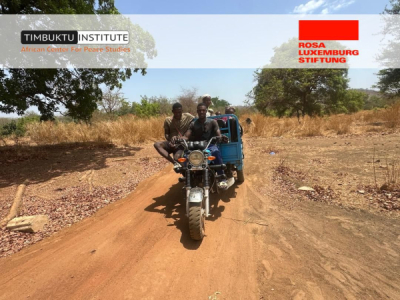
The Timbuktu Institute – African Center for Peace Studies, in partnership with the Rosa Luxemburg Foundation, will soon publish a research report on migration, resilience, and human security in the departments of Goudiry and Bakel, in the far east of Senegal. Based on a mixed-methods field study combining quantitative data, qualitative interviews, direct observations, and life narratives, this work offers one of the most detailed analyses ever conducted of this border region, at the crossroads of historical migration dynamics and shifting regional security landscapes—particularly in light of the current security situation in Mali.
A Border Region Under Dual Pressure
Bordering the Senegal and Falémé rivers and in direct contact with Mali and Mauritania, Goudiry and Bakel face multiple challenges: as one of the country’s oldest regions of emigration, the area is now also exposed to porous borders and the deteriorating security situation in neighboring Mali. This situation is exemplified by significant events such as the recent attack in Diboli and the concerns of a youth population that faces chronic unemployment, precarious living conditions, and socioeconomic vulnerabilities. It is against this backdrop that the Timbuktu Institute, supported by the Rosa Luxemburg Foundation, has chosen to conduct a large-scale field study, utilizing quantitative questionnaires, semi-structured interviews, direct observations, and life narratives, distributed across the two departments in eastern Senegal.
Initial trends: Migration, a structural pillar rather than a temporary phenomenon
Preliminary results confirm that migration is not a marginal phenomenon but rather the central social reality of the region: in nearly all households surveyed, at least one member is currently migrating, and one-quarter of households include a migrant who left more than ten years ago. Remittances, received “regularly” by nearly three out of four respondents, primarily fund families’ food and healthcare, ahead of education and housing; this is a sign that the remittance economy remains largely focused on short-term resilience rather than productive investment.
This structural dependence on migration is accompanied by a shared awareness of its human cost: tragedies at sea and in the desert, the brain drain, and the breaking up of families. The life stories collected from returning migrants who passed through Libya, Algeria, Morocco, or France give this statistical reality a face and a voice, reflecting both the hardships endured during their journey and the pride in the achievements made possible by the money sent home.
Unemployment and Radicalization: A Link Identified by All Field Actors
One of the most obvious findings of the study is the interesting convergence of viewpoints among heads of households, young people, women leaders, religious guides, and members of the Defense and Security Forces regarding the link between a lack of economic opportunities and vulnerability to radicalization. The report documents a three-stage process, described with great insight by the respondents themselves: the loss of direction linked to unemployment, frustrations with the system, and then the search for recognition and a sense of social belonging—a fertile ground that extremist networks know how to exploit in neighboring countries. In the face of this risk, religious leaders and families are widely regarded as the two primary actors in prevention, far ahead of formal institutional mechanisms. One specific trend, noted in Bakel, deserves particular attention: the recent arrival of new preachers delivering an unusual religious message, mentioned independently by several respondents.
Human Security, Trust in the FDS, and Community Dialogue
The study also explores the public’s perception of their security and of their Defense and Security Forces: a majority of respondents rate the security situation as good to very good and express genuine trust in the Defense and Security Forces, while noting a persistent shortage of human and logistical resources. Notably, the proximity of the regional threat appears to have further strengthened cooperation between civilian populations and security forces
Regarding inter-community dialogue, the study confirms the vitality of traditional mechanisms—embodied by customary chiefdoms, religious mediation, and “joking kinship”—which, far ahead of formal mechanisms, remain the primary recourse for communities in conflict resolution.
A Report to Inform Public and Partnership-Based Action
Beyond the analysis, the study outlines the concrete expectations expressed by the populations of Goudiry and Bakel regarding the state, local authorities, the Defense and Security Forces, technical and financial partners, and the diaspora—ranging from vocational training for young people to improving road access, and including the channeling of remittances into sustainable productive investments.
The full report, which details all of these findings by department and contextualizes them with field data, will be released in the coming weeks by the Timbuktu Institute and the Rosa Luxemburg Foundation. Based on initial trends and current findings, it will serve as a key reference resource for public actors, development partners, and civil society organizations working in the Tambacounda region and, more broadly, in eastern Senegal.
Timbuktu Institute, juillet 2026
Le Timbuktu Institute – African Center for Peace Studies procédera à la publication prochaine, en partenariat avec la Fondation Rosa Luxemburg, d'un rapport d'étude consacré à la migration, à la résilience et à la sécurité humaine dans les départements de Goudiry et de Bakel, à l'extrême Est du Sénégal. Fruit d'une enquête de terrain mixte associant données quantitatives, entretiens qualitatifs, observations directes et récits de vie, ce travail offre l'un des diagnostics les plus fins jamais réalisés sur cette zone frontalière, au carrefour des dynamiques migratoires historiques et des recompositions sécuritaires régionales, notamment avec la situation sécuritaire actuelle au Mali.
Une zone frontalière sous double tension
Adossés au fleuve Sénégal et à la Falémé, en contact direct avec le Mali et la Mauritanie, Goudiry et Bakel cumulent les défis : terre d'émigration parmi les plus anciennes du pays, la zone est aujourd'hui également exposée à la porosité des frontières, à la dégradation de la situation sécuritaire au Mali voisin. Cette situation est matérialisée par des événements marquants comme la récente attaque à Diboli et les interrogations d’une jeunesse durablement confrontée au chômage, à la précarité et aux vulnérabilités socio-économiques. C'est dans ce contexte que le Timbuktu Institute soutenu par la Fondation Rosa Luxemburg a choisi de conduire une étude de terrain d'ampleur, mobilisant questionnaires quantitatifs, entretiens semi-directifs, 7 observations directes et des récits de vie, répartis entre les deux départements de l’Est du Sénégal.
Premières tendances : la migration, un pilier structurel plus qu'un accident conjoncturel
Les résultats préliminaires confirment que la migration n'est pas un phénomène marginal mais bien le fait social central de la zone : dans la quasi-totalité des ménages enquêtés, au moins un membre est actuellement en migration, et un quart des ménages comptent un migrant parti depuis plus de dix ans. Les transferts de fonds, reçus « régulièrement » par près de trois répondants sur quatre, financent avant tout l'alimentation et la santé des familles, avant l'éducation et l'habitat ; signe d'une économie des transferts encore largement tournée vers la résilience de court terme plutôt que vers l'investissement productif.
Cette dépendance structurelle à la migration s'accompagne d'une lucidité partagée sur son coût humain : des drames en mer et dans le désert, la fuite des compétences, l’éclatement des familles. Les récits de vie recueillis auprès de migrants de retour, passés par la Libye, l'Algérie, le Maroc ou la France, donnent à cette réalité statistique un visage et une certaine voix, entre épreuves endurées en transit et fierté des réalisations permises par l'argent envoyé au pays.
Chômage et radicalisation : un lien identifié par l'ensemble des acteurs de terrain
L'un des enseignements les plus évidents de l'étude est l’intéressante convergence des points de vue des chefs de ménage, des jeunes, des femmes leaders, des guides religieux, des agents des Forces de Défense et de Sécurité, sur le lien entre absence d'opportunités économiques et vulnérabilité à la radicalisation. Le rapport documente un mécanisme en trois temps, décrit avec une grande finesse par les répondants eux-mêmes : la perte de repères liée à l'absence de travail, les frustrations à l'égard du système, puis la recherche de reconnaissance et d'appartenance sociale ; un terreau que les réseaux extrémistes savent exploiter dans les pays voisins. Face à ce risque, les leaders religieux et les familles sont plébiscités comme les deux premiers acteurs de prévention, loin devant les dispositifs institutionnels formels. Un signal spécifique, relevé à Bakel, mérite une attention particulière : l'arrivée récente de nouveaux prêcheurs tenant un discours religieux inhabituel, mentionnée indépendamment par plusieurs répondants.
Sécurité humaine, confiance envers les FDS et dialogue communautaire
L'étude explore, également, la perception qu'ont les populations de leur sécurité et de leurs Forces de Défense et de Sécurité : une majorité de répondants juge la situation sécuritaire bonne à très bonne et exprime une confiance réelle envers les FDS, tout en pointant un déficit persistant de moyens humains et logistiques. Fait notable, la proximité de la menace régionale semble avoir plus renforcé la coopération entre populations civiles et forces de sécurité
Au sujet du dialogue intercommunautaire, l'étude confirme la vitalité des mécanismes traditionnels incarnés par les chefferies coutumières, la médiation religieuse, le cousinage à plaisanterie qui demeurent, très largement devant les dispositifs formels, les premiers recours des populations pour la résolution des conflits.
Un rapport pour éclairer l'action publique et partenariale
Au-delà du diagnostic, l'étude restitue les attentes concrètes exprimées par les populations de Goudiry et de Bakel à l'endroit de l'État, des collectivités locales, des Forces de Défense et de Sécurité, des partenaires techniques et financiers et de la diaspora — de la formation professionnelle des jeunes au désenclavement routier, en passant par la structuration des transferts de fonds en investissements productifs durables.
Le rapport complet, qui détaille l'ensemble de ces résultats par département et les met en perspective avec les données de terrain, sera rendu public dans les prochaines semaines par le Timbuktu Institute et la Fondation Rosa Luxemburg. Au regard des premières tendances et des conclusions en l’état, il constituera une ressource de référence pour les acteurs publics, les partenaires au développement et les organisations de la société civile engagés dans la région de Tambacounda et, plus largement, dans l’Est du Sénégal.
Timbuktu Institute Week 1 - July 2026
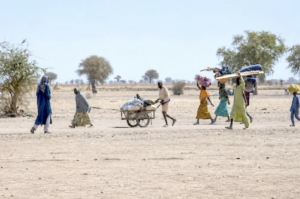
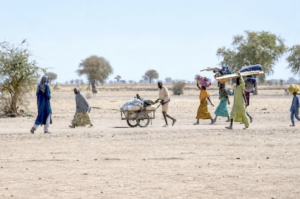
More than a decade after the emergence of Boko Haram, the Lake Chad Basin remains a hotbed of chronic instability, where jihadist incursions continue to dictate the daily lives of local populations. As a result, the security situation there continues to deteriorate, exacerbating an already severe humanitarian crisis. According to the United Nations High Commissioner for Refugees (UNHCR), more than 3.5 million people are currently forcibly displaced in Cameroon, Chad, Niger, and Nigeria, while more than 8 million people require humanitarian assistance. Between January 2024 and April 2026, security incidents rose significantly, with an increase in attacks on civilians, kidnappings, and clashes involving armed groups such as Boko Haram and the Islamic State in West Africa (ISWAP). Borno State, in northeastern Nigeria, remains the epicenter of this violence, leading to new displacements into neighboring countries, particularly Niger and Chad. The crisis particularly affects vulnerable populations: women and children face increased risks of violence and disruptions to essential services, while school closures are depriving thousands of children of an education. Given the scale of the needs, UNHCR warns that humanitarian funding is insufficient and calls for increased international support to prevent a lasting escalation of instability in the region.
Meanwhile, flooding is ravaging the country, particularly in the capital. Faced with the persistent risk of flooding in N’Djamena, Prime Minister Allah-Maye Halina conducted, on June 30, a field visit to several neighborhoods in the capital to assess prevention measures and identify the most affected areas. Following the recent heavy rains, he observed that several drainage channels were blocked and that maintenance work on water infrastructure was inadequate, specifically criticizing the failures of the National Committee for Flood Management and Prevention. Urgent measures were ordered, including the removal of sediment from drainage systems and the acceleration of work on the Walia levee, the partial absence of which had contributed to the severe flooding of 2024. The head of government also called on local authorities to prioritize a preventive and ongoing approach, arguing that risk management should not be limited to periods of heavy rainfall.
N’Djamena Strengthens Its Alliances
On the international front, Chad is stepping up its efforts toward international cooperation. On June 30 in Abu Dhabi, Chadian President Mahamat Idriss Deby Itno was received by his Emirati counterpart, Sheikh Mohamed Bin Zayed Al Nahyan, as part of a meeting focused on strengthening strategic cooperation between Chad and the United Arab Emirates. In particular, the two leaders reviewed the progress of commitments related to the “Chad Connexion 2030” National Development Plan, for which a financing forum was held in November 2025 in Abu Dhabi. Discussions also focused on several projects supported by the UAE in the fields of energy, health, social development, and humanitarian aid, as well as regional and international issues of mutual interest.
Furthermore, in this vein, the government has resumed its cooperation with the South African NGO African Parks Network (APN) through new agreements covering the management of four major protected areas in the country: Zakouma National Park, Siniaka-Minia Park, the Aouk Reserve, and the Ennedi Natural and Cultural Reserve. This signing follows a period of tension marked by the Chadian authorities’ decision in October 2025 to terminate the previous partnership agreements, prior to the start of new negotiations. The new cooperation framework provides for an increased role for the state in the management and oversight of protected areas, strengthened financial governance, and greater involvement of local authorities. The authorities also highlight commitments to transparency, the development of ecotourism, support for local communities, and the fight against poaching. This renewed partnership thus aims to reconcile biodiversity conservation, the economic development of natural resources, and the strengthening of national sovereignty in the management of protected areas.
Timbuktu Institute semaine 1 Juillet 2026
Plus d'une décennie après l'irruption de Boko Haram, le bassin du lac Tchad demeure un foyer d'instabilité chronique, où les incursions jihadistes continuent de dicter le quotidien des populations. Ainsi, la situation sécuritaire continue de s’y dégrader, aggravant une crise humanitaire déjà profonde. Selon le Haut-Commissariat des Nations unies pour les réfugiés (HCR), plus de 3,5 millions de personnes sont aujourd’hui déplacées de force au Cameroun, au Tchad, au Niger et au Nigeria, tandis que plus de 8 millions de personnes nécessitent une assistance humanitaire. Entre janvier 2024 et avril 2026, les incidents sécuritaires ont connu une hausse significative, avec une multiplication des attaques contre les civils, des enlèvements et des affrontements impliquant des groupes armés comme Boko Haram et l’État islamique en Afrique de l’Ouest (ISWAP). L’État de Borno, dans le nord-est du Nigeria, demeure l’épicentre de cette violence, entraînant de nouveaux déplacements vers les pays voisins, notamment le Niger et le Tchad. La crise affecte particulièrement les populations vulnérables : les femmes et les enfants sont exposés à des risques accrus de violences et de rupture des services essentiels, tandis que la fermeture des écoles prive des milliers d’enfants d’éducation. Face à l’ampleur des besoins, le HCR alerte sur l’insuffisance des financements humanitaires et appelle à un soutien international renforcé afin d’éviter une aggravation durable de l’instabilité dans la région.
Pendant ce temps, les inondations sévissent dans le pays, notamment dans la capitale. Face aux risques persistants d’inondations à N’Djamena, le Premier ministre Allah-Maye Halina a effectué, le 30 juin, une visite de terrain dans plusieurs quartiers de la capitale afin d’évaluer les dispositifs de prévention et les zones les plus touchées. Après les fortes pluies enregistrées récemment, il a constaté l’obstruction de plusieurs caniveaux et l’insuffisance des travaux d’entretien des infrastructures hydrauliques, dénonçant notamment les défaillances du Comité national de gestion et de prévention des inondations. Des mesures urgentes ont été ordonnées, notamment le désensablement des ouvrages d’évacuation des eaux et l’accélération des travaux liés à la digue de Walia, dont l’absence partielle avait contribué aux graves inondations de 2024. Le chef du gouvernement a également appelé les autorités locales à privilégier une approche préventive et permanente, estimant que la gestion des risques ne devait pas se limiter aux périodes de fortes pluies.
N’Djamena consolide ses alliances
Au plan externe, le Tchad multiplie les démarches de coopération internationale. Ainsi, le président tchadien Mahamat Idriss Deby Itno a été reçu, le 30 juin à Abu Dhabi, par son homologue émirati Cheikh Mohamed Bin Zayed Al Nahyan, dans le cadre d’une rencontre consacrée au renforcement de la coopération stratégique entre le Tchad et les Émirats arabes unis. Les deux dirigeants ont notamment évalué l’état d’avancement des engagements liés au Plan national de développement « Tchad Connexion 2030 », dont le forum de financement s’était tenu en novembre 2025 à Abu Dhabi. Les discussions ont également porté sur plusieurs projets soutenus par les Émirats dans les domaines de l’énergie, de la santé, du développement social et de l’aide humanitaire, ainsi que sur des enjeux régionaux et internationaux d’intérêt commun.
Par ailleurs, dans cette veine que le gouvernement a renoué sa coopération avec l’ONG sud-africaine African Parks Network (APN) à travers de nouveaux accords portant sur la gestion de quatre grandes aires protégées du pays : le parc national de Zakouma, le parc de Siniaka-Minia, la réserve de l’Aouk et la réserve naturelle et culturelle de l’Ennedi. Cette signature intervient après une période de tensions marquée par la décision des autorités tchadiennes, en octobre 2025, de mettre fin aux précédents accords de partenariat, avant l’ouverture de nouvelles négociations. Le nouveau cadre de coopération prévoit un rôle accru de l’État dans le pilotage et le contrôle des espaces protégés, une gouvernance financière renforcée ainsi qu’une implication plus importante des collectivités locales. Les autorités mettent également en avant des engagements en faveur de la transparence, du développement de l’écotourisme, du soutien aux communautés riveraines et de la lutte contre le braconnage. Ce partenariat renouvelé vise ainsi à concilier préservation de la biodiversité, valorisation économique des ressources naturelles et renforcement de la souveraineté nationale dans la gestion des aires protégées.
Timbuktu Institute Week 1 - July 2026
Nigeria appears to remain trapped in a cycle of ongoing security pressure. Despite the measures taken by the authorities, structural vulnerabilities and the proliferation of pockets of violence are fueling a climate of instability that is proving difficult to resolve. In the northeast of the country, Borno State continues to face the persistent threat of jihadist groups. On June 29, armed men suspected of belonging to the Islamic State in West Africa (ISWAP) attacked a high school in the town of Lassa, in the Askira-Uba district, while students were taking a national biology exam. The attackers abducted several dozen high school students and killed three people, including a soldier. According to authorities, a search operation conducted by the army led to the recovery of ten victims, while at least 37 families have reported their children missing. Investigators believe the militants had infiltrated the community the day before, taking advantage of a local market and posing as merchants or forestry officials to prepare for their operation. This attack, which led to the temporary closure of schools in the district, illustrates ISWAP’s continued ability to carry out mass kidnappings in a region marked by more than fifteen years of jihadist insurgency. It also comes just hours after the abduction of several women and two infants in nearby fields, confirming the severe security pressure that continues to weigh on the civilian population of Borno State.
However, the security picture is not entirely bleak. The military continues to make progress in its fight against jihadist groups active in the country’s northeast. In fact, according to the Joint Task Force Operation Hadin Kai, several alleged ISWAP leaders have surrendered to the Nigerian armed forces as part of counterinsurgency operations. According to military command, these surrenders are reportedly the result of ground offensives and intelligence operations that have weakened several insurgent bases and disrupted jihadist chains of command. In total, 76 suspected fighters—some accompanied by family members—are also reported to have laid down their arms over the past week. Nigerian authorities view this development as a sign that the operational capabilities of ISWAP and Boko Haram are weakening, while affirming their intention to continue operations until the armed groups are completely neutralized or surrender.
Abuja Strengthens Regional Security Alliances
In an effort to contain the expansion of jihadist groups from the Sahel, Nigeria intends to strengthen its military cooperation with its neighbors Benin and Niger. Nigerian Defense Minister General Christopher Musa stated on July 2 that the border area between the three countries had become a new priority sector for Abuja, due to the advance of fighters affiliated with the Group for the Support of Islam and Muslims (JNIM), who are reportedly seeking to exploit the corridor through Burkina Faso and Benin to enter Nigeria. The initiative notably calls for increased intelligence sharing and the possibility of coordinated cross-border operations. Cooperation with Benin is already underway, with Beninese forces conducting operations on Nigerian territory with Abuja’s approval.
This initiative comes amid a deteriorating security situation in northwestern Nigeria, marked by a surge in attacks and kidnappings, as the country has been facing a jihadist insurgency since 2009, led primarily by Boko Haram and ISWAP. At the same time, the authorities have launched a repatriation operation to bring their nationals home from South Africa, amid growing tensions over the issue of migration. A second flight chartered by the Nigerian government brought 269 Nigerian citizens back from Johannesburg to Lagos, bringing the total number of people repatriated since the start of the operation to 335. This initiative comes as South Africa steps up its security measures in the face of announced anti-immigrant protests and a rise in hostile rhetoric targeting foreigners, particularly Africans.
Meanwhile, a political and administrative scandal is currently rocking Abuja over a fake organization presented as an official government agency. The “Presidential Foreign Investment Promotion Council” (PFIPC), purportedly established to promote foreign investment, is said to have operated for several months as a recognized institution, interacting with government agencies and even having access to office space, staff, and bank accounts at the Central Bank of Nigeria. According to authorities, the organization was in fact fabricated from scratch by Prince Adeniyi Adeyemi, who is accused of forging official documents and impersonating a public official. Eight charges have been filed against him, including forgery and the creation of a fictitious government agency. The scandal also implicates several officials close to President Bola Tinubu, including Chief of Staff Femi Gbajabiamila, whose signature allegedly appeared on a disputed letter of appointment. While authorities claim to have uncovered a vast institutional fraud operation, Adeniyi Adeyemi denies the charges and denounces them as an attempt to manipulate the situation in order to discredit him.
Timbuktu Institute semaine 1 Juillet 2026
Le Nigeria semble demeurer dans la nasse d’une pression sécuritaire durable. Malgré les réponses apportées par les autorités, les vulnérabilités structurelles et la multiplication des poches de violences entretiennent un climat d’instabilité qui peine à se résorber. Dans le nord-est du pays, l’État de Borno reste confronté à la menace persistante des groupes jihadistes. Le 29 juin, des hommes armés soupçonnés d’appartenir à l’État islamique en Afrique de l’Ouest (Iswap) ont attaqué un lycée de la ville de Lassa, dans le district d’Askira-Uba, alors que les élèves composaient un examen national de biologie. Les assaillants ont enlevé plusieurs dizaines de lycéens et tué trois personnes, dont un militaire. Selon les autorités, une opération de ratissage menée par l’armée a permis de retrouver dix victimes, tandis qu’au moins 37 familles ont signalé la disparition de leurs enfants. Les enquêteurs estiment que les combattants s’étaient infiltrés dans la communauté dès la veille, profitant d’un marché local et se faisant passer pour des commerçants ou des agents forestiers afin de préparer leur opération. Cette attaque, qui a conduit à la fermeture temporaire des établissements scolaires dans le district, illustre la capacité persistante de l’Iswap à mener des opérations de kidnapping de masse dans une région marquée par plus de quinze ans d’insurrection jihadiste. Elle intervient par ailleurs quelques heures après l’enlèvement de plusieurs femmes et de deux nourrissons dans des champs voisins, confirmant la forte pression sécuritaire qui continue de peser sur les populations civiles de l’État de Borno.
Cependant, le tableau sécuritaire n’est pas entièrement sombre. L’armée continue d’enregistrer des avancées dans sa lutte contre les groupes jihadistes actifs dans le nord-est du pays. En effet, d’après la Force opérationnelle interarmées Operation Hadin Kai, plusieurs responsables présumés de l’Iswap se sont rendusaux forces armées nigérianes dans le cadre des opérations de contre-insurrection. Selon le commandement militaire, ces redditions seraient le résultat des offensives terrestres et des opérations de renseignement ayant permis de fragiliser plusieurs bases insurgées et de perturber les chaînes de commandement jihadistes. Au total, 76 combattants présumés, certains accompagnés de membres de leurs familles, auraient également déposé les armes au cours de la dernière semaine. Les autorités nigérianes considèrent cette dynamique comme un signe d’affaiblissement des capacités opérationnelles de l’Iswap et de Boko Haram, tout en affirmant vouloir poursuivre les opérations jusqu’à la neutralisation complète ou la reddition des groupes armés.
Abuja renforce ses alliances sécuritaires régionales
Dans le but de contenir l’expansion des groupes jihadistes venus du Sahel, le Nigeria entend renforcer sa coopération militaire avec ses voisins du Bénin et du Niger. Le ministre nigérian de la Défense, le général Christopher Musa, a indiqué le 2 juillet, que la zone frontalière entre les trois pays était devenue un nouveau secteur prioritaire pour Abuja, en raison de la progression des combattants affiliés au Groupe de soutien à l’islam et aux musulmans (JNIM), qui chercheraient à exploiter le corridor passant par le Burkina Faso et le Bénin pour pénétrer au Nigeria. Le projet prévoit notamment un partage accru du renseignement et la possibilité d’opérations transfrontalières coordonnées. La coopération avec le Bénin est déjà engagée, avec des interventions de forces béninoises sur le territoire nigérian avec l’accord d’Abuja. Cette initiative intervient dans un contexte de dégradation sécuritaire dans le nord-ouest du Nigeria, marqué par la multiplication des attaques et des enlèvements, alors que le pays fait face depuis 2009 à une insurrection jihadiste menée principalement par Boko Haram et l’Iswap. Dans le même temps, les autorités ont lancé une opération de rapatriement de leurs ressortissants depuis l’Afrique du Sud, dans un contexte de tensions croissantes autour de la question migratoire. Un deuxième vol affrété par le gouvernement nigérian a permis le retour de 269 citoyens nigérians depuis Johannesburg vers Lagos, portant à 335 le nombre total de personnes rapatriées depuis le début de l’opération. Cette initiative intervient alors que l’Afrique du Sud renforce son dispositif sécuritaire face à des manifestations anti-immigrés annoncées et à une montée des discours hostiles visant les étrangers, notamment africains.
D’un autre côté, un scandale politico-administratif secoue actuellement Abuja autour d’une fausse structure présentée comme une agence gouvernementale officielle. Le « Presidential Foreign Investment Promotion Council » (PFIPC), censé promouvoir les investissements étrangers, aurait fonctionné pendant plusieurs mois comme une institution reconnue, en échangeant avec des administrations publiques et en bénéficiant même de locaux, d’employés et de comptes bancaires auprès de la Banque centrale nigériane. Selon les autorités, la structure aurait en réalité été créée de toutes pièces par Prince Adeniyi Adeyemi, accusé d’avoir falsifié des documents officiels et usurpé une fonction publique. Huit chefs d’accusation ont été retenus contre lui, notamment pour faux documents et création d’une agence gouvernementale fictive. L’affaire éclabousse également plusieurs responsables proches du président Bola Tinubu, dont le chef de cabinet Femi Gbajabiamila, dont la signature aurait figuré sur une lettre de nomination contestée. Si les autorités affirment avoir découvert une vaste opération de fraude institutionnelle, Adeniyi Adeyemi rejette les accusations et dénonce une tentative de manipulation visant à le discréditer.
Timbuktu Institute Week 1 - July 2026
In Ivory Coast, the heavy rainfall that has been affecting Abidjan for several weeks is reigniting concerns in neighborhoods prone to flooding. Residents live at the mercy of weather alerts, facing submerged roads and homes that are regularly inundated. A rainy spell has now become a source of anxiety due to the lack of adequate drainage infrastructure. These floods have already caused 59 deaths since the start of the rainy season, according to government spokesperson Amadou Coulibaly, who described the death toll as “particularly high” and linked it to the effects of climate change. The town of Attécoubé, west of Abidjan, is among the hardest-hit areas, with about 20 deaths. These tragedies highlight the persistent vulnerability of many precarious neighborhoods in the Ivorian economic capital, where rapid urbanization has led to people settling in areas prone to landslides and flooding. Faced with this recurring situation, authorities are continuing eviction operations targeting homes located in areas deemed dangerous—a policy regularly criticized by human rights organizations due to its social consequences for displaced populations. In the Campement neighborhood (Koumassi municipality), residents are trying to rebuild their lives after their homes were destroyed nearly a month ago. Several affected families have found refuge in classrooms converted into makeshift dormitories, where living conditions remain difficult, particularly due to overcrowding, health risks, and inclement weather. According to the victims’ collective, more than 3,000 households have been affected by the destruction. While the Ivorian Ministry of Solidarity has announced emergency aid for 400 families, including financial assistance and food supplies, residents are calling for long-term solutions, particularly support with rehousing, as many of them remain homeless. The government has also stated its intention to supplement these measures with a rehousing program that includes “two rehousing sites for the construction of 12,000 affordable housing units” intended for approximately 60,000 people.
At the same time, the flood crisis appears to have taken a political turn. Indeed, the eviction operations are fueling political tensions, particularly between the mayor of Port-Bouët, Sylvestre Emmou, and the minister-governor of the Autonomous District of Abidjan, Ibrahim Cissé Bacongo. The demolition of several homes in areas considered at risk has reignited a conflict over jurisdiction between local authorities and the central government, with the mayor of Port-Bouët contesting the methods used and denouncing interventions carried out without sufficient consultation. But behind the issues of urban planning and the fight against unauthorized squatting, a political rivalry within the presidential majority is also emerging. With the rainy season not yet over, the floods highlight the challenges Côte d’Ivoire faces in terms of urban planning, risk prevention, and adaptation to climate change.
Toward a Consensus-Based Electoral System
Meanwhile, the country is still searching for a peaceful electoral system in preparation for its upcoming elections.
With this in mind, on July 3, several civil society organizations presented a “white paper” on electoral governance reform, ten days after the Prime Minister presented a new electoral system to the political parties. Backed by 1,700 organizations, this document sets out several proposals aimed at strengthening the transparency and credibility of the electoral process. In particular, it calls for the creation of an independent department responsible for the voter registry, staffed through a public competitive bidding process for a single six-year term, as well as a permanent civic and electoral education program.
The main proposed innovation involves the establishment of an electoral commission composed of nine experts, including representatives from both the majority and the opposition, but in a technical rather than partisan capacity. This proposal aims to address the opposition’s criticisms of the former Independent Electoral Commission (IEC), whose composition was deemed unbalanced. The document is scheduled to be submitted to the government and the National Assembly, while the authorities are already working on their own reform of the electoral system, amid heated debates over the transparency of upcoming elections.
Timbuktu Institute semaine 1 Juillet 2026
En Côte d’Ivoire, les fortes précipitations qui touchent Abidjan depuis plusieurs semaines relancent les inquiétudes dans les quartiers exposés aux inondations. Les habitants vivent au rythme des alertes météorologiques, confrontés à des routes submergées et à des habitations régulièrement envahies par les eaux. Un épisode pluvieux désormais source d’angoisse, en raison de l’absence d’infrastructures adaptées de drainage. Ces inondations ont déjà causé 59 décès depuis le début de la saison des pluies, selon le porte-parole du gouvernement Amadou Coulibaly, qui a évoqué un bilan « particulièrement élevé » lié aux effets du dérèglement climatique. La commune d’Attécoubé, dans l’ouest d’Abidjan, figure parmi les zones les plus touchées avec une vingtaine de morts. Ces drames rappellent la vulnérabilité persistante de nombreux quartiers précaires de la capitale économique ivoirienne, où l’urbanisation rapide a favorisé l’installation de populations dans des zones exposées aux glissements de terrain et aux inondations. Face à cette situation récurrente, les autorités poursuivent les opérations de déguerpissement visant les habitations situées dans des zones jugées dangereuses, une politique régulièrement critiquée par des organisations de défense des droits humains en raison de ses conséquences sociales pour les populations déplacées. Dans le quartier Campement (commune de Koumassi), les populations tentent de reconstruire leur vie après la destruction de leurs habitations il y a près d’un mois. Plusieurs familles sinistrées ont trouvé refuge dans des salles de classe transformées en dortoirs de fortune, où les conditions de vie restent difficiles, notamment en raison de la promiscuité, des risques sanitaires et des intempéries. Selon le collectif des sinistrés, plus de 3 000 ménages auraient été affectés par ces destructions. Si le ministère ivoirien de la Solidarité a annoncé une aide d’urgence pour 400 familles, comprenant une assistance financière et des vivres, les habitants demandent des solutions durables, notamment un accompagnement au relogement, alors que plusieurs d’entre eux restent sans domicile. Le gouvernement assure par ailleurs vouloir accompagner ces mesures par un programme de relogement prévoyant « deux sites de relogement pour la construction de 12 000 logements à loyer modéré » destinés à environ 60 000 personnes.
Parallèlement, l’équation des inondations semble avoir pris une tournure politique. En effet, les opérations de déguerpissement alimentent les tensions politiques, notamment entre le maire de Port-Bouët, Sylvestre Emmou, et le ministre-gouverneur du District autonome d’Abidjan, Ibrahim Cissé Bacongo. La destruction de plusieurs habitations dans des zones considérées comme à risque a ravivé un conflit de compétences entre autorités locales et administration centrale, le maire de Port-Bouët contestant la méthode employée et dénonçant des interventions réalisées sans concertation suffisante. Mais derrière la question de l’aménagement urbain et de la lutte contre les occupations anarchiques se dessine également une rivalité politique au sein de la majorité présidentielle. Alors que la saison des pluies n’est pas encore arrivée à son terme, les inondations soulignent les défis auxquels la Côte d’Ivoire est confrontée en matière d’aménagement urbain, de prévention des risques et d’adaptation au changement climatique.
Pour un système électoral consensuel
Pendant ce temps, le pays est toujours à la recherche d’un système électoral apaisé, en vue de ses futures échéances électorales. C’est dans cette optique que plusieurs organisations de la société civile ont présenté, le 3 juillet, un « livre blanc » consacré à la réforme de la gouvernance électorale, dix jours après la présentation par le Premier ministre d’un nouveau système électoral aux partis politiques. Porté par 1 700 organisations, ce document formule plusieurs propositions visant à renforcer la transparence et la crédibilité du processus électoral. Il prévoit notamment la création d’un département indépendant chargé du fichier électoral, recruté par appel d’offres public pour un mandat unique de six ans, ainsi qu’un dispositif permanent d’éducation civique et électorale.
La principale innovation proposée concerne la mise en place d’une commission électorale composée de neuf experts, incluant notamment des représentants de la majorité et de l’opposition, mais dans un rôle technique plutôt que partisan. Cette proposition vise à répondre aux critiques formulées par l’opposition contre l’ancienne Commission électorale indépendante (CEI), dont la composition était jugée déséquilibrée. Le document est prévu pour être transmis au gouvernement et à l’Assemblée nationale, alors que les autorités travaillent déjà sur leur propre réforme du système électoral, dans un contexte marqué par de vifs débats sur la transparence des prochaines échéances politiques.
Timbuktu Institute Week 1 - July 2026
Ever since President Faure Gnassingbé consolidated his position at the head of state with the shift from a presidential to a parliamentary system, the Togolese opposition has consistently challenged the legitimacy of the new government. To the point, it must be said, of sometimes appearing somewhat powerless. However, since the ECOWAS Court of Justice issued a ruling characterizing Togo’s March 2024 constitutional amendment as an “unconstitutional change of government,” the political opposition appears to have regained its vigor. On June 30, the Dynamique pour la Majorité du Peuple (DMP) boycotted the second session of the Permanent Consultative Framework (CPC), which took place from July 1 to 3, arguing that this forum for dialogue no longer addresses the gravity of the political and institutional crisis Togo is facing. For the DMP, this decision reinforces its condemnation of an “institutional coup” and underscores the need to challenge the constitutional reform. The coalition believes that the national priority is no longer the continuation of the CPC’s work, but rather the launch of an inclusive political transition aimed at restoring constitutional legality, rebuilding institutions, and reestablishing trust among political actors. Reaffirming its withdrawal from the CPC, announced in July 2025, the DMP also stands by its demands for the release of political prisoners, the abolition of the Fifth Republic, Faure Gnassingbé’s departure from power, and an improvement in the living conditions of the population. Finally, it considers that the CPC has become an ineffective forum for dialogue, incapable of addressing the main issues of the Togolese crisis.
Similarly, in a statement released on July 1, 2026, the Freedom Togo–National Liberation Movement (MLN) welcomed the ruling by the ECOWAS Court of Justice; the movement believes that this decision supports its accusations that the new constitutional framework is “illegal” and “illegitimate.” Citing this ruling by the regional court, Freedom Togo–MLN called for increased mobilization by opposition parties, civil society organizations, labor unions, students, and the defense and security forces in support of a change in government. The movement also urges the international community to increase pressure on the Togolese authorities to secure the departure of the current regime and the launch of a process to restore constitutional and democratic order. The Dynamique Monseigneur Kpodzro (DMK) echoed this sentiment, announcing on the same day a two-pronged offensive—both “legal and spiritual”—aimed at achieving what it describes as the restoration of the political legitimacy resulting from the Togolese presidential election of February 22, 2020. On the legal front, the movement expressed its support for the referral to the Togolese League for Human Rights (LTDH) to explore domestic and international legal remedies following the second ruling by the ECOWAS Court of Justice, issued on January 29, 2026, which the DMK interprets as a recognition of the unconstitutional nature of the institutional reform adopted in 2024. Thus, it appears that the Togolese opposition is regaining momentum following the ECOWAS Court’s significant—albeit non-binding—decision. However, to what extent could this new pressure currently shake the foundations of Faure Gnassingbé’s power? This question is all the more pertinent given that, in the current political landscape, the scope for such challenges remains limited. In any case, this development heralds a possible new wave of sociopolitical protest in a country that has clearly experienced a continuous narrowing of its civic space in recent years.
Deadly Floods
At the same time, Togo has not been spared the floods currently affecting several countries in the subregion. In a statement released on July 4, the Togolese government reported a provisional death toll of five people following the heavy rains of June 28 and 29, which affected the Maritime, Plateaux, and Central regions, as well as the Autonomous District of Greater Lomé (DAGL). The rainfall, described as exceptional for the countries of the Gulf of Guinea, caused significant property damage and disrupted travel. In response to this situation, the authorities activated the ORSEC Plan, coordinated by the National Civil Protection Agency (ANPC), to conduct relief operations with the support of the defense and security forces.
While offering their condolences to the victims’ families, the authorities stated that a multisectoral assessment of the damage was underway to guide assistance efforts for the affected populations. The government also called on citizens to strengthen preventive measures, particularly by maintaining drainage systems, cleaning gutters, clearing natural waterways, and improving waste management, as heavy rainfall continues to affect several West African countries.
Sacré-Coeur 3 – BP 15177 CP 10700 Dakar Fann – SENEGAL.
+221 33 827 34 91 / +221 77 637 73 15
contact@timbuktu-institute.org